- 1HarmonyOS应用开发-闪屏启动页
- 2揭密字节跳动薪资职级,资深测试居然能拿......_字节跳动2-2是什么级别
- 3【云原生】kubectl命令的详解_kubectl命令详解
- 4Linux最狠命令sudo rm -rf /* 详细解释_删库代码rm-rf
- 5web3: 智能合约
- 6Android 系统启动过程纪要(基于Android 10)
- 7华为云云耀云服务器L实例评测|Python Selenium加Chrome Driver构建UI自动化测试实践
- 8HDFS Java API操作(IDEA版)
- 9基于产生式系统的小型专家系统--动物识别_产生式系统动物识别
- 10Android Studio下载及安装和Gradle的配置(非常详细)从零基础入门到精通,看完这一篇就够了
Spring boot多数据源实现动态切换_springboot多数据源配置和切换
赞
踩
概述
日常的业务开发项目中只会配置一套数据源,如果需要获取其他系统的数据往往是通过调用接口, 或者是通过第三方工具比如kettle将数据同步到自己的数据库中进行访问。
但是也会有需要在项目中引用多数据源的场景。比如如下场景:
- 自研数据迁移系统,至少需要新、老两套数据源,从老库读取数据写入新库
- 自研读写分离中间件,系统流量增加,单库响应效率降低,引入读写分离方案,写入数据是一个数据源,读取数据是另一个数据源
环境说明
- spring boot
- mysql
- mybatis-plus
- spring-aop
项目目录结构
- controller: 存放接口类
- service: 存放服务类
- mapper: 存放操作数据库的mapper接口
- entity: 存放数据库表实体类
- vo: 存放返回给前端的视图类
- context: 存放持有当前线程数据源key类
- constants: 存放定义数据源key常量类
- config: 存放数据源配置类
- annotation: 存放动态数据源注解
- aop: 存放动态数据源注解切面类
- resources.config: 项目配置文件
- resources.mapper: 数据库xml文件
关键类说明
忽略掉controller/service/entity/mapper/xml介绍。
- jdbc.properties: 数据源配置文件。虽然可以配置到Spring boot的默认配置文件application.properties/application.yml文件当中,但是如果数据源比较多的话,根据实际使用,最佳的配置方式还是独立配置比较好。
- DynamicDataSourceConfig: 数据源配置类
- DynamicDataSource: 动态数据源配置类
- DataSourceRouting: 动态数据源注解
- DynamicDataSourceAspect: 动态数据源设置切面
- DynamicDataSourceContextHolder: 当前线程持有的数据源key
- DataSourceConstants: 数据源key常量类
开发流程
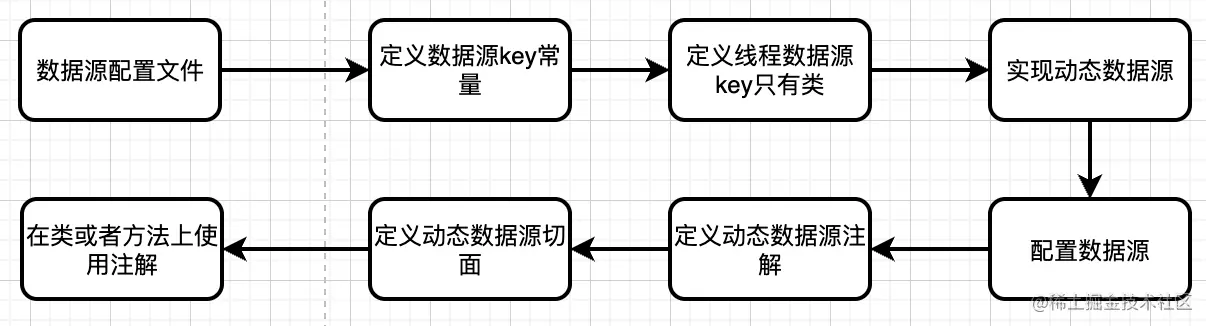
动态数据源流程
Spring Boot 的动态数据源,本质上是把多个数据源存储在一个 Map 中,当需要使用某个数据源时,从 Map 中获取此数据源进行处理。
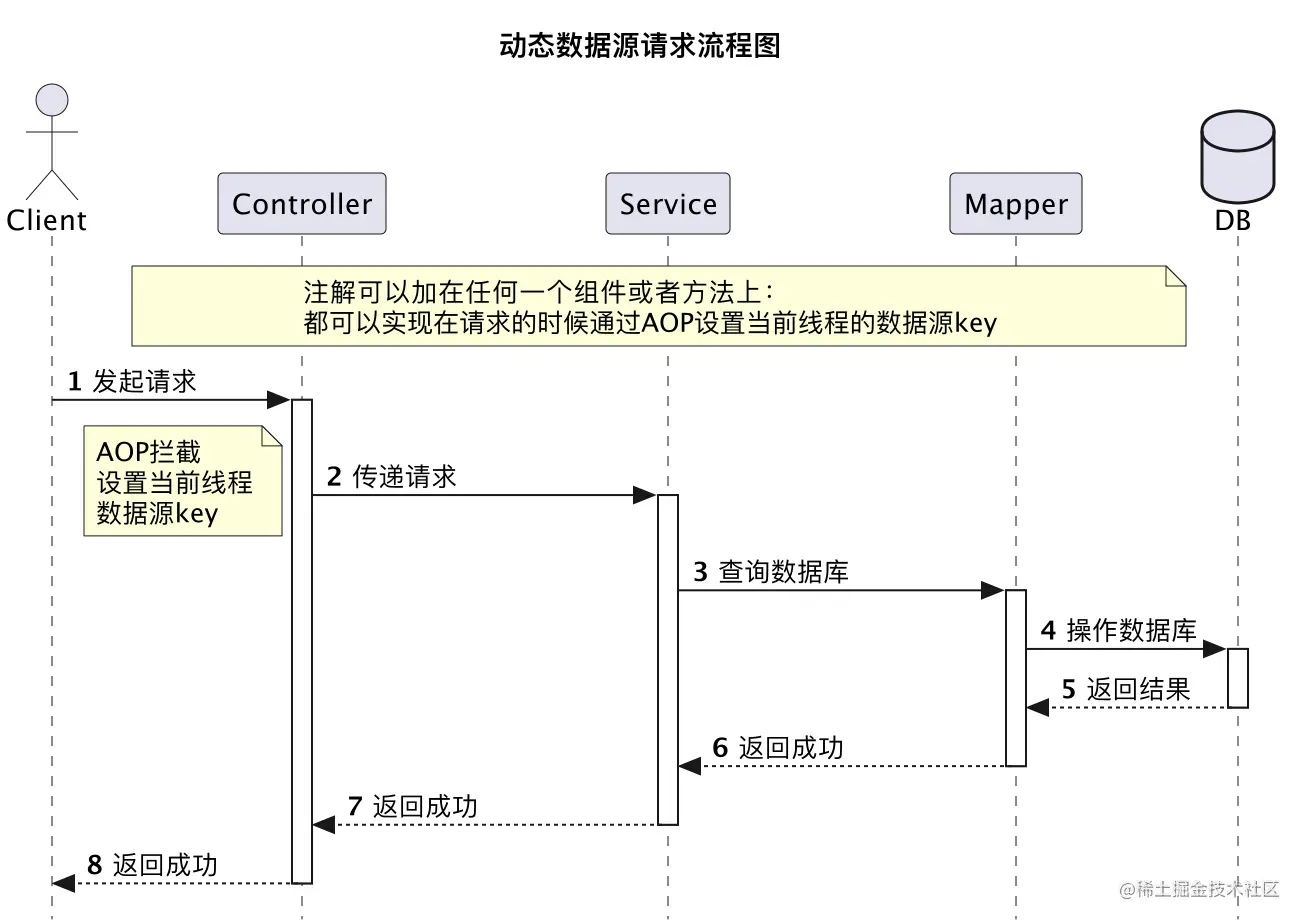
在 Spring 中已提供了抽象类 AbstractRoutingDataSource 来实现此功能,继承AbstractRoutingDataSource类并覆写其determineCurrentLookupKey()方法即可,该方法只需要返回数据源key即可,也就是存放数据源的Map的key。
因此,我们在实现动态数据源的,只需要继承它,实现自己的获取数据源逻辑即可。AbstractRoutingDataSource顶级继承了DataSource,所以它也是可以做为数据源对象,因此项目中使用它作为主数据源。
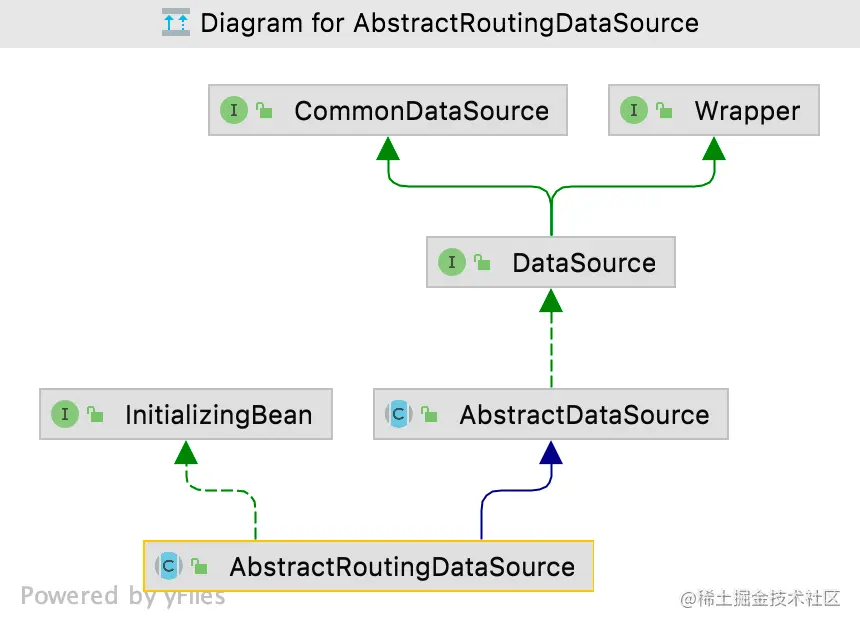
AbstractRoutingDataSource原理
AbstractRoutingDataSource中有一个重要的属性:
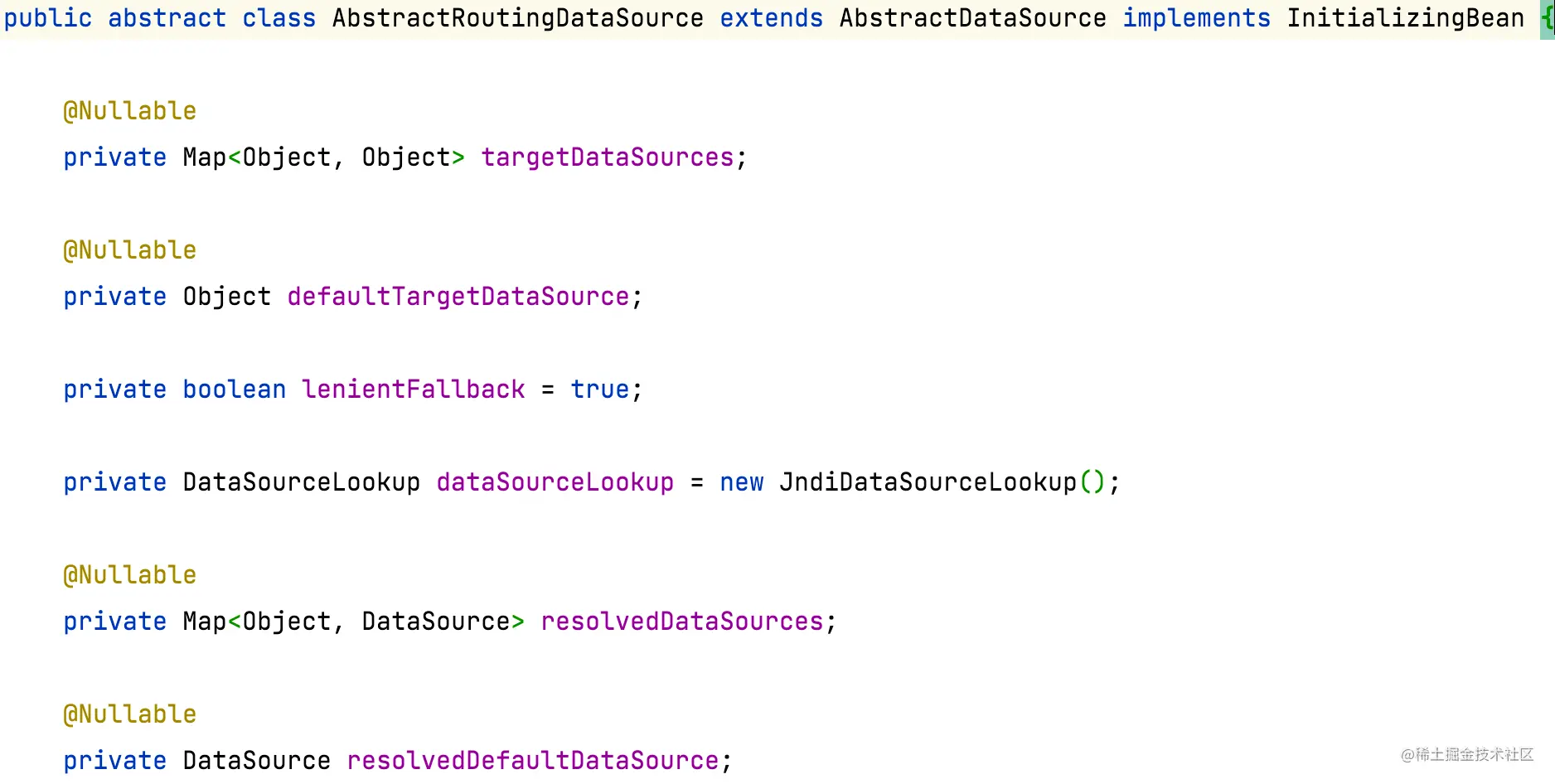
- targetDataSources: 目标数据源,即项目启动的时候设置的需要通过AbstractRoutingDataSource管理的数据源。
- defaultTargetDataSource: 默认数据源,项目启动的时候设置的默认数据源,如果没有指定数据源,默认返回改数据源。
- resolvedDataSources: 也是存放的数据源,是对targetDataSources进行处理后进行存储的。可以看一下源码。
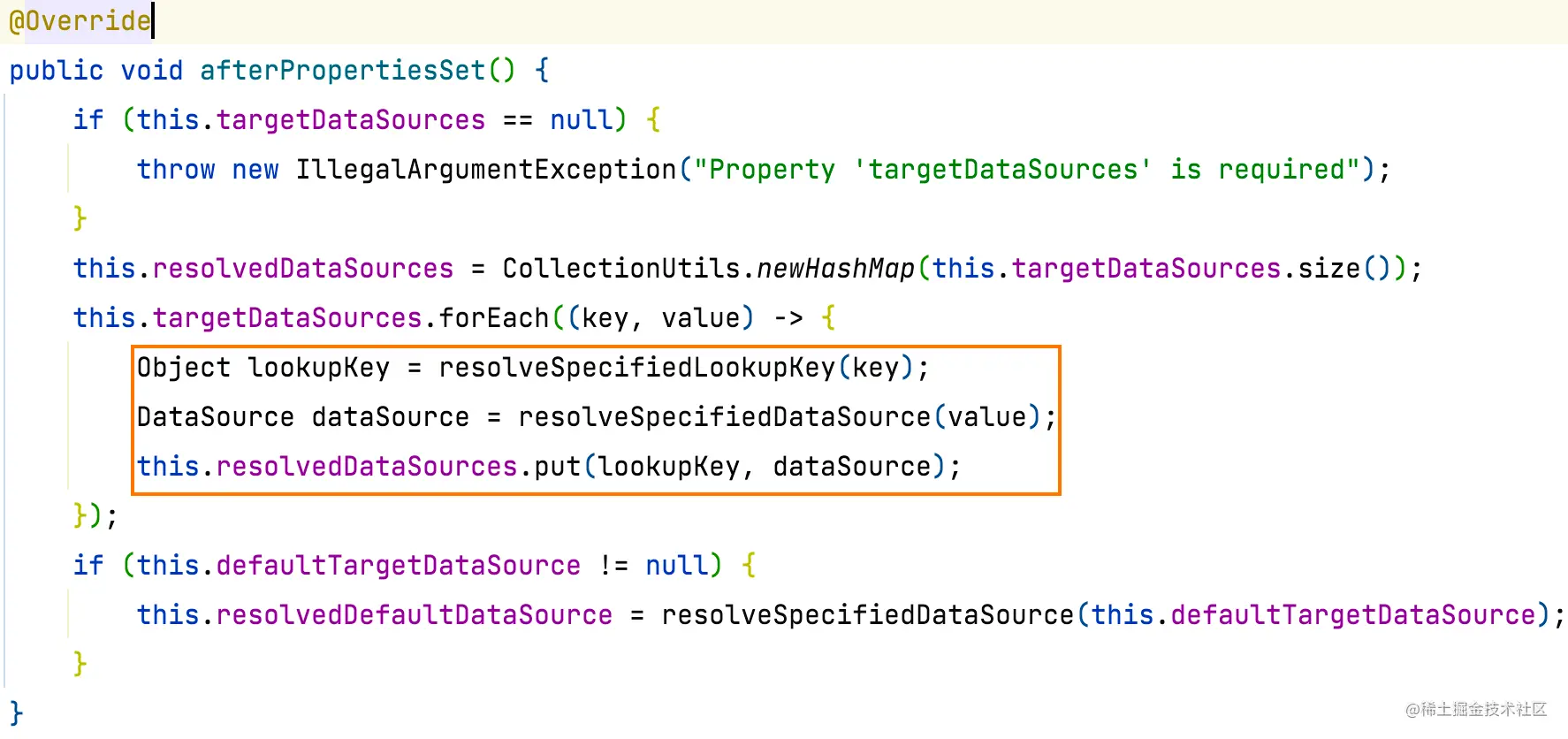
- resolvedDefaultDataSource: 对默认数据源进行了二次处理,源码如上图最后的两行代码。
AbstractRoutingDataSource中所有的方法和属性:

比较重要的是determineTargetDataSource方法。
- protected DataSource determineTargetDataSource() {
- Assert.notNull(this.resolvedDataSources, "DataSource router not initialized");
- Object lookupKey = determineCurrentLookupKey();
- DataSource dataSource = this.resolvedDataSources.get(lookupKey);
- if (dataSource == null && (this.lenientFallback || lookupKey == null)) {
- dataSource = this.resolvedDefaultDataSource;
- }
- if (dataSource == null) {
- throw new IllegalStateException("Cannot determine target DataSource for lookup key [" + lookupKey + "]");
- }
- return dataSource;
- }
-
- /**
- * Determine the current lookup key. This will typically be
- * implemented to check a thread-bound transaction context.
- * <p>Allows for arbitrary keys. The returned key needs
- * to match the stored lookup key type, as resolved by the
- * {@link #resolveSpecifiedLookupKey} method.
- */
- @Nullable
- protected abstract Object determineCurrentLookupKey();
-

这个方法主要就是返回一个DataSource对象,主要逻辑就是先通过方法determineCurrentLookupKey获取一个Object对象的lookupKey,然后通过这个lookupKey到resolvedDataSources中获取数据源(resolvedDataSources就是一个Map,上面已经提到过了);如果没有找到数据源,就返回默认的数据源。determineCurrentLookupKey就是程序员配置动态数据源需要自己实现的方法。
问题
配置多数据源后启动项目报错:Property 'sqlSessionFactory' or 'sqlSession Template' are required。
翻译过来就是:需要属性“sqlSessionFactory”或“sqlSessionTemplate”。也就是说 注入数据源的时候需要这两个数据,但是这两个属性在启动容器中没有找到。
当引入mybatis-plus依赖mybatis-plus-boot-starter后,会添加一个自动配置类 MybatisPlusAutoConfiguration 。 其中有两个方法sqlSessionFactory()、sqlSessionTemplate()。这两个方法就是 给容器中注入“sqlSessionFactory”或“sqlSessionTemplate”两个属性。
-
- @Configuration(
- proxyBeanMethods = false
- )
- @ConditionalOnClass({SqlSessionFactory.class, SqlSessionFactoryBean.class})
- @ConditionalOnSingleCandidate(DataSource.class)
- @EnableConfigurationProperties({MybatisPlusProperties.class})
- @AutoConfigureAfter({DataSourceAutoConfiguration.class, MybatisPlusLanguageDriverAutoConfiguration.class})
- public class MybatisPlusAutoConfiguration implements InitializingBean {
- @Bean
- @ConditionalOnMissingBean
- public SqlSessionFactory sqlSessionFactory(DataSource dataSource) throws Exception {
- MybatisSqlSessionFactoryBean factory = new MybatisSqlSessionFactoryBean();
- factory.setDataSource(dataSource);
- factory.setVfs(SpringBootVFS.class);
- if (StringUtils.hasText(this.properties.getConfigLocation())) {
- factory.setConfigLocation(this.resourceLoader.getResource(this.properties.getConfigLocation()));
- }
-
- this.applyConfiguration(factory);
- if (this.properties.getConfigurationProperties() != null) {
- factory.setConfigurationProperties(this.properties.getConfigurationProperties());
- }
-
- if (!ObjectUtils.isEmpty(this.interceptors)) {
- factory.setPlugins(this.interceptors);
- }
-
- if (this.databaseIdProvider != null) {
- factory.setDatabaseIdProvider(this.databaseIdProvider);
- }
-
- if (StringUtils.hasLength(this.properties.getTypeAliasesPackage())) {
- factory.setTypeAliasesPackage(this.properties.getTypeAliasesPackage());
- }
-
- if (this.properties.getTypeAliasesSuperType() != null) {
- factory.setTypeAliasesSuperType(this.properties.getTypeAliasesSuperType());
- }
-
- if (StringUtils.hasLength(this.properties.getTypeHandlersPackage())) {
- factory.setTypeHandlersPackage(this.properties.getTypeHandlersPackage());
- }
-
- if (!ObjectUtils.isEmpty(this.typeHandlers)) {
- factory.setTypeHandlers(this.typeHandlers);
- }
-
- if (!ObjectUtils.isEmpty(this.properties.resolveMapperLocations())) {
- factory.setMapperLocations(this.properties.resolveMapperLocations());
- }
-
- Objects.requireNonNull(factory);
- this.getBeanThen(TransactionFactory.class, factory::setTransactionFactory);
- Class<? extends LanguageDriver> defaultLanguageDriver = this.properties.getDefaultScriptingLanguageDriver();
- if (!ObjectUtils.isEmpty(this.languageDrivers)) {
- factory.setScriptingLanguageDrivers(this.languageDrivers);
- }
-
- Optional var10000 = Optional.ofNullable(defaultLanguageDriver);
- Objects.requireNonNull(factory);
- var10000.ifPresent(factory::setDefaultScriptingLanguageDriver);
- this.applySqlSessionFactoryBeanCustomizers(factory);
- GlobalConfig globalConfig = this.properties.getGlobalConfig();
- Objects.requireNonNull(globalConfig);
- this.getBeanThen(MetaObjectHandler.class, globalConfig::setMetaObjectHandler);
- this.getBeansThen(IKeyGenerator.class, (i) -> {
- globalConfig.getDbConfig().setKeyGenerators(i);
- });
- Objects.requireNonNull(globalConfig);
- this.getBeanThen(ISqlInjector.class, globalConfig::setSqlInjector);
- Objects.requireNonNull(globalConfig);
- this.getBeanThen(IdentifierGenerator.class, globalConfig::setIdentifierGenerator);
- factory.setGlobalConfig(globalConfig);
- return factory.getObject();
- }
-
- @Bean
- @ConditionalOnMissingBean
- public SqlSessionTemplate sqlSessionTemplate(SqlSessionFactory sqlSessionFactory) {
- ExecutorType executorType = this.properties.getExecutorType();
- return executorType != null ? new SqlSessionTemplate(sqlSessionFactory, executorType) : new SqlSessionTemplate(sqlSessionFactory);
- }
- }
-
这里主要关注配置类上面的注解,详细如下:
- @Configuration(
- proxyBeanMethods = false
- )
- // 当类路径下有SqlSessionFactory.class、SqlSessionFactoryBean.class时才生效
- @ConditionalOnClass({SqlSessionFactory.class, SqlSessionFactoryBean.class})
- // 容器中只能有一个符合条件的DataSource
- // 因为容器中有3个数据源,且没有指定主数据源,这个条件不通过,就不会初始化这个配置类了
- @ConditionalOnSingleCandidate(DataSource.class)
- @EnableConfigurationProperties({MybatisPlusProperties.class})
- @AutoConfigureAfter({DataSourceAutoConfiguration.class, MybatisPlusLanguageDriverAutoConfiguration.class})
- public class MybatisPlusAutoConfiguration implements InitializingBean {
-
- }
-
因为MybatisPlusAutoConfiguration不满足@ConditionalOnSingleCandidate(DataSource.class) 条件,所以自动配置不会生效,就不会执行sqlSessionFactory()、sqlSessionTemplate()两个方法。 容器中就不会有sqlSessionFactory、sqlSessionTemplate 两个bean对象,因此会报错。
所以在数据源配置类中的动态数据源配置上添加@Primary注解即可。
- @Configuration
- @PropertySource("classpath:config/jdbc.properties")
- @MapperScan(basePackages = {"com.xinxing.learning.datasource.mapper"})
- public class DynamicDataSourceConfig {
- @Bean
- @Primary
- public DataSource dynamicDataSource() {
- Map<Object, Object> targetDataSource = new HashMap<>();
- targetDataSource.put(DataSourceConstants.DS_KEY_MASTER, masterDataSource());
- targetDataSource.put(DataSourceConstants.DS_KEY_SLAVE, slaveDataSource());
-
- DynamicDataSource dataSource = new DynamicDataSource();
- dataSource.setTargetDataSources(targetDataSource);
- dataSource.setDefaultTargetDataSource(masterDataSource());
-
- return dataSource;
- }
- }