热门标签
热门文章
- 1【Java基础系列】JDK21新特性
- 2为什么说C语言是面向过程的?
- 3解决vmware虚拟机和宿主机之间不能复制粘贴问题_vm复制不能粘贴到主机
- 4何为.sh文件?_.sh是什么脚本
- 5卸载 vmware-tools.pl和安装 vmware-tools.pl失败了,谁能解?_enter yes to proceed. [no] input: [no] default exe
- 6pl/sql编程(五)触发器_hghukfh
- 7初级通信工程师-职业道德
- 8Idea修改Git账号及密码的方法_idea修改git用户名和密码
- 9目标检测算法——YOLOv5/YOLOv7改进之结合SIoU_姿态损失 形状损失 运动估计损失
- 10docker网络
当前位置: article > 正文
工厂模式与shared_ptr_shared_ptr c++ 工厂模式
作者:编程谜题解决者 | 2024-01-31 18:49:09
赞
踩
shared_ptr c++ 工厂模式
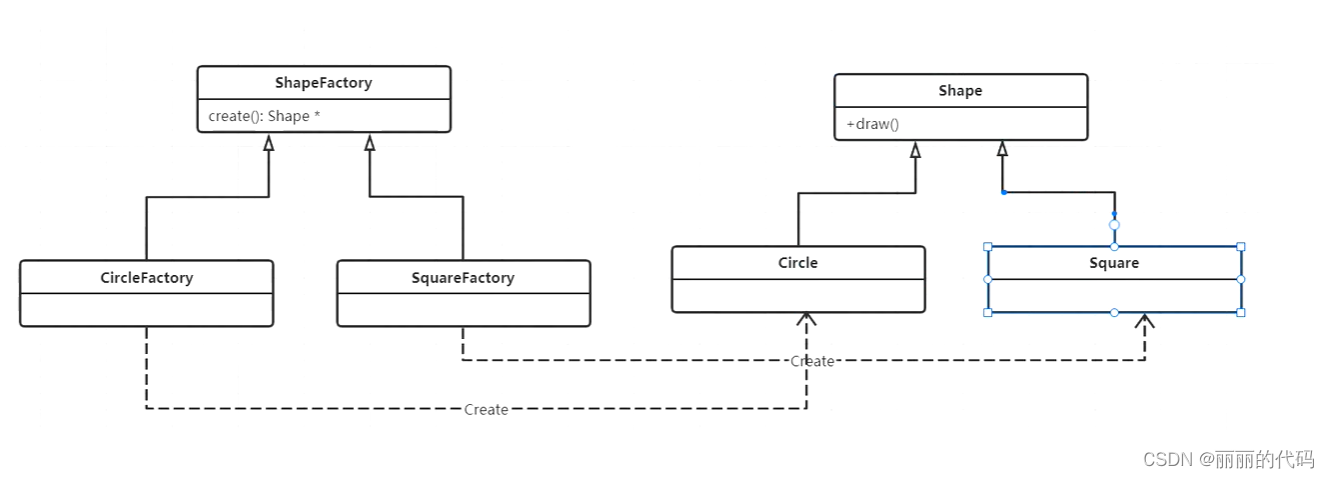
工厂模式图
c++为什么涉及到虚函数时要将基类的析构函数设计为虚函数
要回答这个问题,首先需要弄清楚的问题是,在C++中类的构造函数、析构函数的调用次序是什么?
这里指假设基类和派生类的成员中,包含其他类的对象。
在C++中,构造函数的调用次序是:
基类的成员->基类的构造函数体->派生类的成员->派生类的构造函数体
析构函数的调用次序是:
派生类的析构函数->派生类的成员析构->基类的析构函数->基类的成员析构
#include <iostream>
using namespace std;

class AA
{
public:
    AA()
    {
        cout<<"AA Construct"<<endl;
    }

    ~AA()
    {
        cout<<"AA Destroy"<<endl;
    }
};

class BB
{
public:
    BB()
    {
        cout<<"BB Construct"<<endl;
    }

    ~BB()
    {
        cout<<"BB Destroy"<<endl;
    }
};

class Base
{
public:
    Base()
    {
        cout<<"Base Construct"<<endl;
    }

    ~Base()
    {
        cout<<"Base Destroy"<<endl;
    }
private:
    AA aa;
};

class Derive: public Base
{
public:
    Derive()
    {
        cout<<"Derive Construct"<<endl;
    }

    ~Derive()
    {
        cout<<"Derive Destroy"<<endl;
    }
private:
    BB bb;
};

int main()
{
    Base *p = new Derive;
    delete p;
    /*运行结果
    AA Construct
    Base Construct
    BB Construct
    Derive Construct
    Base Destroy
    AA Destroy
    */
}

- 1
- 2
- 3
- 4
- 5
- 6
- 7
- 8
- 9
- 10
- 11
- 12
- 13
- 14
- 15
- 16
- 17
- 18
- 19
- 20
- 21
- 22
- 23
- 24
- 25
- 26
- 27
- 28
- 29
- 30
- 31
- 32
- 33
- 34
- 35
- 36
- 37
- 38
- 39
- 40
- 41
- 42
- 43
- 44
- 45
- 46
- 47
- 48
- 49
- 50
- 51
- 52
- 53
- 54
- 55
- 56
- 57
- 58
- 59
- 60
- 61
- 62
- 63
- 64
- 65
- 66
- 67
- 68
- 69
- 70
- 71
- 72
- 73
- 74
- 75
- 76
从程序的运行情况来看,我们不难发现,在最后释放指针p所指向的对象时,只释放了基类的部分,没有释放派生类的部分。这是因为,指针p声明时是基类的指针,而基类的析构函数不是虚函数,所以调用那个析构函数是在编译时确定的。如果要执行正确的析构顺序,需要将基类的析构函数定义为 virtual, 这样派生类的析构函数就自动是virtual的了,在最后释放指针p时,按照RTTI,执行p所指真实对象的析构函数
工厂模式代码
//当类里面没有数据只有纯虚方法时称之为接口
class Shape // 接口
{
public:
	Shape() { cout << "Shape" << endl; }
	virtual ~Shape() { cout << "~Shape" << endl; }
	virtual void draw() = 0;
	virtual void erase() = 0;
};

class Circle : public Shape
{
public:
	Circle() { cout << "Circle" << endl; }
	virtual ~Circle() { cout << "~Circle" << endl; }
	void draw() { cout << "circle::draw" << endl; }
	void erase() { cout << "circle::erase" << endl; }
};

class Square : public Shape
{
public:
	Square() { cout << "Square" << endl; }
	virtual ~Square() { cout << "~Square" << endl; }
	void draw() { cout << "Square::draw" << endl; }
	void erase() { cout << "Square::erase" << endl; }
};


class ShapeFactory//工厂
{
public:
	ShapeFactory() { cout << "ShapeFactory" << endl; }
	virtual ~ShapeFactory() { cout << "~ShapeFactory" << endl; }

	virtual Shape* create() = 0;
};
class CircleFactory : public  ShapeFactory
{
public:
	CircleFactory() { cout << "CircleFactory" << endl; }
	~CircleFactory() { cout << "~CircleFactory" << endl; }
	virtual Shape* create()
	{
		return new Circle();
	}
};

class SquareFactory : public  ShapeFactory
{
public:
	SquareFactory() { cout << "SquareFactory" << endl; }
	~SquareFactory() { cout << "~SquareFactory" << endl; }
	virtual Shape* create()
	{
		return new Square();
	}
};

int main()
{
	ShapeFactory* factory = new SquareFactory();
	Shape* shape = factory->create();
	shape->draw();
	shape->erase();

	factory = new CircleFactory();
	shape = factory->create();
	shape->draw();
	shape->erase();
	return 0;
}
- 1
- 2
- 3
- 4
- 5
- 6
- 7
- 8
- 9
- 10
- 11
- 12
- 13
- 14
- 15
- 16
- 17
- 18
- 19
- 20
- 21
- 22
- 23
- 24
- 25
- 26
- 27
- 28
- 29
- 30
- 31
- 32
- 33
- 34
- 35
- 36
- 37
- 38
- 39
- 40
- 41
- 42
- 43
- 44
- 45
- 46
- 47
- 48
- 49
- 50
- 51
- 52
- 53
- 54
- 55
- 56
- 57
- 58
- 59
- 60
- 61
- 62
- 63
- 64
- 65
- 66
- 67
- 68
- 69
- 70
- 71
- 72
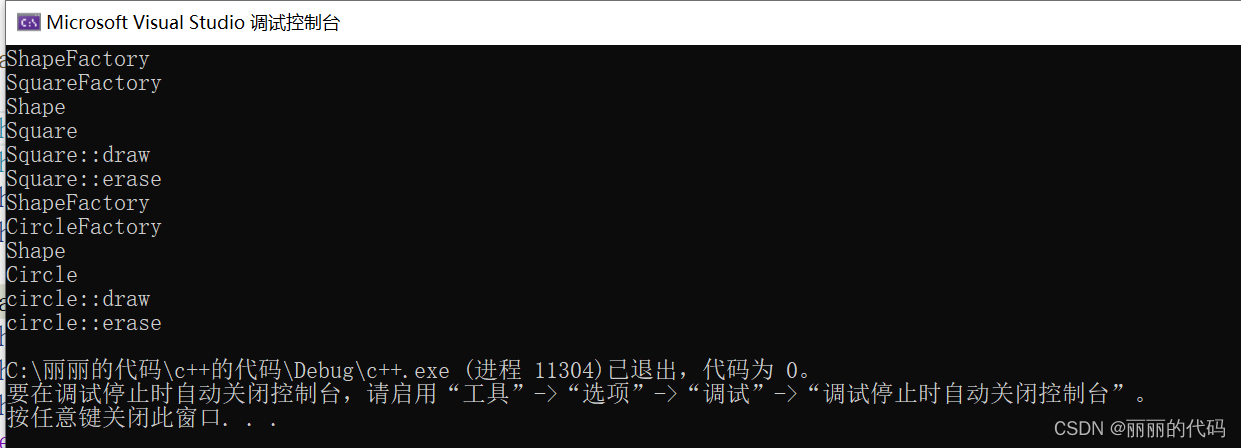
#include<iostream>
#include<atomic>
#include<string>
#include<map>
//key_value键值对,和值
using namespace std;
//当类里面没有数据只有纯虚方法时称之为接口
class Shape // 接口
{
public:
	Shape() { cout << "Shape" << endl; }
	virtual ~Shape() { cout << "~Shape" << endl; }
	virtual void draw() = 0;
	virtual void erase() = 0;
};

class Circle : public Shape
{
public:
	Circle() { cout << "Circle" << endl; }
	virtual ~Circle() { cout << "~Circle" << endl; }
	void draw() { cout << "circle::draw" << endl; }
	void erase() { cout << "circle::erase" << endl; }
};

class Square : public Shape
{
public:
	Square() { cout << "Square" << endl; }
	virtual ~Square() { cout << "~Square" << endl; }
	void draw() { cout << "Square::draw" << endl; }
	void erase() { cout << "Square::erase" << endl; }
};


class ShapeFactory//工厂
{
public:
	ShapeFactory() { cout << "ShapeFactory" << endl; }
	virtual ~ShapeFactory() { cout << "~ShapeFactory" << endl; }
	virtual Shape* create() = 0;
public:
	static std::map<string, ShapeFactory*> factories;
	//              key       value
	//             ShapeName;
	static Shape* createShape(const string& id)
	{
		if (factories.find(id) != factories.end())
		{
			return factories[id]->create();
		}
		else
		{
			return nullptr;
		}
	}
};
//静态成员的初始化
std::map<string, ShapeFactory*> ShapeFactory::factories;

class CircleFactroy : public  ShapeFactory
{
public:
	CircleFactroy() { cout << "CircleFactroy" << endl; }
	~CircleFactroy() { cout << "~CircleFactroy" << endl; }
	virtual Shape* create()
	{
		return new Circle();
	}
};

class SquareFactroy : public  ShapeFactory
{
public:
	SquareFactroy() { cout << "SquareFactroy" << endl; }
	~SquareFactroy() { cout << "~SquareFactroy" << endl; }
	virtual Shape* create()
	{
		return new Square();
	}
};
//形状工厂的初始化,主要负责初始map
class ShapeFactoryInitializer
{//不能在类里面定义一个类型成员会无限递归下去,使用static
	static ShapeFactoryInitializer si;
	ShapeFactoryInitializer()
	{
		// key  value ShapeFactroy *
		ShapeFactory::factories["Circle"] = new CircleFactroy();
		ShapeFactory::factories["Square"] = new SquareFactroy();
	}
};
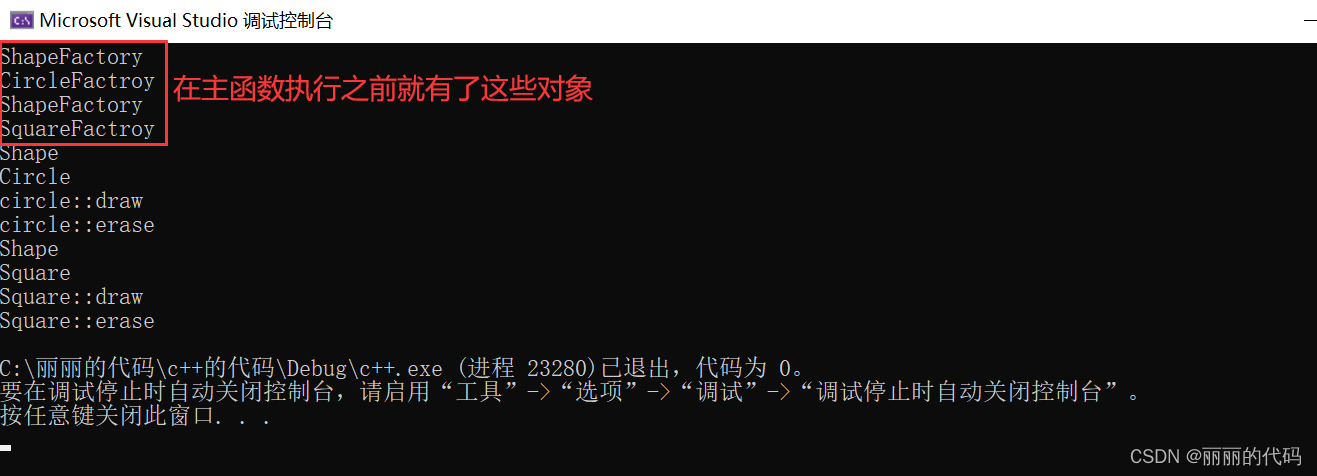
//下面这行代码会在主函数之前生成CircleFactroy和SquareFactroy对象
ShapeFactoryInitializer ShapeFactoryInitializer::si;

// Client
int main()
{
	Shape* shape = ShapeFactory::createShape("Circle");

	shape->draw();
	shape->erase();

	shape = ShapeFactory::createShape("Square");

	shape->draw();
	shape->erase();


	return 0;
}
- 1
- 2
- 3
- 4
- 5
- 6
- 7
- 8
- 9
- 10
- 11
- 12
- 13
- 14
- 15
- 16
- 17
- 18
- 19
- 20
- 21
- 22
- 23
- 24
- 25
- 26
- 27
- 28
- 29
- 30
- 31
- 32
- 33
- 34
- 35
- 36
- 37
- 38
- 39
- 40
- 41
- 42
- 43
- 44
- 45
- 46
- 47
- 48
- 49
- 50
- 51
- 52
- 53
- 54
- 55
- 56
- 57
- 58
- 59
- 60
- 61
- 62
- 63
- 64
- 65
- 66
- 67
- 68
- 69
- 70
- 71
- 72
- 73
- 74
- 75
- 76
- 77
- 78
- 79
- 80
- 81
- 82
- 83
- 84
- 85
- 86
- 87
- 88
- 89
- 90
- 91
- 92
- 93
- 94
- 95
- 96
- 97
- 98
- 99
- 100
- 101
- 102
- 103
- 104
- 105
- 106
- 107
- 108
- 109
- 110
- 111
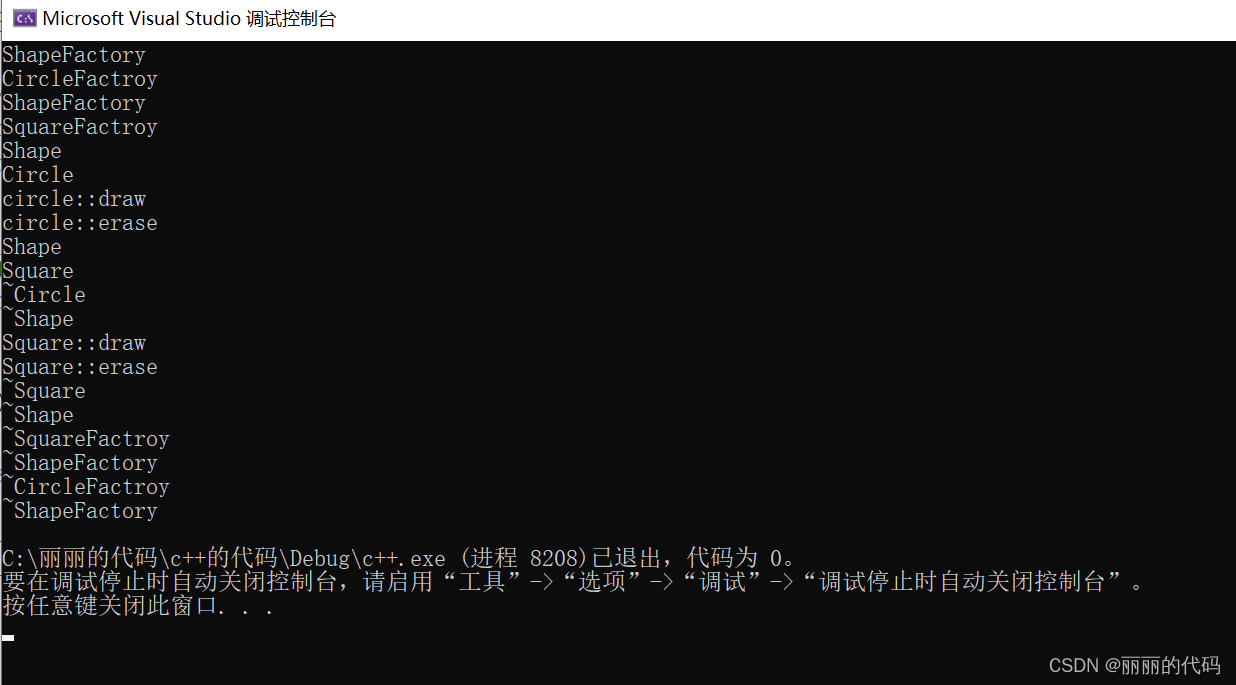
#include<iostream>
#include<atomic>
#include<string>
#include<map>
#include<memory>
//当类里面没有数据只有纯虚方法时称之为接口
class Shape // 接口
{
public:
	Shape() { cout << "Shape" << endl; }
	virtual ~Shape() { cout << "~Shape" << endl; }
	virtual void draw() = 0;
	virtual void erase() = 0;
};

class Circle : public Shape
{
public:
	Circle() { cout << "Circle" << endl; }
	virtual ~Circle() { cout << "~Circle" << endl; }
	void draw() { cout << "circle::draw" << endl; }
	void erase() { cout << "circle::erase" << endl; }
};

class Square : public Shape
{
public:
	Square() { cout << "Square" << endl; }
	virtual ~Square() { cout << "~Square" << endl; }
	void draw() { cout << "Square::draw" << endl; }
	void erase() { cout << "Square::erase" << endl; }
};


class ShapeFactory//工厂
{
public:
	ShapeFactory() { cout << "ShapeFactory" << endl; }
	virtual ~ShapeFactory() { cout << "~ShapeFactory" << endl; }
	virtual std::shared_ptr<Shape> create() = 0;
public:
	static std::map<string, std::shared_ptr<ShapeFactory>> factories;
	//              key       value
	//             ShapeName;
	static std::shared_ptr<Shape> createShape(const string& id)
	{
		if (factories.find(id) != factories.end())
		{
			return factories[id]->create();
		}
		else
		{
			return nullptr;
		}
	}
};
//静态成员的初始化
std::map<string, std::shared_ptr<ShapeFactory>> ShapeFactory::factories;

class CircleFactroy : public  ShapeFactory
{
public:
	CircleFactroy() { cout << "CircleFactroy" << endl; }
	~CircleFactroy() { cout << "~CircleFactroy" << endl; }
	virtual std::shared_ptr<Shape> create()
	{
		return std::make_shared<Circle>();
	}
};

class SquareFactroy : public  ShapeFactory
{
public:
	SquareFactroy() { cout << "SquareFactroy" << endl; }
	~SquareFactroy() { cout << "~SquareFactroy" << endl; }
	virtual std::shared_ptr<Shape> create()
	{
		return std::make_shared<Square>();
	}
};
//形状工厂的初始化,主要负责初始map
class ShapeFactoryInitializer
{//不能在类里面定义一个类型成员会无限递归下去,使用static
	static ShapeFactoryInitializer si;
	ShapeFactoryInitializer()
	{
		// key  value ShapeFactroy *
		ShapeFactory::factories["Circle"] = std::make_shared<CircleFactroy>();//new CircleFactroy();
		ShapeFactory::factories["Square"] = std::make_shared<SquareFactroy>();//new SquareFactroy();
	}
};
//下面这行代码会在主函数之前生成CircleFactroy和SquareFactroy对象
ShapeFactoryInitializer ShapeFactoryInitializer::si;

// Client
int main()
{
	std::shared_ptr<Shape> shape = ShapeFactory::createShape("Circle");

	shape->draw();
	shape->erase();

	shape = ShapeFactory::createShape("Square");

	shape->draw();
	shape->erase();

	return 0;
}
- 1
- 2
- 3
- 4
- 5
- 6
- 7
- 8
- 9
- 10
- 11
- 12
- 13
- 14
- 15
- 16
- 17
- 18
- 19
- 20
- 21
- 22
- 23
- 24
- 25
- 26
- 27
- 28
- 29
- 30
- 31
- 32
- 33
- 34
- 35
- 36
- 37
- 38
- 39
- 40
- 41
- 42
- 43
- 44
- 45
- 46
- 47
- 48
- 49
- 50
- 51
- 52
- 53
- 54
- 55
- 56
- 57
- 58
- 59
- 60
- 61
- 62
- 63
- 64
- 65
- 66
- 67
- 68
- 69
- 70
- 71
- 72
- 73
- 74
- 75
- 76
- 77
- 78
- 79
- 80
- 81
- 82
- 83
- 84
- 85
- 86
- 87
- 88
- 89
- 90
- 91
- 92
- 93
- 94
- 95
- 96
- 97
- 98
- 99
- 100
- 101
- 102
- 103
- 104
- 105
- 106
- 107
- 108
- 109
shared_ptr对象创建方法的讨论
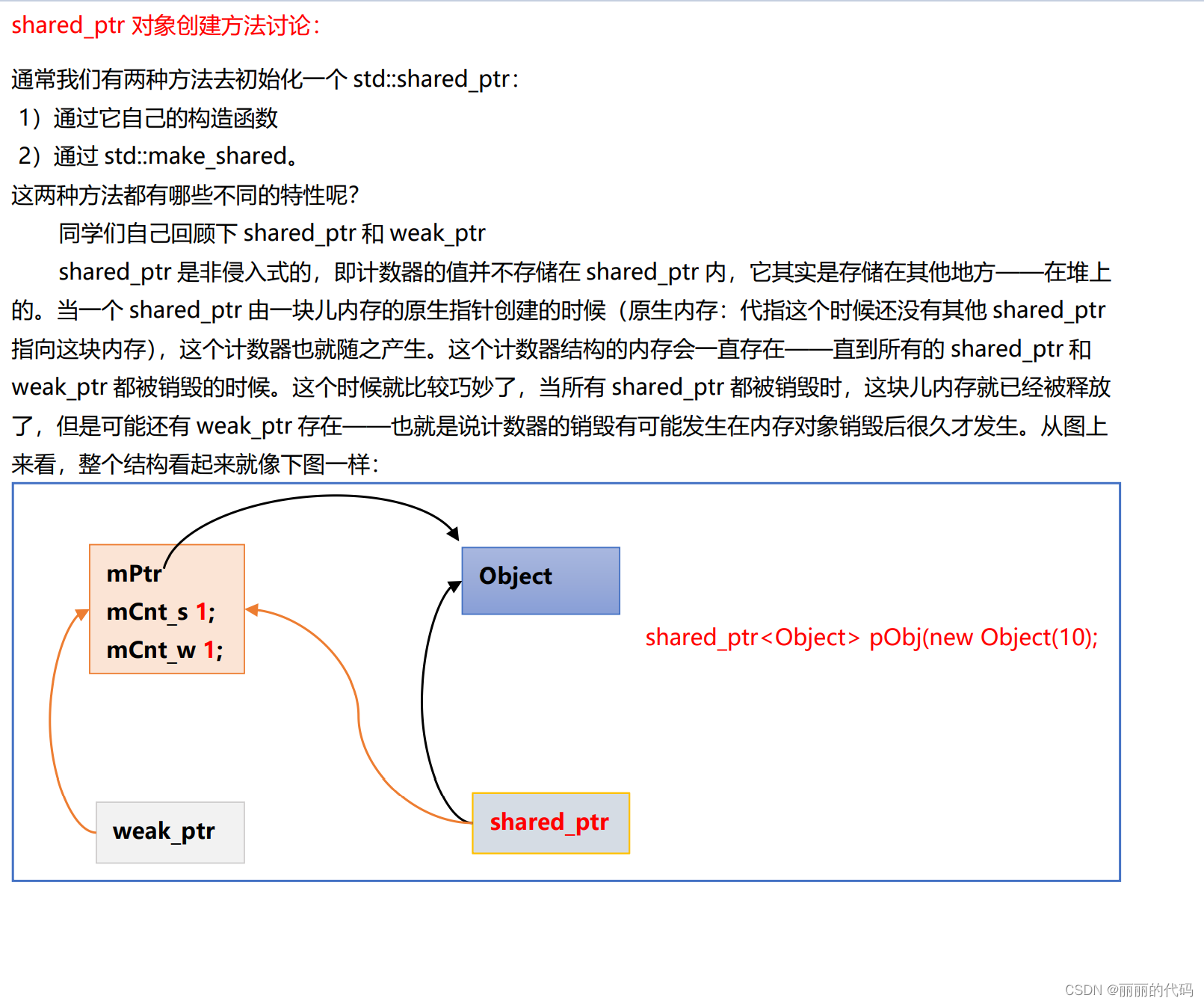
标题make_share的好处
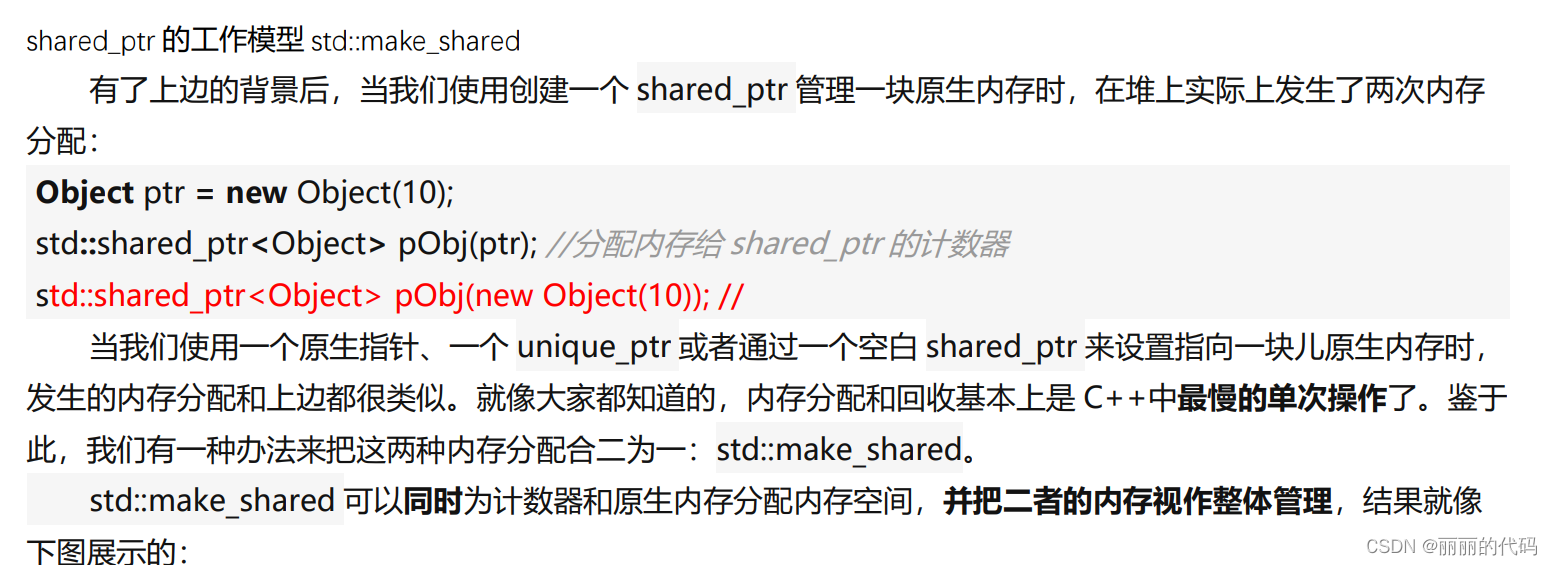
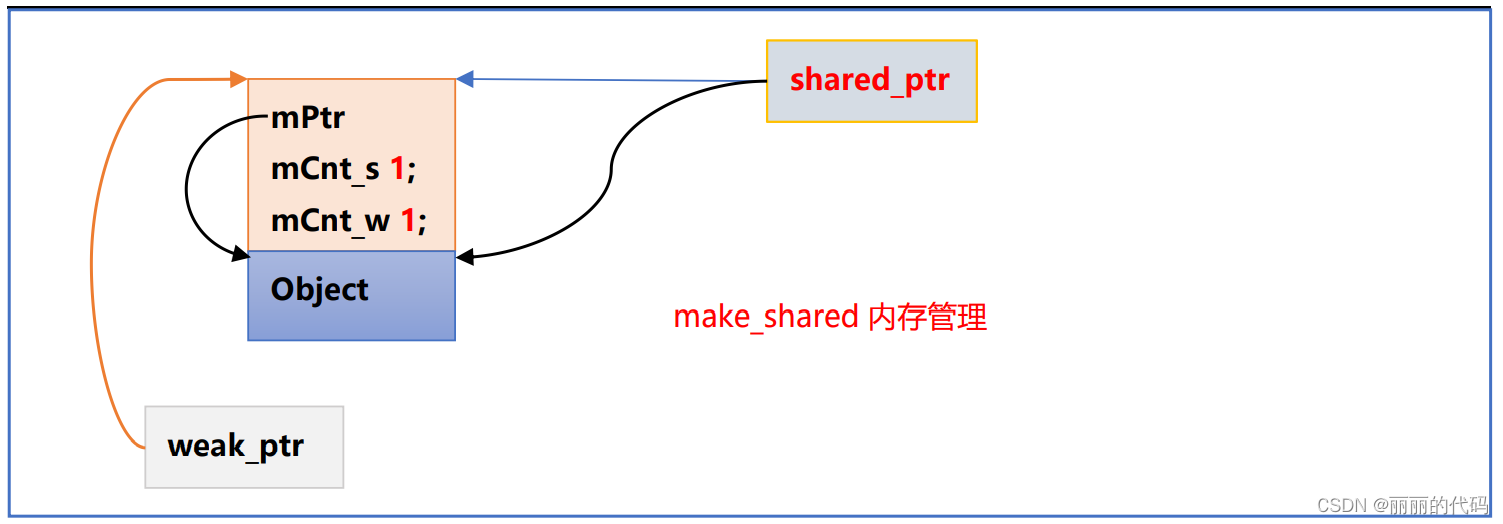
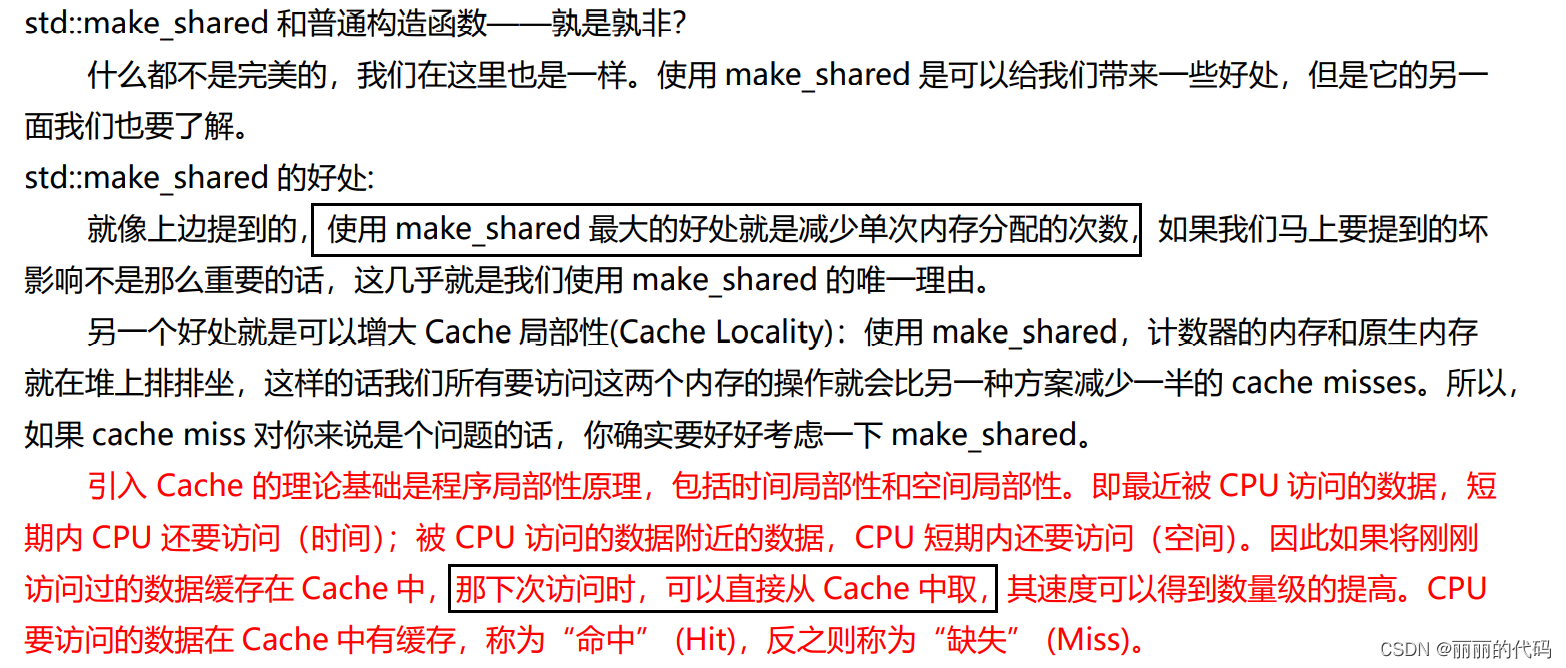
make_share的坏处
声明:本文内容由网友自发贡献,转载请注明出处:【wpsshop】