
热门标签
热门文章
- 1HashSet的实现原理_说一下 hashset 的实现原理
- 2SpringBoot中使用Spring自带线程池ThreadPoolTaskExecutor与Java8CompletableFuture实现异步任务示例
- 3Glance-制作镜像_使用镜像文件centos_7_x86_6420140327.qcow2 创 建 glance 镜 像
- 4常见的DOS命令符总结_1980版bos命令符
- 5Vue:循环遍历(v-for)_vue 遍历
- 6redis的key命名规则_redis命名惯例
- 7Linux基础知识点,详细总结!
- 8C语言:二进制换十进制_c语言二进制转换十进制代码
- 9分享一下,我自己的Python数据分析笔记
- 10华为OD-华为机试精讲500篇系列文章目录介绍(持续补充ing)
当前位置: article > 正文
[机器学习]简单线性回归——最小二乘法
作者:思考机器3 | 2024-01-29 21:00:56
赞
踩
[机器学习]简单线性回归——最小二乘法
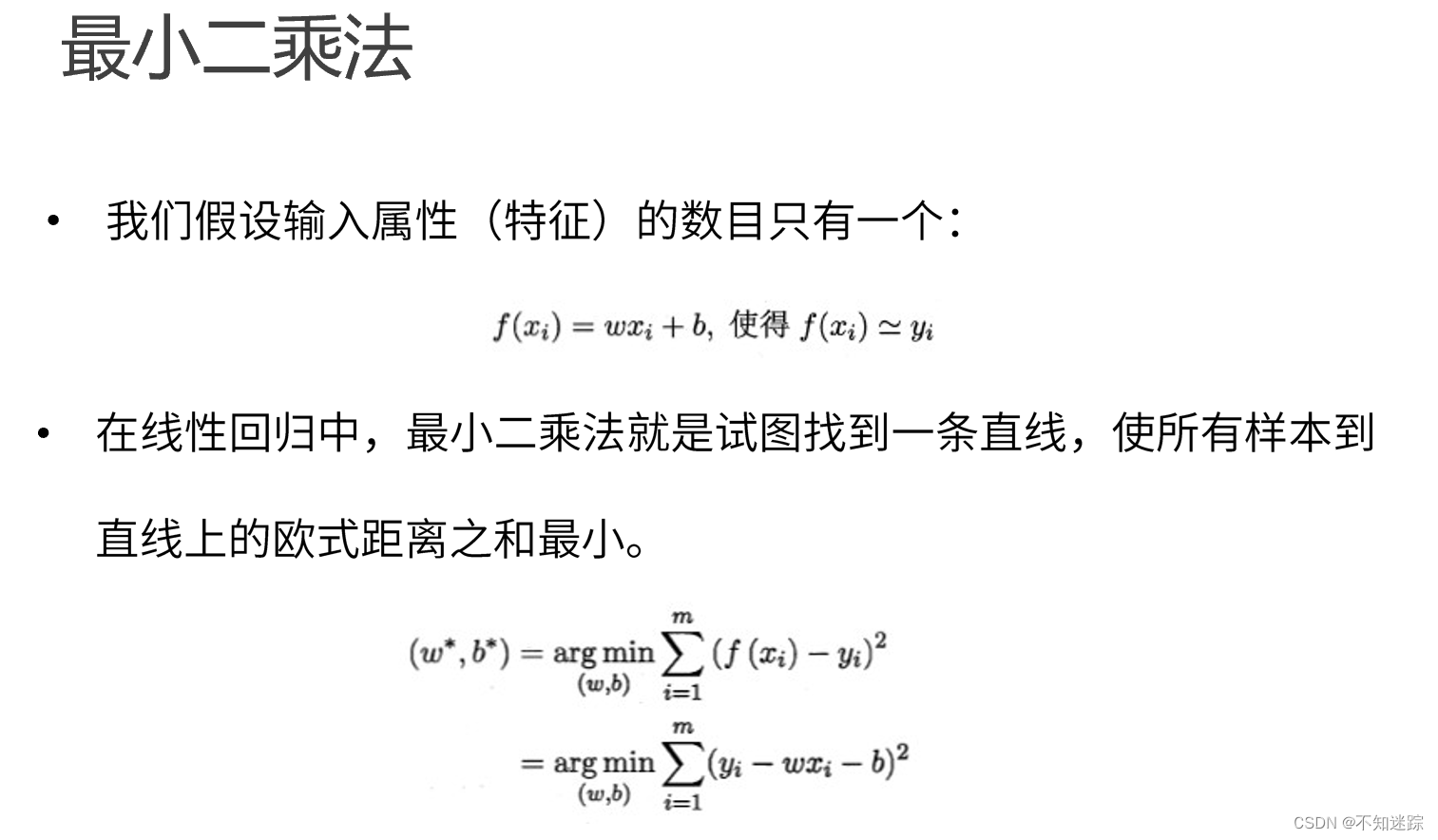
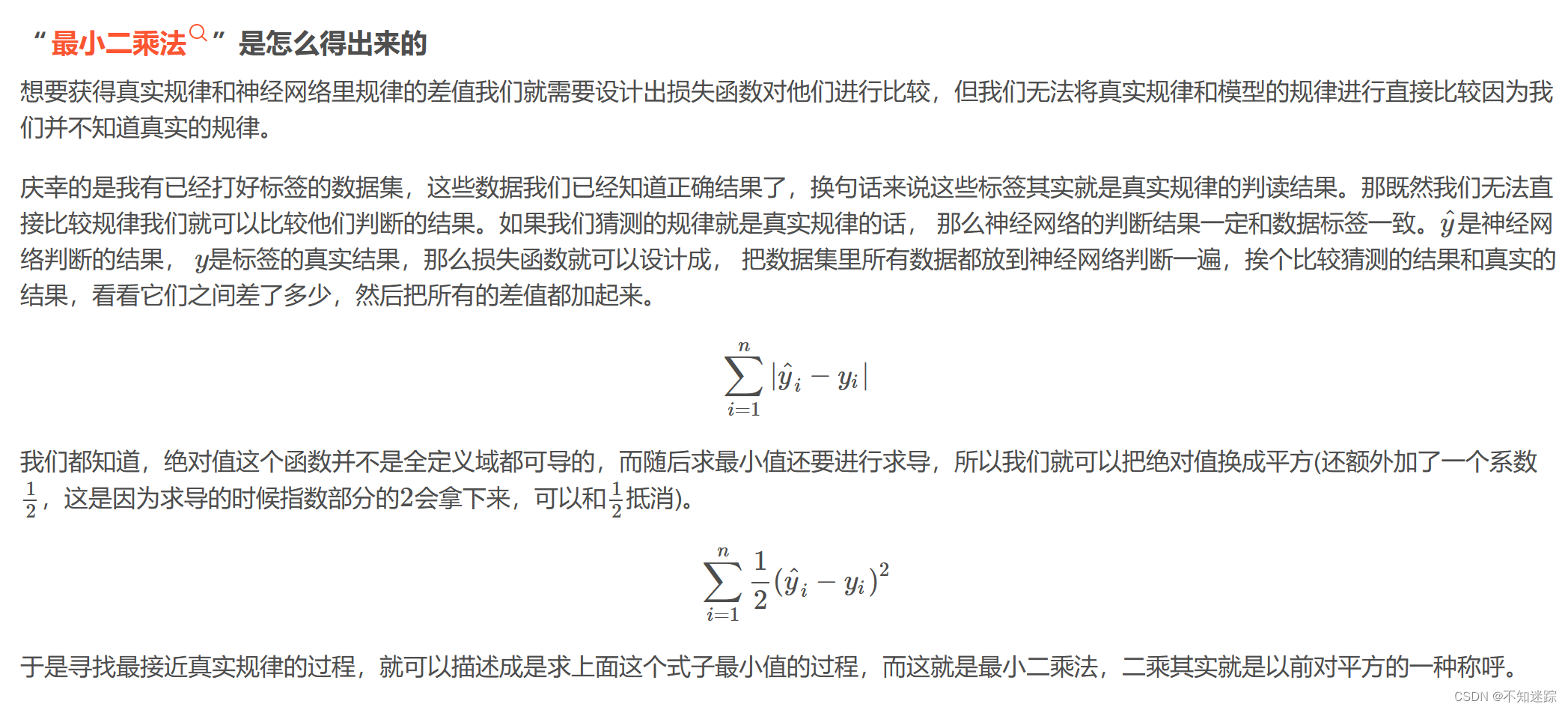
一.线性回归及最小二乘法概念





2.代码实现
- # 0.引入依赖
- import numpy as np
- import matplotlib.pyplot as plt
-
- # 1.导入数据
- points = np.genfromtxt('data.csv', delimiter=',')
- # points[0,0]
-
- # 提取points中的两列数据,分别作为x,y
- x = points[:, 0]
- y = points[:, 1]
-
- # 用plt画出散点图
- # plt.scatter(x, y)
- # plt.show()
-
- # 2.定义损失函数:最小平方损失函数
- # 损失函数是系数的函数,另外还要传入数据的x,y
- def compute_cost(w, b, points):
- total_cost = 0
- M = len(points)
-
- # 逐点计算平方损失误差,然后求平均数
- for i in range(M):
- x = points[i, 0]
- y = points[i, 1]
- total_cost += (y - w * x - b) ** 2
-
- return total_cost / M
-
- # 3.定义算法拟合函数
- # 先定义一个求均值的函数
- def average(data):
- sum = 0
- num = len(data)
- for i in range(num):
- sum += data[i]
- return sum / num
-
-
- # 定义核心拟合函数
- def fit(points):
- M = len(points)
- x_bar = average(points[:, 0])
-
- sum_yx = 0
- sum_x2 = 0
- sum_delta = 0
-
- for i in range(M):
- x = points[i, 0]
- y = points[i, 1]
- sum_yx += y * (x - x_bar)
- sum_x2 += x ** 2
- # 根据公式计算w
- w = sum_yx / (sum_x2 - M * (x_bar ** 2))
-
- for i in range(M):
- x = points[i, 0]
- y = points[i, 1]
- sum_delta += (y - w * x)
- b = sum_delta / M
-
- return w, b
-
- # 4.测试
- w, b = fit(points)
- print("w is: ", w)
- print("b is: ", b)
- cost = compute_cost(w, b, points)
- print("cost is: ", cost)
-
- # 5.画出拟合曲线
- plt.scatter(x, y)
- # 针对每一个x,计算出预测的y值
- pred_y = w * x + b
- plt.plot(x, pred_y, c='r')
- plt.show()

- import numpy as np
- import matplotlib.pyplot as plt
- from sklearn.linear_model import LinearRegression # sklearn库实现
-
- # 1. 导入数据(data.csv)
- points = np.genfromtxt('data.csv', delimiter=',')
- points[0,0]
-
- # 提取points中的两列数据,分别作为x,y
- x = points[:, 0]
- y = points[:, 1]
-
- # 用plt画出散点图
- # plt.scatter(x, y)
- # plt.show()
-
- # 2. 定义损失函数:最小平方损失函数
- # 损失函数是系数的函数,另外还要传入数据的x,y
- def compute_cost(w, b, points):
- total_cost = 0
- M = len(points)
-
- # 逐点计算平方损失误差,然后求平均数
- for i in range(M):
- x = points[i, 0]
- y = points[i, 1]
- total_cost += (y - w * x - b) ** 2
-
- return total_cost / M
-
- lr = LinearRegression()
- x_new = x.reshape(-1, 1) # 将1行数据变为二维数组
- y_new = y.reshape(-1, 1)
- lr.fit(x_new, y_new)
-
- # 3. 从训练好的模型中提取系数和截距:使用的也是最小二乘法
- w = lr.coef_[0][0]
- b = lr.intercept_[0]
-
- print("w is: ", w)
- print("b is: ", b)
-
- cost = compute_cost(w, b, points)
-
- print("cost is: ", cost)
-
- plt.scatter(x, y)
- # 针对每一个x,计算出预测的y值
- pred_y = w * x + b
-
- plt.plot(x, pred_y, c='r')
- plt.show()
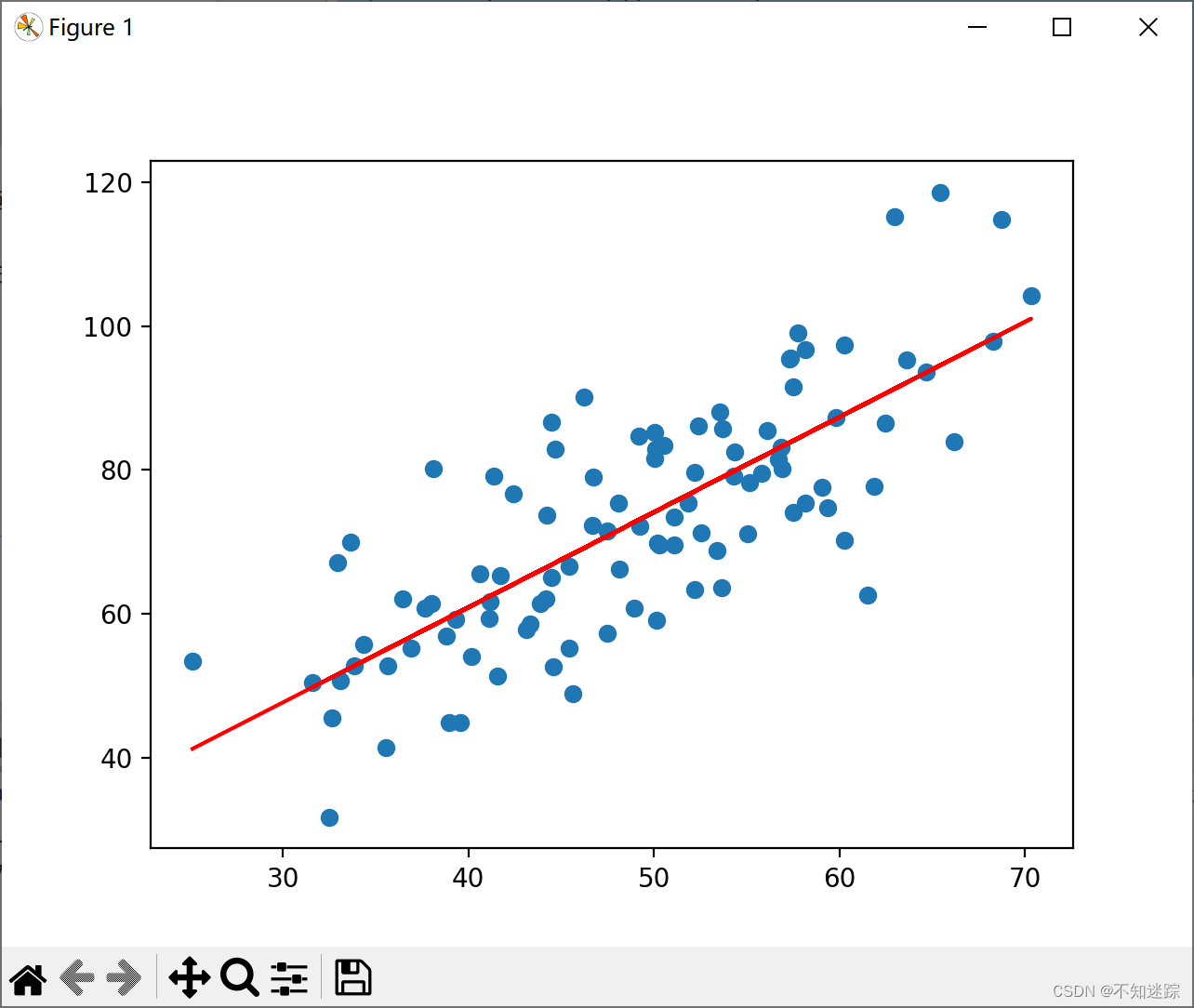
w is: 1.3224310227553846
b is: 7.991020982269173
cost is: 110.25738346621313
3.代码及数据下载
声明:本文内容由网友自发贡献,不代表【wpsshop博客】立场,版权归原作者所有,本站不承担相应法律责任。如您发现有侵权的内容,请联系我们。转载请注明出处:https://www.wpsshop.cn/article/detail/45012
推荐阅读
相关标签

