
- 1【数据结构篇】手写双向链表、单向链表(超详细)_手写链表
- 2HTML5游戏引擎(十五)-时间控制——Timer计时器 & Ticker心跳-startTick-stopTick & 帧事件-ENTER_FRAME_egret stoptick
- 3C++_02_命名空间和作用域运算符
- 4钢管运输模型_钢管订购和运输优化模型lingo程序
- 5百敖飞腾 BIOS开发者手册①_飞腾 uefi
- 6Python 生成验证码_用python生成一个指定长度的验证码,用asllc
- 7解决因数据库返回1117或21等错误导致无法备份,tomcat无法正常启动的问题_2008数据库备份提示1117
- 8window11安装wsl,wsl连接vsCode开发,安装docker、Nginx_wsl2 docker vscode
- 9bzoj4563 [Haoi2016]放棋子_有一个n*n的矩阵,和n个棋子
- 10mysql 批量插入_mysql batchinsert
python3与python2的区别
赞
踩
1.字符编码&字符串类型
python2:默认为Ascii码。其string类型包括了str和unicode。
unicode类型表示字符串序列
str类型表示字节序列
对于中文需要使用utf-8:
#--coding: utf-8-- #encoding=utf-8
- 1
python3:默认为utf-8编码,所有编写的代码都是unicode,python解析器在运行的时候,内部都转换(除非你显示定义为bytes类型)为unicode
str类型表示字符串序列
byte类型表示字节序列
2.包的导入方式
python2:相对路径导入
python3:绝对路径导入
3.缩进
python2:支持space和tab混用,一个tab等于8个space
python3:不支持混用
4.新式类与旧式类
python2:存在老式类与新式类的区别
python3:全部使用新式类
5.bool类型 与int 类型
bool:
python2:True 和False是变量,可以赋值
python3:True和False是关键字,不可变
int:
python2:存在int 和long
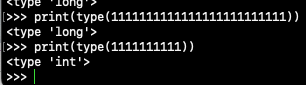
python3:只有int

6.运算符‘/’和‘//’
python2:
‘/’ :若为两个整形数进行运算,结果为整形,但若两个数中有一个为浮点数,则结果为浮点数;
3/2 =1 3.0/2 = 1.5
- 1
python3:
‘/’ :真除法 返回实际结果
‘//’ :向下取整除法
7.异常处理机制
Python2
抛出异常:raise IOError, "error“
捕捉异常:
try
	#
except Errorname,err:
	#
- 1
- 2
- 3
- 4
Python3
抛出异常:raise IOError("file error")
捕捉异常:
try
	#
except Errorname as err:
	#
- 1
- 2
- 3
- 4
8.变量泄露(作者只知道在进行列表推导时会出现这种情况):
i=6
print((i for i in range(4)))#列表推导
print(i)

#python2  输出:[0,1,2,3] 3
#python3  输出:[0,1,2,3] 6
- 1
- 2
- 3
- 4
- 5
- 6
python2:列表推导会修改外部相同名称变量的值
python3:不会
9.输入
python 2: input 默认接收整形数据,str类型要用引号包起来,或用raw_input函数可以接收字符串
python 3: input 函数接收,获得输入类型为字符型
10.部分语句或函数废弃
- print 语句被 Python3 废弃,统一使用 print 函数
print 'hello world'  #python2
print('hello world') #python2 & 3
- 1
- 2
- exec 语句被 python3 废弃,统一使用 exec 函数
- execfile 语句被 Python3 废弃,推荐使用
exec(open("./filename").read()) - 不相等操作符"<>“被 Python3 废弃,统一使用”!="
print(3<>4) #True python2
print(3!=4)#true python2 & 3
- 1
- 2
- long 整数类型被 Python3 废弃,统一使用 int
- xrange 函数被 Python3 废弃,统一使用 range,Python3 中 range 的机制也进行修改并提高了大数据集生成效率
“#range和xrange用法相同,不同的是xrange不是生成一个序列,而是作为一个生成器,即生成一个取出一个
- 1
-
Python3 中这些方法再不再返回 list 对象:dictionary 关联的
keys()、values()、items(),zip(),map(),filter(),但是可以通过 list 强行转换: -
迭代器 iterator 的 next()函数被 Python3 废弃,统一使用 next(iterator)
-
raw_input 函数被 Python3 废弃,统一使用 input 函数
-
字典变量的 has_key 函数被 Python 废弃,统一使用 in 关键词
-
file 函数被 Python3 废弃,统一使用 open 来处理文件,可以通过 io.IOBase 检查文件类型
-
apply 函数被 Python3 废弃
-
异常 StandardError 被 Python3 废弃,统一使用 Exception。

