- 1python 十大经典排序算法_数据排序python
- 2开源项目学习:若依RuoYi-Vue后台管理系统【环境搭建】_后台管理系统vue开源
- 3常见网络安全攻击路径分析与防护建议_攻击路劲如何找关键防御节点
- 4华为机试真题实战应用【赛题代码篇】-计算堆栈中的剩余数字(附Java和python代码)_华为od
- 530分钟你也能搭建一个vue3.2+vite+pinia+Ts+element plus+axios的后台管理系统
- 6Go自带小工具_go小工具
- 7Linux小知识--通过MAC地址查询厂家OUI(成功率很高)_oui查询
- 8【阅读笔记】多任务学习之PLE(含代码实现)_ple模型
- 9计算机设计大赛 深度学习 机器视觉 车位识别车道线检测 - python opencv
- 10如何在Visual Studio Code运行C语言?(以及一些快捷指令、常见错误)_vscode运行c语言
语义分割(3):损失函数解析
赞
踩
语义分割任务实际上是一种
像素层面上的分类,需要识别图像中存在的内容和位置,同样也存在与分类类似问题-样本类别不平衡,对于语义分割更多的是前景区域的样本远小于背景区域。针对类别不平衡问题,在loss层面上有不同的选择。
1. 常见语义分割损失
1.1 Cross Entropy
用于图像语义分割任务的最常用损失函数是像素级别的交叉熵损失,这种损失会逐个检查每个像素,将对每个像素类别的预测结果(概率分布向量)与我们的one-hot标签向量进行比较。
p
i
x
e
l
−
l
o
s
s
=
−
∑
c
l
a
s
s
e
s
y
t
r
u
e
l
o
g
(
y
p
r
e
d
)
pixel-loss=- \sum_{classes}y_{true}log(y_{pred})
pixel−loss=−classes∑ytruelog(ypred)
整个图像的损失就是对每个像素的损失求平均值
Pytorch中CrossEntropyLoss()函数的主要是将log_softmax 和NLLLoss(最小化负对数似然函数)合并到一块得到的结果
CrossEntropyLoss()=log_softmax() + NLLLoss()
- 1

(1)首先对预测值pred进行softmax计算:其中softmax函数又称为归一化指数函数,它可以把一个多维向量压缩在(0,1)之间,并且它们的和为1
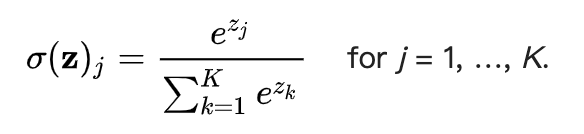
(2)然后对softmax计算的结果,再取log对数。(3)最后再利用NLLLoss() 计算CrossEntropyLoss, 其中NLLLoss() 的计算过程为:将经过log_softmax计算的结果与target相乘并求和,然后取反。
其中(1),(2)实现的是log_softmax计算,(3)实现的是NLLLoss(), 经过以上3步计算,得到最终的交叉熵损失的计算结果。
详见: 深度学习loss总结:nn.CrossEntropyLoss,nn.MSELoss,Focal_Loss,nn.KLDivLoss等
1.2 dice Loss
- Dice Loss 最先是在
VNet这篇文章中被提出,后来被广泛的应用在了医学影像分割之中。 - Dice Loss,也叫
Soft Dice Coefficient,是一种广泛用于图像分割任务的损失函数。它基于目标分割图像与模型输出结果之间的重叠区域的比例计算出分数。与交叉熵损失函数相比,它更适合于处理难分割的目标。 - Dice Loss是由
Dice系数而得名的,Dice系数是一种用于评估两个样本集合相似性的度量函数,其值越大意味着这两个样本集越相似。
1.2.1 为什么使用Dice loss
Dice Loss在处理类别不平衡和目标小但多的图像分割任务时有着很好的性能。交叉熵损失函数忽略了预测值和目标值之间的相似性,并且对于极端的像素值不够敏感。而Dice Loss是基于相似性的评价指标,它看重相同的像素值,可以很好地处理像素值不平衡的情况。
1.2.2 公式
D i c e = 2 ∣ X ∩ Y ∣ ∣ X ∣ + ∣ Y ∣ Dice =\frac{2|X\cap{Y}|}{|X|+|Y|} Dice=∣X∣+∣Y∣2∣X∩Y∣
其中
∣
X
∩
Y
∣
|X\cap{Y}|
∣X∩Y∣表示X和Y之间交集元素的个数,
∣
X
∣
|X|
∣X∣ 和
∣
Y
∣
|Y|
∣Y∣分别表示X、Y中元素的个数。分子乘2为了保证分母重复计算后取值范围在$[0,1]之间,
D
i
c
e
L
o
s
s
Dice Loss
DiceLoss表达式如下:
D
i
c
e
l
o
s
s
=
1
−
D
i
c
e
=
1
−
2
∣
X
∩
Y
∣
∣
X
∣
+
∣
Y
∣
Dice loss= 1-Dice =1-\frac{2|X\cap{Y}|}{|X|+|Y|}
Diceloss=1−Dice=1−∣X∣+∣Y∣2∣X∩Y∣
- Dice Loss常用于语义分割问题中,X表示真实分割图像的像素标签,Y表示模型预测分割图像的像素类别, ∣ X ∩ Y ∣ |X\cap Y| ∣X∩Y∣ 近试为预测图像的像素与真实标签图像的像素之间的点乘,并将点乘结果相加, ∣ X ∣ |X| ∣X∣ 和 ∣ Y ∣ |Y| ∣Y∣分别近似为他们各自对应图像像素相加。
D i c e L o s s = 1 − 2 ∑ i = 1 N y i y 1 ^ ∑ i = 1 N y i + ∑ i = 1 N y i ^ DiceLoss = 1-\frac{2\sum_{i=1}^{N}y_{i}\hat{y_1}}{\sum_{i=1}^N y_i +\sum_{i=1}^N \hat{y_i}} DiceLoss=1−∑i=1Nyi+∑i=1Nyi^2∑i=1Nyiy1^
可以说Dice Loss是直接优化F1 score而来的,是对F1 score的高度抽象,可用于多分类分割问题上。F1 score就被提出,其公式如下:
F 1 s c o r e = 2 P R P + R = 2 T P 2 R P + F P + F N F1 score = \frac{2PR}{P+R} = \frac {2TP}{2RP+FP+FN} F1score=P+R2PR=2RP+FP+FN2TP
在二分类问题中,Dice系数也可以写成 D i c e = 2 T P 2 T P + F P + F N = F 1 s c o r e Dice = \frac {2TP}{2TP+FP+FN}=F1score Dice=2TP+FP+FN2TP=F1score
D i c e L o s s = 1 − D i c e = 1 − F 1 s c o r e Dice_{Loss} =1- Dice= 1 - F1_{score} DiceLoss=1−Dice=1−F1score
1.2.3 Dice loss 和 F1-score代码
(1) F1-score
def f_score(inputs, target, beta=1, smooth = 1e-5, threhold = 0.5):
    n, c, h, w = inputs.size()
    nt, ht, wt, ct = target.size()
    if h != ht and w != wt:
        inputs = F.interpolate(inputs, size=(ht, wt), mode="bilinear", align_corners=True)

    temp_inputs = torch.softmax(inputs.transpose(1, 2).transpose(2, 3).contiguous().view(n, -1, c),-1)
    temp_target = target.view(n, -1, ct)

    #--------------------------------------------#
    #   计算dice系数
    #--------------------------------------------#
    temp_inputs = torch.gt(temp_inputs, threhold).float()
    tp = torch.sum(temp_target[...,:-1] * temp_inputs, axis=[0,1])
    fp = torch.sum(temp_inputs                       , axis=[0,1]) - tp
    fn = torch.sum(temp_target[...,:-1]              , axis=[0,1]) - tp

    score = ((1 + beta ** 2) * tp + smooth) / ((1 + beta ** 2) * tp + beta ** 2 * fn + fp + smooth)
    score = torch.mean(score)
    return score

- 1
- 2
- 3
- 4
- 5
- 6
- 7
- 8
- 9
- 10
- 11
- 12
- 13
- 14
- 15
- 16
- 17
- 18
- 19
- 20
- 上述是
F-score的代码,F1-Score是F-score的一种特殊形式,即当beta=1, F-score等价于F1-Score

inputs为分割模型的推理预测输出shape为(n,h,w,c), 其中c为cls_nums,未经过softmax处理, 因此在计算F1-score时,需要进行softmax处理。target为 为真实的分割标签one-hot编码格式,shape为(n,h,w,c)- 可以利用如下代码,将标签
mask图片png转为one-hot编码seg_labels
#-------------------------------------------------------#
#   转化成one_hot的形式
#   在这里需要+1是因为voc数据集有些标签具有白边部分
#   我们需要将白边部分进行忽略,+1的目的是方便忽略。
#-------------------------------------------------------#
seg_labels  = np.eye(self.num_classes + 1)[png.reshape([-1])]
seg_labels  = seg_labels.reshape((int(self.input_shape[0]), int(self.input_shape[1]), self.num_classes + 1))
- 1
- 2
- 3
- 4
- 5
- 6
- 7
png.reshape([-1])得到shape大小为(h*w,1), 其中每个元素值为类别的索引, 然后根据类别索引从np.eye(self.num_classes + 1)取对应的行,这样就将mask转化为one-hot形式的seg_labels- 然后将
seg_labelsreshape为(h,w,self.num_classes + 1) - 在这里需要+1是因为voc数据集有些标签具有白边部分, +1的目的是方便忽略
(2) Dice loss
def Dice_loss(inputs, target, beta=1, smooth = 1e-5):
    n, c, h, w = inputs.size()
    nt, ht, wt, ct = target.size()
    if h != ht and w != wt:
        inputs = F.interpolate(inputs, size=(ht, wt), mode="bilinear", align_corners=True)

    temp_inputs = torch.softmax(inputs.transpose(1, 2).transpose(2, 3).contiguous().view(n, -1, c),-1)
    temp_target = target.view(n, -1, ct)

    #--------------------------------------------#
    #   计算dice loss
    #--------------------------------------------#
    tp = torch.sum(temp_target[...,:-1] * temp_inputs, axis=[0,1])
    fp = torch.sum(temp_inputs                       , axis=[0,1]) - tp
    fn = torch.sum(temp_target[...,:-1]              , axis=[0,1]) - tp

    score = ((1 + beta ** 2) * tp + smooth) / ((1 + beta ** 2) * tp + beta ** 2 * fn + fp + smooth)
    dice_loss = 1 - torch.mean(score)
    return dice_loss
- 1
- 2
- 3
- 4
- 5
- 6
- 7
- 8
- 9
- 10
- 11
- 12
- 13
- 14
- 15
- 16
- 17
- 18
- 19
-
inputs为分割模型的推理预测输出shape为(n,h,w,c),target为 为真实的分割标签one-hot编码格式shape为(n,h,w,c) -
可以看到
dice_loss的实现,跟F1-score基本上是一模一样的, 将torch.mean(score)求得的F1-soce, 然后通过dice_loss = 1- F1-score来实现。
1.3 focal loss
上面针对不同类别的像素数量不均衡提出了改进方法,但有时还需要将像素分为难学习和容易学习这两种样本。
容易学习的样本模型可以很轻松地将其预测正确,模型只要将大量容易学习的样本分类正确,loss就可以减小很多,从而导致模型不怎么顾及难学习的样本,所以我们要想办法让模型更加关注难学习的样本。
1.3.1 公式:
(1) 交叉熵损失:
L
c
e
−
∑
q
t
l
o
g
2
(
p
t
)
=
−
l
o
g
(
p
t
)
L_{ce} - \sum q_t log_2(p_t)= -log(p_t)
Lce−∑qtlog2(pt)=−log(pt)
- 其中:log一般以
e或者2为底都是可以的。参考:KL散度、CrossEntropy详解, - 因为对于
分类或者分割任务, q t q_t qt为one-hot编码,只在真实类别处为1,其他都是0, 所以交叉熵等效为 − l o g ( p t ) -log(p_t) −log(pt)
(2) Focal Loss
F
L
(
p
t
)
=
−
a
t
(
1
−
p
t
)
r
l
o
g
(
p
t
)
FL(p_t)=-a_t(1-p_t)^rlog(p_t)
FL(pt)=−at(1−pt)rlog(pt)
-
a
t
a_t
at 是用来
平衡正负样本数量的:基于样本非平衡造成的损失函数倾斜,一个直观的做法就是在损失函数中添加权重因子,提高少数类别在损失函数中的权重,平衡损失函数的分布。 p t p_t pt 表示预测的概率值或者置信度, p t p_t pt越大说明预测越接近。focal loss设置了一个modulating factor: ( 1 − p t ) r (1-p_t)^r (1−pt)r用来区分样本预测的难易程度, 当预测的概率 p t p_t pt越接近于1,说明样本容易预测,此时 ( 1 − p t ) r (1-p_t)^r (1−pt)r趋近于0;当预测概率 p t p_t pt越接近于0时,说明样本比较难预测,此时 ( 1 − p t ) r (1-p_t)^r (1−pt)r趋近于1。 整体而言,通过modulating factor因子的调节,相当于增加了难分样本在损失函数中的权重。
可以看出Focal Loss是在交叉熵Cross Entropy基础上演进而来的,相比于交叉熵损失,多了一个类别平衡系数
a
t
a_t
at,以及区分样本难分程度的因子modulating factor:
(
1
−
p
t
)
r
(1-p_t)^r
(1−pt)r
1.3.2 代码
def Focal_Loss(inputs, target, cls_weights, num_classes=21, alpha=0.5, gamma=2):
    n, c, h, w = inputs.size()
    nt, ht, wt = target.size()
    if h != ht and w != wt:
        inputs = F.interpolate(inputs, size=(ht, wt), mode="bilinear", align_corners=True)

    temp_inputs = inputs.transpose(1, 2).transpose(2, 3).contiguous().view(-1, c)
    temp_target = target.view(-1)

    logpt  = -nn.CrossEntropyLoss(weight=cls_weights, ignore_index=num_classes, reduction='none')(temp_inputs, temp_target)
    pt = torch.exp(logpt)
    if alpha is not None:
        logpt *= alpha
    loss = -((1 - pt) ** gamma) * logpt
    loss = loss.mean()
    return loss
- 1
- 2
- 3
- 4
- 5
- 6
- 7
- 8
- 9
- 10
- 11
- 12
- 13
- 14
- 15
- 16
inputs为分割模型的推理预测输出shape为(n,h,w,c)- 由于
nn.CrossEntropyLoss内部已经包含了Softmax处理,因此不需要对模型的预测输出inputs进行Softmax计算。 - 对于分类、分割任务而言,
focal loss相比于交叉熵损失CE: − l o g ( p t ) -log(p_t) −log(pt),多了一个类别平衡系数a t a_t at,以及区分样本难分程度的因子modulating factor: ( 1 − p t ) r (1-p_t)^r (1−pt)r,因此可以先求CrossEntropyLoss,然后乘以类别平衡系数以及区分样本难分程度的因子modulating factor: ( 1 − p t ) r (1-p_t)^r (1−pt)r, 就可以求出focal loss了
logpt  = -nn.CrossEntropyLoss(weight=cls_weights, ignore_index=num_classes, reduction='none')(temp_inputs, temp_target)
 pt = torch.exp(logpt)
 if alpha is not None:
     logpt *= alpha
 loss = -((1 - pt) ** gamma) * logpt
 loss = loss.mean()
- 1
- 2
- 3
- 4
- 5
- 6
cls_weights: 衡量每个类别的重要程度,cls_weights数组元素个数与类别数一样。代码中默认设置各个类别重要度一样:
cls_weights = np.ones([num_classes], np.float32)
- 1
- 在计算
CrossEntropyLoss, target可以是one-hot格式,也可以直接输出类别,不需要进行one-hot处理(此时pytorch 内部会自动帮忙进行one-hot编码)
temp_inputs = inputs.transpose(1, 2).transpose(2, 3).contiguous().view(-1, c)
temp_target = target.view(-1)

logpt  = -nn.CrossEntropyLoss(weight=cls_weights, ignore_index=num_classes, reduction='none')(temp_inputs, temp_target)
- 1
- 2
- 3
- 4
CrossEntropyLoss根据预测输出和真实的target,就可以计算出交叉熵损失, 注意预测的输出需要reshape到(-1,c), target需要reshape到[-1](一维),每个元素为像素的类别索引
2. 语义分割损失应用
- 在语义分割中,
focal_loss和Cross entropy loss以及dice_loss,通常需要结合一起使用。代码参考:https://github.com/bubbliiiing/deeplabv3-plus-pytorch/blob/main/train.py - 可以看到作者定义语义分割的损失中,结合了这三类损失,默认只使用的是
Cross entropy loss, 如果存在素类别不平衡,以及难分的像素类别,可以将focal_loss和dice_loss两个损失一起叠加使用。
dice_loss       = False
focal_loss      = Fals
cls_weights     = np.ones([num_classes], np.float32)

for iteration, batch in enumerate(train_dataloader):
        imgs, pngs, labels = batch

        with torch.no_grad():
            weights = torch.from_numpy(cls_weights)
            if cuda:
                imgs    = imgs.cuda(local_rank)
                pngs    = pngs.cuda(local_rank)
                labels  = labels.cuda(local_rank)
                weights = weights.cuda(local_rank)
        #----------------------#
        #   清零梯度
        #----------------------#
        optimizer.zero_grad()
		outputs = model_train(imgs)
		 #----------------------#
		 #   计算损失
		 #----------------------#
		 if focal_loss:
		     loss = Focal_Loss(outputs, pngs, weights, num_classes = num_classes)
		 else:
		     loss = CE_Loss(outputs, pngs, weights, num_classes = num_classes)

		 if dice_loss:
		     main_dice = Dice_loss(outputs, labels)
		     loss      = loss + main_dice
- 1
- 2
- 3
- 4
- 5
- 6
- 7
- 8
- 9
- 10
- 11
- 12
- 13
- 14
- 15
- 16
- 17
- 18
- 19
- 20
- 21
- 22
- 23
- 24
- 25
- 26
- 27
- 28
- 29
- 30
- 其中
imgs为图片数据,shape大小为(n,c,h,w), pngs为mask标签图片,shape大小为(n,h,w), 为8位单通道图像,每个像素值对应类别信息
利用imgs和pngs可以计算focal_loss 和CE_Losslabels为标签pngs的one-hot形式,shape大小为(n,h,w,c+1), 在计算Dice_loss时,需要将标签转换为one_hot格式。weights是用来,给各个类别附加权重的,weight数组元素需要和类别数一样
参考
https://github.dev/bubbliiiing/deeplabv3-plus-pytorch
https://zhuanlan.zhihu.com/p/101773544?utm_id=0