
- 1「Django REST Framework 框架」Permissions权限解析及应用举例_djangoobjectpermissions
- 2python开发数字人助理版_fay数字人搭建
- 3A. Make it Increasing-Codeforces Round #783 (Div. 1)_make it increasing codeforces
- 4Unity3d发布WebGL(网页)以及IIS部署_unity3d如何将localhost改为ip
- 5Spring Boot3整合Redis
- 62021年总结:回顾这不平凡的一年_回顾即将过去的2021年,对于我个人来说,意义非凡极不平常
- 7【命令行】CMD/BAT文件执行时中文乱码的解决方法_bat文件中文无法执行
- 8[PyTorch][chapter 54][Variational Auto-Encoder 实战]
- 9Python | 关于日期的那些事儿_python timedetla
- 10Kafka 生产调优
一、品达通用权限系统__项目概述与Spring Boot Starter介绍
赞
踩
一、项目概述
1.1、项目介绍
对于企业中的项目绝大多数都需要进行用户权限管理、认证、鉴权、加密、解密、XSS防跨站攻击等。这些功能整体实现思路基本一致,但是绝大部分项目都需要实现一次,这无形中就形成了巨大的资源浪费。本项目就是针对这个问题,提供了一套通用的权限解决方案——品达通用权限系统。
品达通用权限系统基于SpringCloud(Hoxton.SR1)+SpringBoot(2.2.2.RELEASE)的微服务框架,具备通用的用户管理、资源权限管理、网关统一鉴权、XSS防跨站攻击等多个模块、支持多业务系统并行开发、可作为后端服务的开发脚手架。核心技术采用SpringBoot、Zuul、Nacos、Fegin、Ribbon、Hystrix、JWT Token、Mybatis Plus等主要框架和中间件。
本项目具有两个主要功能特性:
- 用户权限管理
具有用户、部门、岗位、角色、菜单管理。并通过网关进行统一的权限认证。 - 微服务开发框架
本项目同时也是一个微服务开发框架,集成了基础的公共组件,包括数据库、缓存、日志、表单验证、对象转换、防注入和接口文档管理等工具。
1.2、业务架构
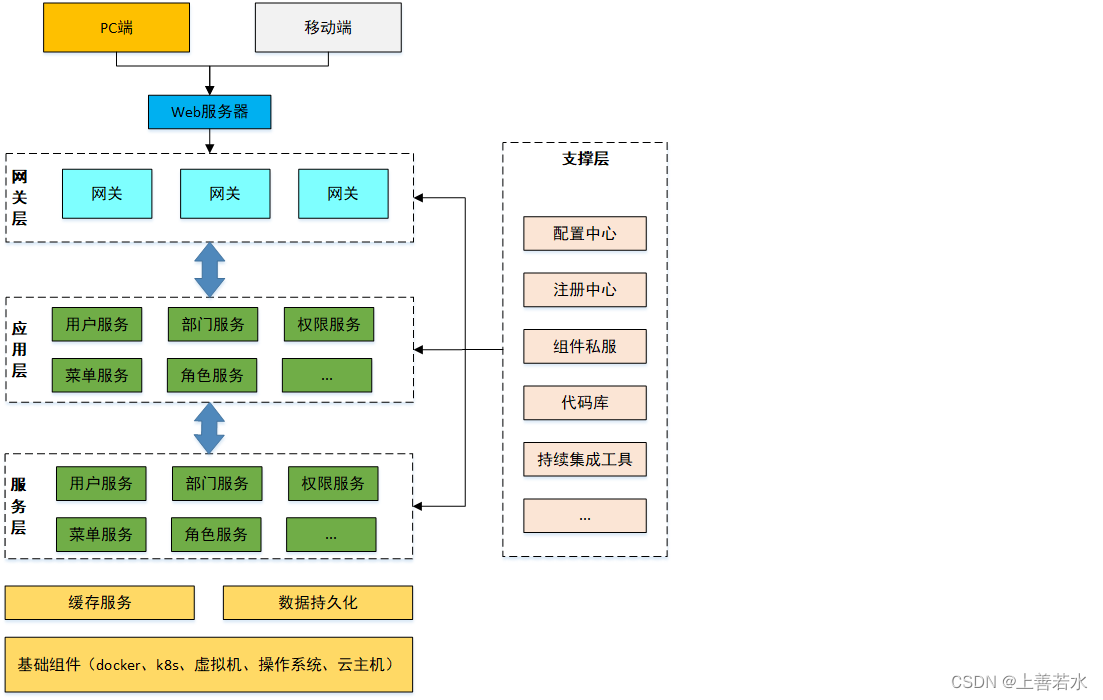
1.3、技术架构
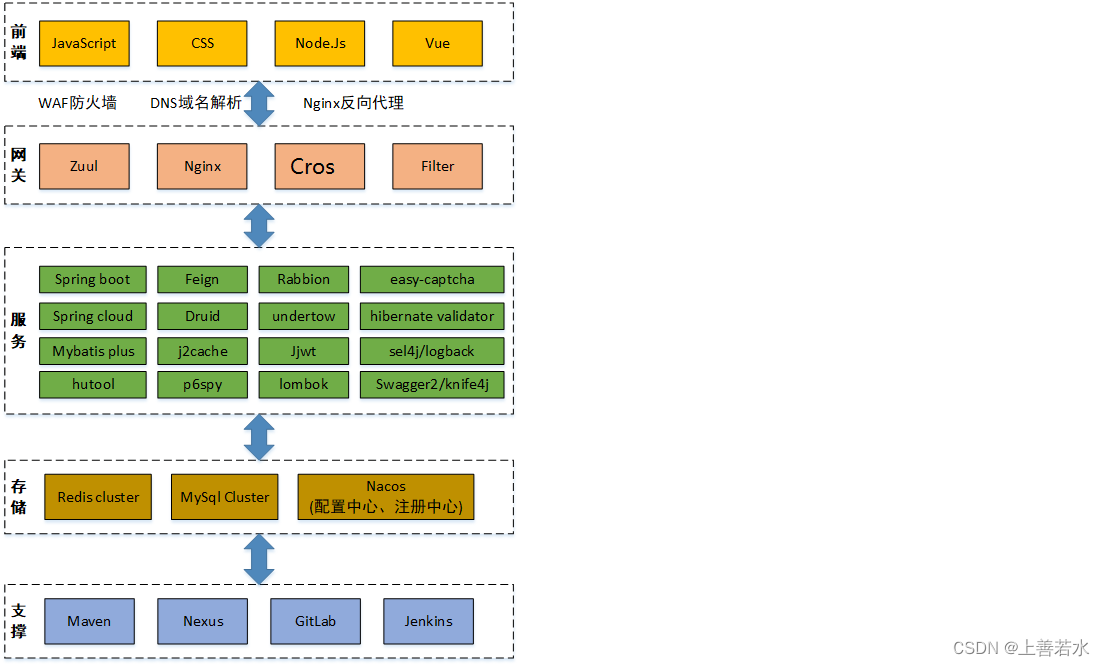
1.4、环境要求
- JDK : 1.8 +
- Maven: 3.3 +
http://maven.apache.org/download.cgi - Mysql: 5.6.0 +
https://downloads.mysql.com/archives/community
- Redis: 4.0 +
https://redis.io/download - Nacos: 1.1.4
https://github.com/alibaba/nacos/releases - Node: 11.3+(集成npm)
https://nodejs.org/en/download
二、SpringBoot Starter
我们知道Spring Boot大大简化了项目初始搭建以及开发过程,而这些都是通过Spring Boot提供的starter来完成的。品达通用权限系统就是基于Spring Boot进行开发,而且一些基础模块其本质就是starter,所以我们需要对Spring Boot的starter有一个全面深入的了解,这是我们开发品达通用权限系统的必备知识。
2.1、starter介绍
Spring Boot在配置上相比Spring要简单许多,其核心在于spring-boot-starter,在使用Spring Boot来搭建一个项目时,只需要引入官方提供的starter,就可以直接使用,免去了各种配置。starter简单来讲就是引入了一些相关依赖和一些初始化的配置。
- Spring官方提供的starter名称为:
spring-boot-starter-xxx
例如:Spring官方提供的spring-boot-starter-web - 第三方提供的starter名称为:
xxx-spring-boot-starter
例如:由mybatis提供的mybatis-spring-boot-starter
2.2、starter原理
Spring Boot之所以能够帮我们简化项目的搭建和开发过程,主要是基于它提供的起步依赖和自动配置。
2.2.1、起步依赖
起步依赖,其实就是将具备某种功能的坐标打包到一起,可以简化依赖导入的过程。例如,我们导入spring-boot-starter-web这个starter,则和web开发相关的jar包都一起导入到项目中了。如下图所示:

2.2.2、自动配置
自动配置,就是无须手动配置xml,自动配置并管理bean,可以简化开发过程。那么Spring Boot是如何完成自动配置的呢?
自动配置涉及到如下几个关键步骤:
- 基于Java代码的bean配置
- 自动配置条件依赖
- bean参数获取
- bean的发现
- bean的加载
我们可以通过一个实际的例子mybatis-spring-boot-starter来说明自动配置的实现过程。
2.2.2.1、基于Java代码的bean配置
当我们在项目中导入mybatis-spring-boot-starter这个jar后,可以看到它包括了很多相关的jar包,如下图:

其实在mybatis-spring-boot-autoconfigure这个jar包中有如下一个MybatisAutoConfiguration自动配置类:
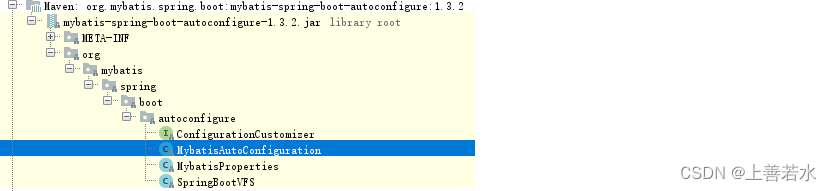
打开这个类,截取的关键代码如下:


@Configuration 和 @Bean 这两个注解一起使用就可以创建一个基于Java代码的配置类,可以用来代替传统的xml配置文件。
@Configuration 注解的类可以看作是能够生产让Spring IOC容器管理的bean实例工厂。
@Bean 注解的方法返回的对象可以被注册到spring容器中。
所以上面的MybatisAutoConfiguration这个类,自动帮我们生成了SqlSessionFactory和SqlSessionTemplate这些Mybatis的重要实例并交给spring容器管理,从而完成bean的自动注册。
2.2.2.2、自动配置条件依赖
从MybatisAutoConfiguration这个类中使用的注解可以看出,要完成自动配置是有依赖条件的。

所以要完成Mybatis的自动配置,需要在类路径中存在SqlSessionFactory.class、SqlSessionFactoryBean.class这两个类,同时需要存在DataSource这个bean且这个bean完成自动注册。
这些注解是spring boot特有的,常见的条件依赖注解有:
| 注解 | 功能说明 |
|---|---|
| @ConditionalOnBean | 仅在当前上下文中存在某个bean时,才会实例化这个Bean |
| @ConditionalOnClass | 某个class位于类路径上,才会实例化这个Bean |
| @ConditionalOnExpression | 当表达式为true的时候,才会实例化这个Bean |
| @ConditionalOnMissingBean | 仅在当前上下文中不存在某个bean时,才会实例化这个Bean |
| @ConditionalOnMissingClass | 某个class在类路径上不存在的时候,才会实例化这个Bean |
| @ConditionalOnNotWebApplication | 不是web应用时才会实例化这个Bean |
| @AutoConfigureAfter | 在某个bean完成自动配置后实例化这个bean |
| @AutoConfigureBefore | 在某个bean完成自动配置前实例化这个bean |
2.2.2.3、bean参数获取
要完成mybatis的自动配置,需要我们在配置文件中提供数据源相关的配置参数,例如数据库驱动、连接url、数据库用户名、密码等。那么spring boot是如何读取yml或者properties配置文件的属性来创建数据源对象?
在我们导入mybatis-spring-boot-starter这个jar包后会传递过来一个spring-boot-autoconfigure包,在这个包中有一个自动配置类DataSourceAutoConfiguration,如下所示:
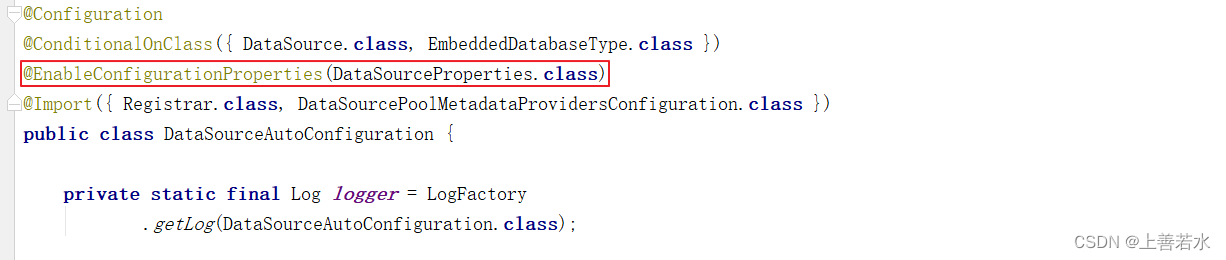
我们可以看到这个类上加入了EnableConfigurationProperties这个注解,继续跟踪源码到DataSourceProperties这个类,如下:
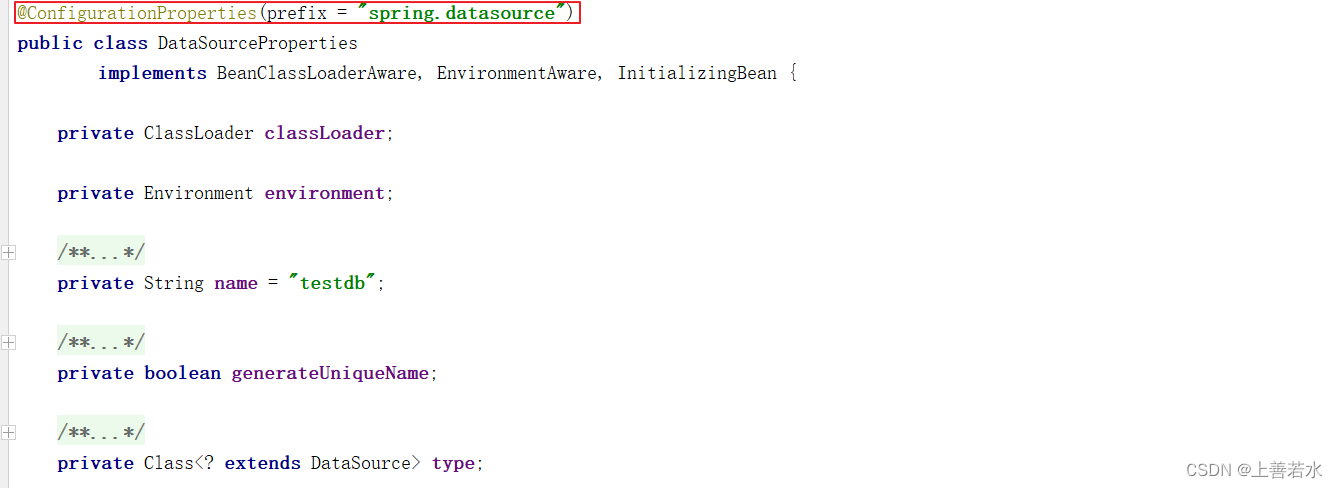
可以看到这个类上加入了ConfigurationProperties注解,这个注解的作用就是把yml或者properties配置文件中的配置参数信息封装到ConfigurationProperties注解标注的bean(即DataSourceProperties)的相应属性上。
@EnableConfigurationProperties注解的作用是使@ConfigurationProperties注解生效。
2.2.2.4、bean的发现
spring boot默认扫描启动类所在的包下的主类与子类的所有组件,但并没有包括依赖包中的类,那么依赖包中的bean是如何被发现和加载的?
我们需要从spring boot项目的启动类开发跟踪,在启动类上我们一般会加入
SpringBootApplication注解,此注解的源码如下:
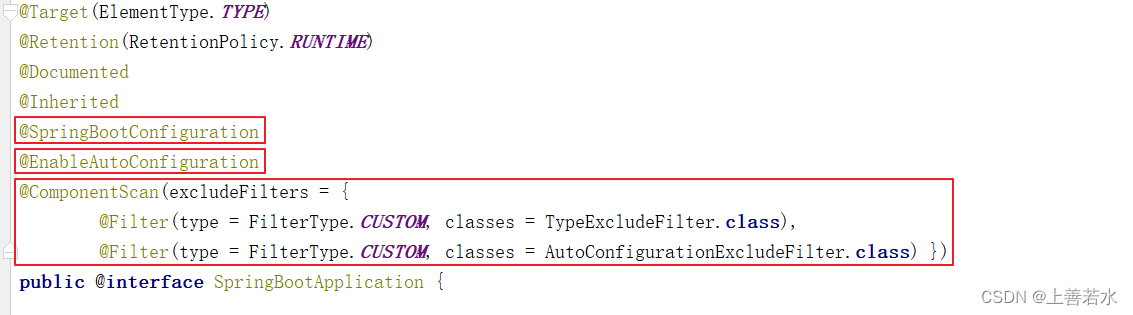
重点介绍如下三个注解:
SpringBootConfiguration:作用就相当于Configuration注解,被注解的类将成为一个bean配置类
ComponentScan:作用就是自动扫描并加载符合条件的组件,最终将这些bean加载到spring容器中
EnableAutoConfiguration :这个注解很重要,借助@Import的支持,收集和注册依赖包中相关的bean定义
继续跟踪EnableAutoConfiguration注解源码:
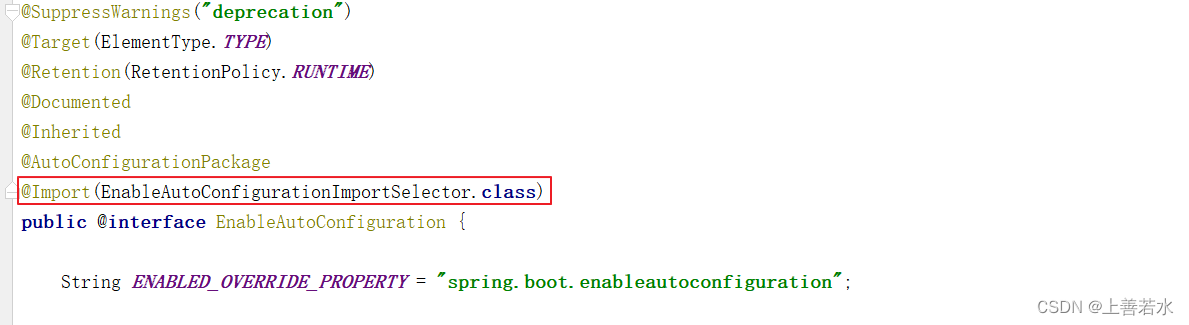
@EnableAutoConfiguration注解引入了@Import这个注解。
Import:导入需要自动配置的组件,此处为EnableAutoConfigurationImportSelector这个类
EnableAutoConfigurationImportSelector类源码如下:
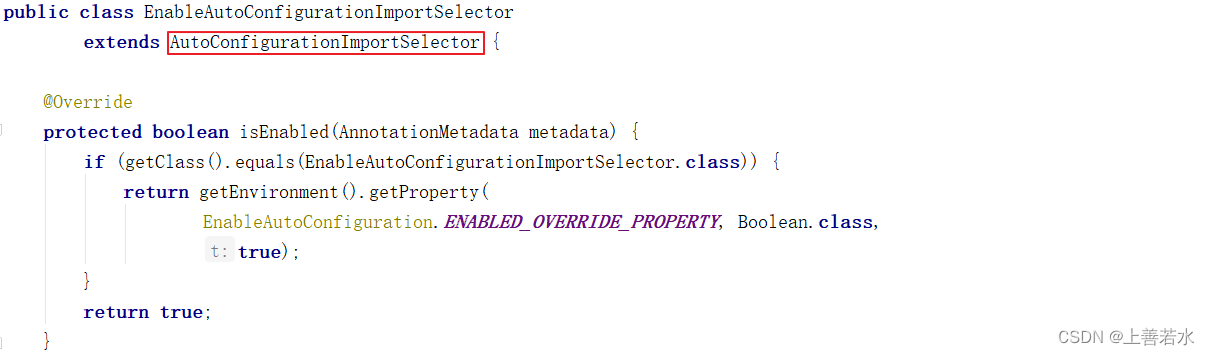
EnableAutoConfigurationImportSelector继承了AutoConfigurationImportSelector类,继续跟踪AutoConfigurationImportSelector类源码:
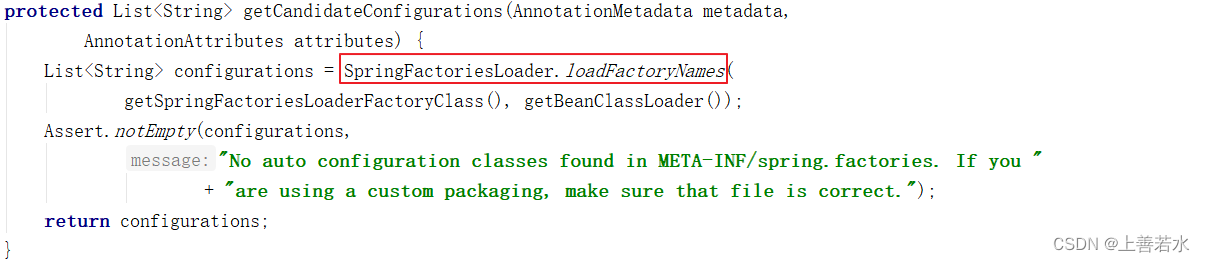
AutoConfigurationImportSelector类的getCandidateConfigurations方法中的调用了SpringFactoriesLoader类的loadFactoryNames方法,继续跟踪源码:
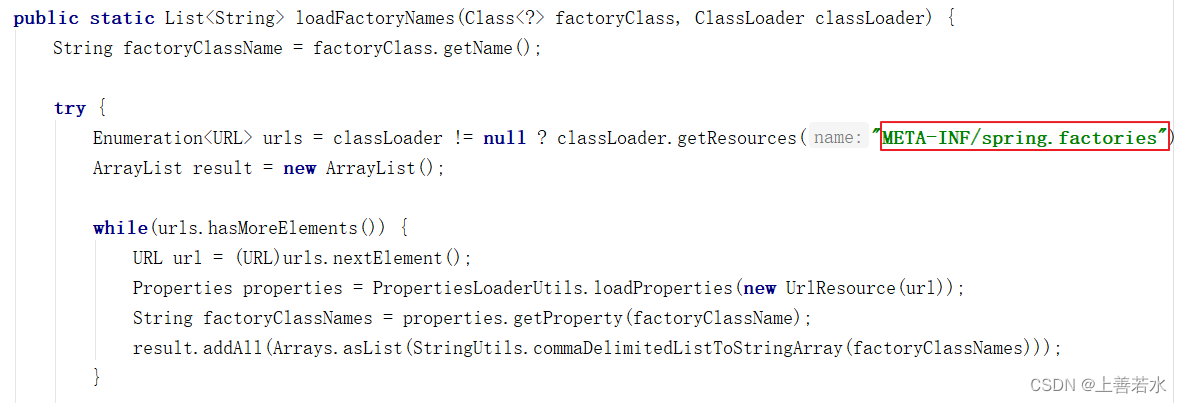
SpringFactoriesLoader的loadFactoryNames静态方法可以从所有的jar包中读取META-INF/spring.factories文件,而自动配置的类就在这个文件中进行配置:

spring.factories文件内容如下:

这样Spring Boot就可以加载到MybatisAutoConfiguration这个配置类了。
2.2.2.5、bean的加载
在Spring Boot应用中要让一个普通类交给Spring容器管理,通常有以下方法:
- 使用
@Configuration与@Bean注解 - 使用
@Controller、@Service、@Repository、@Component注解标注该类并且启用@ComponentScan自动扫描 - 使用
@Import方法
其中Spring Boot实现自动配置使用的是@Import注解这种方式,AutoConfigurationImportSelector类的selectImports方法返回一组从META-INF/spring.factories文件中读取的bean的全类名,这样Spring Boot就可以加载到这些Bean并完成实例的创建工作。
2.2.3、自动配置总结
我们可以将自动配置的关键几步以及相应的注解总结如下:
@Configuration与@Bean:基于Java代码的bean配置@Conditional:设置自动配置条件依赖@EnableConfigurationProperties与@ConfigurationProperties:读取配置文件转换为bean@EnableAutoConfiguration与@Import:实现bean发现与加载
2.3、自定义starter
本小节我们通过自定义两个starter来加强starter的理解和应用。
2.3.1、案例一
2.3.1.1、开发starter
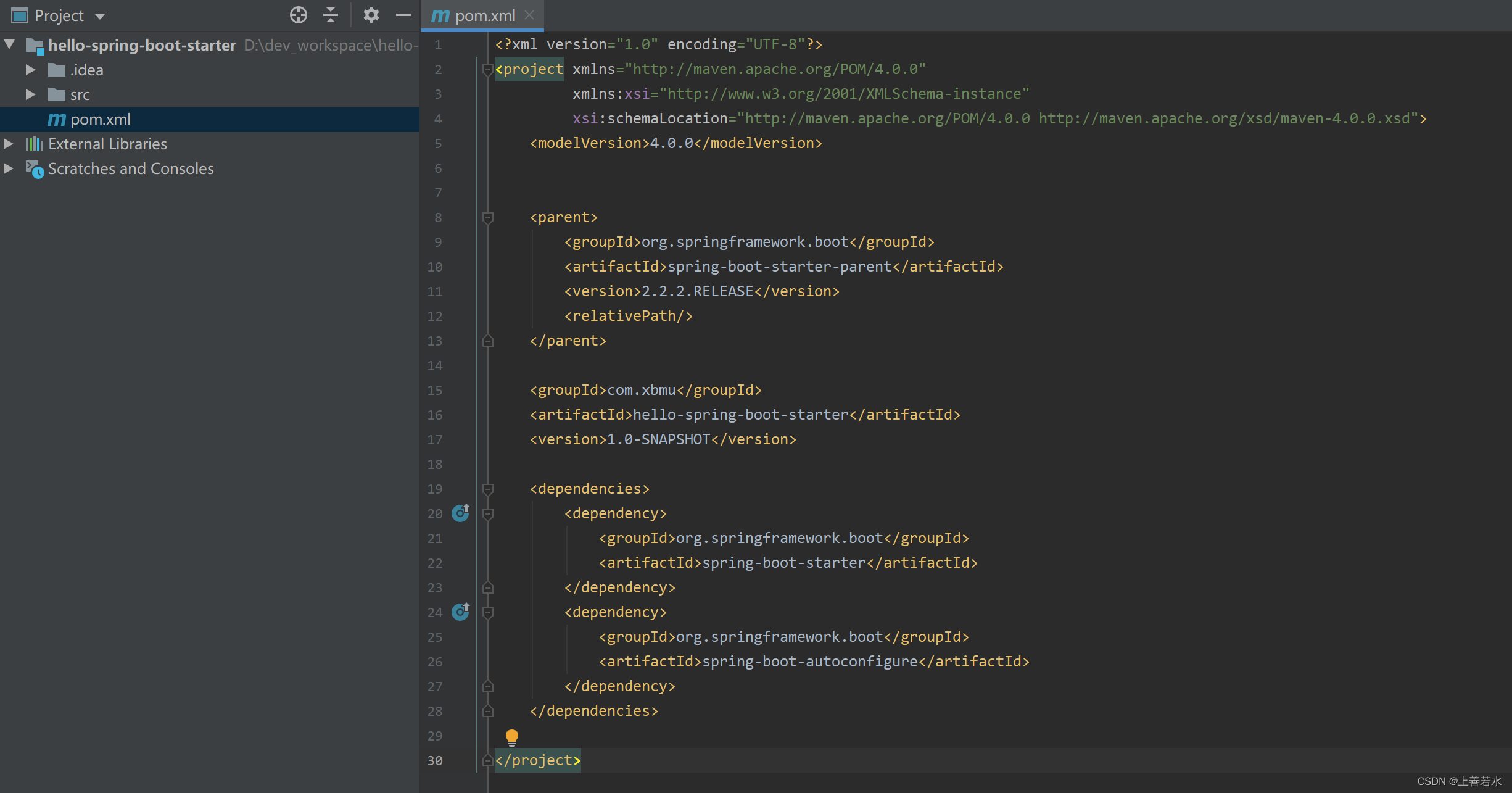
第一步:创建starter工程hello-spring-boot-starter并配置pom.xml文件
<?xml version="1.0" encoding="UTF-8"?>
<project xmlns="http://maven.apache.org/POM/4.0.0"
         xmlns:xsi="http://www.w3.org/2001/XMLSchema-instance"
         xsi:schemaLocation="http://maven.apache.org/POM/4.0.0 http://maven.apache.org/xsd/maven-4.0.0.xsd">
    <modelVersion>4.0.0</modelVersion>


    <parent>
        <groupId>org.springframework.boot</groupId>
        <artifactId>spring-boot-starter-parent</artifactId>
        <version>2.2.2.RELEASE</version>
        <relativePath/>
    </parent>

    <groupId>com.xbmu</groupId>
    <artifactId>hello-spring-boot-starter</artifactId>
    <version>1.0-SNAPSHOT</version>

    <dependencies>
        <dependency>
            <groupId>org.springframework.boot</groupId>
            <artifactId>spring-boot-starter</artifactId>
        </dependency>
        <dependency>
            <groupId>org.springframework.boot</groupId>
            <artifactId>spring-boot-autoconfigure</artifactId>
        </dependency>
    </dependencies>

</project>

- 1
- 2
- 3
- 4
- 5
- 6
- 7
- 8
- 9
- 10
- 11
- 12
- 13
- 14
- 15
- 16
- 17
- 18
- 19
- 20
- 21
- 22
- 23
- 24
- 25
- 26
- 27
- 28
- 29
- 30
第二步:创建配置属性类 HelloProperties
package com.xbmu.config;

import org.springframework.boot.context.properties.ConfigurationProperties;

/**
 * 读取配置文件转换为bean
 */
@ConfigurationProperties(prefix = "hello")
public class HelloProperties {
    private String name;
    private String address;

    public String getName() {
        return name;
    }

    public void setName(String name) {
        this.name = name;
    }

    public String getAddress() {
        return address;
    }

    public void setAddress(String address) {
        this.address = address;
    }

    @Override
    public String toString() {
        return "HelloProperties{" +
                "name='" + name + '\'' +
                ", address='" + address + '\'' +
                '}';
    }
}
- 1
- 2
- 3
- 4
- 5
- 6
- 7
- 8
- 9
- 10
- 11
- 12
- 13
- 14
- 15
- 16
- 17
- 18
- 19
- 20
- 21
- 22
- 23
- 24
- 25
- 26
- 27
- 28
- 29
- 30
- 31
- 32
- 33
- 34
- 35
- 36
第三步:创建服务类HelloService
package com.xbmu.service;

public class HelloService {
    private String name;
    private String address;

    public HelloService(String name, String address) {
        this.name = name;
        this.address = address;
    }

    public String sayHello(){
        return "你好!我的名字叫 " + name + ",我来自 " + address;
    }
}
- 1
- 2
- 3
- 4
- 5
- 6
- 7
- 8
- 9
- 10
- 11
- 12
- 13
- 14
- 15
第四步:创建自动配置类HelloServiceAutoConfiguration
package com.xbmu.config;

import com.xbmu.service.HelloService;
import org.springframework.boot.autoconfigure.condition.ConditionalOnMissingBean;
import org.springframework.boot.context.properties.EnableConfigurationProperties;
import org.springframework.context.annotation.Bean;
import org.springframework.context.annotation.Configuration;

/**
 * 配置类,基于Java代码的bean配置
 */
@Configuration
@EnableConfigurationProperties(HelloProperties.class)
public class HelloServiceAutoConfiguration {
    private HelloProperties helloProperties;

    // 通过构造方法注入配置属性对象 HelloProperties
    public HelloServiceAutoConfiguration(HelloProperties helloProperties) {
        this.helloProperties = helloProperties;
    }
    // 实例化HelloService并载人Spring IOC容器
    @Bean
    @ConditionalOnMissingBean
    public HelloService helloService(){
        return new HelloService(helloProperties.getName(),helloProperties.getAddress());
    }
}
- 1
- 2
- 3
- 4
- 5
- 6
- 7
- 8
- 9
- 10
- 11
- 12
- 13
- 14
- 15
- 16
- 17
- 18
- 19
- 20
- 21
- 22
- 23
- 24
- 25
- 26
- 27
第五步:在 resources目录下创建 META-INF/spring.factories
org.springframework.boot.autoconfigure.EnableAutoConfiguration=\
com.xbmu.config.HelloServiceAutoConfiguration
- 1
- 2
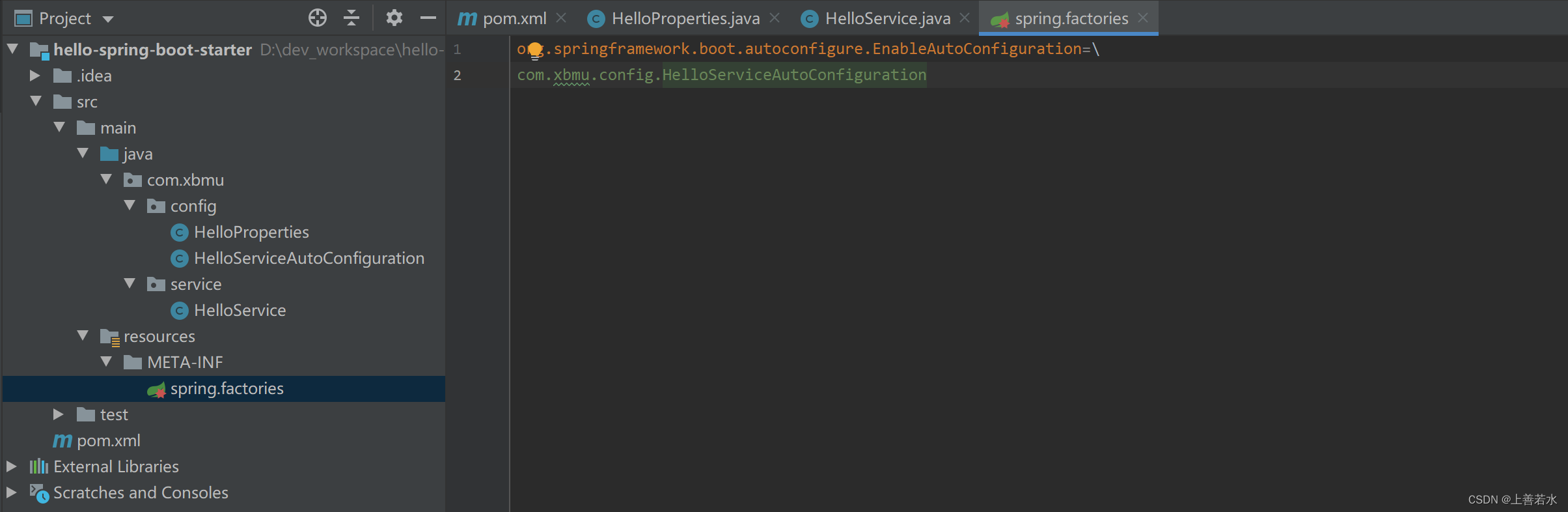
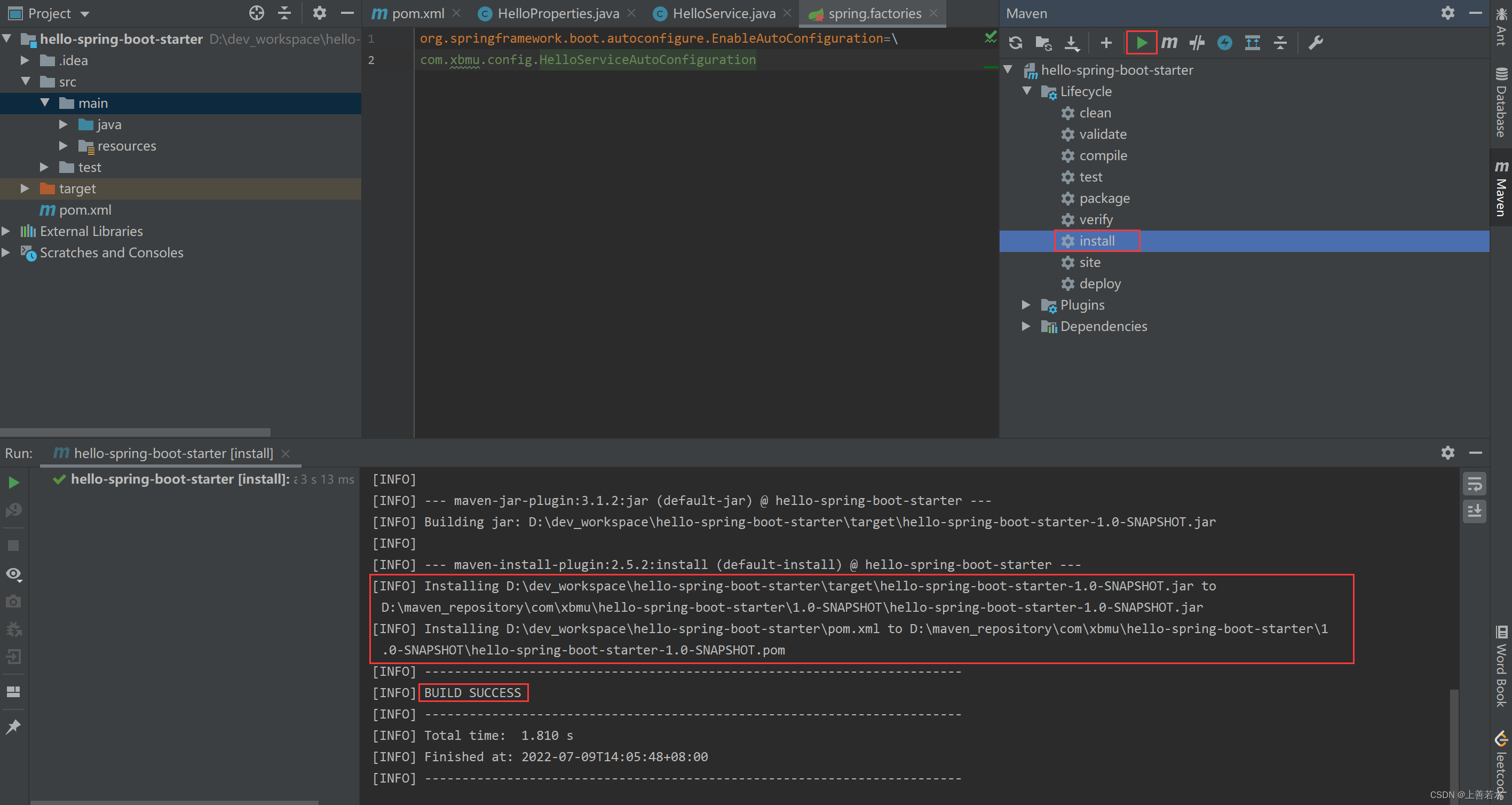
至此starter已经开发完成了,可以将当前starter安装到本地maven仓库供其他应用来使用。

2.3.1.2、使用starter
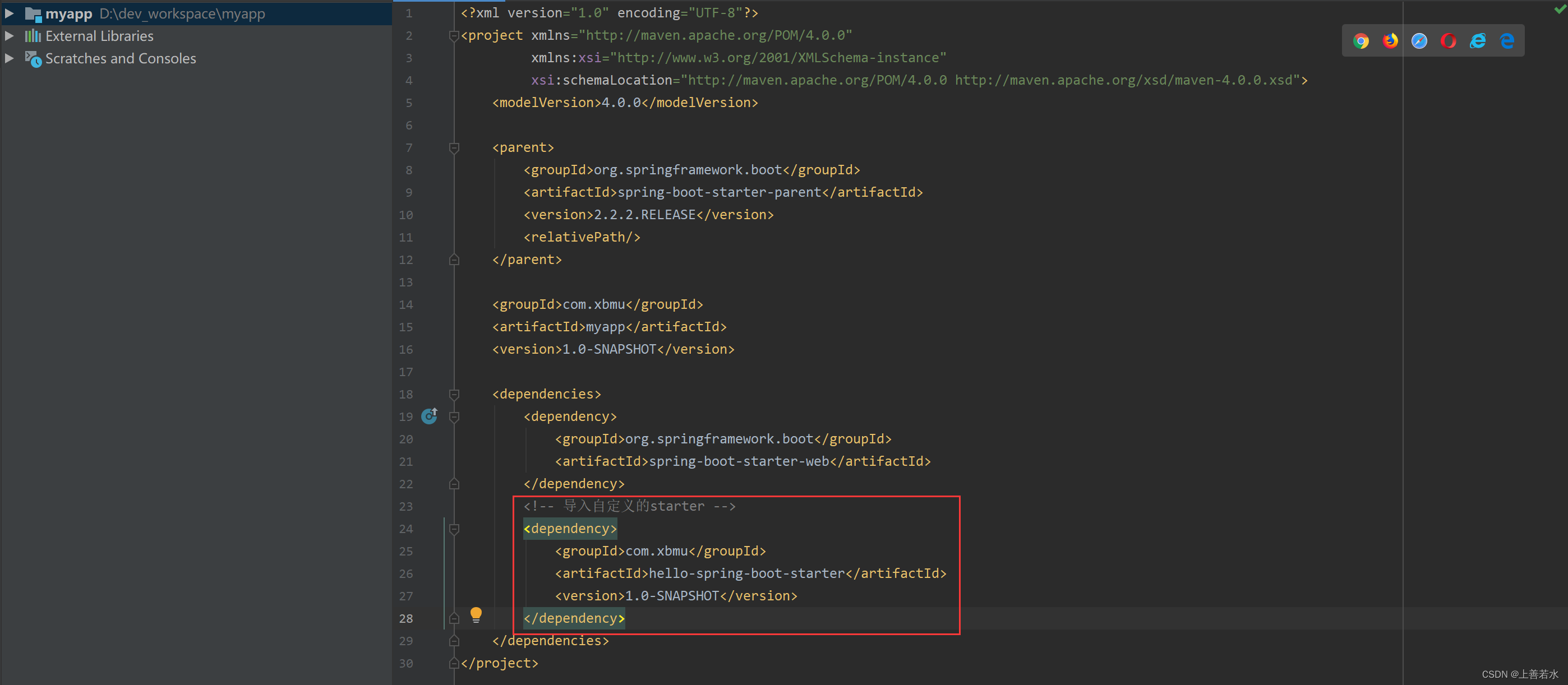
第一步:创建maven工程myapp并配置pom.xml文件
<?xml version="1.0" encoding="UTF-8"?>
<project xmlns="http://maven.apache.org/POM/4.0.0"
         xmlns:xsi="http://www.w3.org/2001/XMLSchema-instance"
         xsi:schemaLocation="http://maven.apache.org/POM/4.0.0 http://maven.apache.org/xsd/maven-4.0.0.xsd">
    <modelVersion>4.0.0</modelVersion>

    <parent>
        <groupId>org.springframework.boot</groupId>
        <artifactId>spring-boot-starter-parent</artifactId>
        <version>2.2.2.RELEASE</version>
        <relativePath/>
    </parent>

    <groupId>com.xbmu</groupId>
    <artifactId>myapp</artifactId>
    <version>1.0-SNAPSHOT</version>

    <dependencies>
        <dependency>
            <groupId>org.springframework.boot</groupId>
            <artifactId>spring-boot-starter-web</artifactId>
        </dependency>
        <!-- 导入自定义的starter -->
        <dependency>
            <groupId>com.xbmu</groupId>
            <artifactId>hello-spring-boot-starter</artifactId>
            <version>1.0-SNAPSHOT</version>
        </dependency>
    </dependencies>
</project>
- 1
- 2
- 3
- 4
- 5
- 6
- 7
- 8
- 9
- 10
- 11
- 12
- 13
- 14
- 15
- 16
- 17
- 18
- 19
- 20
- 21
- 22
- 23
- 24
- 25
- 26
- 27
- 28
- 29
- 30
第二步:创建 application.yml文件
server:
  port: 8080

hello:
  name: bitaotao
  address: xian
- 1
- 2
- 3
- 4
- 5
- 6
第三步:创建HelloController
package com.xbmu.contoller;

import com.xbmu.service.HelloService;
import org.springframework.beans.factory.annotation.Autowired;
import org.springframework.web.bind.annotation.GetMapping;
import org.springframework.web.bind.annotation.RequestMapping;
import org.springframework.web.bind.annotation.RestController;

@RestController
@RequestMapping("/hello")
public class HelloController {
    // HelloService在我们自定义的starter中已经完成了自动配置,所以此处可以直接注入
    @Autowired
    private HelloService helloService;

    @GetMapping("/say")
    public String sayHello(){
        return helloService.sayHello();
    }
}
- 1
- 2
- 3
- 4
- 5
- 6
- 7
- 8
- 9
- 10
- 11
- 12
- 13
- 14
- 15
- 16
- 17
- 18
- 19
- 20
第四步:创建启动类HelloApplication
package com.xbmu;

import org.springframework.boot.SpringApplication;
import org.springframework.boot.autoconfigure.SpringBootApplication;

@SpringBootApplication
public class HelloApplication {
    public static void main(String[] args) {
        SpringApplication.run(HelloApplication.class,args);
    }
}
- 1
- 2
- 3
- 4
- 5
- 6
- 7
- 8
- 9
- 10
- 11
执行启动类main方法,访问地址 http://localhost:8080/hello/say

2.3.2、案例二
在前面的案例一中我们通过定义starter,自动配置了一个HelloService实例。本案例我们需要通过自动配置来创建一个拦截器对象,通过此拦截器对象来实现记录日志功能。
我们可以在案例一的基础上继续开发案例二。
2.3.2.1、开发starter
第一步:在hello-spring-boot-starter的pom.xml文件中追加如下maven坐标
<dependency>
    <groupId>org.springframework.boot</groupId>
    <artifactId>spring-boot-starter-web</artifactId>
    <optional>true</optional>
</dependency>
<dependency>
    <groupId>org.springframework.boot</groupId>
    <artifactId>spring-boot-configuration-processor</artifactId>
</dependency>
- 1
- 2
- 3
- 4
- 5
- 6
- 7
- 8
- 9
第二步:自定义MyLog注解
package com.xbmu.log;

import java.lang.annotation.ElementType;
import java.lang.annotation.Retention;
import java.lang.annotation.RetentionPolicy;
import java.lang.annotation.Target;

@Target(ElementType.METHOD)
@Retention(RetentionPolicy.RUNTIME)
public @interface MyLog {
    /**
     * 方法描述
     */
    String desc() default "";
}
- 1
- 2
- 3
- 4
- 5
- 6
- 7
- 8
- 9
- 10
- 11
- 12
- 13
- 14
- 15
第三步:自定义日志拦截器MyLogInterceptor
package com.xbmu.log;

import org.springframework.web.method.HandlerMethod;
import org.springframework.web.servlet.ModelAndView;
import org.springframework.web.servlet.handler.HandlerInterceptorAdapter;
import javax.servlet.http.HttpServletRequest;
import javax.servlet.http.HttpServletResponse;
import java.lang.reflect.Method;

/**
 * 日志拦截器
 */
public class MyLogInterceptor extends HandlerInterceptorAdapter {
    private static final ThreadLocal<Long> startTimeThreadLocal = new ThreadLocal<>();

    public boolean preHandle(HttpServletRequest request, HttpServletResponse response,
                             Object handler) throws Exception {
        HandlerMethod handlerMethod = (HandlerMethod)handler;
        Method method = handlerMethod.getMethod();//获得被拦截的方法对象
        MyLog myLog = method.getAnnotation(MyLog.class);//获得方法上的注解
        if(myLog != null){
            //方法上加了MyLog注解,需要进行日志记录
            long startTime = System.currentTimeMillis();
            startTimeThreadLocal.set(startTime);
        }
        return true;
    }

    public void postHandle(HttpServletRequest request, HttpServletResponse response,
                           Object handler, ModelAndView modelAndView) throws Exception {
        HandlerMethod handlerMethod = (HandlerMethod)handler;
        Method method = handlerMethod.getMethod();//获得被拦截的方法对象
        MyLog myLog = method.getAnnotation(MyLog.class);//获得方法上的注解
        if(myLog != null){
            //方法上加了MyLog注解,需要进行日志记录
            long endTime = System.currentTimeMillis();
            Long startTime = startTimeThreadLocal.get();
            long optTime = endTime - startTime;

            String requestUri = request.getRequestURI();
            String methodName = method.getDeclaringClass().getName() + "." +
                    method.getName();
            String methodDesc = myLog.desc();

            System.out.println("请求uri:" + requestUri);
            System.out.println("请求方法名:" + methodName);
            System.out.println("方法描述:" + methodDesc);
            System.out.println("方法执行时间:" + optTime + "ms");
        }
    }
}
- 1
- 2
- 3
- 4
- 5
- 6
- 7
- 8
- 9
- 10
- 11
- 12
- 13
- 14
- 15
- 16
- 17
- 18
- 19
- 20
- 21
- 22
- 23
- 24
- 25
- 26
- 27
- 28
- 29
- 30
- 31
- 32
- 33
- 34
- 35
- 36
- 37
- 38
- 39
- 40
- 41
- 42
- 43
- 44
- 45
- 46
- 47
- 48
- 49
- 50
- 51
第四步:创建自动配置类MyLogAutoConfiguration,用于自动配置拦截器、参数解析器等web组件
package com.xbmu.config;

import org.springframework.context.annotation.Configuration;
import org.springframework.web.servlet.config.annotation.InterceptorRegistry;
import org.springframework.web.servlet.config.annotation.WebMvcConfigurer;

/**
 * 配置类,用于自动配置拦截器、参数解析器等web组件
 */

@Configuration
public class MyLogAutoConfiguration implements WebMvcConfigurer{
    //注册自定义日志拦截器
    public void addInterceptors(InterceptorRegistry registry) {
        registry.addInterceptor(new MyLogInterceptor());
    }
}
- 1
- 2
- 3
- 4
- 5
- 6
- 7
- 8
- 9
- 10
- 11
- 12
- 13
- 14
- 15
- 16
- 17
第五步:在spring.factories中追加MyLogAutoConfiguration配置
org.springframework.boot.autoconfigure.EnableAutoConfiguration=\
com.xbmu.config.HelloServiceAutoConfiguration,\
com.xbmu.config.MyLogAutoConfiguration
- 1
- 2
- 3
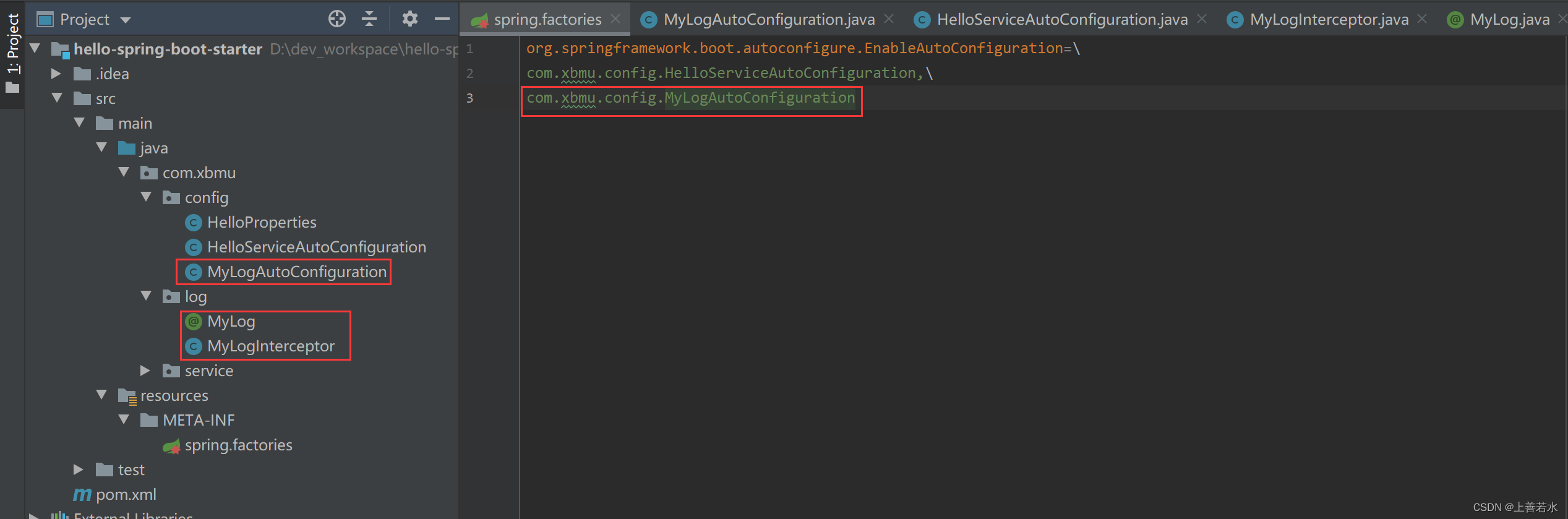
注意:我们在hello-spring-boot-starter中追加了新的内容,需要重新打包安装到maven仓库。
2.3.2.2、使用starter
在myapp工程的Controller方法上加入@MyLog注解
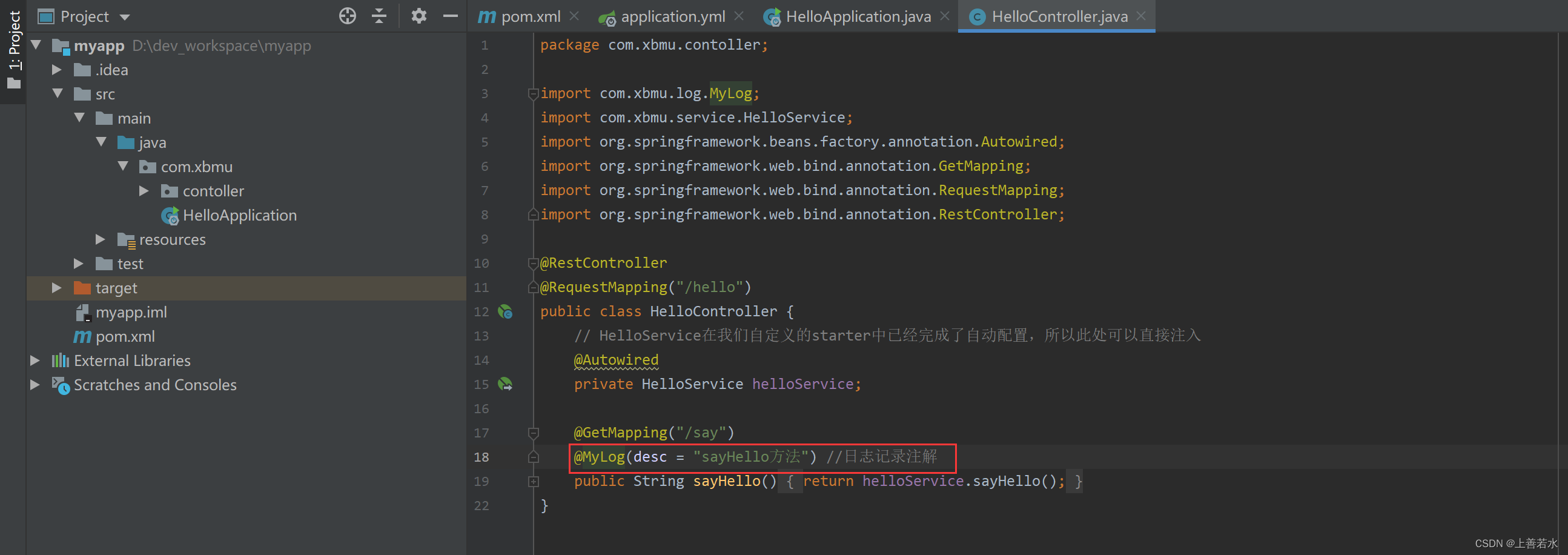
访问地址:http://localhost:8080/hello/say,查看控制台输出:

三、lombok
3.1、lombok 介绍
lombok是一个开源的代码生成库,能以简单的注解形式来简化Java类中的大量样板代码,提高开发人员的开发效率。例如开发中经常需要写的JavaBean,都需要花时间去添加相应的getter/setter,也许还要去写构造器、equals等方法,而且需要维护,当属性多时会出现大量的getter/setter方法,这些显得很冗长也没有太多技术含量。
lombok能通过注解的方式,在编译时自动为属性生成构造器、getter/setter、equals、hashcode、toString方法,使代码看起来更简洁。
lombok对应的maven坐标:
<dependency>
    <groupId>org.projectlombok</groupId>
    <artifactId>lombok</artifactId>
    <version>1.18.10</version>
</dependency>
- 1
- 2
- 3
- 4
- 5
3.2、安装lombok插件
要使用lombok需要在IDE中安装对应的lombok插件。本课程使用的开发工具为IntelliJ IDEA,安装插件过程如下:
- 打开IntelliJ IDEA后点击菜单栏中的File–>Settings进入到设置页面
- 点击设置页面中的Plugins进行插件的安装,在右侧选择Browse repositories…,然后在搜索页面输入lombok,可以查询到下方的Lombok Plugin,鼠标点击Lombok Plugin可在右侧看到Install按钮,点击该按钮便可安装
3.3、lombok常用注解
| 注解 | 说明 |
|---|---|
| @Setter | 注解在类或属性,注解在类时为所有属性生成setter方法,注解在属性上时只为该属性生成setter方法 |
| @Getter | 使用方法同@Setter,区别在于生成的是getter方法 |
| @ToString | 注解在类,添加toString方法 |
| @EqualsAndHashCode | 注解在类,生成hashCode和equals方法 |
| @NoArgsConstructor | 注解在类,生成无参的构造方法 |
| @RequiredArgsConstructor | 注解在类,为类中需要特殊处理的属性生成构造方法,比如final和被@NonNull注解的属性 |
| @AllArgsConstructor | 注解在类,生成包含类中所有属性的构造方法 |
| @Data | 注解在类,生成setter/getter、equals、canEqual、hashCode、toString方法,如为final属性,则不会为该属性生成setter方法 |
| @Slf4j | 注解在类,生成log变量,用于记录日志 |
| @Builder | 将类转变为建造者模式 |

