- 1AtCoder Beginner Contest 157 F Yakiniku Optimization Problem 难点 计算几何 求解两圆相交的交点坐标 二分
- 2C/C++程序设计课程设计[2023-02-15]_c++网吧管理系统课程设计
- 3java 1.7 linux rpm_linux 下面 jdk1.7 rpm 包的安装
- 4JDK8常见的函数式接口详解_jdk函数式接口
- 5STM32F103RCT6 实验代码之舵机+超声波避障小车(二)舵机+超声波_stm32f103rct6超声波模块
- 6k8s集群部署springboot项目_k8s部署springboot项目
- 7【Vue3+Vite】Vue生命周期与组件 快速学习 第三期
- 8QrCodeUtil--二维码工具类
- 9springboot banner在线生成_江帅帅:精通 Spring Boot 系列 03
- 10基于Spring Security2与 Ext 的权限管理设计与兑现
mongodb分页java写的_亿级别记录的mongodb分页查询java代码实现
赞
踩
1.准备环境
1.1 mongodb下载
1.2 mongodb启动
C:\mongodb\bin\mongod --dbpath D:\mongodb\data
1.3 可视化mongo工具Robo 3T下载
2.准备数据
org.mongodb
mongo-java-driver
3.6.1
java代码执行
public static voidmain(String[] args) {try{/**** Connect to MongoDB ****/
//Since 2.10.0, uses MongoClient
MongoClient mongo = new MongoClient("localhost", 27017);/**** Get database ****/
//if database doesn't exists, MongoDB will create it for you
DB db = mongo.getDB("www");/**** Get collection / table from 'testdb' ****/
//if collection doesn't exists, MongoDB will create it for you
DBCollection table = db.getCollection("person");/**** Insert ****/
//create a document to store key and value
BasicDBObject document=null;for(int i=0;i<100000000;i++) {
document= newBasicDBObject();
document.put("name", "mkyong"+i);
document.put("age", 30);
document.put("sex", "f");
table.insert(document);
}/**** Done ****/System.out.println("Done");
}catch(UnknownHostException e) {
e.printStackTrace();
}catch(MongoException e) {
e.printStackTrace();
}
}
3.分页查询
传统的limit方式当数据量较大时查询缓慢,不太适用。考虑别的方式,参考了logstash-input-mongodb的思路:
publicdefget_cursor_for_collection(mongodb, mongo_collection_name, last_id_object, batch_size)
collection=mongodb.collection(mongo_collection_name)#Need to make this sort by date in object id then get the first of the series
#db.events_20150320.find().limit(1).sort({ts:1})
return collection.find({:_id => {:$gt =>last_id_object}}).limit(batch_size)
end
collection_name=collection[:name]
@logger.debug("collection_data is: #{@collection_data}")
last_id=@collection_data[index][:last_id]#@logger.debug("last_id is #{last_id}", :index => index, :collection => collection_name)
#get batch of events starting at the last_place if it is set
last_id_object=last_idif since_type == 'id'last_id_object=BSON::ObjectId(last_id)
elsif since_type== 'time'
if last_id != ''last_id_object=Time.at(last_id)
end
end
cursor= get_cursor_for_collection(@mongodb, collection_name, last_id_object, batch_size)
使用java实现
importjava.net.UnknownHostException;importjava.util.List;importorg.bson.types.ObjectId;importcom.mongodb.BasicDBObject;importcom.mongodb.DB;importcom.mongodb.DBCollection;importcom.mongodb.DBCursor;importcom.mongodb.DBObject;importcom.mongodb.MongoClient;importcom.mongodb.MongoException;public classTest {public static voidmain(String[] args) {int pageSize=50000;try{/**** Connect to MongoDB ****/
//Since 2.10.0, uses MongoClient
MongoClient mongo = new MongoClient("localhost", 27017);/**** Get database ****/
//if database doesn't exists, MongoDB will create it for you
DB db = mongo.getDB("www");/**** Get collection / table from 'testdb' ****/
//if collection doesn't exists, MongoDB will create it for you
DBCollection table = db.getCollection("person");
DBCursor dbObjects;
Long cnt=table.count();//System.out.println(table.getStats());
Long page=getPageSize(cnt,pageSize);
ObjectId lastIdObject=new ObjectId("5bda8f66ef2ed979bab041aa");for(Long i=0L;i
Long start=System.currentTimeMillis();
dbObjects=getCursorForCollection(table, lastIdObject, pageSize);
System.out.println("第"+(i+1)+"次查询,耗时:"+(System.currentTimeMillis()-start)/1000+"秒");
List objs=dbObjects.toArray();
lastIdObject=(ObjectId) objs.get(objs.size()-1).get("_id");
}
}catch(UnknownHostException e) {
e.printStackTrace();
}catch(MongoException e) {
e.printStackTrace();
}
}public static DBCursor getCursorForCollection(DBCollection collection,ObjectId lastIdObject,intpageSize) {
DBCursor dbObjects=null;if(lastIdObject==null) {
lastIdObject=(ObjectId) collection.findOne().get("_id"); //TODO 排序sort取第一个,否则可能丢失数据
}
BasicDBObject query=newBasicDBObject();
query.append("_id",new BasicDBObject("$gt",lastIdObject));
BasicDBObject sort=newBasicDBObject();
sort.append("_id",1);
dbObjects=collection.find(query).limit(pageSize).sort(sort);returndbObjects;
}public static Long getPageSize(Long cnt,intpageSize) {return cnt%pageSize==0?cnt/pageSize:cnt/pageSize+1;
}
}
4.一些经验教训
1. 不小心漏打了一个$符号,导致查询不到数据,浪费了一些时间去查找原因
query.append("_id",new BasicDBObject("$gt",lastIdObject)); 2.创建索引
创建普通的单列索引:db.collection.ensureIndex({field:1/-1}); 1是升续 -1是降续
实例:db.articles.ensureIndex({title:1}) //注意 field 不要加""双引号,否则创建不成功
查看当前索引状态: db.collection.getIndexes();
实例:
db.articles.getIndexes();
删除单个索引db.collection.dropIndex({filed:1/-1});
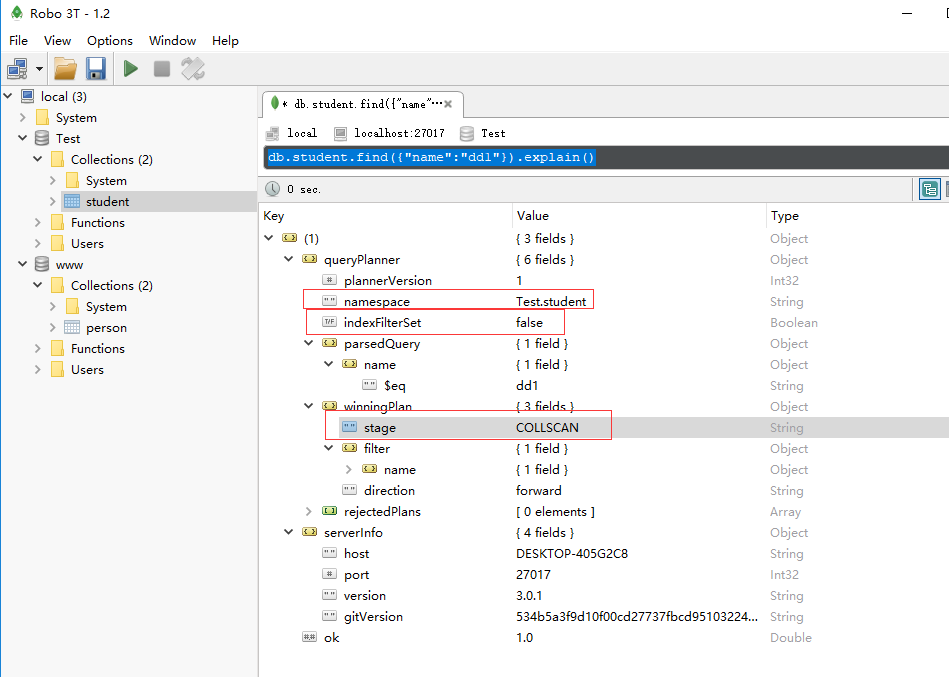
3.执行计划
db.student.find({"name":"dd1"}).explain()
参考文献:
【1】https://github.com/phutchins/logstash-input-mongodb/blob/master/lib/logstash/inputs/mongodb.rb
【2】https://www.cnblogs.com/yxlblogs/p/4930308.html
【3】https://docs.mongodb.com/manual/reference/method/db.collection.ensureIndex/