- 1SpringBoot3.0新特性:1、spring.factories文件废弃,自动配置包位置变化 2、Spring Native 快速体验 3、jakata api迁移 3、三方库的支持
- 2Eclipse怎么导出可执行jar文件_eclipse如何导出可执行文件
- 3downloadjs下载库 源码解析_jsdownload
- 4ubuntu20-github不通问题
- 5ARTS_Week_One_fetish locator week one存档
- 6Linux - Ubuntu系统下误删/bin/bash如何恢复_ubuntu bin文件夹被删除
- 7Python 环境变量配置详解_python环境变量的配置
- 8操作系统:精髓与设计原理 中文第七版 阅读笔记 第八章_操作系统精髓与设计原理第七版答案
- 9Anaconda+PyCharm创建环境及超详细配置指南,看这一篇就够了_anaconda pycharm
- 10【存储数据恢复】H3C存储卷中的数据恢复案例_存储卷什么情况下会重建
【尚硅谷】Java数据结构与算法笔记10 - 树结构的基础部分_java数据结构及算法尚硅谷
赞
踩
一、二叉树
1.1 为什么需要树结构
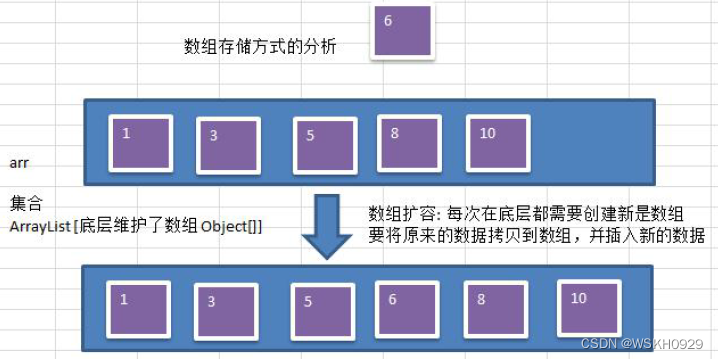
1.1.1 数组存储方式的分析
优点: 通过下标方式访问元素, 速度快。对于有序数组, 还可使用二分查找提高检索速度。
缺点: 如果要检索具体某个值, 或者揷入值(按一定顺序)会整体移动, 效率较低
画出操作示意图:
1.1.2 链式存储方式的分析
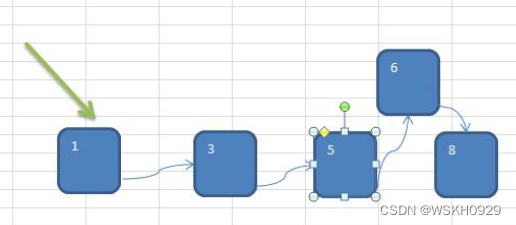
优点: 在一定程度上对数组存储方式有优化(比如: 揷入一个数值节点, 只需要将揷入节点, 链接到链表中即可, 删除效率也很好)。
缺点: 在进行检索时, 效率仍然较低, 比如(检索某个值, 需要从头节点开始遍历)
画出操作示意图:
1.1.3 树存储方式的分析
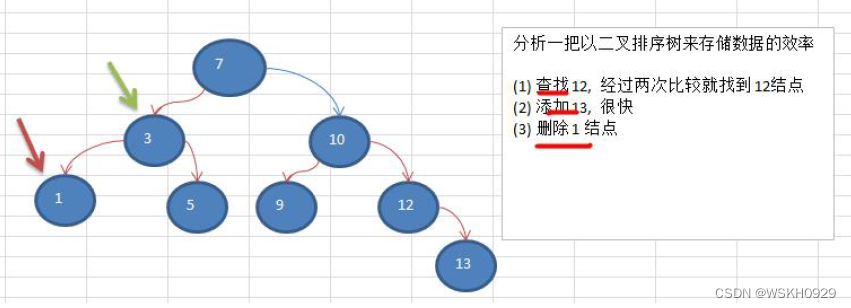
优点:能提高数据存储, 读取的效率, 比如利用 二叉排序树(Binary Sort Tree), 既可以保证数据的检索速度, 同时也 可以保证数据的揷入, 删除, 修改的速度。
案例: [ 7 , 3 , 10 , 1 , 5 , 9 , 12 ] [7,3,10,1,5,9,12] [7,3,10,1,5,9,12]
1.2 树示意图
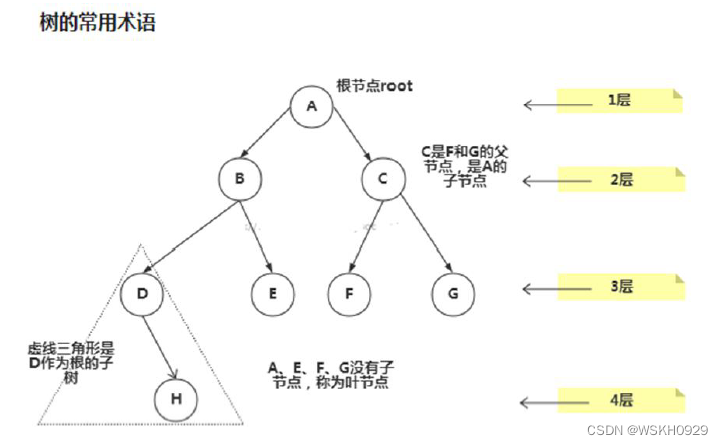
树的常用术语(结合示意图理解):
1)节点
2)根节点
3)父节点
4)子节点
5)叶子节点(没有子节点的节点)
6)节点的权(节点值)
7)路径(从 root 节点找到该节点的路线)
8)层
9)子权
10)树的高度(最大层数)
11)森林:多颗子树构成森林
1.3 二叉树的概念
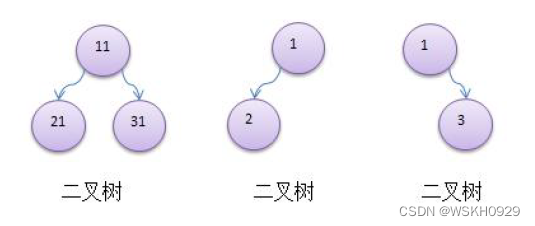
树有很多种,每个节点最多只能有两个子节点的一种形式称为二叉树
二叉树的子节点分为左节点和右节点
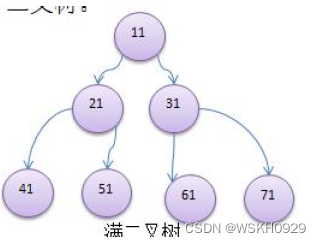
如果该二叉树的所有叶子节点都在最后一层,并且结点总数为
2
n
−
1
2^{n-1}
2n−1 ,
n
n
n 为层数,则我们称其为满二叉树
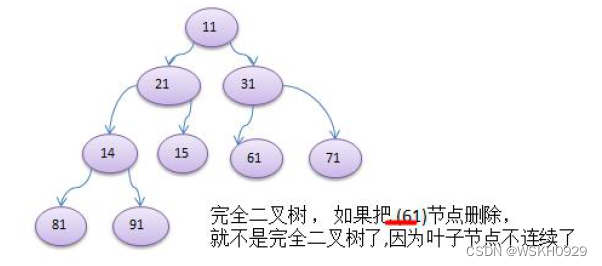
如果该二叉树的所有叶子节点都在最后一层或者倒数第二层,而且最后一层的叶子节点在左边连续,倒数第二层的叶子节点在右边连续,我们称为完全二叉树
1.4 二叉树 - 遍历节点
前序遍历:先输出当前节点,再遍历左子树和右子树
中序遍历:先遍历左子树,再输出当前节点,再遍历右子树
后序遍历:先遍历左子树和右子树,最后输出当前节点
public class BinaryTreeErgodic {

    public static void main(String[] args) {
        // 先需要创建一颗二叉树
        BinaryTreeNode root = new BinaryTreeNode(1);
        BinaryTreeNode node2 = new BinaryTreeNode(2);
        BinaryTreeNode node3 = new BinaryTreeNode(3);
        BinaryTreeNode node4 = new BinaryTreeNode(4);
        BinaryTreeNode node5 = new BinaryTreeNode(5);
        // 说明,我们先手动创建该二叉树,后面我们学习递归的方式创建二叉树
        root.left = node2;
        root.right = node3;
        node3.right = node4;
        node3.left = node5;
        // 测试前中后序遍历
        System.out.println("前序遍历");
        root.preOrderErgodic();
        System.out.println("中序遍历");
        root.infixOrderErgodic();
        System.out.println("后序遍历");
        root.postOrderErgodic();
    }

    static class BinaryTreeNode {
        int value;
        BinaryTreeNode left;
        BinaryTreeNode right;


        public BinaryTreeNode(int value) {
            this.value = value;
        }

        // 前序遍历:先输出当前节点,再遍历左子树和右子树
        public void preOrderErgodic() {
            System.out.println(value);
            if (left != null) {
                left.preOrderErgodic();
            }
            if (right != null) {
                right.preOrderErgodic();
            }
        }

        // 中序遍历:先遍历左子树,再输出当前节点,再遍历右子树
        public void infixOrderErgodic() {
            if (left != null) {
                left.infixOrderErgodic();
            }
            System.out.println(value);
            if (right != null) {
                right.infixOrderErgodic();
            }
        }

        // 后序遍历:先遍历左子树和右子树,最后输出当前节点
        public void postOrderErgodic() {
            if (left != null) {
                left.postOrderErgodic();
            }
            if (right != null) {
                right.postOrderErgodic();
            }
            System.out.println(value);
        }

    }

}

- 1
- 2
- 3
- 4
- 5
- 6
- 7
- 8
- 9
- 10
- 11
- 12
- 13
- 14
- 15
- 16
- 17
- 18
- 19
- 20
- 21
- 22
- 23
- 24
- 25
- 26
- 27
- 28
- 29
- 30
- 31
- 32
- 33
- 34
- 35
- 36
- 37
- 38
- 39
- 40
- 41
- 42
- 43
- 44
- 45
- 46
- 47
- 48
- 49
- 50
- 51
- 52
- 53
- 54
- 55
- 56
- 57
- 58
- 59
- 60
- 61
- 62
- 63
- 64
- 65
- 66
- 67
- 68
- 69
输出:
前序遍历
1
2
3
5
4
中序遍历
2
1
5
3
4
后序遍历
2
5
4
3
1
- 1
- 2
- 3
- 4
- 5
- 6
- 7
- 8
- 9
- 10
- 11
- 12
- 13
- 14
- 15
- 16
- 17
- 18
1.5 二叉树 - 查找指定节点

public class BinaryTreeSearch {

    public static void main(String[] args) {
        // 先需要创建一颗二叉树
        BinaryTreeNode root = new BinaryTreeNode(1);
        BinaryTreeNode node2 = new BinaryTreeNode(2);
        BinaryTreeNode node3 = new BinaryTreeNode(3);
        BinaryTreeNode node4 = new BinaryTreeNode(4);
        BinaryTreeNode node5 = new BinaryTreeNode(5);
        // 说明,我们先手动创建该二叉树,后面我们学习递归的方式创建二叉树
        root.left = node2;
        root.right = node3;
        node3.right = node4;
        node3.left = node5;
        // 测试前中后序遍历
        System.out.println("前序遍历查找");
        System.out.println(root.preOrderSearch(5));
        System.out.println("中序遍历查找");
        System.out.println(root.infixOrderSearch(5));
        System.out.println("后序遍历查找");
        System.out.println(root.postOrderSearch(5));
    }

    static class BinaryTreeNode {
        int value;
        BinaryTreeNode left;
        BinaryTreeNode right;


        public BinaryTreeNode(int value) {
            this.value = value;
        }

        // 前序遍历:先输出当前节点,再遍历左子树和右子树
        public BinaryTreeNode preOrderSearch(int num) {
            if (value == num) {
                return this;
            }
            if (left != null) {
                BinaryTreeNode node = left.preOrderSearch(num);
                if (node != null) {
                    return node;
                }
            }
            if (right != null) {
                return right.preOrderSearch(num);
            }
            return null;
        }

        // 中序遍历:先遍历左子树,再输出当前节点,再遍历右子树
        public BinaryTreeNode infixOrderSearch(int num) {
            if (left != null) {
                BinaryTreeNode node = left.infixOrderSearch(num);
                if (node != null) {
                    return node;
                }
            }
            if (value == num) {
                return this;
            }
            if (right != null) {
                return right.infixOrderSearch(num);
            }
            return null;
        }

        // 后序遍历:先遍历左子树和右子树,最后输出当前节点
        public BinaryTreeNode postOrderSearch(int num) {
            if (left != null) {
                BinaryTreeNode node = left.postOrderSearch(num);
                if (node != null) {
                    return node;
                }
            }
            if (right != null) {
                return right.postOrderSearch(num);
            }
            if (value == num) {
                return this;
            }
            return null;
        }

        @Override
        public String toString() {
            return "BinaryTreeNode{" +
                    "value=" + value +
                    '}';
        }
    }

}
- 1
- 2
- 3
- 4
- 5
- 6
- 7
- 8
- 9
- 10
- 11
- 12
- 13
- 14
- 15
- 16
- 17
- 18
- 19
- 20
- 21
- 22
- 23
- 24
- 25
- 26
- 27
- 28
- 29
- 30
- 31
- 32
- 33
- 34
- 35
- 36
- 37
- 38
- 39
- 40
- 41
- 42
- 43
- 44
- 45
- 46
- 47
- 48
- 49
- 50
- 51
- 52
- 53
- 54
- 55
- 56
- 57
- 58
- 59
- 60
- 61
- 62
- 63
- 64
- 65
- 66
- 67
- 68
- 69
- 70
- 71
- 72
- 73
- 74
- 75
- 76
- 77
- 78
- 79
- 80
- 81
- 82
- 83
- 84
- 85
- 86
- 87
- 88
- 89
- 90
- 91
- 92
- 93
输出:
前序遍历查找
BinaryTreeNode{value=5}
中序遍历查找
BinaryTreeNode{value=5}
后序遍历查找
BinaryTreeNode{value=5}
- 1
- 2
- 3
- 4
- 5
- 6
1.6 二叉树 - 删除节点
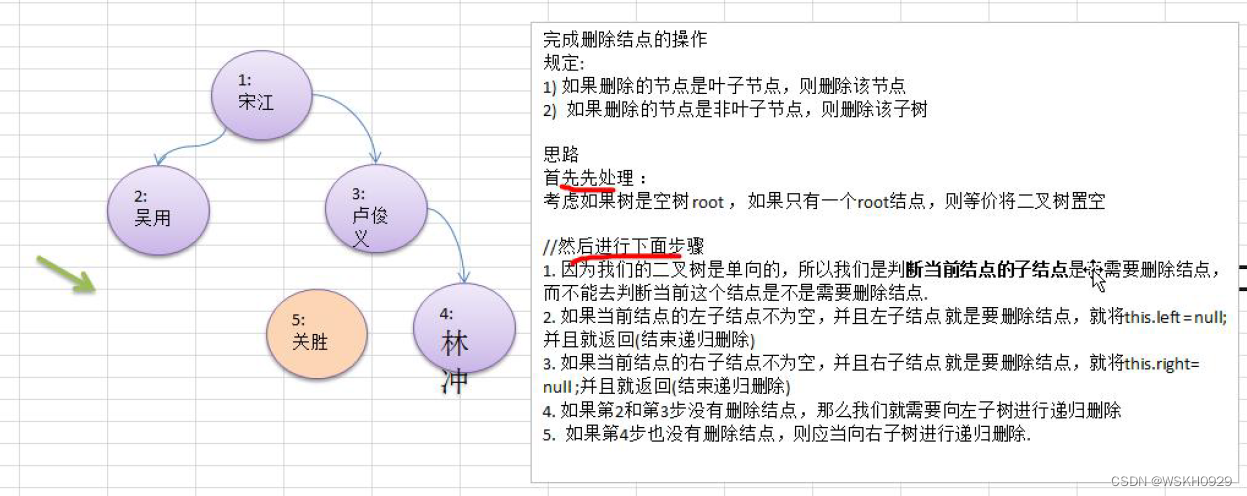
public class BinaryTreeRemove {

    public static void main(String[] args) {
        // 先需要创建一颗二叉树
        BinaryTreeNode root = new BinaryTreeNode(1);
        BinaryTreeNode node2 = new BinaryTreeNode(2);
        BinaryTreeNode node3 = new BinaryTreeNode(3);
        BinaryTreeNode node4 = new BinaryTreeNode(4);
        BinaryTreeNode node5 = new BinaryTreeNode(5);
        // 说明,我们先手动创建该二叉树,后面我们学习递归的方式创建二叉树
        root.left = node2;
        root.right = node3;
        node3.right = node4;
        node3.left = node5;
        // 测试前中后序遍历
        System.out.println("删除节点");
        root = BinaryTreeNode.removeNode(root, 5);
        if (root == null) {
            System.out.println("root = null");
        } else {
            root.preOrderErgodic();
        }
    }

    static class BinaryTreeNode {
        int value;
        BinaryTreeNode left;
        BinaryTreeNode right;


        public BinaryTreeNode(int value) {
            this.value = value;
        }

        // 前序遍历:先输出当前节点,再遍历左子树和右子树
        public static BinaryTreeNode removeNode(BinaryTreeNode node, int num) {
            if (node.value == num) {
                return null;
            }
            node.removeNode(num);
            return node;
        }

        private void removeNode(int num) {
            // 1. 如果当前结点的左子结点不为空,并且左子结点 就是要删除结点,就将this.left = null; 并且就返回(结束递归删除)
            if (this.left != null && this.left.value == num) {
                this.left = null;
                return;
            }
            // 2.如果当前结点的右子结点不为空,并且右子结点 就是要删除结点,就将this.right= null ;并且就返回(结束递归删除)
            if (this.right != null && this.right.value == num) {
                this.right = null;
                return;
            }
            // 3.我们就需要向左子树进行递归删除
            if (this.left != null) {
                this.left.removeNode(num);
            }
            // 4.则应当向右子树进行递归删除
            if (this.right != null) {
                this.right.removeNode(num);
            }
        }

        // 前序遍历:先输出当前节点,再遍历左子树和右子树
        public void preOrderErgodic() {
            System.out.println(value);
            if (left != null) {
                left.preOrderErgodic();
            }
            if (right != null) {
                right.preOrderErgodic();
            }
        }

        @Override
        public String toString() {
            return "BinaryTreeNode{" +
                    "value=" + value +
                    '}';
        }
    }

}
- 1
- 2
- 3
- 4
- 5
- 6
- 7
- 8
- 9
- 10
- 11
- 12
- 13
- 14
- 15
- 16
- 17
- 18
- 19
- 20
- 21
- 22
- 23
- 24
- 25
- 26
- 27
- 28
- 29
- 30
- 31
- 32
- 33
- 34
- 35
- 36
- 37
- 38
- 39
- 40
- 41
- 42
- 43
- 44
- 45
- 46
- 47
- 48
- 49
- 50
- 51
- 52
- 53
- 54
- 55
- 56
- 57
- 58
- 59
- 60
- 61
- 62
- 63
- 64
- 65
- 66
- 67
- 68
- 69
- 70
- 71
- 72
- 73
- 74
- 75
- 76
- 77
- 78
- 79
- 80
- 81
- 82
- 83
- 84
输出:
删除节点
1
2
3
4
- 1
- 2
- 3
- 4
- 5
二、顺序存储二叉树
2.1 顺序存储二叉树的概念
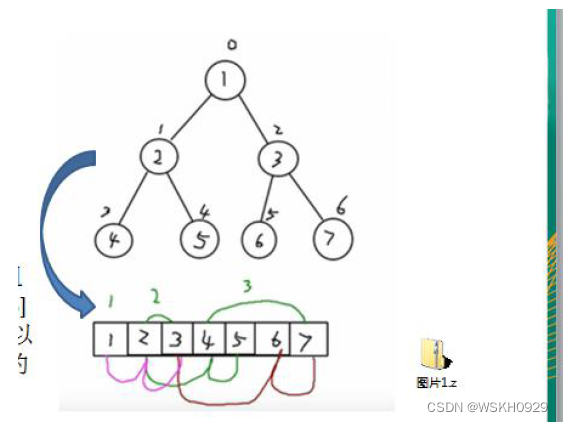
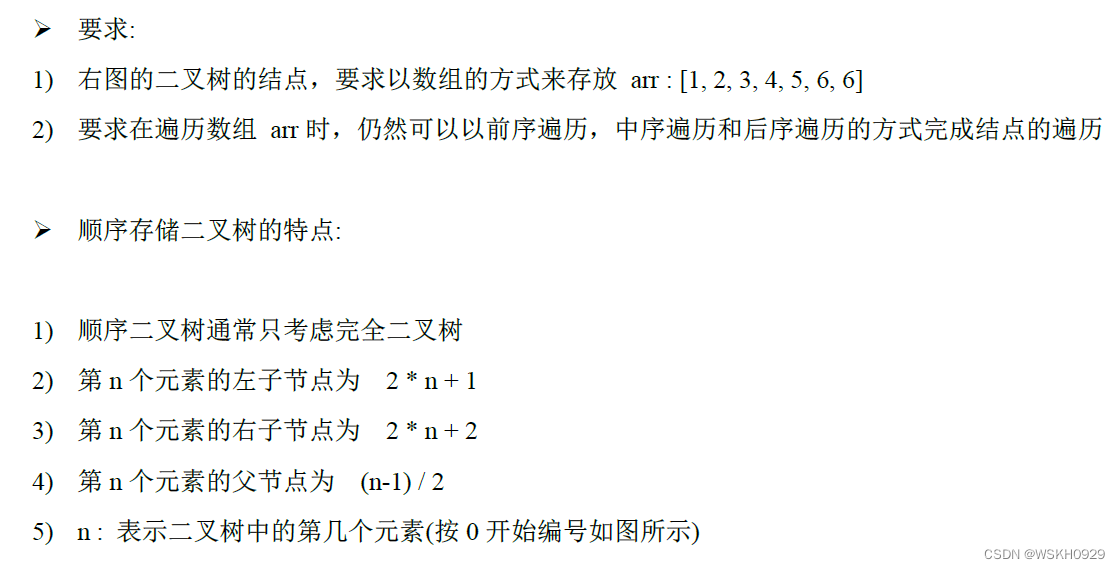
从数据存储来看, 数组存储方式和树的存储方式可以相互转换, 即数组可以转换成树, 树也可以转换成数组, 看下面的示意图。
2.2 顺序存储二叉树遍历
public class ArrayBinaryTreeDemo {

    public static void main(String[] args) {
        int[] arr = {1, 2, 3, 4, 5, 6, 7};
        //创建一个 ArrBinaryTree
        ArrayBinaryTree arrayBinaryTree = new ArrayBinaryTree(arr);
        System.out.println("前序遍历");
        arrayBinaryTree.preOrder(); // 1,2,4,5,3,6,7
    }

    // 编写一个ArrayBinaryTree, 实现顺序存储二叉树遍历
    static class ArrayBinaryTree {
        private int[] arr;//存储数据结点的数组

        public ArrayBinaryTree(int[] arr) {
            this.arr = arr;
        }

        //重载preOrder
        public void preOrder() {
            this.preOrder(0);
        }

        //编写一个方法,完成顺序存储二叉树的前序遍历

        /**
         * @param index 数组的下标
         */
        public void preOrder(int index) {
            //如果数组为空,或者 arr.length = 0
            if (arr == null || arr.length == 0) {
                System.out.println("数组为空,不能按照二叉树的前序遍历");
            }
            //输出当前这个元素
            System.out.println(arr[index]);
            //向左递归遍历
            if ((index * 2 + 1) < arr.length) {
                preOrder(2 * index + 1);
            }
            //向右递归遍历
            if ((index * 2 + 2) < arr.length) {
                preOrder(2 * index + 2);
            }
        }

    }
}
- 1
- 2
- 3
- 4
- 5
- 6
- 7
- 8
- 9
- 10
- 11
- 12
- 13
- 14
- 15
- 16
- 17
- 18
- 19
- 20
- 21
- 22
- 23
- 24
- 25
- 26
- 27
- 28
- 29
- 30
- 31
- 32
- 33
- 34
- 35
- 36
- 37
- 38
- 39
- 40
- 41
- 42
- 43
- 44
- 45
- 46
- 47
三、线索化二叉树
3.1 先看一个问题
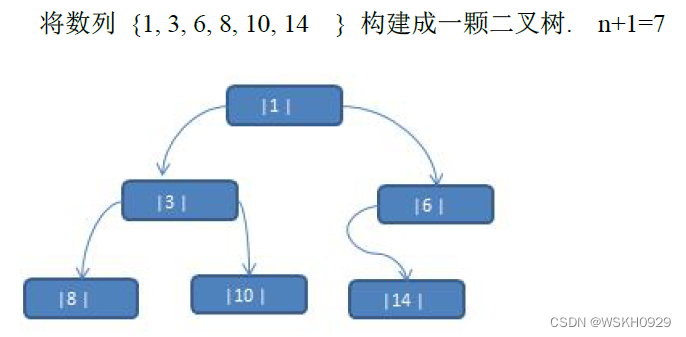
问题分析:
- 当我们对上面的二叉树进行中序遍历时,数列为:[8,3,10,1,6,14]
- 但是 6,8,10,14 这几个节点的左右指针,并没有完全的利用上
- 如果我们希望充分利用各个节点的左右指针,让各个节点可以指向自己的前后节点怎么办?
- 解决方案就是:线索二叉树
3.2 线索二叉树基本介绍
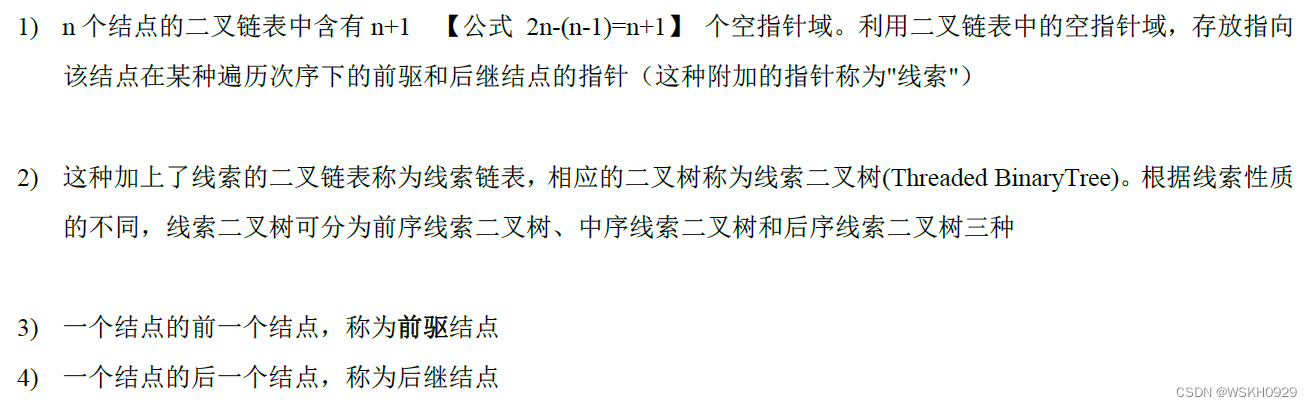
3.3 线索二叉树应用案例
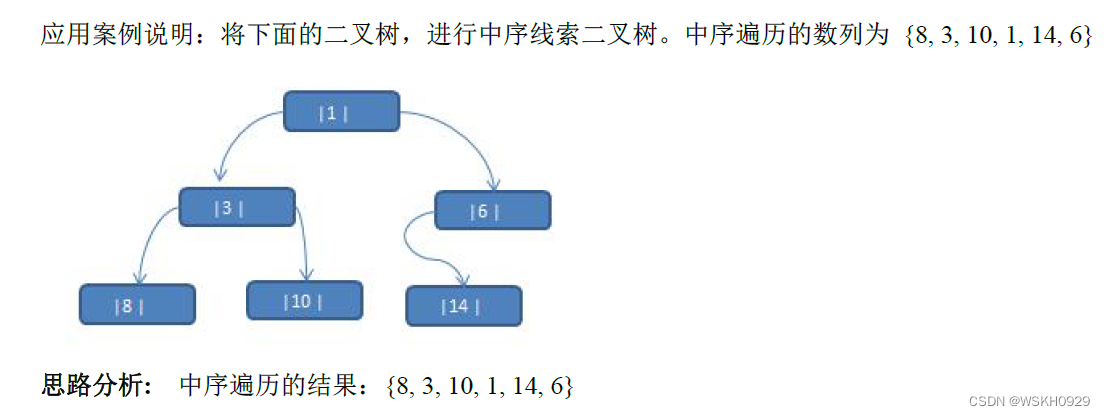
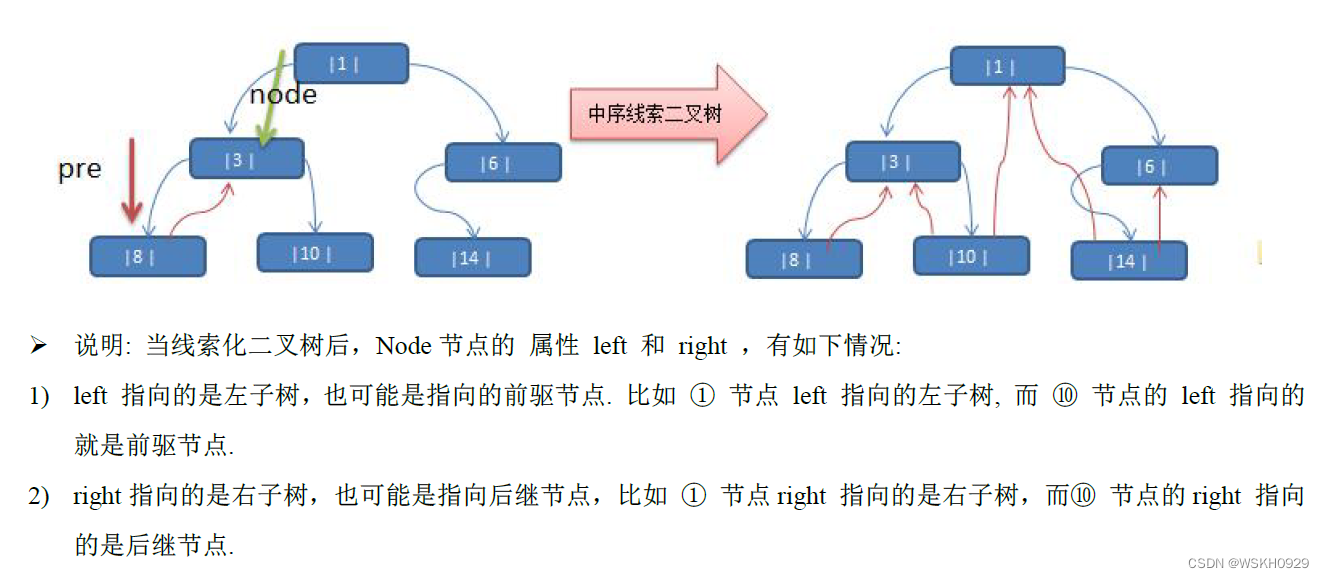
3.4 遍历线索化二叉树
说明:对前面的中序线索化二叉树,进行遍历
分析:因为线索化后,各个节点指向有变化,因此原来的遍历方式不能使用,这是需要使用新的方式遍历线索化二叉树,各个节点可以通过线型方式遍历,因此无需使用递归方式,这样也提高了遍历的效率。遍历的次序应当和中序遍历保持一致。
public class ThreadedBinaryTreeDemo {

    public static void main(String[] args) {
        // 测试一把中序线索二叉树的功能
        HeroNode root = new HeroNode(1, "tom");
        HeroNode node2 = new HeroNode(3, "jack");
        HeroNode node3 = new HeroNode(6, "smith");
        HeroNode node4 = new HeroNode(8, "mary");
        HeroNode node5 = new HeroNode(10, "king");
        HeroNode node6 = new HeroNode(14, "dim");

        // 二叉树,后面我们要递归创建, 现在简单处理使用手动创建
        root.setLeft(node2);
        root.setRight(node3);
        node2.setLeft(node4);
        node2.setRight(node5);
        node3.setLeft(node6);

        // 测试中序线索化
        ThreadedBinaryTree threadedBinaryTree = new ThreadedBinaryTree();
        threadedBinaryTree.setRoot(root);
        threadedBinaryTree.threadedNodes();

        // 测试: 以10号节点测试
        HeroNode leftNode = node5.getLeft();
        HeroNode rightNode = node5.getRight();
        System.out.println("10号结点的前驱结点是 =" + leftNode); //3
        System.out.println("10号结点的后继结点是=" + rightNode); //1

        // 当线索化二叉树后,能在使用原来的遍历方法
        // threadedBinaryTree.infixOrder();
        System.out.println("使用线索化的方式遍历 线索化二叉树");
        threadedBinaryTree.threadedList(); // 8, 3, 10, 1, 14, 6

    }

    // 定义ThreadedBinaryTree 实现了线索化功能的二叉树
    static class ThreadedBinaryTree {
        private HeroNode root;

        // 为了实现线索化,需要创建要给指向当前结点的前驱结点的指针
        // 在递归进行线索化时,pre 总是保留前一个结点
        private HeroNode pre = null;

        public void setRoot(HeroNode root) {
            this.root = root;
        }

        // 重载一把threadedNodes方法
        public void threadedNodes() {
            this.threadedNodes(root);
        }

        // 遍历线索化二叉树的方法
        public void threadedList() {
            // 定义一个变量,存储当前遍历的结点,从root开始
            HeroNode node = root;
            while (node != null) {
                // 循环的找到leftType == 1的结点,第一个找到就是8结点
                // 后面随着遍历而变化,因为当leftType==1时,说明该结点是按照线索化
                // 处理后的有效结点
                while (node.getLeftType() == 0) {
                    node = node.getLeft();
                }

                // 打印当前这个结点
                System.out.println(node);
                // 如果当前结点的右指针指向的是后继结点,就一直输出
                while (node.getRightType() == 1) {
                    // 获取到当前结点的后继结点
                    node = node.getRight();
                    System.out.println(node);
                }
                // 替换这个遍历的结点
                node = node.getRight();

            }
        }

        // 编写对二叉树进行中序线索化的方法

        /**
         * @param node 就是当前需要线索化的结点
         */
        public void threadedNodes(HeroNode node) {

            // 如果node==null, 不能线索化
            if (node == null) {
                return;
            }

            // (一)先线索化左子树
            threadedNodes(node.getLeft());
            // (二)线索化当前结点[有难度]

            // 处理当前结点的前驱结点
            // 以8结点来理解
            // 8结点的.left = null , 8结点的.leftType = 1
            if (node.getLeft() == null) {
                // 让当前结点的左指针指向前驱结点
                node.setLeft(pre);
                // 修改当前结点的左指针的类型,指向前驱结点
                node.setLeftType(1);
            }

            // 处理后继结点
            if (pre != null && pre.getRight() == null) {
                // 让前驱结点的右指针指向当前结点
                pre.setRight(node);
                // 修改前驱结点的右指针类型
                pre.setRightType(1);
            }
            // 每处理一个结点后,让当前结点是下一个结点的前驱结点
            pre = node;

            // (三)在线索化右子树
            threadedNodes(node.getRight());


        }

        // 删除结点
        public void delNode(int no) {
            if (root != null) {
                // 如果只有一个root结点, 这里立即判断root是不是就是要删除结点
                if (root.getNo() == no) {
                    root = null;
                } else {
                    // 递归删除
                    root.delNode(no);
                }
            } else {
                System.out.println("空树,不能删除~");
            }
        }

        // 前序遍历
        public void preOrder() {
            if (this.root != null) {
                this.root.preOrder();
            } else {
                System.out.println("二叉树为空,无法遍历");
            }
        }

        // 中序遍历
        public void infixOrder() {
            if (this.root != null) {
                this.root.infixOrder();
            } else {
                System.out.println("二叉树为空,无法遍历");
            }
        }

        // 后序遍历
        public void postOrder() {
            if (this.root != null) {
                this.root.postOrder();
            } else {
                System.out.println("二叉树为空,无法遍历");
            }
        }

        // 前序遍历
        public HeroNode preOrderSearch(int no) {
            if (root != null) {
                return root.preOrderSearch(no);
            } else {
                return null;
            }
        }

        // 中序遍历
        public HeroNode infixOrderSearch(int no) {
            if (root != null) {
                return root.infixOrderSearch(no);
            } else {
                return null;
            }
        }

        // 后序遍历
        public HeroNode postOrderSearch(int no) {
            if (root != null) {
                return this.root.postOrderSearch(no);
            } else {
                return null;
            }
        }
    }

    // 先创建HeroNode 结点
    static class HeroNode {
        private int no;
        private String name;
        private HeroNode left; // 默认null
        private HeroNode right; // 默认null
        // 说明
        // 1. 如果leftType == 0 表示指向的是左子树, 如果 1 则表示指向前驱结点
        // 2. 如果rightType == 0 表示指向是右子树, 如果 1表示指向后继结点
        private int leftType;
        private int rightType;


        public int getLeftType() {
            return leftType;
        }

        public void setLeftType(int leftType) {
            this.leftType = leftType;
        }

        public int getRightType() {
            return rightType;
        }

        public void setRightType(int rightType) {
            this.rightType = rightType;
        }

        public HeroNode(int no, String name) {
            this.no = no;
            this.name = name;
        }

        public int getNo() {
            return no;
        }

        public void setNo(int no) {
            this.no = no;
        }

        public String getName() {
            return name;
        }

        public void setName(String name) {
            this.name = name;
        }

        public HeroNode getLeft() {
            return left;
        }

        public void setLeft(HeroNode left) {
            this.left = left;
        }

        public HeroNode getRight() {
            return right;
        }

        public void setRight(HeroNode right) {
            this.right = right;
        }

        @Override
        public String toString() {
            return "HeroNode [no=" + no + ", name=" + name + "]";
        }

        // 递归删除结点
        // 1.如果删除的节点是叶子节点,则删除该节点
        // 2.如果删除的节点是非叶子节点,则删除该子树
        public void delNode(int no) {

            //思路
		/*
		 * 	1. 因为我们的二叉树是单向的,所以我们是判断当前结点的子结点是否需要删除结点,而不能去判断当前这个结点是不是需要删除结点.
			2. 如果当前结点的左子结点不为空,并且左子结点 就是要删除结点,就将this.left = null; 并且就返回(结束递归删除)
			3. 如果当前结点的右子结点不为空,并且右子结点 就是要删除结点,就将this.right= null ;并且就返回(结束递归删除)
			4. 如果第2和第3步没有删除结点,那么我们就需要向左子树进行递归删除
			5.  如果第4步也没有删除结点,则应当向右子树进行递归删除.

		 */
            // 2. 如果当前结点的左子结点不为空,并且左子结点 就是要删除结点,就将this.left = null; 并且就返回(结束递归删除)
            if (this.left != null && this.left.no == no) {
                this.left = null;
                return;
            }
            // 3.如果当前结点的右子结点不为空,并且右子结点 就是要删除结点,就将this.right= null ;并且就返回(结束递归删除)
            if (this.right != null && this.right.no == no) {
                this.right = null;
                return;
            }
            // 4.我们就需要向左子树进行递归删除
            if (this.left != null) {
                this.left.delNode(no);
            }
            // 5.则应当向右子树进行递归删除
            if (this.right != null) {
                this.right.delNode(no);
            }
        }

        // 编写前序遍历的方法
        public void preOrder() {
            System.out.println(this); // 先输出父结点
            // 递归向左子树前序遍历
            if (this.left != null) {
                this.left.preOrder();
            }
            // 递归向右子树前序遍历
            if (this.right != null) {
                this.right.preOrder();
            }
        }

        // 中序遍历
        public void infixOrder() {

            // 递归向左子树中序遍历
            if (this.left != null) {
                this.left.infixOrder();
            }
            // 输出父结点
            System.out.println(this);
            // 递归向右子树中序遍历
            if (this.right != null) {
                this.right.infixOrder();
            }
        }

        // 后序遍历
        public void postOrder() {
            if (this.left != null) {
                this.left.postOrder();
            }
            if (this.right != null) {
                this.right.postOrder();
            }
            System.out.println(this);
        }

        // 前序遍历查找

        /**
         * @param no 查找no
         * @return 如果找到就返回该Node ,如果没有找到返回 null
         */
        public HeroNode preOrderSearch(int no) {
            System.out.println("进入前序遍历");
            // 比较当前结点是不是
            if (this.no == no) {
                return this;
            }
            // 1.则判断当前结点的左子节点是否为空,如果不为空,则递归前序查找
            // 2.如果左递归前序查找,找到结点,则返回
            HeroNode resNode = null;
            if (this.left != null) {
                resNode = this.left.preOrderSearch(no);
            }
            if (resNode != null) { // 说明我们左子树找到
                return resNode;
            }
            // 1.左递归前序查找,找到结点,则返回,否继续判断,
            // 2.当前的结点的右子节点是否为空,如果不空,则继续向右递归前序查找
            if (this.right != null) {
                resNode = this.right.preOrderSearch(no);
            }
            return resNode;
        }

        // 中序遍历查找
        public HeroNode infixOrderSearch(int no) {
            // 判断当前结点的左子节点是否为空,如果不为空,则递归中序查找
            HeroNode resNode = null;
            if (this.left != null) {
                resNode = this.left.infixOrderSearch(no);
            }
            if (resNode != null) {
                return resNode;
            }
            System.out.println("进入中序查找");
            // 如果找到,则返回,如果没有找到,就和当前结点比较,如果是则返回当前结点
            if (this.no == no) {
                return this;
            }
            // 否则继续进行右递归的中序查找
            if (this.right != null) {
                resNode = this.right.infixOrderSearch(no);
            }
            return resNode;

        }

        // 后序遍历查找
        public HeroNode postOrderSearch(int no) {

            // 判断当前结点的左子节点是否为空,如果不为空,则递归后序查找
            HeroNode resNode = null;
            if (this.left != null) {
                resNode = this.left.postOrderSearch(no);
            }
            if (resNode != null) { // 说明在左子树找到
                return resNode;
            }

            // 如果左子树没有找到,则向右子树递归进行后序遍历查找
            if (this.right != null) {
                resNode = this.right.postOrderSearch(no);
            }
            if (resNode != null) {
                return resNode;
            }
            System.out.println("进入后序查找");
            // 如果左右子树都没有找到,就比较当前结点是不是
            if (this.no == no) {
                return this;
            }
            return resNode;
        }

    }

}
- 1
- 2
- 3
- 4
- 5
- 6
- 7
- 8
- 9
- 10
- 11
- 12
- 13
- 14
- 15
- 16
- 17
- 18
- 19
- 20
- 21
- 22
- 23
- 24
- 25
- 26
- 27
- 28
- 29
- 30
- 31
- 32
- 33
- 34
- 35
- 36
- 37
- 38
- 39
- 40
- 41
- 42
- 43
- 44
- 45
- 46
- 47
- 48
- 49
- 50
- 51
- 52
- 53
- 54
- 55
- 56
- 57
- 58
- 59
- 60
- 61
- 62
- 63
- 64
- 65
- 66
- 67
- 68
- 69
- 70
- 71
- 72
- 73
- 74
- 75
- 76
- 77
- 78
- 79
- 80
- 81
- 82
- 83
- 84
- 85
- 86
- 87
- 88
- 89
- 90
- 91
- 92
- 93
- 94
- 95
- 96
- 97
- 98
- 99
- 100
- 101
- 102
- 103
- 104
- 105
- 106
- 107
- 108
- 109
- 110
- 111
- 112
- 113
- 114
- 115
- 116
- 117
- 118
- 119
- 120
- 121
- 122
- 123
- 124
- 125
- 126
- 127
- 128
- 129
- 130
- 131
- 132
- 133
- 134
- 135
- 136
- 137
- 138
- 139
- 140
- 141
- 142
- 143
- 144
- 145
- 146
- 147
- 148
- 149
- 150
- 151
- 152
- 153
- 154
- 155
- 156
- 157
- 158
- 159
- 160
- 161
- 162
- 163
- 164
- 165
- 166
- 167
- 168
- 169
- 170
- 171
- 172
- 173
- 174
- 175
- 176
- 177
- 178
- 179
- 180
- 181
- 182
- 183
- 184
- 185
- 186
- 187
- 188
- 189
- 190
- 191
- 192
- 193
- 194
- 195
- 196
- 197
- 198
- 199
- 200
- 201
- 202
- 203
- 204
- 205
- 206
- 207
- 208
- 209
- 210
- 211
- 212
- 213
- 214
- 215
- 216
- 217
- 218
- 219
- 220
- 221
- 222
- 223
- 224
- 225
- 226
- 227
- 228
- 229
- 230
- 231
- 232
- 233
- 234
- 235
- 236
- 237
- 238
- 239
- 240
- 241
- 242
- 243
- 244
- 245
- 246
- 247
- 248
- 249
- 250
- 251
- 252
- 253
- 254
- 255
- 256
- 257
- 258
- 259
- 260
- 261
- 262
- 263
- 264
- 265
- 266
- 267
- 268
- 269
- 270
- 271
- 272
- 273
- 274
- 275
- 276
- 277
- 278
- 279
- 280
- 281
- 282
- 283
- 284
- 285
- 286
- 287
- 288
- 289
- 290
- 291
- 292
- 293
- 294
- 295
- 296
- 297
- 298
- 299
- 300
- 301
- 302
- 303
- 304
- 305
- 306
- 307
- 308
- 309
- 310
- 311
- 312
- 313
- 314
- 315
- 316
- 317
- 318
- 319
- 320
- 321
- 322
- 323
- 324
- 325
- 326
- 327
- 328
- 329
- 330
- 331
- 332
- 333
- 334
- 335
- 336
- 337
- 338
- 339
- 340
- 341
- 342
- 343
- 344
- 345
- 346
- 347
- 348
- 349
- 350
- 351
- 352
- 353
- 354
- 355
- 356
- 357
- 358
- 359
- 360
- 361
- 362
- 363
- 364
- 365
- 366
- 367
- 368
- 369
- 370
- 371
- 372
- 373
- 374
- 375
- 376
- 377
- 378
- 379
- 380
- 381
- 382
- 383
- 384
- 385
- 386
- 387
- 388
- 389
- 390
- 391
- 392
- 393
- 394
- 395
- 396
- 397
- 398
- 399
- 400
- 401
- 402
- 403
- 404
- 405
- 406
- 407
- 408
- 409
- 410
- 411
- 412
- 413
- 414
- 415
- 416
- 417
输出:
10号结点的前驱结点是 =HeroNode [no=3, name=jack]
10号结点的后继结点是=HeroNode [no=1, name=tom]
使用线索化的方式遍历 线索化二叉树
HeroNode [no=8, name=mary]
HeroNode [no=3, name=jack]
HeroNode [no=10, name=king]
HeroNode [no=1, name=tom]
HeroNode [no=14, name=dim]
HeroNode [no=6, name=smith]
- 1
- 2
- 3
- 4
- 5
- 6
- 7
- 8
- 9