
热门标签
热门文章
- 1【C++入门】(纯)虚函数和多态、抽象类、接口_c++ 多态,虚函数 接口详解
- 2ORB-SLAM策略思考之RANSAC
- 3《硬件设计指南-从器件认知到手机基带设计》正式上市!
- 432个关于FPGA的学习网站_verilog刷题网站
- 5Python Selenium3 自动化测试实战:构建高效测试项目_selenium3.0平台级自动化测试框架综合实战
- 6【软考】系统集成项目管理工程师【总】_软考中级系统集成项目管理工程师
- 7STM32F103C8T6+LD3320语音识别模块智能灯控
- 8java小项目——点餐系统_java点餐系统
- 9考研机试 三元组
- 10嵌入式培训机构四个月实训课程笔记(完整版)-Linux ARM平台编程第一天-嵌入式系统概述(物联技术666)
当前位置: article > 正文
经典面试题:SpringBoot 应用可以同时并发处理多少请求
作者:程序诗人 | 2024-02-01 00:02:11
赞
踩
经典面试题:SpringBoot 应用可以同时并发处理多少请求
前言
- hello,大家好,我是你们的老朋友 Lorin,最近逛帖子看到一个面试题:SpringBoot 应用可以同时并发处理多少请求?看到这个问题大多数朋友也许都会回答 200,这样你也许第二天就会收到如下拒信:
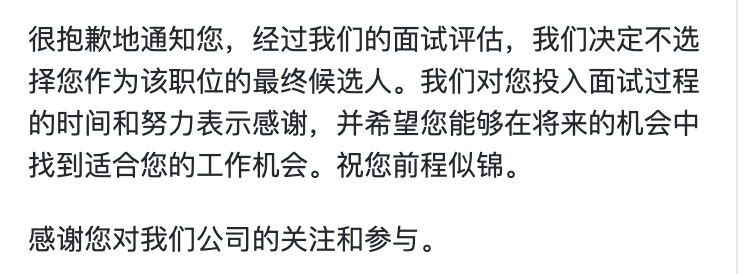
- 你可能会很难疑惑,面试都答上了为什么没有通过呢?因为这个答案在一定程度上是正确的,但却不是面试官想听到的答案,看完这篇文章,你应该就知道答案了。
构建测试 SpringBoot 应用看看 200 来自哪里
- 下面我们写一个简单的 demo 测试一把,这里为了压测简单,我们收到请求后直接把线程睡眠2分钟,通过日志打印观察应用能够同时处理的请求数。
/**
 * @description: 测试 Controller
 * @author: Lorin
 * @create: 2023-08-27 07:46
 **/
@RestController
public class TestController {

    /**
     * 并发测试
     * 接受并发请求,接受请求后睡眠 2 分钟阻塞线程,用于判断实例可以处理多少请求
     *
     * @param num 请求ID 表示已经收到多少个请求
     */
    @GetMapping("/test-with-sleep")
    public void testWithSleep(@RequestParam Integer num) throws InterruptedException {
        System.out.println("接受到请求: " + num);
        Thread.sleep(1000 * 120);
        System.out.println("请求执行完成");
    }

    /**
     * http test with no sleep
     *
     * @param num
     */
    @GetMapping("/test1")
    public void test1(@RequestParam Integer num) {
        System.out.println("接受到请求: " + num);
        System.out.println("请求执行完成");
    }
}

/**
 * @description: 并发测试
 * @author: Lorin
 * @create: 2023-08-27
 **/
class TestControllerTest {

    /**
     * 为了方便测试直接起多线程并发请求测试 当然也可以用 jmeter 等压测工具
     */
    @Test
    void test1() {
        for (int i = 0; i < 1000; i++) {
            int num = i;
            new Thread(() -> {
                try {
                    URL url = new URL("http://localhost:8080/test1?num=" + num);
                    HttpURLConnection connection = (HttpURLConnection) url.openConnection();
                    connection.connect();
                    System.out.println(connection.getResponseCode());
                    connection.disconnect();
                } catch (Exception exception) {
                    System.out.println(exception);
                }
            }).start();
        }
    }
}

- 1
- 2
- 3
- 4
- 5
- 6
- 7
- 8
- 9
- 10
- 11
- 12
- 13
- 14
- 15
- 16
- 17
- 18
- 19
- 20
- 21
- 22
- 23
- 24
- 25
- 26
- 27
- 28
- 29
- 30
- 31
- 32
- 33
- 34
- 35
- 36
- 37
- 38
- 39
- 40
- 41
- 42
- 43
- 44
- 45
- 46
- 47
- 48
- 49
- 50
- 51
- 52
- 53
- 54
- 55
- 56
- 57
- 58
- 59
- 60
- 61
运行结果
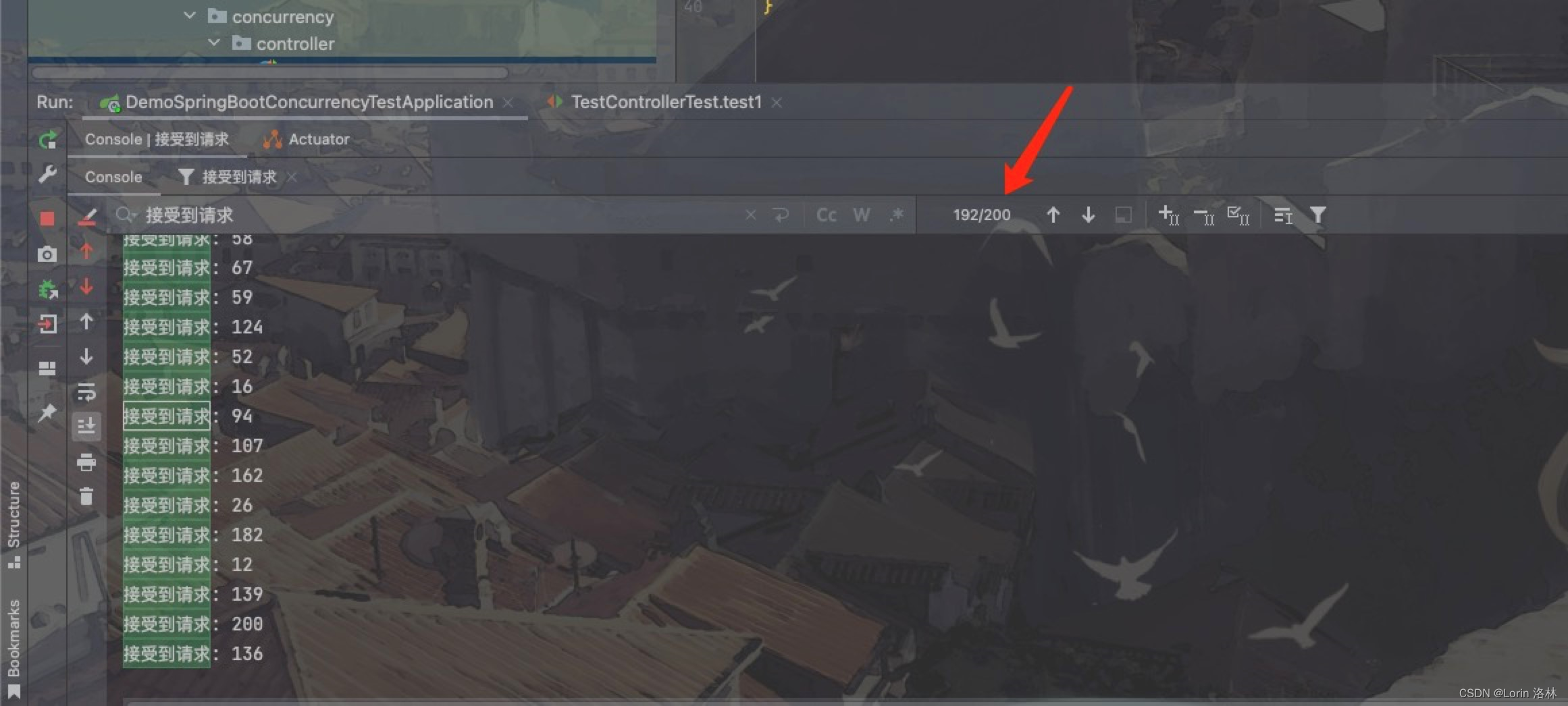
- 你仔细一看200,这不正是我们需要的答案?但是我们作为一个程序员一定要知其然然后知其所以然。
- 比如面试官会接着问:
这里并发为什么是200,我们可以调整?
如果并发数小于200或者大于200是如何表现?
- 1
- 2
- 这时候也许就触及到了你的知识盲区了,不要慌马上发车,大家一起来刨根问底来知其所以然:

什么影响了 SpringBoot 应用并发处理请求数
- 先说结论:应用并发请求数主要由两个因素影响,使用的 Servlet容器(默认使用 Tomcat,常用的还有 jetty、undertow) 和 配置项。
- 所以在开头的答案我们可以优化一下:在默认配置下,SprigBoot 应用可以并发处理 200 请求。
- 这就是终极答案吗?不不不,这才是开始,继续发车接下来我们要告诉面试官,不同的 Servlet 容器的工作原理以及配置项,相信下面这些内容回答完,面试官心里的 OS 肯定是:哎哟,这小伙子懂得挺多,不错不错!!

Tomcat
原理
- 现在我们断点看一下应用的执行流程:
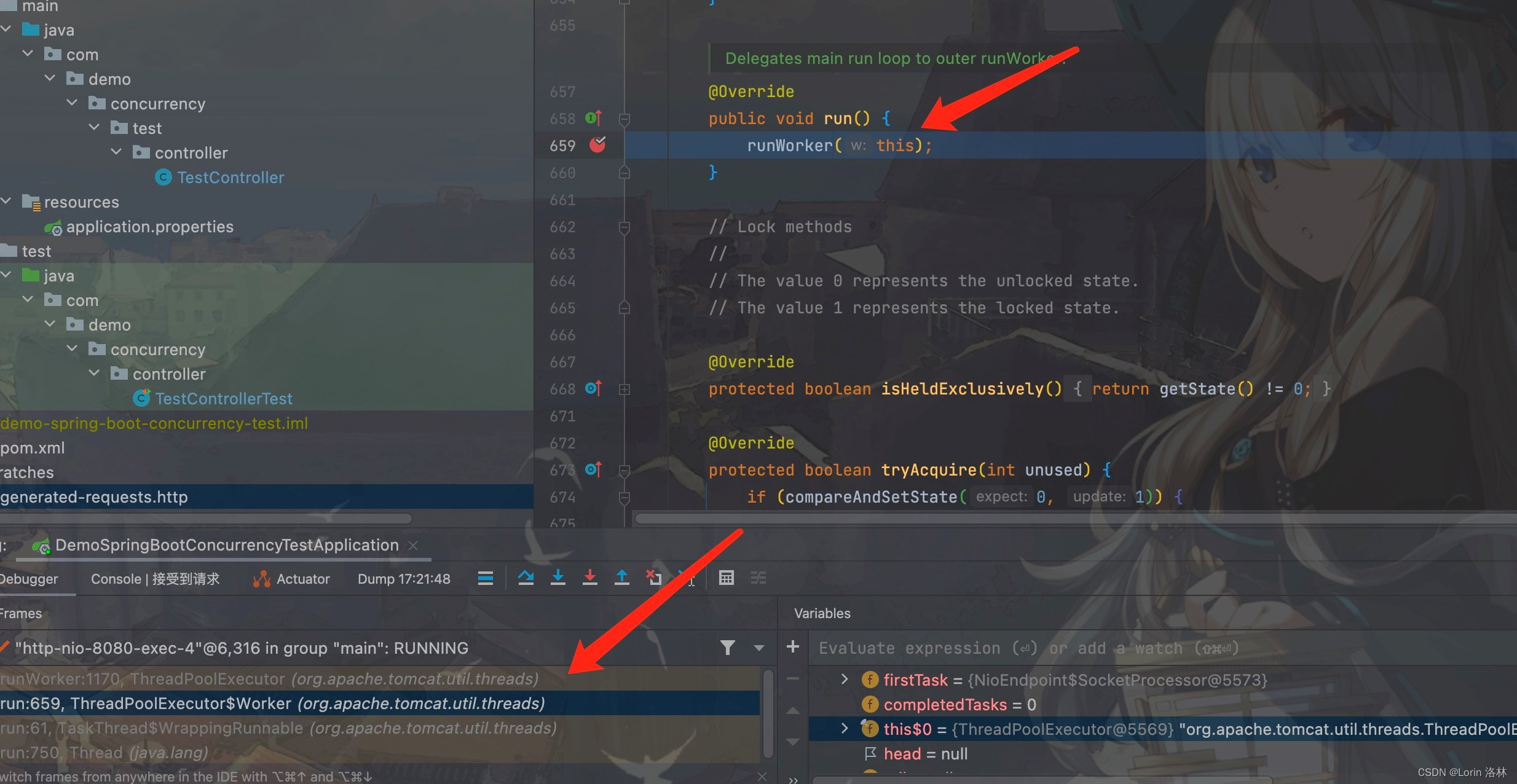
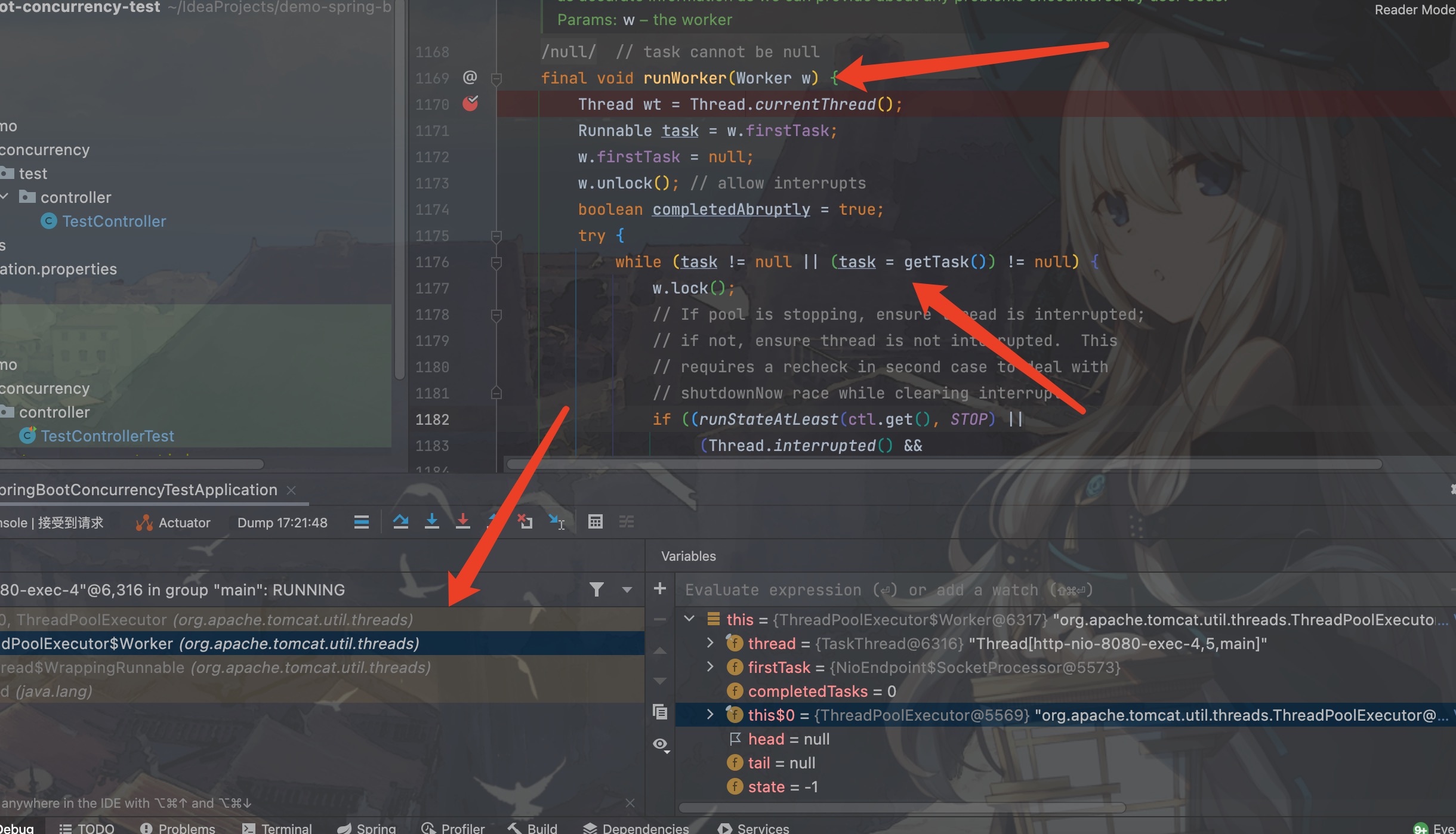
- 咋一看是不是很眼熟,这不是有点我们线程池的运行逻辑:任务数小于核心数,创建核心线程执行,任务数大于核心线程数,将任务放到任务队列中,任务队列满后创建非核心线程数执行。那么我们来看看几个参数的配置是多少:
核心线程数:10
非核心线程数:200
任务队列长度:2147483647  Integer.MAX_VALUE
- 1
- 2
- 3
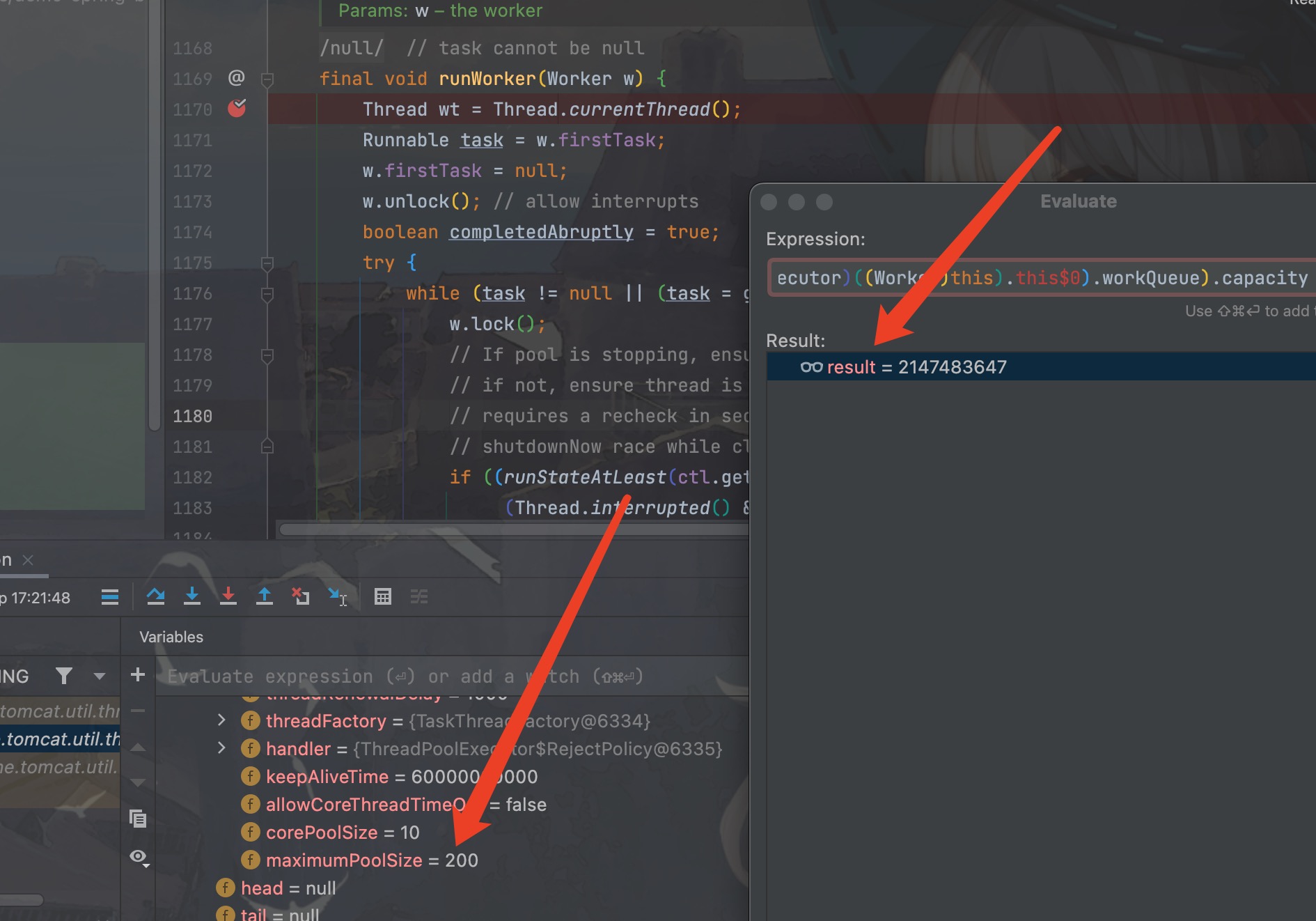
- 怎么肥事?我们任务队列为 Integer.MAX_VALUE ,我们才 1000 个请求,怎么创建了非核心线程,难道和 Java 的线程池不一样,回到源码中,我们再看看怎么回事:
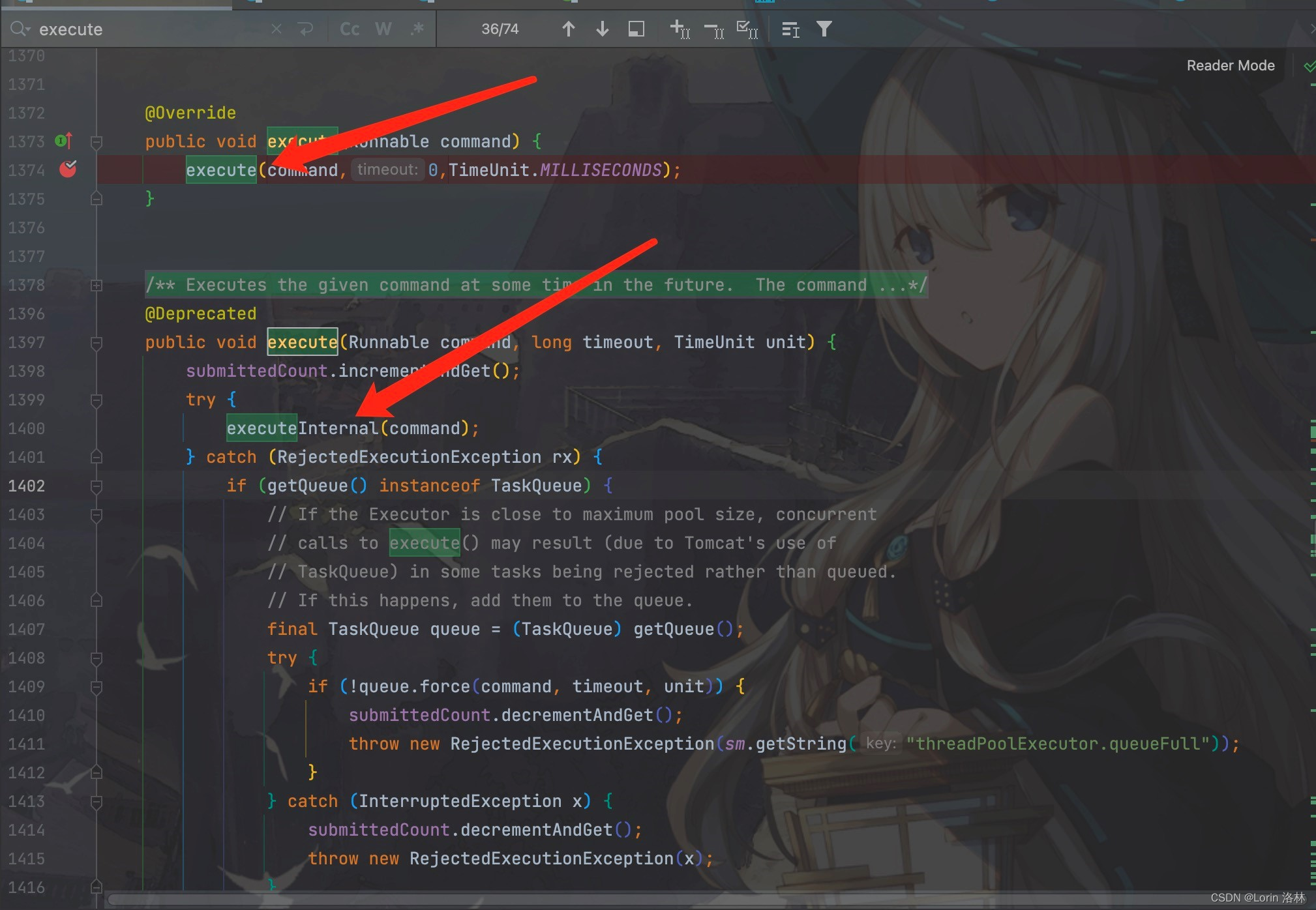
- 这个时候我们需要看看任务是如何提交到线程池的,既然都是线程池,那么猜测 提交应该也是一样使用 execute 方法,我们断点试一下发现猜测正确:
org.apache.tomcat.util.threads.ThreadPoolExecutor#execute(java.lang.Runnable)
- 1
    private void executeInternal(Runnable command) {
        if (command == null) {
            throw new NullPointerException();
        }
        /*
         * Proceed in 3 steps:
         *
         * 1. If fewer than corePoolSize threads are running, try to
         * start a new thread with the given command as its first
         * task.  The call to addWorker atomically checks runState and
         * workerCount, and so prevents false alarms that would add
         * threads when it shouldn't, by returning false.
         *
         * 2. If a task can be successfully queued, then we still need
         * to double-check whether we should have added a thread
         * (because existing ones died since last checking) or that
         * the pool shut down since entry into this method. So we
         * recheck state and if necessary roll back the enqueuing if
         * stopped, or start a new thread if there are none.
         *
         * 3. If we cannot queue task, then we try to add a new
         * thread.  If it fails, we know we are shut down or saturated
         * and so reject the task.
         */
        int c = ctl.get();
        // 判断是否小于核心线程数 小于则创建核心线程处理任务
        if (workerCountOf(c) < corePoolSize) {
            if (addWorker(command, true)) {
                return;
            }
            c = ctl.get();
        }
        // 判断任务是否可以放入队列中
        if (isRunning(c) && workQueue.offer(command)) {
            int recheck = ctl.get();
            if (! isRunning(recheck) && remove(command)) {
                reject(command);
            } else if (workerCountOf(recheck) == 0) {
                addWorker(null, false);
            }
        }
        // 尝试创建非核心线程
        else if (!addWorker(command, false)) {
            reject(command);
        }
    }

// 既然没有放入队列中 那么我们看看为什么没有放入队列中
public class TaskQueue extends LinkedBlockingQueue<Runnable> {
    @Override
    public boolean offer(Runnable o) {
      //we can't do any checks
        if (parent==null) {
            return super.offer(o);
        }
        //we are maxed out on threads, simply queue the object
        if (parent.getPoolSize() == parent.getMaximumPoolSize()) {
            return super.offer(o);
        }
        //we have idle threads, just add it to the queue
        if (parent.getSubmittedCount()<=(parent.getPoolSize())) {
            return super.offer(o);
        }
        //if we have less threads than maximum force creation of a new thread
        if (parent.getPoolSize()<parent.getMaximumPoolSize()) {
            return false;
        }
        //if we reached here, we need to add it to the queue
        return super.offer(o);
    }
}

// parent 就是我们的 tomcat 线程池,parent.getPoolSize() 返回当前线程池中的数量
// 关键在这段代码,若当前当前线程数小于最大线程数,则不放入队列中,结合上文逻辑,则进入创建非核心线程逻辑
// if we have less threads than maximum force creation of a new thread
if (parent.getPoolSize()<parent.getMaximumPoolSize()) {
    return false;
}
- 1
- 2
- 3
- 4
- 5
- 6
- 7
- 8
- 9
- 10
- 11
- 12
- 13
- 14
- 15
- 16
- 17
- 18
- 19
- 20
- 21
- 22
- 23
- 24
- 25
- 26
- 27
- 28
- 29
- 30
- 31
- 32
- 33
- 34
- 35
- 36
- 37
- 38
- 39
- 40
- 41
- 42
- 43
- 44
- 45
- 46
- 47
- 48
- 49
- 50
- 51
- 52
- 53
- 54
- 55
- 56
- 57
- 58
- 59
- 60
- 61
- 62
- 63
- 64
- 65
- 66
- 67
- 68
- 69
- 70
- 71
- 72
- 73
- 74
- 75
- 76
- 77
- 78
- 看完上文的代码豁然开朗,原来 Tomcat 线程池和 Java 线程池的执行逻辑并不一致,Tomcat 线程池会先创建非核心线程,当已创建线程池数量大于最大线程时才会将任务放入队列中。
配置项
- 看完 Tomcat 的原理,我们来看看 Tomacat 的常用配置是否会影响并发请求的数量,有了上面的基础,我们来看一下常用的配置项:
# 非核心线程数
server.tomcat.threads.max=200
# 核心线程数
server.tomcat.threads.min-spare=10

----------------------------------

# 在拒绝连接之前可排队的连接数
server.tomcat.accept-count=100

# 非核心线程空闲时间 1 分钟

# 同时处理最大接收连接数
# maxConnections和accept-count的关系为:当连接数达到最大值maxConnections后,系统会继续接收连接,但不会超过acceptCount的值
# 当该值小于 server.tomcat.threads.max 时会影响最大可并发处理请求数
server.tomcat.max-connections=8192

# 每个连接可以处理的最大请求数
server.tomcat.max-keep-alive-requests=100

# 连接存活时间 默认使用 connection-timeout
server.tomcat.keep-alive-timeout=-1

# 连接超时时间 默认 20s
server.tomcat.connection-timeout=20000
- 1
- 2
- 3
- 4
- 5
- 6
- 7
- 8
- 9
- 10
- 11
- 12
- 13
- 14
- 15
- 16
- 17
- 18
- 19
- 20
- 21
- 22
- 23
- 24
- 25
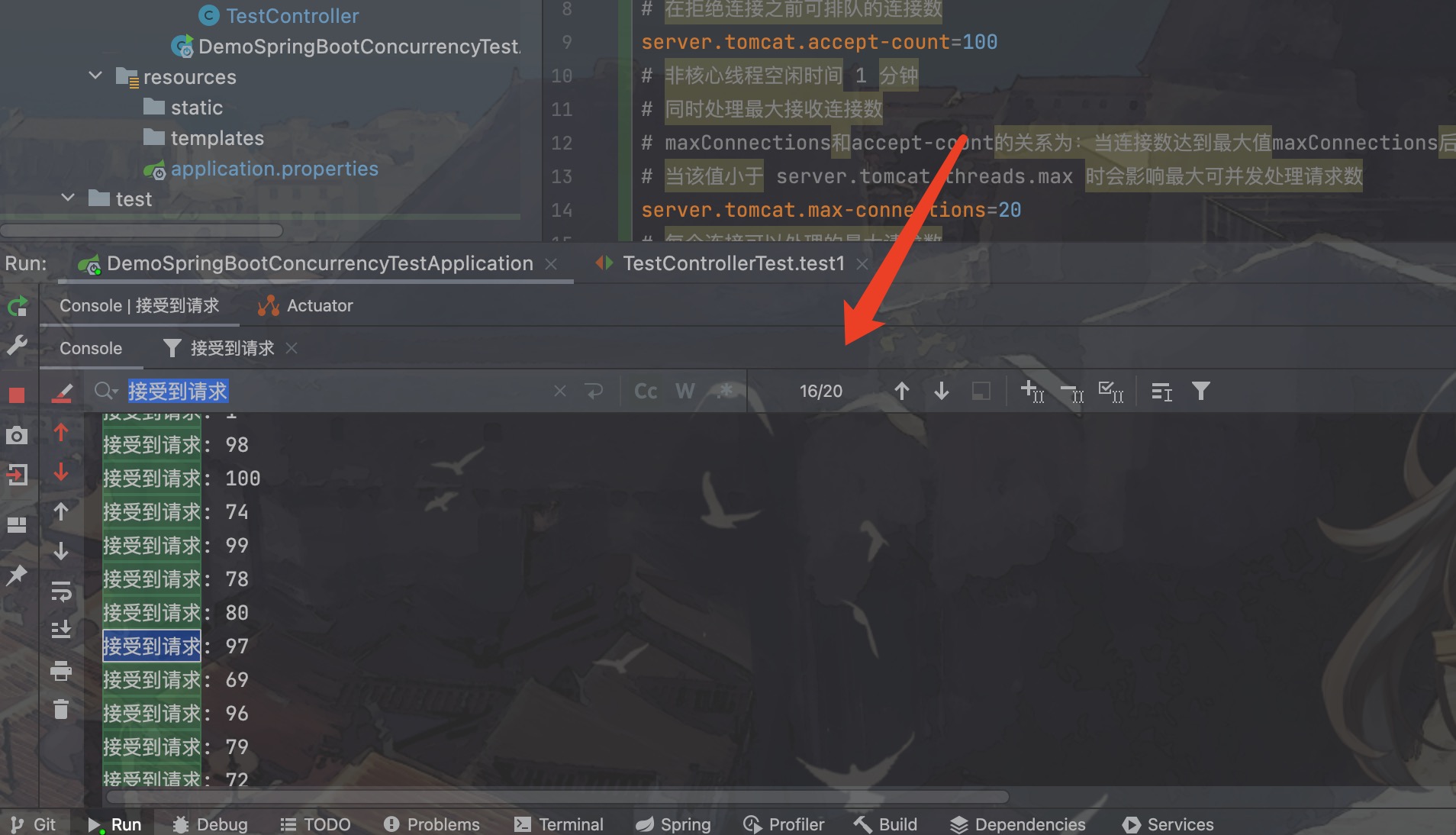
- 除 server.tomcat.threads.max 会影响并发数以外,其实 server.tomcat.max-connections 也会影响并发请求数,比如将该参数设置为 20:
- 然后回答上面的补充问题:
这里并发为什么是 200,我们可以调整?
- 因为 tomcat 线程池类似 Java 线程池,但有一定区别,会先创建非核心线程后再放入队列中。
- 我们可以通过调整 最大线程数来 控制并发数量

如果并发数小于 200 或者大于 200 是如何表现?(默认配置下)
- 小于 200 会创建核心线程和非核心线程立即处理任务,大于 200 的任务会放入等待队列中
- 1
- 2
- 3
- 4
- 5
- 6
undertow
如何切换 undertow 容器
- 很简单,我们只需要将原有的 tomcat 容器移除,然后引入 undertow 容器即可
        <dependency>
            <groupId>org.springframework.boot</groupId>
            <artifactId>spring-boot-starter-web</artifactId>
            <exclusions>
                <exclusion>
                    <groupId>org.springframework.boot</groupId>
                    <artifactId>spring-boot-starter-tomcat</artifactId>
                </exclusion>
            </exclusions>
        </dependency>
        <dependency>
            <groupId>org.springframework.boot</groupId>
            <artifactId>spring-boot-starter-undertow</artifactId>
        </dependency>

// 观察启动日志可以看到我们已经成功启动
2023-08-27 20:56:29.531  INFO 2618 --- [           main] org.jboss.threads                        : JBoss Threads version 3.1.0.Final
2023-08-27 20:56:29.575  INFO 2618 --- [           main] o.s.b.w.e.undertow.UndertowWebServer     : Undertow started on port(s) 8080 (http)
- 1
- 2
- 3
- 4
- 5
- 6
- 7
- 8
- 9
- 10
- 11
- 12
- 13
- 14
- 15
- 16
- 17
- 18
并发处理请求数
- 老规矩先并发请求压测一把:
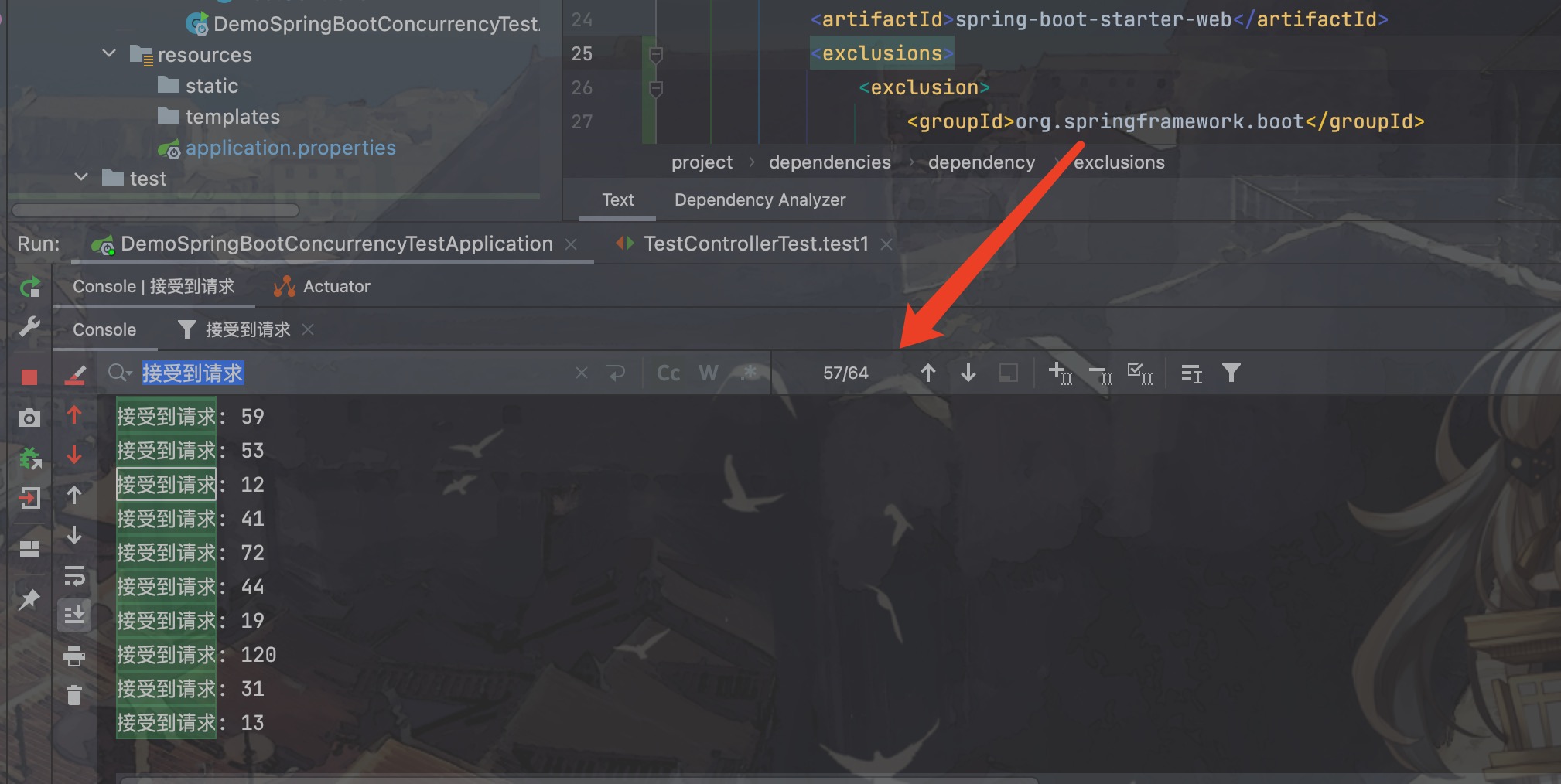
- 可以看到我们同时并发处理的请求为 64,那么这个 64 是从什么地方的呢,接着往下面看,和上面 Tomcat 的思路一样先断点查看堆栈信息定位:
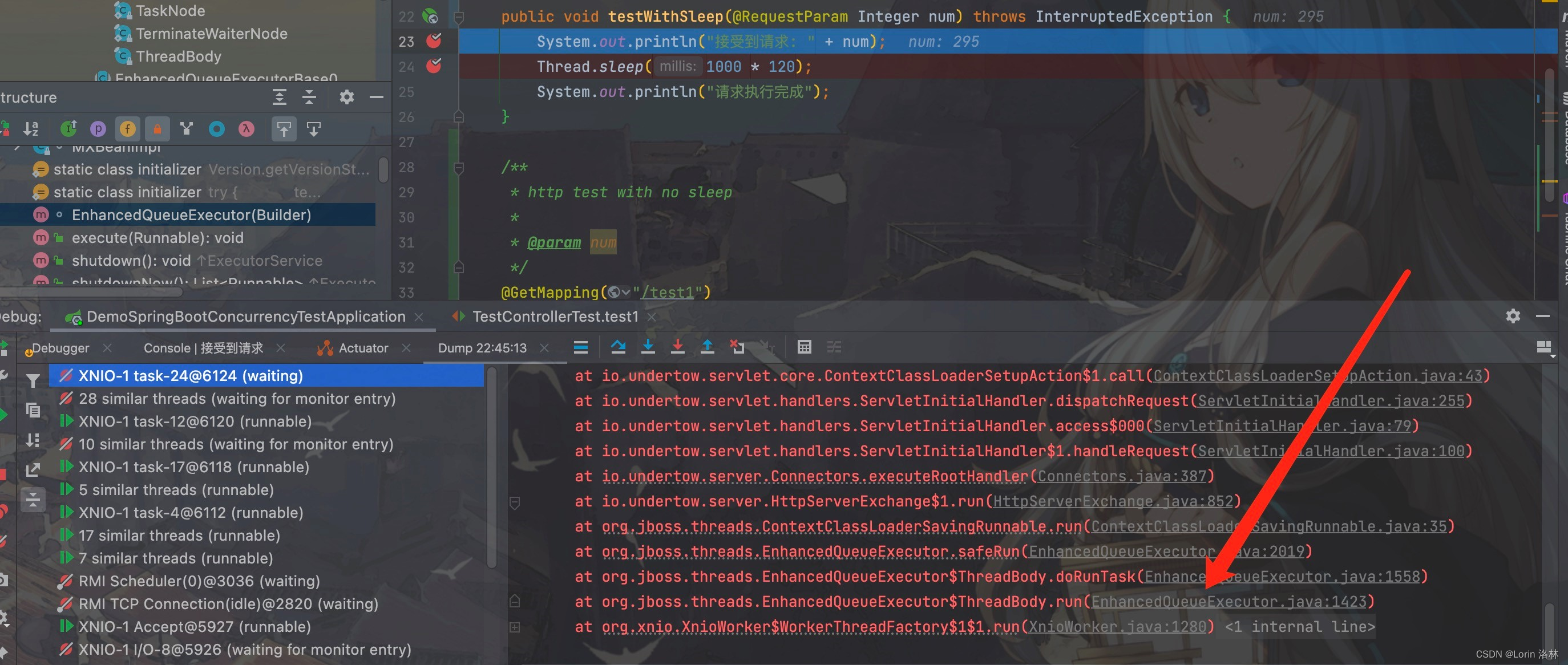
- org.jboss.threads.EnhancedQueueExecutor.Builder 找到创建线程池的地方:
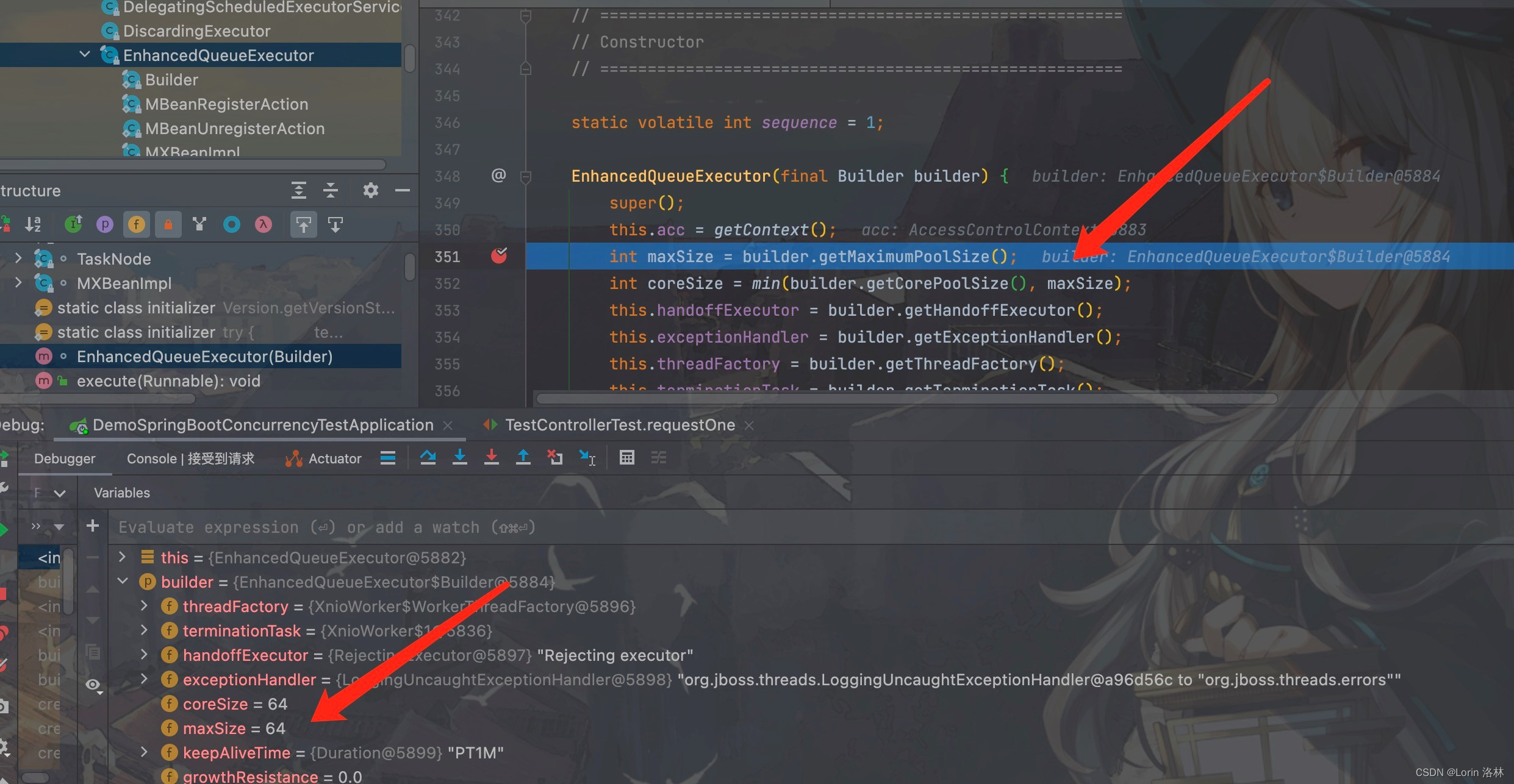
-
可以看到 maxSize、coreSize 来自于 Builder 这个对象,我们回到 Builder 看看这两个参数来自哪里:
-
org.jboss.threads.EnhancedQueueExecutor.Builder
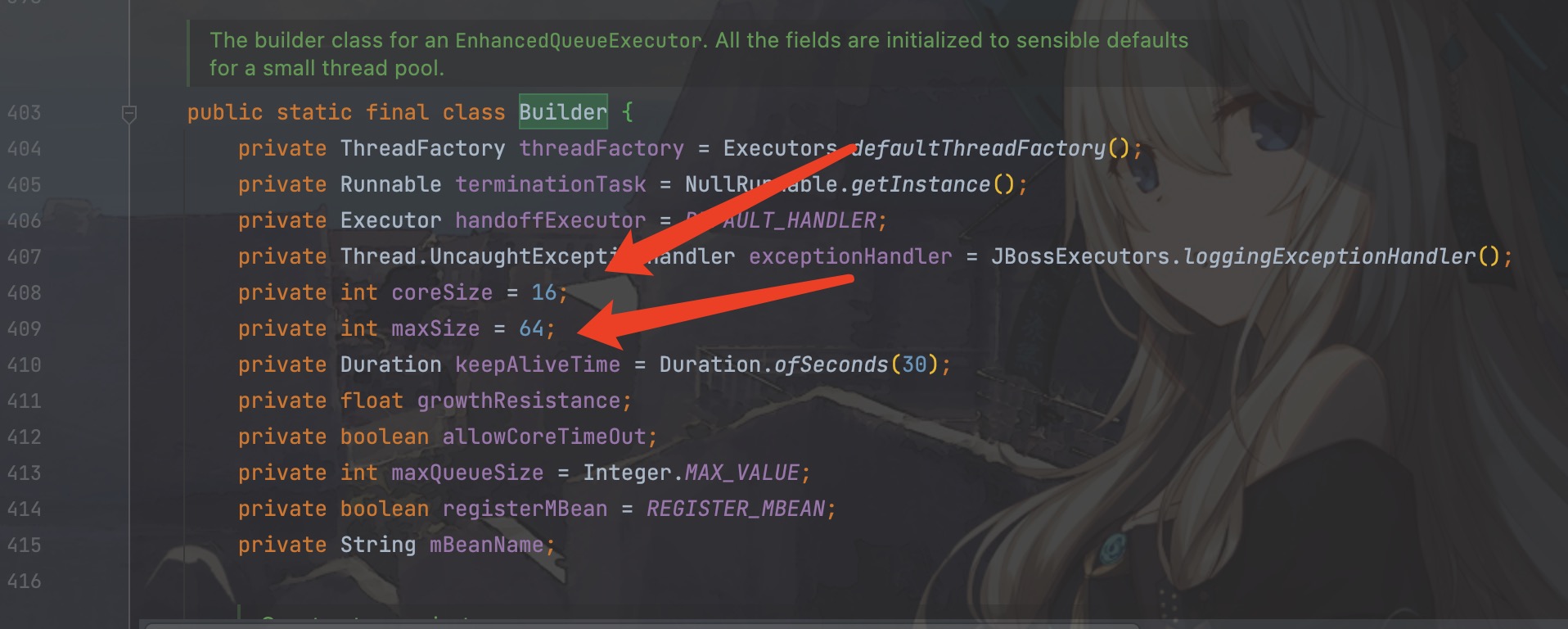
-
我们看到 maxSize、coreSize 原始值为 64、16,那么是在哪里改变的呢?接着往下断点,我们可以找到:
-
org.xnio.XnioWorker#XnioWorker 中创建了 修改了 Builder 创建了 EnhancedQueueExecutorTaskPool:
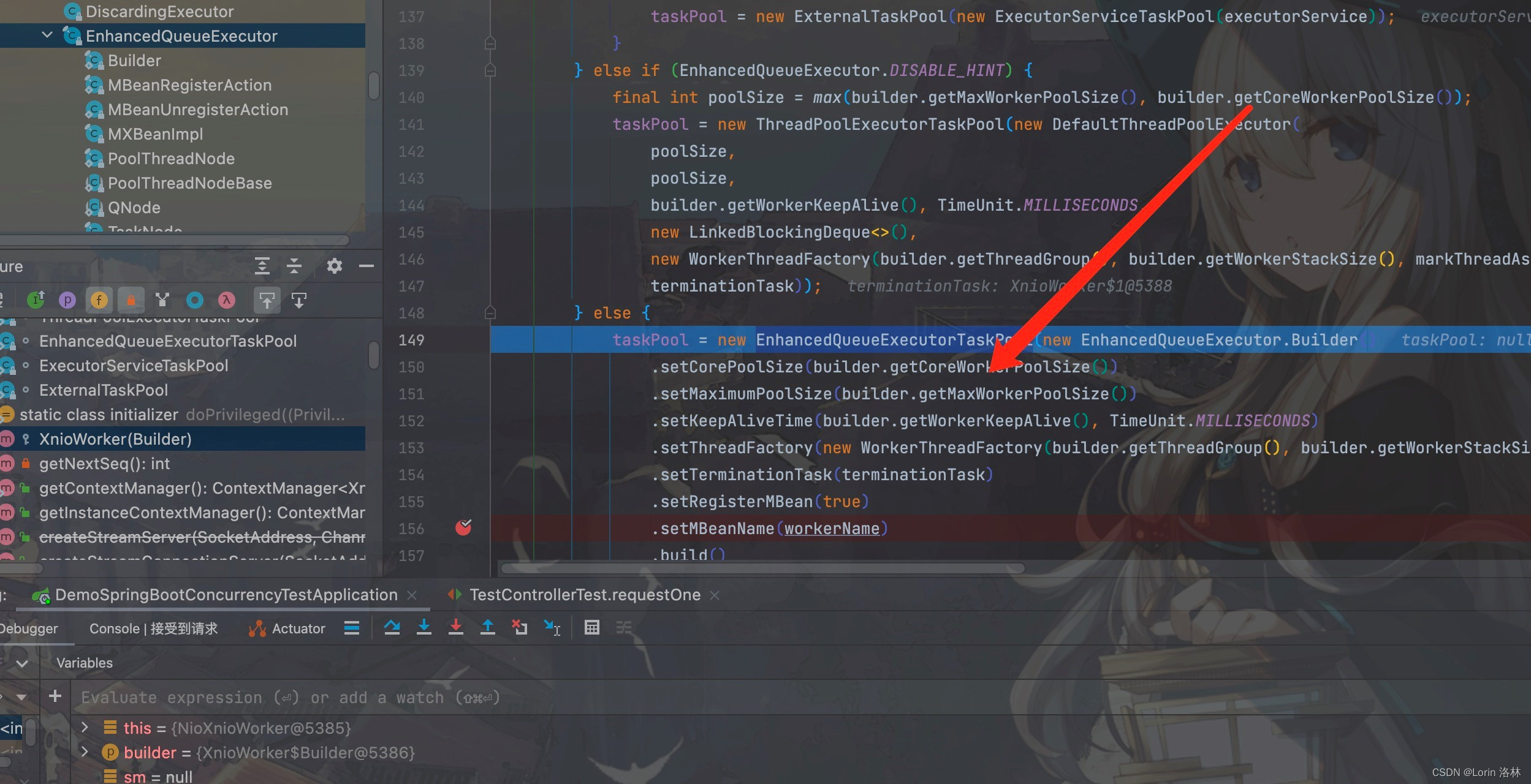
- 那么这里的值又是从哪里来的呢?继续往上找 io.undertow.Undertow#start 发现在这里调用
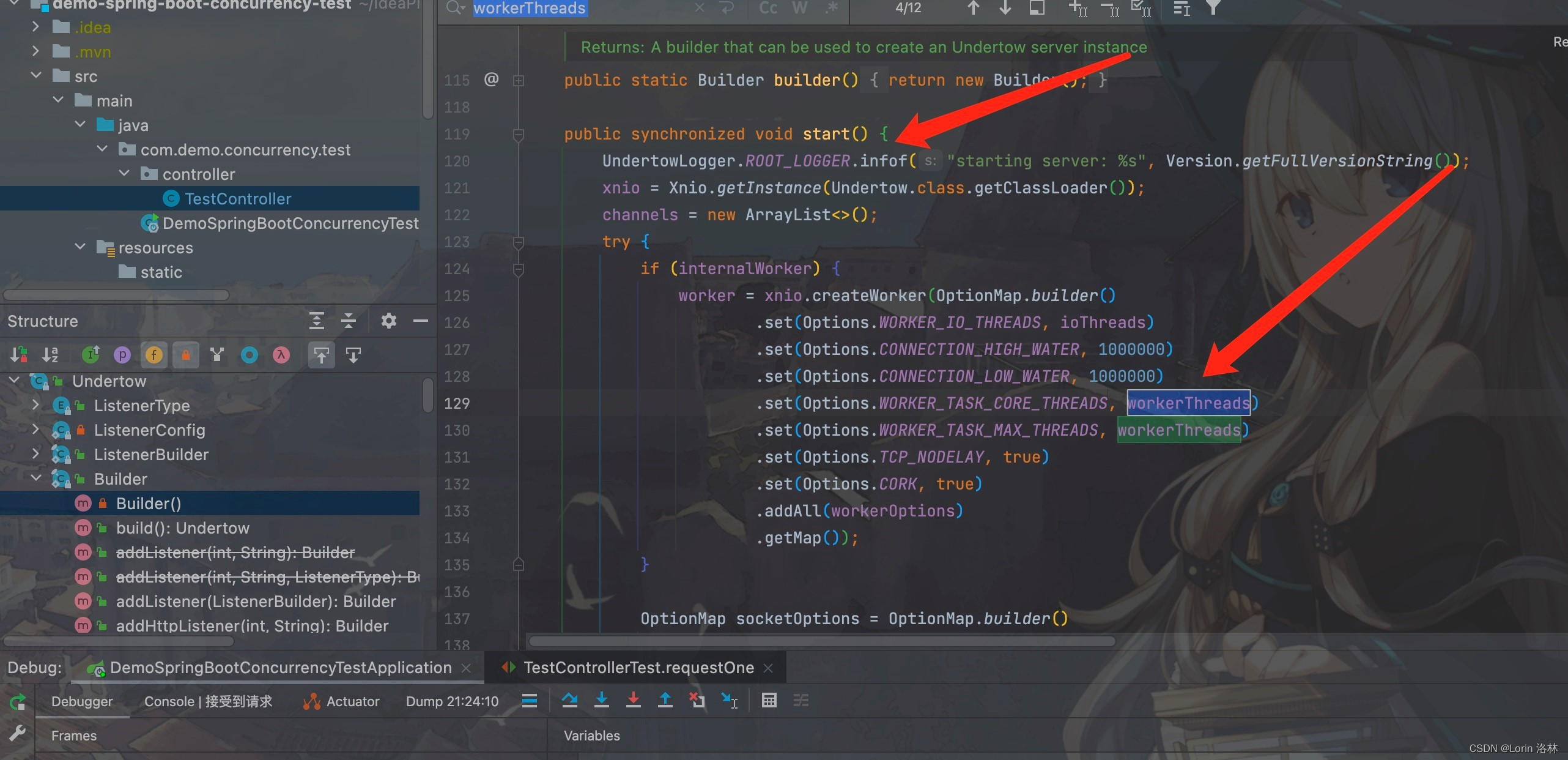
- io.undertow.Undertow.Builder#Builder 构建
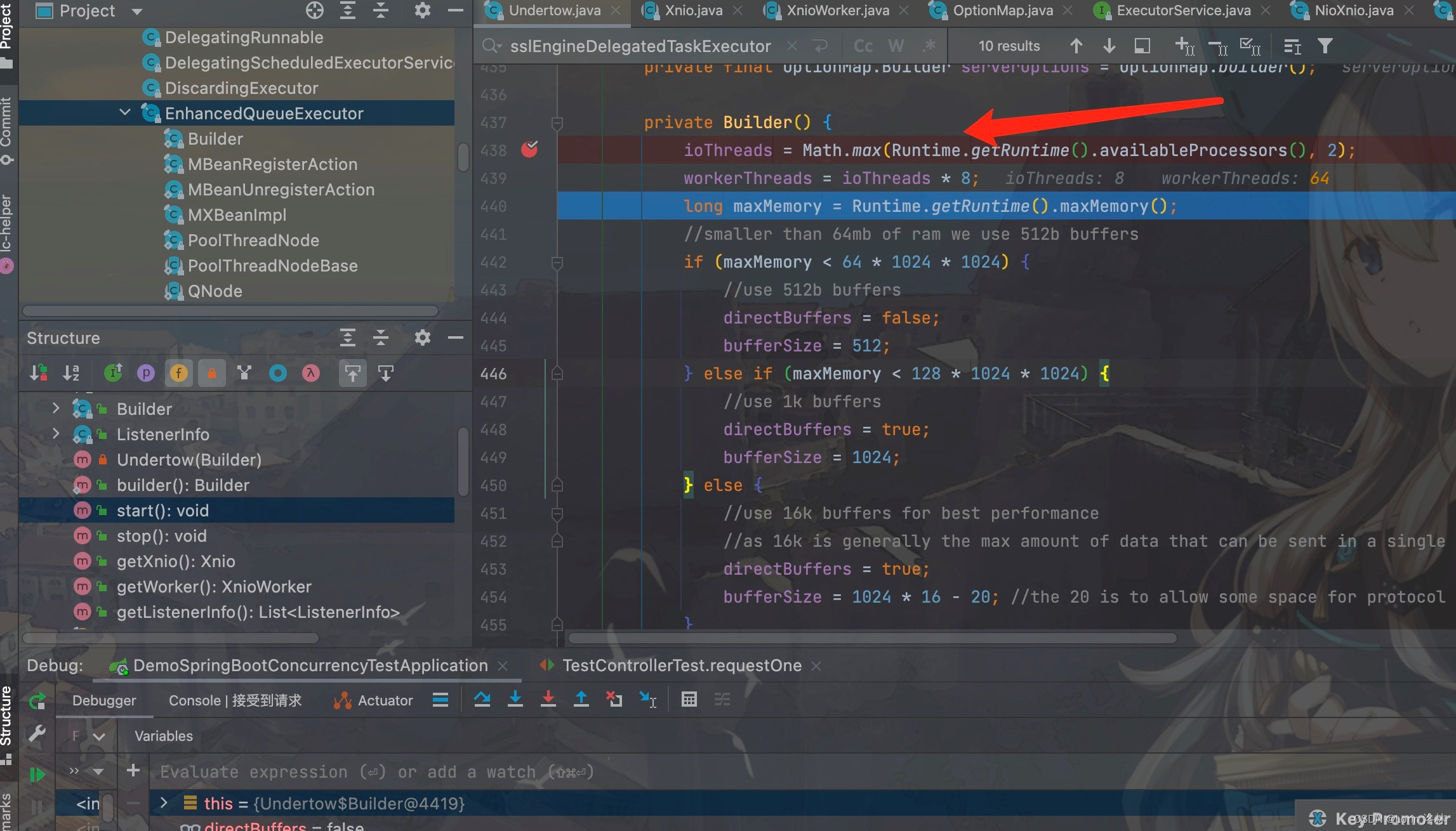
- 可以看到默认会根据机器可用的 CPU 数 * 8 计算一个 workerThreads 作为最大线程数和核心线程数,我电脑的 CPU 数为 8,因此最大线程数和核心线程数都为 64。
- 同时,线程池基于 Java 线程池实现,因此当等待队列未满时使用仅使用核心线程池。
配置项
# 线程数 核心线程和非核心线程都使用该值
server.undertow.threads.worker=5
- 1
- 2
你以为这就结束了?
- 也许这才是下一个问题的开始,面试官会问你几种 Servlet 容器的优缺点、IO 实现是否一致,以及各自的适用场景、如何进行参数调优等等,后面的内容我们下期见吧。
声明:本文内容由网友自发贡献,不代表【wpsshop博客】立场,版权归原作者所有,本站不承担相应法律责任。如您发现有侵权的内容,请联系我们。转载请注明出处:https://www.wpsshop.cn/article/detail/52522
推荐阅读

相关标签

