- 1【ACDC数据集】:预处理ACDC心脏3D MRI影像数据集到VOC数据集格式,nii转为jpg,label转为png
- 2【“云计算”的初识,从无到有的第一步积累】_公有云是指外部客户提供服务的云
- 3R语言ggplot2改变坐标轴的顺序或者方向:改变字体、颜色、旋转刻度标签、轴刻度 log、sqrt 等转换、设置和隐藏刻度标记、反转轴方向、设定范围和反转轴方向、x 与 y 轴固定的比例_ggplot 更改y轴排序
- 4ATSHA204A(二)——基本特性
- 5ABAP - 内表行数统计的三种方法_abap 取内表中符合条件的行数
- 6Topaz Video Enhance AI(ai视频画质增强软件)官方正式版V2.2.0 | AI视频放大软件下载 | 视频画质怎么变清晰?
- 7修改elementui 里面input的placeholder字体颜色_element-plus 选择器 placeholder颜色
- 8win服务器系统2019和2016区别,Windows Server 2019和Windows Server, Version 1909的区别是什么?...
- 9Js字符串操作函数大全_js instr
- 10使用腾讯云快速完成网站备案的详细过程_腾讯云网站备案
Java多线程数据库事务提交控制_java中通过手动提交事务的方式解决操作两个库的操作
赞
踩
项目代码基于:MySql 数据,开发框架为:SpringBoot、Mybatis
开发语言为:Java8
项目代码:https://gitee.com/john273766764/springboot-mybatis-threads
前言
公司业务中遇到一个需求,需要同时修改最多约5万条数据,而且还不支持批量或异步修改操作。于是只能写个for循环操作,但操作耗时太长,只能一步一步寻找其他解决方案。
具体操作如下:
一、循环操作的代码
先写一个最简单的for循环代码,看看耗时情况怎么样。
 /***
     * 一条一条依次对50000条数据进行更新操作
     * 耗时:2m27s,1m54s
     */
    @Test
    void updateStudent() {
        List<Student> allStudents = studentMapper.getAll();
        allStudents.forEach(s -> {
            //更新教师信息
            String teacher = s.getTeacher();
            String newTeacher = "TNO_" + new Random().nextInt(100);
            s.setTeacher(newTeacher);
            studentMapper.update(s);
        });
    }
- 1
- 2
- 3
- 4
- 5
- 6
- 7
- 8
- 9
- 10
- 11
- 12
- 13
- 14
- 15
循环修改整体耗时约 1分54秒,且代码中没有手动事务控制应该是自动事务提交,所以每次操作事务都会提交所以操作比较慢,我们先对代码中添加手动事务控制,看查询效率怎样。
二、使用手动事务的操作代码
修改后的代码如下:
 @Autowired
    private DataSourceTransactionManager dataSourceTransactionManager;

    @Autowired
    private TransactionDefinition transactionDefinition;

    /**
     * 由于希望更新操作 一次性完成,需要手动控制添加事务
     * 耗时:24s
     * 从测试结果可以看出,添加事务后插入数据的效率有明显的提升
     */
    @Test
    void updateStudentWithTrans() {
        List<Student> allStudents = studentMapper.getAll();
        TransactionStatus transactionStatus = dataSourceTransactionManager.getTransaction(transactionDefinition);
        try {
            allStudents.forEach(s -> {
                //更新教师信息
                String teacher = s.getTeacher();
                String newTeacher = "TNO_" + new Random().nextInt(100);
                s.setTeacher(newTeacher);
                studentMapper.update(s);
            });
            dataSourceTransactionManager.commit(transactionStatus);
        } catch (Throwable e) {
            dataSourceTransactionManager.rollback(transactionStatus);
            throw e;
        }
    }

- 1
- 2
- 3
- 4
- 5
- 6
- 7
- 8
- 9
- 10
- 11
- 12
- 13
- 14
- 15
- 16
- 17
- 18
- 19
- 20
- 21
- 22
- 23
- 24
- 25
- 26
- 27
- 28
- 29
添加手动事务操控制后,整体耗时约 24秒,这相对于自动事务提交的代码,快了约5倍,对于大量循环数据库提交操作,添加手动事务可以有效提高操作效率。
三、尝试多线程进行数据修改
添加数据库手动事务后操作效率有明细提高,但还是比较长,接下来尝试多线程提交看是不是能够再快一些。
先添加一个Service将批量修改操作整合一下,具体代码如下:
@Service
public class StudentServiceImpl implements StudentService {
    @Autowired
    private StudentMapper studentMapper;

    @Autowired
    private DataSourceTransactionManager dataSourceTransactionManager;

    @Autowired
    private TransactionDefinition transactionDefinition;

    @Override
    public void updateStudents(List<Student> students, CountDownLatch threadLatch) {
        TransactionStatus transactionStatus = dataSourceTransactionManager.getTransaction(transactionDefinition);
        System.out.println("子线程:" + Thread.currentThread().getName());
        try {
            students.forEach(s -> {
                // 更新教师信息
                // String teacher = s.getTeacher();
                String newTeacher = "TNO_" + new Random().nextInt(100);
                s.setTeacher(newTeacher);
                studentMapper.update(s);
            });
            dataSourceTransactionManager.commit(transactionStatus);
            threadLatch.countDown();
        } catch (Throwable e) {
            e.printStackTrace();
            dataSourceTransactionManager.rollback(transactionStatus);
        }
    }
}
- 1
- 2
- 3
- 4
- 5
- 6
- 7
- 8
- 9
- 10
- 11
- 12
- 13
- 14
- 15
- 16
- 17
- 18
- 19
- 20
- 21
- 22
- 23
- 24
- 25
- 26
- 27
- 28
- 29
- 30
- 31
多线程提交修改时,我们尝试了不同线程数对提交速度的影响,具体可以看下面表格,
| 线程数 | 1 | 2 | 5 | 10 | 100 | 500 | 1000 | 2000 | 5000 |
|---|---|---|---|---|---|---|---|---|---|
| 耗时 | 25s | 14s | 15s | 15s | 15s | 17s | 19s | 23s | 29s |
根据表格,我们线程数增大提交速度并非一直增大,在当前情况下约在2-5个线程数时,提交速度最快(实际线程数还是需要根据服务器配置实际测试)。
四、基于两个CountDownLatch控制多线程事务提交
由于多线程提交时,每个线程事务时单独的,无法保证一致性,我们尝试给多线程添加事务控制,来保证每个线程都是在插入数据完成后在提交事务,
这里我们使用两个 CountDownLatch 来控制主线程与子线程事务提交,并设置了超时时间为 30 秒。我们对代码进行了一点修改:
 @Override
    public void updateStudentsThread(List<Student> students, CountDownLatch threadLatch, CountDownLatch mainLatch, StudentTaskError taskStatus) {
        TransactionStatus transactionStatus = dataSourceTransactionManager.getTransaction(transactionDefinition);
        System.out.println("子线程:" + Thread.currentThread().getName());
        try {
            students.forEach(s -> {
                // 更新教师信息
                // String teacher = s.getTeacher();
                String newTeacher = "TNO_" + new Random().nextInt(100);
                s.setTeacher(newTeacher);
                studentMapper.update(s);
            });
        } catch (Throwable e) {
            taskStatus.setIsError();
        } finally {
            threadLatch.countDown(); // 切换到主线程执行
        }
        try {
            mainLatch.await();  //等待主线程执行
        } catch (Throwable e) {
            taskStatus.setIsError();
        }
        // 判断是否有错误,如有错误 就回滚事务
        if (taskStatus.getIsError()) {
            dataSourceTransactionManager.rollback(transactionStatus);
        } else {
            dataSourceTransactionManager.commit(transactionStatus);
        }
    }
- 1
- 2
- 3
- 4
- 5
- 6
- 7
- 8
- 9
- 10
- 11
- 12
- 13
- 14
- 15
- 16
- 17
- 18
- 19
- 20
- 21
- 22
- 23
- 24
- 25
- 26
- 27
- 28
- 29
  /**
     * 由于每个线程都是单独的事务,需要添加对线程事务的统一控制
     * 我们这边使用两个 CountDownLatch 对子线程的事务进行控制
     */
    @Test
    void updateStudentWithThreadsAndTrans() {
        //查询总数据
        List<Student> allStudents = studentMapper.getAll();
        // 线程数量
        final Integer threadCount = 4;

        //每个线程处理的数据量
        final Integer dataPartionLength = (allStudents.size() + threadCount - 1) / threadCount;

        // 创建多线程处理任务
        ExecutorService studentThreadPool = Executors.newFixedThreadPool(threadCount);
        CountDownLatch threadLatchs = new CountDownLatch(threadCount); // 用于计算子线程提交数量
        CountDownLatch mainLatch = new CountDownLatch(1); // 用于判断主线程是否提交
        StudentTaskError taskStatus = new StudentTaskError(); // 用于判断子线程任务是否有错误

        for (int i = 0; i < threadCount; i++) {
            // 每个线程处理的数据
            List<Student> threadDatas = allStudents.stream()
                    .skip(i * dataPartionLength).limit(dataPartionLength)
                    .collect(Collectors.toList());
            studentThreadPool.execute(() -> {
                studentService.updateStudentsThread(threadDatas, threadLatchs, mainLatch, taskStatus);
            });
        }
        try {
            // 倒计时锁设置超时时间 30s
            boolean await = threadLatchs.await(30, TimeUnit.SECONDS);
            if (!await) { // 等待超时,事务回滚
                taskStatus.setIsError();
            }
        } catch (Throwable e) {
            e.printStackTrace();
            taskStatus.setIsError();
        }
        mainLatch.countDown(); // 切换到子线程执行
        studentThreadPool.shutdown(); //关闭线程池

        System.out.println("主线程完成");
    }
- 1
- 2
- 3
- 4
- 5
- 6
- 7
- 8
- 9
- 10
- 11
- 12
- 13
- 14
- 15
- 16
- 17
- 18
- 19
- 20
- 21
- 22
- 23
- 24
- 25
- 26
- 27
- 28
- 29
- 30
- 31
- 32
- 33
- 34
- 35
- 36
- 37
- 38
- 39
- 40
- 41
- 42
- 43
- 44
本想再次测试一下不同线程数对执行效率的影响时,发现当线程数超过10个时,执行时就报错。具体错误内容如下:
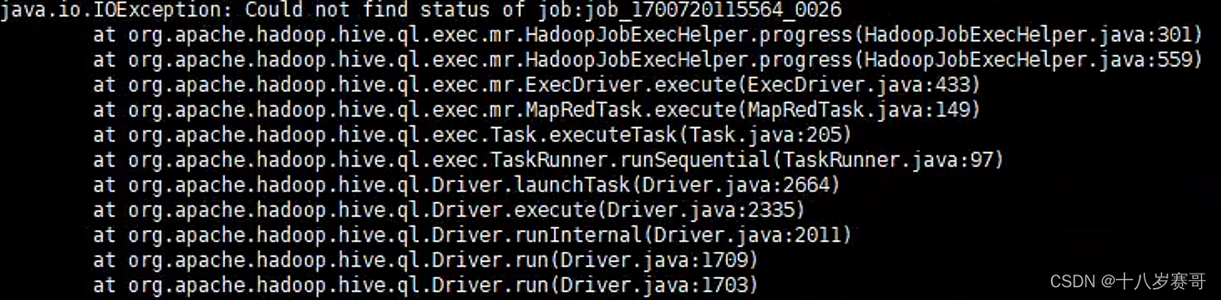
Exception in thread "pool-1-thread-2" org.springframework.transaction.CannotCreateTransactionException: Could not open JDBC Connection for transaction; nested exception is java.sql.SQLTransientConnectionException: HikariPool-1 - Connection is not available, request timed out after 30055ms.
	at org.springframework.jdbc.datasource.DataSourceTransactionManager.doBegin(DataSourceTransactionManager.java:309)
	at org.springframework.transaction.support.AbstractPlatformTransactionManager.startTransaction(AbstractPlatformTransactionManager.java:400)
	at org.springframework.transaction.support.AbstractPlatformTransactionManager.getTransaction(AbstractPlatformTransactionManager.java:373)
	at com.example.springbootmybatis.service.Impl.StudentServiceImpl.updateStudentsThread(StudentServiceImpl.java:58)
	at com.example.springbootmybatis.StudentTest.lambda$updateStudentWithThreadsAndTrans$3(StudentTest.java:164)
	at java.util.concurrent.ThreadPoolExecutor.runWorker(ThreadPoolExecutor.java:1149)
	at java.util.concurrent.ThreadPoolExecutor$Worker.run(ThreadPoolExecutor.java:624)
	at java.lang.Thread.run(Thread.java:748)
Caused by: java.sql.SQLTransientConnectionException: HikariPool-1 - Connection is not available, request timed out after 30055ms.
	at com.zaxxer.hikari.pool.HikariPool.createTimeoutException(HikariPool.java:696)
	at com.zaxxer.hikari.pool.HikariPool.getConnection(HikariPool.java:197)
	at com.zaxxer.hikari.pool.HikariPool.getConnection(HikariPool.java:162)
	at com.zaxxer.hikari.HikariDataSource.getConnection(HikariDataSource.java:128)
	at org.springframework.jdbc.datasource.DataSourceTransactionManager.doBegin(DataSourceTransactionManager.java:265)
	... 7 more
- 1
- 2
- 3
- 4
- 5
- 6
- 7
- 8
- 9
- 10
- 11
- 12
- 13
- 14
- 15
- 16
错误的大致意思时,不能为数据库事务打开 jdbc Connection,连接在30s的时候超时了。由于前面启动的十个线程需要等待主线程完成后才能提交,所以一直占用连接未释放,造成后面的进程创建连接超时。
看错误日志中错误的来源是 HikariPool ,我们来重新配置一下这个连接池的参数,将最大连接数修改为100,具体配置如下:
# 连接池中允许的最小连接数。缺省值:10
spring.datasource.hikari.minimum-idle=10
# 连接池中允许的最大连接数。缺省值:10
spring.datasource.hikari.maximum-pool-size=100
# 自动提交
spring.datasource.hikari.auto-commit=true
# 一个连接idle状态的最大时长(毫秒),超时则被释放(retired),缺省:10分钟
spring.datasource.hikari.idle-timeout=30000
# 一个连接的生命时长(毫秒),超时而且没被使用则被释放(retired),缺省:30分钟,建议设置比数据库超时时长少30秒
spring.datasource.hikari.max-lifetime=1800000
# 等待连接池分配连接的最大时长(毫秒),超过这个时长还没可用的连接则发生SQLException, 缺省:30秒
- 1
- 2
- 3
- 4
- 5
- 6
- 7
- 8
- 9
- 10
- 11
再次执行测试发现没有报错,修改线程数为20又执行了一下,同样执行成功了。
五、基于TransactionStatus集合来控制多线程事务提交
在同事推荐下我们使用事务集合来进行多线程事务控制,主要代码如下
@Service
public class StudentsTransactionThread {

    @Autowired
    private StudentMapper studentMapper;
    @Autowired
    private StudentService studentService;
    @Autowired
    private PlatformTransactionManager transactionManager;

    List<TransactionStatus> transactionStatuses = Collections.synchronizedList(new ArrayList<TransactionStatus>());

    @Transactional(propagation = Propagation.REQUIRED, rollbackFor = {Exception.class})
    public void updateStudentWithThreadsAndTrans() throws InterruptedException {

        //查询总数据
        List<Student> allStudents = studentMapper.getAll();

        // 线程数量
        final Integer threadCount = 2;

        //每个线程处理的数据量
        final Integer dataPartionLength = (allStudents.size() + threadCount - 1) / threadCount;

        // 创建多线程处理任务
        ExecutorService studentThreadPool = Executors.newFixedThreadPool(threadCount);
        CountDownLatch threadLatchs = new CountDownLatch(threadCount);
        AtomicBoolean isError = new AtomicBoolean(false);
        try {
            for (int i = 0; i < threadCount; i++) {
                // 每个线程处理的数据
                List<Student> threadDatas = allStudents.stream()
                        .skip(i * dataPartionLength).limit(dataPartionLength).collect(Collectors.toList());
                studentThreadPool.execute(() -> {
                    try {
                        try {
                            studentService.updateStudentsTransaction(transactionManager, transactionStatuses, threadDatas);
                        } catch (Throwable e) {
                            e.printStackTrace();
                            isError.set(true);
                        }finally {
                            threadLatchs.countDown();
                        }
                    } catch (Exception e) {
                        e.printStackTrace();
                        isError.set(true);
                    }
                });
            }

            // 倒计时锁设置超时时间 30s
            boolean await = threadLatchs.await(30, TimeUnit.SECONDS);
            // 判断是否超时
            if (!await) {
                isError.set(true);
            }
        } catch (Throwable e) {
            e.printStackTrace();
            isError.set(true);
        }

        if (!transactionStatuses.isEmpty()) {
            if (isError.get()) {
                transactionStatuses.forEach(s -> transactionManager.rollback(s));
            } else {
                transactionStatuses.forEach(s -> transactionManager.commit(s));
            }
        }

        System.out.println("主线程完成");
    }
}
- 1
- 2
- 3
- 4
- 5
- 6
- 7
- 8
- 9
- 10
- 11
- 12
- 13
- 14
- 15
- 16
- 17
- 18
- 19
- 20
- 21
- 22
- 23
- 24
- 25
- 26
- 27
- 28
- 29
- 30
- 31
- 32
- 33
- 34
- 35
- 36
- 37
- 38
- 39
- 40
- 41
- 42
- 43
- 44
- 45
- 46
- 47
- 48
- 49
- 50
- 51
- 52
- 53
- 54
- 55
- 56
- 57
- 58
- 59
- 60
- 61
- 62
- 63
- 64
- 65
- 66
- 67
- 68
- 69
- 70
- 71
- 72
@Override
    @Transactional(propagation = Propagation.REQUIRED, rollbackFor = {Exception.class})
    public void updateStudentsTransaction(PlatformTransactionManager transactionManager, List<TransactionStatus> transactionStatuses, List<Student> students) {
        // 使用这种方式将事务状态都放在同一个事务里面
        DefaultTransactionDefinition def = new DefaultTransactionDefinition();
        def.setPropagationBehavior(TransactionDefinition.PROPAGATION_REQUIRES_NEW); // 事物隔离级别,开启新事务,这样会比较安全些。
        TransactionStatus status = transactionManager.getTransaction(def); // 获得事务状态
        transactionStatuses.add(status);

        students.forEach(s -> {
            // 更新教师信息
            // String teacher = s.getTeacher();
            String newTeacher = "TNO_" + new Random().nextInt(100);
            s.setTeacher(newTeacher);
            studentMapper.update(s);
        });
        System.out.println("子线程:" + Thread.currentThread().getName());
    }
- 1
- 2
- 3
- 4
- 5
- 6
- 7
- 8
- 9
- 10
- 11
- 12
- 13
- 14
- 15
- 16
- 17
- 18
由于这个中方式去前面方式相同,需要等待线程执行完成后才会提交事务,所有任会占用Jdbc连接池,如果线程数量超过连接池最大数量会产生连接超时。所以在使用过程中任要控制线程数量,
六、使用union连接多个select实现批量update
有些情况写不支持,批量update,但支持insert 多条数据,这个时候可尝试将需要更新的数据拼接成多条select 语句,然后使用union 连接起来,再使用update 关联这个数据进行update,具体代码演示如下:
update student,(
	(select  1 as id,'teacher_A' as teacher) union
	(select  2 as id,'teacher_A' as teacher) union
	(select  3 as id,'teacher_A' as teacher) union
	(select  4 as id,'teacher_A' as teacher)
    /* ....more data ... */
    ) as new_teacher
set
	student.teacher=new_teacher.teacher
where
	student.id=new_teacher.id
- 1
- 2
- 3
- 4
- 5
- 6
- 7
- 8
- 9
- 10
- 11
这种方式在Mysql 数据库没有配置 allowMultiQueries=true 也可以实现批量更新。
总结
- 对于大批量数据库操作,使用手动事务提交可以很多程度上提高操作效率
- 多线程对数据库进行操作时,并非线程数越多操作时间越快,按上述示例大约在2-5个线程时操作时间最快。
- 对于多线程阻塞事务提交时,线程数量不能过多。
- 如果能有办法实现批量更新那是最好