- 1数据结构-堆/栈 C语言实现_堆栈操作c语言实现
- 2【07】深度学习知识点总结_、ⅰ′↓
- 3姿态检测简述
- 4Unity 编辑器篇|(六)编辑器拓展EditorGUI类 (全面总结 | 建议收藏)_unity editorgui
- 5unity-地形_unity地形
- 6Pytorch搭建AlexNet目标检测平台_pytorch alexnet gpu
- 7On-Premises (On-Prem) 介绍(公司自有硬件部署——自有物理设施内部署和管理IT基础设施,包括数据中心、服务器、网络硬件、存储设备等)(On-Prem与云服务的对比)私有化部署_on premise
- 8unity3D技术之WaitForEndOfFrame 等待帧结束_unity waitforendofframe
- 9OpenCV(图像处理)-基于Python-形态学处理-开运算、闭运算、顶帽、黑帽运算_opencv 顶帽
- 10安装yolov5_yolov5下载
SpringBoot学习(二)_spring.datasource.type
赞
踩
四、整合和集成
4.1、整合JDBC
创建项目,选中JDBC API,Mysql Dirver,发现在项目pom.xml中增加了
<!-- jdbc -->
<dependency>
	<groupId>org.springframework.boot</groupId>
	<artifactId>spring-boot-starter-jdbc</artifactId>
</dependency>
<!-- mysql -->
<dependency>
	<groupId>mysql</groupId>
	<artifactId>mysql-connector-java</artifactId>
	<scope>runtime</scope>
</dependency>
- 1
- 2
- 3
- 4
- 5
- 6
- 7
- 8
- 9
- 10
- 11
配置yaml
spring:
  datasource:
    username: root
    password: 123456
    url: jdbc:mysql://localhost:3306/mybatis?serverTimezone=UTC&characterEncoding=utf8&useUnicode=true&useSSL=false
    driver-class-name: com.mysql.cj.jdbc.Driver
- 1
- 2
- 3
- 4
- 5
- 6
配置完这一些东西后,我们就可以直接去使用了,因为SpringBoot已经默认帮我们进行了自动配置;去测试类测试一下
@SpringBootTest
class SpringbootDataJdbcApplicationTests {

    //DI注入数据源
    @Autowired
    DataSource dataSource;

    @Test
    public void contextLoads() throws SQLException {
        //看一下默认数据源
        System.out.println(dataSource.getClass());
        //获得连接
        Connection connection =   dataSource.getConnection();
        System.out.println(connection);
        //关闭连接
        connection.close();
    }
}

- 1
- 2
- 3
- 4
- 5
- 6
- 7
- 8
- 9
- 10
- 11
- 12
- 13
- 14
- 15
- 16
- 17
- 18
结果:我们可以看到他默认给我们配置的数据源为 : class com.zaxxer.hikari.HikariDataSource , 我们并没有手动配置
HikariDataSource 号称 Java WEB 当前速度最快的数据源,相比于传统的 C3P0 、DBCP、Tomcat jdbc 等连接池更加优秀;
可以使用 spring.datasource.type 指定自定义的数据源类型,值为 要使用的连接池实现的完全限定名。
JDBCTemplate
1、有了数据源(com.zaxxer.hikari.HikariDataSource),然后可以拿到数据库连接(java.sql.Connection),有了连接,就可以使用原生的 JDBC 语句来操作数据库;
2、即使不使用第三方第数据库操作框架,如 MyBatis等,Spring 本身也对原生的JDBC 做了轻量级的封装,即JdbcTemplate。
3、数据库操作的所有 CRUD 方法都在 JdbcTemplate 中。
4、Spring Boot 不仅提供了默认的数据源,同时默认已经配置好了 JdbcTemplate 放在了容器中,程序员只需自己注入即可使用
5、JdbcTemplate 的自动配置是依赖 org.springframework.boot.autoconfigure.jdbc 包下的 JdbcTemplateConfiguration 类
JdbcTemplate主要提供以下几类方法:
- execute方法:可以用于执行任何SQL语句,一般用于执行DDL语句;
- update方法及batchUpdate方法:update方法用于执行新增、修改、删除等语句;batchUpdate方法用于执行批处理相关语句;
- query方法及queryForXXX方法:用于执行查询相关语句;
- call方法:用于执行存储过程、函数相关语句。
4.2、整合Druid
Druid 是阿里巴巴开源平台上一个数据库连接池实现,结合了 C3P0、DBCP 等 DB 池的优点,同时加入了日志监控。
Druid 可以很好的监控 DB 池连接和 SQL 的执行情况,天生就是针对监控而生的 DB 连接池。
Druid已经在阿里巴巴部署了超过600个应用,经过一年多生产环境大规模部署的严苛考验。
Spring Boot 2.0 以上默认使用 Hikari 数据源,可以说 Hikari 与 Driud 都是当前 Java Web 上最优秀的数据源,我们来重点介绍 Spring Boot 如何集成 Druid 数据源,如何实现数据库监控。
Github地址:https://github.com/alibaba/druid/
com.alibaba.druid.pool.DruidDataSource 基本配置参数如下:
[外链图片转存失败,源站可能有防盗链机制,建议将图片保存下来直接上传(img-IFKwhyly-1658828975508)(D:\program files\TyporaImg\image-20220715193707471.png)]
[外链图片转存失败,源站可能有防盗链机制,建议将图片保存下来直接上传(img-iQhFxAVh-1658828975509)(D:\program files\TyporaImg\image-20220715193617387.png)]
导入依赖
<!-- Druid -->
<dependency>
	<groupId>com.alibaba</groupId>
	<artifactId>druid</artifactId>
	<version>1.2.11</version>
</dependency>
- 1
- 2
- 3
- 4
- 5
- 6
设置数据源连接属性
spring:
  datasource:
    username: root
    password: 123456
    url: jdbc:mysql://localhost:3306/mybatis?serverTimezone=UTC&characterEncoding=utf8&useUnicode=true&useSSL=false
    driver-class-name: com.mysql.cj.jdbc.Driver
    # 连接池类型:使用druid
    type: com.alibaba.druid.pool.DruidDataSource

    #Spring Boot 默认是不注入这些属性值的,需要自己绑定
    #druid 数据源专有配置
    initialSize: 5
    minIdle: 5
    maxActive: 20
    maxWait: 60000
    timeBetweenEvictionRunsMillis: 60000
    minEvictableIdleTimeMillis: 300000
    validationQuery: SELECT 1 FROM DUAL
    testWhileIdle: true
    testOnBorrow: false
    testOnReturn: false
    poolPreparedStatements: true

    #配置监控统计拦截的filters,stat:监控统计、log4j:日志记录、wall:防御sql注入
    #如果允许时报错  java.lang.ClassNotFoundException: org.apache.log4j.Priority
    #则导入 log4j 依赖即可,Maven 地址:https://mvnrepository.com/artifact/log4j/log4j
    filters: stat,wall,log4j
    maxPoolPreparedStatementPerConnectionSize: 20
    useGlobalDataSourceStat: true
    connectionProperties: druid.stat.mergeSql=true;druid.stat.slowSqlMillis=500
- 1
- 2
- 3
- 4
- 5
- 6
- 7
- 8
- 9
- 10
- 11
- 12
- 13
- 14
- 15
- 16
- 17
- 18
- 19
- 20
- 21
- 22
- 23
- 24
- 25
- 26
- 27
- 28
- 29
- 30
导入依赖
<!-- 使用Druid产生的日志功能log4j -->
<dependency>
    <groupId>log4j</groupId>
    <artifactId>log4j</artifactId>
    <version>1.2.17</version>
</dependency>
- 1
- 2
- 3
- 4
- 5
- 6
编写DruidConfig类,使用其监控功能
package com.rui.config;

import com.alibaba.druid.pool.DruidDataSource;
import com.alibaba.druid.support.http.StatViewServlet;
import com.alibaba.druid.support.http.WebStatFilter;
import org.springframework.boot.context.properties.ConfigurationProperties;
import org.springframework.boot.web.servlet.FilterRegistrationBean;
import org.springframework.boot.web.servlet.ServletRegistrationBean;
import org.springframework.context.annotation.Bean;
import org.springframework.context.annotation.Configuration;

import javax.sql.DataSource;
import java.util.HashMap;

@Configuration
public class DruidConfig {

    @ConfigurationProperties(prefix = "spring.datasource")
    @Bean
    public DataSource druidDataSource(){
        return new DruidDataSource();
    }

    //后台监控功能 :web.xml  ServletRegistrationBean
    //因为SpringBoot 内置了servlet容器,所以没有web.xml, 替代方法ServletRegistrationBean
    //Druid 数据源具有监控的功能,并提供了一个 web 界面方便用户查看,类似安装 路由器 时,人家也提供了一个默认的 web 页面。
    @Bean
    public ServletRegistrationBean statViewServlet(){
        ServletRegistrationBean<StatViewServlet> bean = new ServletRegistrationBean<>(new StatViewServlet(), "/druid/*");

        HashMap<String, String> initParameter = new HashMap<>();
        //增加配置
        initParameter.put("loginUsername","admin");
        initParameter.put("loginPassword","123456");
        //允许谁可以访问
        initParameter.put("allow","");
        //deny:Druid 后台拒绝谁访问
        //initParams.put("rui", "192.168.1.20");表示禁止此ip访问
        //设置初始化参数
        bean.setInitParameters(initParameter);

        return bean;
    }

    //配置 Druid 监控 之  web 监控的 filter//WebStatFilter:用于配置Web和Druid数据源之间的管理关联监控统计
    @Bean
    public FilterRegistrationBean webStatFilter(){
        FilterRegistrationBean bean = new FilterRegistrationBean();
        bean.setFilter(new WebStatFilter());

        HashMap<String, String> initParameter = new HashMap<>();
        //这些东西不进行统计
        initParameter.put("exclusions","*.js,*.css,/druid/*");
        //设置初始化参数
        bean.setInitParameters(initParameter);
        return bean;

    }

}
- 1
- 2
- 3
- 4
- 5
- 6
- 7
- 8
- 9
- 10
- 11
- 12
- 13
- 14
- 15
- 16
- 17
- 18
- 19
- 20
- 21
- 22
- 23
- 24
- 25
- 26
- 27
- 28
- 29
- 30
- 31
- 32
- 33
- 34
- 35
- 36
- 37
- 38
- 39
- 40
- 41
- 42
- 43
- 44
- 45
- 46
- 47
- 48
- 49
- 50
- 51
- 52
- 53
- 54
- 55
- 56
- 57
- 58
- 59
- 60
我们可以选择访问 :http://localhost:8080/druid/login.html,就可以看到它强大的监控功能了。
4.3、整合MyBatis
导入 MyBatis 所需要的依赖
<dependency>
    <groupId>org.mybatis.spring.boot</groupId>
    <artifactId>mybatis-spring-boot-starter</artifactId>
    <version>2.1.1</version>
</dependency>
- 1
- 2
- 3
- 4
- 5
配置数据库连接信息
spring.datasource.driver-class-name=com.mysql.cj.jdbc.Driver
spring.datasource.name=defaultDataSource
spring.datasource.url=jdbc:mysql://localhost:3306/mybatis?serverTimezone=UTC
spring.datasource.username=root
spring.datasource.password=123456
- 1
- 2
- 3
- 4
- 5
导入lombok,编写pojo类User
@Data
@NoArgsConstructor
@AllArgsConstructor
public class User {
    private int id;
    private String name;
    private String pwd;
}
- 1
- 2
- 3
- 4
- 5
- 6
- 7
- 8
编写UserMapper
//这个注解表示这个类是mybatis的mapper类:dao
@Mapper
@Repository
public interface UserMapper {
    List<User> queryUserList();
    User queryUserById(int id);
    int addUser(User user);
    int updateUser(User user);
    int deleteUser(int id);
}
- 1
- 2
- 3
- 4
- 5
- 6
- 7
- 8
- 9
- 10
整合mybatis配置信息
mybatis.type-aliases-package=com.rui.pojo
mybatis.mapper-locations=classpath:mybatis/mapper/*.xml
- 1
- 2
在resources文件夹下创建mybatis/mapper/UserMapper.xml
<?xml version="1.0" encoding="UTF-8" ?>
<!DOCTYPE mapper
        PUBLIC "-//mybatis.org//DTD Mapper 3.0//EN"
        "http://mybatis.org/dtd/mybatis-3-mapper.dtd">

<mapper namespace="com.rui.mapper.UserMapper">

    <select id="queryUserList" resultType="User">
        select * from user;
    </select>

    <select id="queryUserById" resultType="User">
        select * from user where id = #{id};
    </select>

    <insert id="addUser" parameterType="User">
        insert into user values (#{id},#{name},#{pwd});
    </insert>

    <update id="updateUser" parameterType="User">
        update user set name=#{name},pwd=#{pwd} where id = #{id};
    </update>

    <delete id="deleteUser" parameterType="int">
        delete from user where id = #{id};
    </delete>

</mapper>
- 1
- 2
- 3
- 4
- 5
- 6
- 7
- 8
- 9
- 10
- 11
- 12
- 13
- 14
- 15
- 16
- 17
- 18
- 19
- 20
- 21
- 22
- 23
- 24
- 25
- 26
- 27
- 28
编写UserController
package com.rui.controller;


import com.rui.mapper.UserMapper;
import com.rui.pojo.User;
import org.springframework.beans.factory.annotation.Autowired;
import org.springframework.web.bind.annotation.GetMapping;
import org.springframework.web.bind.annotation.PathVariable;
import org.springframework.web.bind.annotation.RestController;

import java.util.List;

@RestController
public class UserController {

    @Autowired
    private UserMapper userMapper;

    @GetMapping("/getlist")
    public List<User> getEmployees(){
        return userMapper.queryUserList();
    }

    @GetMapping("/add")
    public int add(){
        User user = new User(10, "小王", "666");
        return userMapper.addUser(user);
    }

    @GetMapping("/update")
    public int update(){
        User user = new User(10, "xiaownag", "666");
        return userMapper.updateUser(user);
    }

    @GetMapping("/get/{id}")
    public User get(@PathVariable("id") Integer id){
        return userMapper.queryUserById(id);
    }

    @GetMapping("/delete/{id}")
    public int delete(@PathVariable("id") Integer id){
        return userMapper.deleteUser(id);
    }

}
- 1
- 2
- 3
- 4
- 5
- 6
- 7
- 8
- 9
- 10
- 11
- 12
- 13
- 14
- 15
- 16
- 17
- 18
- 19
- 20
- 21
- 22
- 23
- 24
- 25
- 26
- 27
- 28
- 29
- 30
- 31
- 32
- 33
- 34
- 35
- 36
- 37
- 38
- 39
- 40
- 41
- 42
- 43
- 44
- 45
- 46
测试…
4.4、集成SpringSecurity
Spring Security 是针对Spring项目的安全框架,也是Spring Boot底层安全模块默认的技术选型,他可以实现强大的Web安全控制,对于安全控制,我们仅需要引入 spring-boot-starter-security 模块,进行少量的配置,即可实现强大的安全管理!
记住几个类:
- WebSecurityConfigurerAdapter:自定义Security策略
- AuthenticationManagerBuilder:自定义认证策略
- @EnableWebSecurity:开启WebSecurity模式
Spring Security的两个主要目标是 “认证” 和 “授权”(访问控制)。
“认证”(Authentication)
身份验证是关于验证您的凭据,如用户名/用户ID和密码,以验证您的身份。
身份验证通常通过用户名和密码完成,有时与身份验证因素结合使用。
“授权” (Authorization)
授权发生在系统成功验证您的身份后,最终会授予您访问资源(如信息,文件,数据库,资金,位置,几乎任何内容)的完全权限。
这个概念是通用的,而不是只在Spring Security 中存在。
环境搭建
静态资源地址:https://gitee.com/ENNRIAAA/spring-security-material?_from=gitee_search
编写路由跳转实现类RouterController
package com.rui.controller;

import org.springframework.stereotype.Controller;
import org.springframework.web.bind.annotation.PathVariable;
import org.springframework.web.bind.annotation.RequestMapping;

@Controller
public class RouterController {

    @RequestMapping({"/","/index"})
    public String index(){
        return "index";
    }

    @RequestMapping({"/toLogin"})
    public String toLogin(){
        return "views/login";
    }

    @RequestMapping({"/level1/{id}"})
    public String level1(@PathVariable("id") int id){
        return "views/level1/"+id;
    }
    @RequestMapping({"/level2/{id}"})
    public String level2(@PathVariable("id") int id){
        return "views/level2/"+id;
    }
    @RequestMapping({"/level3/{id}"})
    public String level3(@PathVariable("id") int id){
        return "views/level3/"+id;
    }
}
- 1
- 2
- 3
- 4
- 5
- 6
- 7
- 8
- 9
- 10
- 11
- 12
- 13
- 14
- 15
- 16
- 17
- 18
- 19
- 20
- 21
- 22
- 23
- 24
- 25
- 26
- 27
- 28
- 29
- 30
- 31
- 32
导入Spring Security 模块
<dependency>
   <groupId>org.springframework.boot</groupId>
   <artifactId>spring-boot-starter-security</artifactId>
</dependency>
- 1
- 2
- 3
- 4
编写 Spring Security 配置类SecurityConfig 配置认证和授权信息
package com.rui.config;

import org.springframework.security.config.annotation.authentication.builders.AuthenticationManagerBuilder;
import org.springframework.security.config.annotation.web.builders.HttpSecurity;
import org.springframework.security.config.annotation.web.configuration.EnableWebSecurity;
import org.springframework.security.config.annotation.web.configuration.WebSecurityConfigurerAdapter;
import org.springframework.security.crypto.bcrypt.BCryptPasswordEncoder;


// aop:拦截器
@EnableWebSecurity// 开启WebSecurity模式
public class SecurityConfig extends WebSecurityConfigurerAdapter {

    @Override
    protected void configure(HttpSecurity http) throws Exception {
        //首页所有人可以访问,但是功能也需要有对应的权限的人才能访问
        //请求授权的规则
        http.authorizeRequests()
                .antMatchers("/").permitAll()
                .antMatchers("/level1/**").hasRole("vip1")
                .antMatchers("/level2/**").hasRole("vip2")
                .antMatchers("/level3/**").hasRole("vip3");


        //没有权限回到登录页面,需要开启登录的页面
        http.formLogin().loginPage("/toLogin")
                .usernameParameter("user").passwordParameter("pwd")
                .loginProcessingUrl("/login");

        //关闭csrf功能:跨站请求伪造,默认只能通过post方式提交logout请求
        http.csrf().disable();

        //开启注销功能,跳到首页
        http.logout().logoutSuccessUrl("/");

        //开启记住我功能 cookie,默认保存14天   自定义接受前端的参数
        http.rememberMe().rememberMeParameter("remember");
    }

    //认证
    //密码编码:passwordEncoder
    @Override
    protected void configure(AuthenticationManagerBuilder auth) throws Exception {
        //从内存中读:inMemoryAuthentication
        auth.inMemoryAuthentication().passwordEncoder(new BCryptPasswordEncoder())
                .withUser("yechen").password(new BCryptPasswordEncoder().encode("123456")).roles("vip1")
                .and()
                .withUser("admin").password(new BCryptPasswordEncoder().encode("123456")).roles("vip2","vip3")
                .and()
                .withUser("root").password(new BCryptPasswordEncoder().encode("123456")).roles("vip1","vip2","vip3");

    }

    //应该从数据库中读取用户信息
    // @Autowired
    // private DataSource dataSource;
    // @Override
    // protected void configure(AuthenticationManagerBuilder auth) throws Exception {
    //     User.UserBuilder users =User.withDefaultPasswordEncoder();
    //     auth.jdbcAuthentication().dataSource(dataSource)
    //             .withDefaultSchema()
    //             .withUser(users.username("user").password("123456").roles("vip1"))
    //             .withUser(users.username("admin").password("123456").roles("vip1","vip2"));
    //
    // }
}
- 1
- 2
- 3
- 4
- 5
- 6
- 7
- 8
- 9
- 10
- 11
- 12
- 13
- 14
- 15
- 16
- 17
- 18
- 19
- 20
- 21
- 22
- 23
- 24
- 25
- 26
- 27
- 28
- 29
- 30
- 31
- 32
- 33
- 34
- 35
- 36
- 37
- 38
- 39
- 40
- 41
- 42
- 43
- 44
- 45
- 46
- 47
- 48
- 49
- 50
- 51
- 52
- 53
- 54
- 55
- 56
- 57
- 58
- 59
- 60
- 61
- 62
- 63
- 64
- 65
- 66
其中对应的登录页面的表单数据为
<form th:action="@{/login}" method="post">
    <div class="field">
        <label>Username</label>
        <div class="ui left icon input">
            <input type="text" placeholder="Username" name="user">
            <i class="user icon"></i>
        </div>
    </div>
    <div class="field">
        <label>Password</label>
        <div class="ui left icon input">
            <input type="password" name="pwd">
            <i class="lock icon"></i>
        </div>
    </div>
    <div class="field">
        <input type="checkbox" name="remember">记住我
    </div>
    <input type="submit" class="ui blue submit button"/>
</form>
- 1
- 2
- 3
- 4
- 5
- 6
- 7
- 8
- 9
- 10
- 11
- 12
- 13
- 14
- 15
- 16
- 17
- 18
- 19
- 20
导入依赖Security-thymeleaf整合包
<dependency>
	<groupId>org.thymeleaf.extras</groupId>
	<artifactId>thymeleaf-extras-springsecurity5</artifactId>
	<version>3.0.4.RELEASE</version>
</dependency>
- 1
- 2
- 3
- 4
- 5
在需要的html中添加命名空间
xmlns:sec="http://www.thymeleaf.org/extras/spring-security"
- 1
登录,注销按钮sec:authorize="!isAuthenticated()"展示属性值sec:authentication="name" sec:authentication="principal.authorities"
<!--登录注销-->
<div class="right menu">
    <!--未登录-->
    <div sec:authorize="!isAuthenticated()">
        <a class="item" th:href="@{/toLogin}">
            <i class="address card icon"></i> 登录
        </a>
    </div>
    <!--已登录:显示用户名和注销按钮-->
    <div sec:authorize="isAuthenticated()">
        <a class="item" th:href="@{/logout}">
            用户名:<span sec:authentication="name"></span>
            角色:<span sec:authentication="principal.authorities"></span>
        </a>
    </div>
    <div sec:authorize="isAuthenticated()">
        <a class="item" th:href="@{/logout}">
            <i class="sign-out icon"></i> 注销
        </a>
    </div>
</div>
- 1
- 2
- 3
- 4
- 5
- 6
- 7
- 8
- 9
- 10
- 11
- 12
- 13
- 14
- 15
- 16
- 17
- 18
- 19
- 20
- 21
根据用户权限来展示模板数据 sec:authorize="hasRole('vip1')"
<div class="ui three column stackable grid">

    <!--根据用户权限来展示数据sec:authorize="hasRole('vip1')"-->
    <div class="column" sec:authorize="hasRole('vip1')">
        <div class="ui raised segment">
            <div class="ui">
                <div class="content">
                    <h5 class="content">Level 1</h5>
                    <hr>
                    <div><a th:href="@{/level1/1}"><i class="bullhorn icon"></i> Level-1-1</a></div>
                    <div><a th:href="@{/level1/2}"><i class="bullhorn icon"></i> Level-1-2</a></div>
                    <div><a th:href="@{/level1/3}"><i class="bullhorn icon"></i> Level-1-3</a></div>
                </div>
            </div>
        </div>
    </div>

    <div class="column" sec:authorize="hasRole('vip2')">
        <div class="ui raised segment">
            <div class="ui">
                <div class="content">
                    <h5 class="content">Level 2</h5>
                    <hr>
                    <div><a th:href="@{/level2/1}"><i class="bullhorn icon"></i> Level-2-1</a></div>
                    <div><a th:href="@{/level2/2}"><i class="bullhorn icon"></i> Level-2-2</a></div>
                    <div><a th:href="@{/level2/3}"><i class="bullhorn icon"></i> Level-2-3</a></div>
                </div>
            </div>
        </div>
    </div>

    <div class="column" sec:authorize="hasRole('vip3')">
        <div class="ui raised segment">
            <div class="ui">
                <div class="content">
                    <h5 class="content">Level 3</h5>
                    <hr>
                    <div><a th:href="@{/level3/1}"><i class="bullhorn icon"></i> Level-3-1</a></div>
                    <div><a th:href="@{/level3/2}"><i class="bullhorn icon"></i> Level-3-2</a></div>
                    <div><a th:href="@{/level3/3}"><i class="bullhorn icon"></i> Level-3-3</a></div>
                </div>
            </div>
        </div>
    </div>

</div>
- 1
- 2
- 3
- 4
- 5
- 6
- 7
- 8
- 9
- 10
- 11
- 12
- 13
- 14
- 15
- 16
- 17
- 18
- 19
- 20
- 21
- 22
- 23
- 24
- 25
- 26
- 27
- 28
- 29
- 30
- 31
- 32
- 33
- 34
- 35
- 36
- 37
- 38
- 39
- 40
- 41
- 42
- 43
- 44
- 45
- 46
测试…
4.5、集成Shiro
Shiro详细简介: Shiro 关于_w3cschool
分析shiro快速搭建的Maven项目,得到
Subject currentSubject = SecurityUtils.getSubject();
Session session = currentSubject.getSession();
currentSubject.isAuthenticated();
currentSubject.getPrincipal();
currentSubject.hasRole("");
currentSubject.isPermitted("");
currentSubject.logout();
- 1
- 2
- 3
- 4
- 5
- 6
- 7
当然这些在Spring Security中都有
在springboot中使用(默认已实现数据库连接…通过姓名查找对象userService.queryUserByName(String name);)
导入项目关键的shiro,thymeleaf所需依赖
<!-- shiro-thymeleaf整合包 -->
<dependency>
    <groupId>com.github.theborakompanioni</groupId>
    <artifactId>thymeleaf-extras-shiro</artifactId>
    <version>2.0.0</version>
</dependency>
<!-- shiro -->
<dependency>
    <groupId>org.apache.shiro</groupId>
    <artifactId>shiro-spring</artifactId>
    <version>1.9.0</version>
</dependency>
<!-- thymeleaf -->
<dependency>
    <groupId>org.springframework.boot</groupId>
    <artifactId>spring-boot-starter-thymeleaf</artifactId>
</dependency>
- 1
- 2
- 3
- 4
- 5
- 6
- 7
- 8
- 9
- 10
- 11
- 12
- 13
- 14
- 15
- 16
- 17
编写UserRealm类继承AuthorizingRealm
- 授权
doGetAuthorizationInfo - 认证
doGetAuthenticationInfo
package com.rui.config;

import com.rui.pojo.User;
import com.rui.service.UserServiceImpl;
import org.apache.shiro.SecurityUtils;
import org.apache.shiro.authc.*;
import org.apache.shiro.authz.AuthorizationInfo;
import org.apache.shiro.authz.SimpleAuthorizationInfo;
import org.apache.shiro.realm.AuthorizingRealm;
import org.apache.shiro.session.Session;
import org.apache.shiro.subject.PrincipalCollection;
import org.apache.shiro.subject.Subject;
import org.springframework.beans.factory.annotation.Autowired;

public class UserRealm extends AuthorizingRealm {
    @Autowired
    UserServiceImpl userService;

    //授权
    @Override
    protected AuthorizationInfo doGetAuthorizationInfo(PrincipalCollection principalCollection) {
        System.out.println("执行->授权doGetAuthorizationInfo");
        //SimpleAuthorizationInfo
        SimpleAuthorizationInfo info = new SimpleAuthorizationInfo();
        // info.addStringPermission("user:add");
        //拿到当前登录的这个对象
        Subject subject = SecurityUtils.getSubject();
        User currentUser = (User)subject.getPrincipal();
        //设置当前用户的权限
        info.addStringPermission(currentUser.getPerms());
        return info;
    }

    //认证
    @Override
    protected AuthenticationInfo doGetAuthenticationInfo(AuthenticationToken token) throws AuthenticationException {
        System.out.println("执行->认证doGetAuthenticationInfo");
        UsernamePasswordToken userToken = (UsernamePasswordToken) token;
        User user = userService.queryUserByName(userToken.getUsername());
        if(user==null){
            return null;//UnknownAccountException
        }
        Subject currentSubject = SecurityUtils.getSubject();
        Session session = currentSubject.getSession();
        session.setAttribute("loginUser",user);
        // if(!userToken.getUsername().equals(name)){
        //     return null;
        // }
        //可以加密  md5加密  md5盐值加密
        //密码认证:shiro自己做
        return new SimpleAuthenticationInfo(user,user.getPwd(),"");
    }
}
- 1
- 2
- 3
- 4
- 5
- 6
- 7
- 8
- 9
- 10
- 11
- 12
- 13
- 14
- 15
- 16
- 17
- 18
- 19
- 20
- 21
- 22
- 23
- 24
- 25
- 26
- 27
- 28
- 29
- 30
- 31
- 32
- 33
- 34
- 35
- 36
- 37
- 38
- 39
- 40
- 41
- 42
- 43
- 44
- 45
- 46
- 47
- 48
- 49
- 50
- 51
- 52
- 53
编写ShiroConfig类,注册ShiroFilterFactoryBean,DefaultWebSecurityManager,realm ,ShiroDialect
package com.rui.config;

import at.pollux.thymeleaf.shiro.dialect.ShiroDialect;
import org.apache.shiro.spring.web.ShiroFilterFactoryBean;
import org.apache.shiro.web.mgt.DefaultWebSecurityManager;
import org.springframework.beans.factory.annotation.Qualifier;
import org.springframework.context.annotation.Bean;
import org.springframework.context.annotation.Configuration;
import java.util.HashMap;
import java.util.Map;

@Configuration
public class ShiroConfig {
    //ShiroFilterFactoryBean
    @Bean
    public ShiroFilterFactoryBean getShiroFilterFactoryBean(@Qualifier("getDefaultWebSecurityManager") DefaultWebSecurityManager defaultWebSecurityManager){
        ShiroFilterFactoryBean bean = new ShiroFilterFactoryBean();
        //关联DefaultWebSecurityManager
        bean.setSecurityManager(defaultWebSecurityManager);

        //添加shiro的内置过滤器
        /*
            anno:无需认证就可以访问
            authc:必须认证才可以访问
            user:必须拥有记住我功能才能访问
            perms:拥有对某个资源的权限才能访问
            role:拥有某个角色权限才能访问
         */
        //登录拦截
        Map<String, String> filterMap =new HashMap<>();
        //授权,401错误:正常情况下,未授权跳到未授权页面
        filterMap.put("/user/add","perms[user:add]");
        filterMap.put("/user/update","perms[user:update]");
        filterMap.put("/user/*","authc");

        bean.setFilterChainDefinitionMap(filterMap);
        //设置登录请求
        bean.setLoginUrl("/toLogin");
        //未授权的页面
        bean.setUnauthorizedUrl("/noauth");
        return bean;
    }
    //DefaultWebSecurityManager
    @Bean
    public DefaultWebSecurityManager getDefaultWebSecurityManager(@Qualifier("userRealm") UserRealm userRealm){
        DefaultWebSecurityManager securityManager = new DefaultWebSecurityManager();
        //关联UserRealm
        securityManager.setRealm(userRealm);
        return securityManager;
    }
    //创建realm对象,需要自定义
    @Bean
    public UserRealm userRealm(){
        return new UserRealm();
    }

    //整合ShiroDialect:用来整合shiro thymeleaf
    @Bean
    public ShiroDialect getShiroDialect(){
        return new ShiroDialect();
    }
}
- 1
- 2
- 3
- 4
- 5
- 6
- 7
- 8
- 9
- 10
- 11
- 12
- 13
- 14
- 15
- 16
- 17
- 18
- 19
- 20
- 21
- 22
- 23
- 24
- 25
- 26
- 27
- 28
- 29
- 30
- 31
- 32
- 33
- 34
- 35
- 36
- 37
- 38
- 39
- 40
- 41
- 42
- 43
- 44
- 45
- 46
- 47
- 48
- 49
- 50
- 51
- 52
- 53
- 54
- 55
- 56
- 57
- 58
- 59
- 60
- 61
- 62
在html使用shiro,需要导入命名空间
xmlns:shiro="http://www.thymeleaf.org/thymeleaf-extras-shiro"
- 1
shiro:hasPermission=""是否拥有权限
如,在index.html首页中
<!DOCTYPE html>
<html lang="en" xmlns:th="http://www.thymeleaf.org"
      xmlns:shiro="http://www.thymeleaf.org/thymeleaf-extras-shiro">
<head>
    <meta charset="UTF-8">
    <title>Title</title>
</head>
<body>
<h1>首页</h1>
<div th:if="session.loginUser==null">
    <a th:href="@{/toLogin}">登录</a>
</div>
<p th:text="${msg}"></p>
<hr>

<!--根据权限显示模块-->
<div shiro:hasPermission="user:add">
    <a th:href="@{/user/add}">add</a>
</div>
<div shiro:hasPermission="user:update">
    <a th:href="@{/user/update}">update</a>
</div>

</body>
</html>
- 1
- 2
- 3
- 4
- 5
- 6
- 7
- 8
- 9
- 10
- 11
- 12
- 13
- 14
- 15
- 16
- 17
- 18
- 19
- 20
- 21
- 22
- 23
- 24
- 25
编写MyController类,在MyController中控制路由
package com.rui.controller;

import org.apache.shiro.SecurityUtils;
import org.apache.shiro.authc.IncorrectCredentialsException;
import org.apache.shiro.authc.LockedAccountException;
import org.apache.shiro.authc.UnknownAccountException;
import org.apache.shiro.authc.UsernamePasswordToken;
import org.apache.shiro.session.Session;
import org.apache.shiro.subject.Subject;
import org.springframework.stereotype.Controller;
import org.springframework.ui.Model;
import org.springframework.web.bind.annotation.RequestMapping;
import org.springframework.web.bind.annotation.ResponseBody;

@Controller
public class MyController {

    @RequestMapping({"/","/index"})
    public String toIndex(Model model){
        model.addAttribute("msg","hello,Shiro");
        return "index";
    }

    @RequestMapping("/user/add")
    public String add(){
        return "user/add";
    }

    @RequestMapping("/user/update")
    public String update(){
        return "user/update";
    }

    @RequestMapping("/toLogin")
    public String toLogin(){
        return "login";
    }

    @RequestMapping("/login")
    public String login(String username,String password,Model model){
        //获取当前用户
        Subject subject = SecurityUtils.getSubject();
        //封装用户的登录数据
        UsernamePasswordToken token = new UsernamePasswordToken(username, password);

        try{
            subject.login(token);//执行登录的方法
            return "index";
        }catch (UnknownAccountException e) {
            model.addAttribute("msg","用户名错误");
            return "login";
        } catch (IncorrectCredentialsException e) {
            model.addAttribute("msg","密码错误");
            return "login";
        }
    }

    @RequestMapping("/noauth")
    @ResponseBody
    public String unauthorized(){
        return "未经授权无法访问此页面";
    }

}
- 1
- 2
- 3
- 4
- 5
- 6
- 7
- 8
- 9
- 10
- 11
- 12
- 13
- 14
- 15
- 16
- 17
- 18
- 19
- 20
- 21
- 22
- 23
- 24
- 25
- 26
- 27
- 28
- 29
- 30
- 31
- 32
- 33
- 34
- 35
- 36
- 37
- 38
- 39
- 40
- 41
- 42
- 43
- 44
- 45
- 46
- 47
- 48
- 49
- 50
- 51
- 52
- 53
- 54
- 55
- 56
- 57
- 58
- 59
- 60
- 61
- 62
- 63
- 64
测试…
4.6、集成Swagger终极版
官网:https://swagger.io/
导入Swagger3相关依赖
<dependency>
    <groupId>io.springfox</groupId>
    <artifactId>springfox-boot-starter</artifactId>
    <version>3.0.0</version>
<dependency>
- 1
- 2
- 3
- 4
- 5
编写SwaggerConfig配置Swagger
package com.rui.config;

import org.springframework.context.annotation.Bean;
import org.springframework.context.annotation.Configuration;
import org.springframework.core.env.Environment;
import org.springframework.core.env.Profiles;
import org.springframework.web.servlet.config.annotation.EnableWebMvc;
import springfox.documentation.builders.PathSelectors;
import springfox.documentation.builders.RequestHandlerSelectors;
import springfox.documentation.oas.annotations.EnableOpenApi;
import springfox.documentation.service.ApiInfo;
import springfox.documentation.service.Contact;
import springfox.documentation.spi.DocumentationType;
import springfox.documentation.spring.web.plugins.Docket;

import java.util.ArrayList;

@Configuration
//@EnableSwagger2  //开启Swagger2
@EnableOpenApi // 开启swagger3的支持
@EnableWebMvc
public class SwaggerConfig {

    //Swagger实例Bean是Docket,所以通过配置Docket实例来配置Swaggger。

    @Bean
    public Docket docket(Environment environment){

        //环境准备:创建application-dev.properties,application-pro.properties,在application.properties中配置spring.profiles.active=dev
        //设置要显示的Swagger
        Profiles profiles = Profiles.of("dev","test");
        //获取项目的环境:通过environment.acceptsProfiles判断是否满足自己想要的
        boolean flag = environment.acceptsProfiles(profiles);

        return new Docket(DocumentationType.SWAGGER_2)
                .apiInfo(apiInfo())
                .enable(flag)//是否启用Swagger
                .select()// 通过.select()方法,去配置扫描接口,RequestHandlerSelectors配置如何扫描接口
                //RequestHandlerSelectors配置要扫描的包
                //basePackage()指定要扫描的包
                //any()扫描全部
                //none()都不扫描
                //withClassAnnotation()扫描类上的注解,参数是一个注解的反射对象
                //withMethodAnnotation()扫描包上的注解
                .apis(RequestHandlerSelectors.basePackage("com.rui.conrtoller"))
                //paths配置过滤路径  PathSelector有以下方法:
                // any() // 任何请求都扫描
                // none() // 任何请求都不扫描
                // regex(final String pathRegex) // 通过正则表达式控制
                // ant(final String antPattern) // 通过ant()控制
                // .paths(PathSelectors.ant("/rui/**"))
                .paths(PathSelectors.any())
                .build()
                .groupName("叶辰");
    }

    //配置Swagger信息=apiInfo
    public ApiInfo apiInfo(){
        Contact contact = new Contact("叶辰", "https://www.baidu.com/", "qijingjing01@126.com");
        return new ApiInfo("叶辰的swaggerApi文档",
                "你尽管努力,剩下的交给天意",
                "1.0",
                "www.baidu.com",
                contact,
                "Apache 2.0",
                "http://localhost:8080/tmall/admin",
                new ArrayList());
    }
    //groupName分组
    @Bean
    public Docket docket1(){
        return new Docket(DocumentationType.SWAGGER_2).groupName("AAA");
    }
    @Bean
    public Docket docket2(){
        return new Docket(DocumentationType.SWAGGER_2).groupName("BBB");
    }

}
- 1
- 2
- 3
- 4
- 5
- 6
- 7
- 8
- 9
- 10
- 11
- 12
- 13
- 14
- 15
- 16
- 17
- 18
- 19
- 20
- 21
- 22
- 23
- 24
- 25
- 26
- 27
- 28
- 29
- 30
- 31
- 32
- 33
- 34
- 35
- 36
- 37
- 38
- 39
- 40
- 41
- 42
- 43
- 44
- 45
- 46
- 47
- 48
- 49
- 50
- 51
- 52
- 53
- 54
- 55
- 56
- 57
- 58
- 59
- 60
- 61
- 62
- 63
- 64
- 65
- 66
- 67
- 68
- 69
- 70
- 71
- 72
- 73
- 74
- 75
- 76
- 77
- 78
- 79
访问测试 : http://localhost:8080/swagger-ui/index.html
常用注解
| Swagger注解 | 简单说明 |
|---|---|
| @Api(tags = “xxx模块说明”) | 作用在模块类上 |
| @ApiOperation(“xxx接口说明”) | 作用在接口方法上 |
| @ApiModel(“xxxPOJO说明”) | 作用在模型类上:如VO、BO |
| @ApiModelProperty(value = “xxx属性说明”,hidden = true) | 作用在类方法和属性上,hidden设置为true可以隐藏该属性 |
| @ApiParam(“xxx参数说明”) | 作用在参数、方法和字段上,类似@ApiModelPropert |
例如:创建的pojo类中
import io.swagger.annotations.ApiModel;
import io.swagger.annotations.ApiModelProperty;

@ApiModel("用户实体类")
public class User {

    @ApiModelProperty("用户名")
    public String name;
    @ApiModelProperty("密码")
    public String password;
}
- 1
- 2
- 3
- 4
- 5
- 6
- 7
- 8
- 9
- 10
- 11
在HelloController中的方法
@ApiOperation("hello控制")
@GetMapping("/hello")
public String hello(@ApiParam("用户名") String name){
	return "hello"+name;
}
- 1
- 2
- 3
- 4
- 5
4.7、Dubbo和Zookeeper集成
五、其他
5.1、异步、定时、邮件任务
异步任务
在service类中的方法上添加@Async注解;告诉Spring这是一个异步方法
在SpringBoot主程序上添加@EnableAsync 开启异步注解功能
定时任务
在service类中的方法上添加@Scheduled(cron="")注解;
在SpringBoot主程序上添加@EnableScheduling 开启基于注解的定时任务
Cron表达式介绍
下表为Cron表达式中六个域能够取的值以及支持的特殊字符。
| 域 | 是否必需 | 取值范围 | 特殊字符 |
|---|---|---|---|
| 秒 | 是 | [0, 59] | * , - / |
| 分钟 | 是 | [0, 59] | * , - / |
| 小时 | 是 | [0, 23] | * , - / |
| 日期 | 是 | [1, 31] | * , - / ? L W |
| 月份 | 是 | [1, 12]或[JAN, DEC] | * , - / |
| 星期 | 是 | [1, 7]或[MON, SUN]。若您使用[1, 7]表达方式,1代表星期一,7代表星期日。 | * , - / ? L # |
| 年 | 否 | [当前年份,2099] | * , - / |
Cron表达式中的每个域都支持一定数量的特殊字符,每个特殊字符有其特殊含义。
| 特殊字符 | 含义 | 示例 |
|---|---|---|
* | 所有可能的值。 | 在月域中,*表示每个月;在星期域中,*表示星期的每一天。 |
, | 列出枚举值。 | 在分钟域中,5,20表示分别在5分钟和20分钟触发一次。 |
- | 范围。 | 在分钟域中,5-20表示从5分钟到20分钟之间每隔一分钟触发一次。 |
/ | 指定数值的增量。 | 在分钟域中,0/15表示从第0分钟开始,每15分钟。在分钟域中3/20表示从第3分钟开始,每20分钟。 |
? | 不指定值,仅日期和星期域支持该字符。 | 当日期或星期域其中之一被指定了值以后,为了避免冲突,需要将另一个域的值设为?。 |
L | 单词Last的首字母,表示最后一天,仅日期和星期域支持该字符。说明 指定L字符时,避免指定列表或者范围,否则,会导致逻辑问题。 | 在日期域中,L表示某个月的最后一天。在星期域中,L表示一个星期的最后一天,也就是星期日(SUN)。如果在L前有具体的内容,例如,在星期域中的6L表示这个月的最后一个星期六。 |
W | 除周末以外的有效工作日,在离指定日期的最近的有效工作日触发事件。W字符寻找最近有效工作日时不会跨过当前月份,连用字符LW时表示为指定月份的最后一个工作日。 | 在日期域中5W,如果5日是星期六,则将在最近的工作日星期五,即4日触发。如果5日是星期天,则将在最近的工作日星期一,即6日触发;如果5日在星期一到星期五中的一天,则就在5日触发。 |
# | 确定每个月第几个星期几,仅星期域支持该字符。 | 在星期域中,4#2表示某月的第二个星期四。 |
常用的Cron表达式
(1)0/2 * * * * ?   表示每2秒 执行任务
(1)0 0/2 * * * ?   表示每2分钟 执行任务
(1)0 0 2 1 * ?   表示在每月的1日的凌晨2点调整任务
(2)0 15 10 ? * MON-FRI   表示周一到周五每天上午10:15执行作业
(3)0 15 10 ? 6L 2002-2006   表示2002-2006年的每个月的最后一个星期五上午10:15执行作
(4)0 0 10,14,16 * * ?   每天上午10点,下午2点,4点
(5)0 0/30 9-17 * * ?   朝九晚五工作时间内每半小时
(6)0 0 12 ? * WED   表示每个星期三中午12点
(7)0 0 12 * * ?   每天中午12点触发
(8)0 15 10 ? * *   每天上午10:15触发
(9)0 15 10 * * ?     每天上午10:15触发
(10)0 15 10 * * ?   每天上午10:15触发
(11)0 15 10 * * ? 2005   2005年的每天上午10:15触发
(12)0 * 14 * * ?     在每天下午2点到下午2:59期间的每1分钟触发
(13)0 0/5 14 * * ?   在每天下午2点到下午2:55期间的每5分钟触发
(14)0 0/5 14,18 * * ?     在每天下午2点到2:55期间和下午6点到6:55期间的每5分钟触发
(15)0 0-5 14 * * ?   在每天下午2点到下午2:05期间的每1分钟触发
(16)0 10,44 14 ? 3 WED   每年三月的星期三的下午2:10和2:44触发
(17)0 15 10 ? * MON-FRI   周一至周五的上午10:15触发
(18)0 15 10 15 * ?   每月15日上午10:15触发
(19)0 15 10 L * ?   每月最后一日的上午10:15触发
(20)0 15 10 ? * 6L   每月的最后一个星期五上午10:15触发
(21)0 15 10 ? * 6L 2002-2005   2002年至2005年的每月的最后一个星期五上午10:15触发
(22)0 15 10 ? * 6#3   每月的第三个星期五上午10:15触发
- 1
- 2
- 3
- 4
- 5
- 6
- 7
- 8
- 9
- 10
- 11
- 12
- 13
- 14
- 15
- 16
- 17
- 18
- 19
- 20
- 21
- 22
- 23
- 24
邮件任务
添加依赖
<dependency>
    <groupId>org.springframework.boot</groupId>
    <artifactId>spring-boot-starter-mail</artifactId>
</dependency>
- 1
- 2
- 3
- 4
配置文件application.properties
spring.mail.username=206875469@qq.com
spring.mail.password=kfkbbiypkawobijj
spring.mail.host=smtp.qq.com
# qq需要配置ssl
spring.mail.properties.mail.smtp.ssl.enable=true
- 1
- 2
- 3
- 4
- 5
在测试类中编写代码使用
@Autowired
JavaMailSenderImpl mailSender;

@Test
public void contextLoads() {
    //邮件设置1:一个简单的邮件
    SimpleMailMessage message = new SimpleMailMessage();
    message.setSubject("通知-明天来狂神这听课");
    message.setText("今晚7:30开会");

    message.setTo("206875469@qq.com");
    message.setFrom("206875469@qq.com");
    mailSender.send(message);
}

@Test
public void contextLoads2() throws MessagingException {
    //邮件设置2:一个复杂的邮件
    MimeMessage mimeMessage = mailSender.createMimeMessage();
    MimeMessageHelper helper = new MimeMessageHelper(mimeMessage, true);

    helper.setSubject("通知-明天来狂神这听课");
    helper.setText("<b style='color:red'>今天 7:30来开会</b>",true);

    //发送附件
    helper.addAttachment("1.jpg",new File(""));
    helper.addAttachment("2.jpg",new File(""));

    helper.setTo("206875469@qq.com");
    helper.setFrom("206875469@qq.com");

    mailSender.send(mimeMessage);
}
- 1
- 2
- 3
- 4
- 5
- 6
- 7
- 8
- 9
- 10
- 11
- 12
- 13
- 14
- 15
- 16
- 17
- 18
- 19
- 20
- 21
- 22
- 23
- 24
- 25
- 26
- 27
- 28
- 29
- 30
- 31
- 32
- 33
5.2、富文本编辑器
简介
思考:我们平时在博客园,或者CSDN等平台进行写作的时候,有同学思考过他们的编辑器是怎么实现的吗?
在博客园后台的选项设置中,可以看到一个文本编辑器的选项:
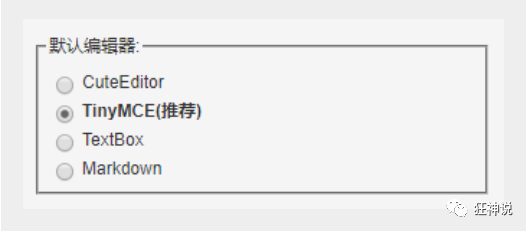
其实这个就是富文本编辑器,市面上有许多非常成熟的富文本编辑器,比如:
-
Editor.md——功能非常丰富的编辑器,左端编辑,右端预览,非常方便,完全免费
-
- 官网:https://pandao.github.io/editor.md/
-
wangEditor——基于javascript和css开发的 Web富文本编辑器, 轻量、简洁、界面美观、易用、开源免费。
-
- 官网:http://www.wangeditor.com/
-
TinyMCE——TinyMCE是一个轻量级的基于浏览器的所见即所得编辑器,由JavaScript写成。它对IE6+和Firefox1.5+都有着非常良好的支持。功能齐全,界面美观,就是文档是英文的,对开发人员英文水平有一定要求。
-
- 官网:https://www.tiny.cloud/docs/demo/full-featured/
- 博客园
-
百度ueditor——UEditor是由百度web前端研发部开发所见即所得富文本web编辑器,具有轻量,功能齐全,可定制,注重用户体验等特点,开源基于MIT协议,允许自由使用和修改代码,缺点是已经没有更新了
-
- 官网:https://ueditor.baidu.com/website/onlinedemo.html
-
kindeditor——界面经典。
-
- 官网:http://kindeditor.net/demo.php
-
Textbox——Textbox是一款极简但功能强大的在线文本编辑器,支持桌面设备和移动设备。主要功能包含内置的图像处理和存储、文件拖放、拼写检查和自动更正。此外,该工具还实现了屏幕阅读器等辅助技术,并符合WAI-ARIA可访问性标准。
-
- 官网:https://textbox.io/
-
CKEditor——国外的,界面美观。
-
- 官网:https://ckeditor.com/ckeditor-5/demo/
-
quill——功能强大,还可以编辑公式等
-
- 官网:https://quilljs.com/
-
simditor——界面美观,功能较全。
-
- 官网:https://simditor.tower.im/
-
summernote——UI好看,精美
-
- 官网:https://summernote.org/
-
jodit——功能齐全
-
- 官网:https://xdsoft.net/jodit/
-
froala Editor——界面非常好看,功能非常强大,非常好用(非免费)
-
- 官网:https://www.froala.com/wysiwyg-editor
总之,目前可用的富文本编辑器有很多…这只是其中的一部分
Editor.md
我这里使用的就是Editor.md,作为一个资深码农,Mardown必然是我们程序猿最喜欢的格式,看下面,就爱上了!
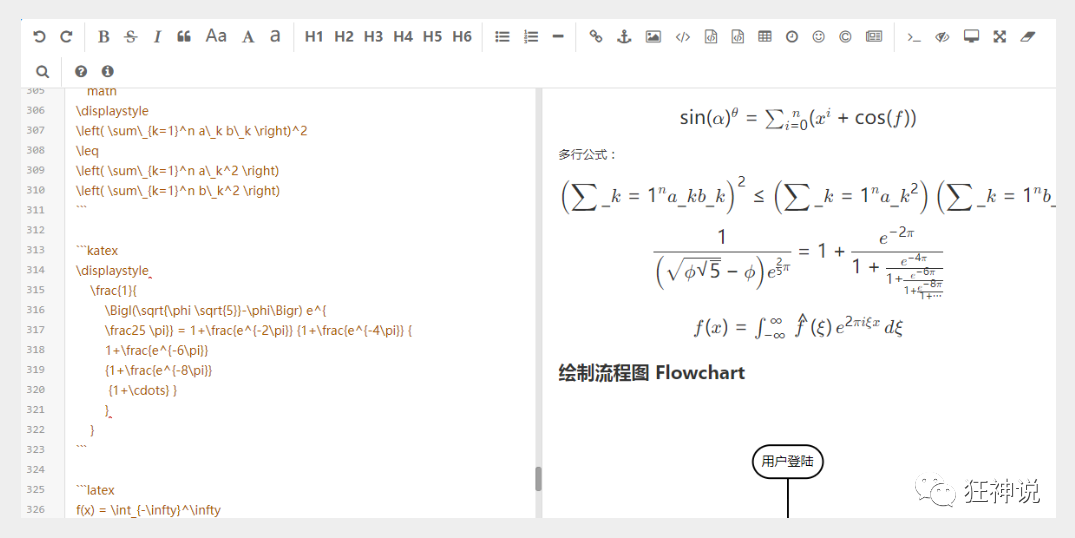
我们可以在官网下载它:https://pandao.github.io/editor.md/ , 得到它的压缩包!
解压以后,在examples目录下面,可以看到他的很多案例使用!学习,其实就是看人家怎么写的,然后进行模仿就好了!
我们可以将整个解压的文件倒入我们的项目,将一些无用的测试和案例删掉即可!
基础工程搭建
数据库设计
article:文章表
| 字段 | 备注 | |
|---|---|---|
| id | int | 文章的唯一ID |
| author | varchar | 作者 |
| title | varchar | 标题 |
| content | longtext | 文章的内容 |
建表SQL:
CREATE TABLE `article` (
`id` int(10) NOT NULL AUTO_INCREMENT COMMENT 'int文章的唯一ID',
`author` varchar(50) NOT NULL COMMENT '作者',
`title` varchar(100) NOT NULL COMMENT '标题',
`content` longtext NOT NULL COMMENT '文章的内容',
PRIMARY KEY (`id`)
) ENGINE=InnoDB DEFAULT CHARSET=utf8
- 1
- 2
- 3
- 4
- 5
- 6
- 7
基础项目搭建
1、建一个SpringBoot项目配置
spring:
datasource:
  username: root
  password: 123456
  #?serverTimezone=UTC解决时区的报错
  url: jdbc:mysql://localhost:3306/springboot?serverTimezone=UTC&useUnicode=true&characterEncoding=utf-8
  driver-class-name: com.mysql.cj.jdbc.Driver
- 1
- 2
- 3
- 4
- 5
- 6
- 7
<resources>
   <resource>
       <directory>src/main/java</directory>
       <includes>
           <include>**/*.xml</include>
       </includes>
       <filtering>true</filtering>
   </resource>
</resources>
- 1
- 2
- 3
- 4
- 5
- 6
- 7
- 8
- 9
2、实体类:
//文章类
@Data
@NoArgsConstructor
@AllArgsConstructor
public class Article implements Serializable {

   private int id; //文章的唯一ID
   private String author; //作者名
   private String title; //标题
   private String content; //文章的内容

}
- 1
- 2
- 3
- 4
- 5
- 6
- 7
- 8
- 9
- 10
- 11
- 12
3、mapper接口:
@Mapper
@Repository
public interface ArticleMapper {
   //查询所有的文章
   List<Article> queryArticles();

   //新增一个文章
   int addArticle(Article article);

   //根据文章id查询文章
   Article getArticleById(int id);

   //根据文章id删除文章
   int deleteArticleById(int id);

}
- 1
- 2
- 3
- 4
- 5
- 6
- 7
- 8
- 9
- 10
- 11
- 12
- 13
- 14
- 15
- 16
<?xml version="1.0" encoding="UTF-8"?>
<!DOCTYPE mapper PUBLIC "-//mybatis.org//DTD Mapper 3.0//EN"
       "http://mybatis.org/dtd/mybatis-3-mapper.dtd">

<mapper namespace="com.kuang.mapper.ArticleMapper">

   <select id="queryArticles" resultType="Article">
      select * from article
   </select>

   <select id="getArticleById" resultType="Article">
      select * from article where id = #{id}
   </select>

   <insert id="addArticle" parameterType="Article">
      insert into article (author,title,content) values (#{author},#{title},#{content});
   </insert>

   <delete id="deleteArticleById" parameterType="int">
      delete from article where id = #{id}
   </delete>

</mapper>
- 1
- 2
- 3
- 4
- 5
- 6
- 7
- 8
- 9
- 10
- 11
- 12
- 13
- 14
- 15
- 16
- 17
- 18
- 19
- 20
- 21
- 22
- 23
既然已经提供了 myBatis 的映射配置文件,自然要告诉 spring boot 这些文件的位置
mybatis:
    mapper-locations: classpath:com/kuang/mapper/*.xml
    type-aliases-package: com.kuang.pojo
- 1
- 2
- 3
编写一个Controller测试下,是否ok;
文章编辑整合(重点)
1、导入 editor.md 资源 ,删除多余文件
2、编辑文章页面 editor.html、需要引入 jQuery;
<!DOCTYPE html>
<html class="x-admin-sm" lang="zh" xmlns:th="http://www.thymeleaf.org">

<head>
   <meta charset="UTF-8">
   <title>秦疆'Blog</title>
   <meta name="renderer" content="webkit">
   <meta http-equiv="X-UA-Compatible" content="IE=edge,chrome=1">
   <meta name="viewport" content="width=device-width,user-scalable=yes, minimum-scale=0.4, initial-scale=0.8,target-densitydpi=low-dpi" />
   <!--Editor.md-->
   <link rel="stylesheet" th:href="@{/editormd/css/editormd.css}"/>
   <link rel="shortcut icon" href="https://pandao.github.io/editor.md/favicon.ico" type="image/x-icon" />
</head>

<body>

<div class="layui-fluid">
   <div class="layui-row layui-col-space15">
       <div class="layui-col-md12">
           <!--博客表单-->
           <form name="mdEditorForm">
               <div>
                  标题:<input type="text" name="title">
               </div>
               <div>
                  作者:<input type="text" name="author">
               </div>
               <div id="article-content">
                   <textarea name="content" id="content" style="display:none;"> </textarea>
               </div>
           </form>

       </div>
   </div>
</div>
</body>

<!--editormd-->
<script th:src="@{/editormd/lib/jquery.min.js}"></script>
<script th:src="@{/editormd/editormd.js}"></script>

<script type="text/javascript">
   var testEditor;

   //window.onload = function(){ }
   $(function() {
       testEditor = editormd("article-content", {
           width : "95%",
           height : 400,
           syncScrolling : "single",
           path : "../editormd/lib/",
           saveHTMLToTextarea : true,    // 保存 HTML 到 Textarea
           emoji: true,
           theme: "dark",//工具栏主题
           previewTheme: "dark",//预览主题
           editorTheme: "pastel-on-dark",//编辑主题
           tex : true,                   // 开启科学公式TeX语言支持,默认关闭
           flowChart : true,             // 开启流程图支持,默认关闭
           sequenceDiagram : true,       // 开启时序/序列图支持,默认关闭,
           //图片上传
           imageUpload : true,
           imageFormats : ["jpg", "jpeg", "gif", "png", "bmp", "webp"],
           imageUploadURL : "/article/file/upload",
           onload : function() {
               console.log('onload', this);
          },
           /*指定需要显示的功能按钮*/
           toolbarIcons : function() {
               return ["undo","redo","|",
                   "bold","del","italic","quote","ucwords","uppercase","lowercase","|",
                   "h1","h2","h3","h4","h5","h6","|",
                   "list-ul","list-ol","hr","|",
                   "link","reference-link","image","code","preformatted-text",
                   "code-block","table","datetime","emoji","html-entities","pagebreak","|",
                   "goto-line","watch","preview","fullscreen","clear","search","|",
                   "help","info","releaseIcon", "index"]
          },

           /*自定义功能按钮,下面我自定义了2个,一个是发布,一个是返回首页*/
           toolbarIconTexts : {
               releaseIcon : "<span bgcolor=\"gray\">发布</span>",
               index : "<span bgcolor=\"red\">返回首页</span>",
          },

           /*给自定义按钮指定回调函数*/
           toolbarHandlers:{
               releaseIcon : function(cm, icon, cursor, selection) {
                   //表单提交
                   mdEditorForm.method = "post";
                   mdEditorForm.action = "/article/addArticle";//提交至服务器的路径
                   mdEditorForm.submit();
              },
               index : function(){
                   window.location.href = '/';
              },
          }
      });
  });
</script>

</html>
- 1
- 2
- 3
- 4
- 5
- 6
- 7
- 8
- 9
- 10
- 11
- 12
- 13
- 14
- 15
- 16
- 17
- 18
- 19
- 20
- 21
- 22
- 23
- 24
- 25
- 26
- 27
- 28
- 29
- 30
- 31
- 32
- 33
- 34
- 35
- 36
- 37
- 38
- 39
- 40
- 41
- 42
- 43
- 44
- 45
- 46
- 47
- 48
- 49
- 50
- 51
- 52
- 53
- 54
- 55
- 56
- 57
- 58
- 59
- 60
- 61
- 62
- 63
- 64
- 65
- 66
- 67
- 68
- 69
- 70
- 71
- 72
- 73
- 74
- 75
- 76
- 77
- 78
- 79
- 80
- 81
- 82
- 83
- 84
- 85
- 86
- 87
- 88
- 89
- 90
- 91
- 92
- 93
- 94
- 95
- 96
- 97
- 98
- 99
- 100
- 101
3、编写Controller,进行跳转,以及保存文章
@Controller
@RequestMapping("/article")
public class ArticleController {

   @GetMapping("/toEditor")
   public String toEditor(){
       return "editor";
  }

   @PostMapping("/addArticle")
   public String addArticle(Article article){
       articleMapper.addArticle(article);
       return "editor";
  }

}
- 1
- 2
- 3
- 4
- 5
- 6
- 7
- 8
- 9
- 10
- 11
- 12
- 13
- 14
- 15
- 16
图片上传问题
1、前端js中添加配置
//图片上传
imageUpload : true,
imageFormats : ["jpg", "jpeg", "gif", "png", "bmp", "webp"],
imageUploadURL : "/article/file/upload", // //这个是上传图片时的访问地址
- 1
- 2
- 3
- 4
2、后端请求,接收保存这个图片, 需要导入 FastJson 的依赖!
//博客图片上传问题
@RequestMapping("/file/upload")
@ResponseBody
public JSONObject fileUpload(@RequestParam(value = "editormd-image-file", required = true) MultipartFile file, HttpServletRequest request) throws IOException {
   //上传路径保存设置

   //获得SpringBoot当前项目的路径:System.getProperty("user.dir")
   String path = System.getProperty("user.dir")+"/upload/";

   //按照月份进行分类:
   Calendar instance = Calendar.getInstance();
   String month = (instance.get(Calendar.MONTH) + 1)+"月";
   path = path+month;

   File realPath = new File(path);
   if (!realPath.exists()){
       realPath.mkdir();
  }

   //上传文件地址
   System.out.println("上传文件保存地址:"+realPath);

   //解决文件名字问题:我们使用uuid;
   String filename = "ks-"+UUID.randomUUID().toString().replaceAll("-", "");
   //通过CommonsMultipartFile的方法直接写文件(注意这个时候)
   file.transferTo(new File(realPath +"/"+ filename));

   //给editormd进行回调
   JSONObject res = new JSONObject();
   res.put("url","/upload/"+month+"/"+ filename);
   res.put("success", 1);
   res.put("message", "upload success!");

   return res;
}
- 1
- 2
- 3
- 4
- 5
- 6
- 7
- 8
- 9
- 10
- 11
- 12
- 13
- 14
- 15
- 16
- 17
- 18
- 19
- 20
- 21
- 22
- 23
- 24
- 25
- 26
- 27
- 28
- 29
- 30
- 31
- 32
- 33
- 34
- 35
3、解决文件回显显示的问题,设置虚拟目录映射!在我们自己拓展的MvcConfig中进行配置即可!
@Configuration
public class MyMvcConfig implements WebMvcConfigurer {

   // 文件保存在真实目录/upload/下,
   // 访问的时候使用虚路径/upload,比如文件名为1.png,就直接/upload/1.png就ok了。
   @Override
   public void addResourceHandlers(ResourceHandlerRegistry registry) {
       registry.addResourceHandler("/upload/**")
          .addResourceLocations("file:"+System.getProperty("user.dir")+"/upload/");
  }

}
- 1
- 2
- 3
- 4
- 5
- 6
- 7
- 8
- 9
- 10
- 11
- 12
表情包问题
自己手动下载,emoji 表情包,放到图片路径下:
修改editormd.js文件
// Emoji graphics files url path
editormd.emoji     = {
   path : "../editormd/plugins/emoji-dialog/emoji/",
   ext   : ".png"
};
- 1
- 2
- 3
- 4
- 5
文章展示
1、Controller 中增加方法
@GetMapping("/{id}")
public String show(@PathVariable("id") int id,Model model){
   Article article = articleMapper.getArticleById(id);
   model.addAttribute("article",article);
   return "article";
}
- 1
- 2
- 3
- 4
- 5
- 6
2、编写页面 article.html
<!DOCTYPE html>
<html lang="en" xmlns:th="http://www.thymeleaf.org">
<head>
   <meta charset="UTF-8">
   <meta name="viewport" content="width=device-width, initial-scale=1, maximum-scale=1">
   <title th:text="${article.title}"></title>
</head>
<body>

<div>
   <!--文章头部信息:标题,作者,最后更新日期,导航-->
   <h2 style="margin: auto 0" th:text="${article.title}"></h2>
  作者:<span style="float: left" th:text="${article.author}"></span>
   <!--文章主体内容-->
   <div id="doc-content">
       <textarea style="display:none;" placeholder="markdown" th:text="${article.content}"></textarea>
   </div>

</div>

<link rel="stylesheet" th:href="@{/editormd/css/editormd.preview.css}" />
<script th:src="@{/editormd/lib/jquery.min.js}"></script>
<script th:src="@{/editormd/lib/marked.min.js}"></script>
<script th:src="@{/editormd/lib/prettify.min.js}"></script>
<script th:src="@{/editormd/lib/raphael.min.js}"></script>
<script th:src="@{/editormd/lib/underscore.min.js}"></script>
<script th:src="@{/editormd/lib/sequence-diagram.min.js}"></script>
<script th:src="@{/editormd/lib/flowchart.min.js}"></script>
<script th:src="@{/editormd/lib/jquery.flowchart.min.js}"></script>
<script th:src="@{/editormd/editormd.js}"></script>

<script type="text/javascript">
   var testEditor;
   $(function () {
       testEditor = editormd.markdownToHTML("doc-content", {//注意:这里是上面DIV的id
           htmlDecode: "style,script,iframe",
           emoji: true,
           taskList: true,
           tocm: true,
           tex: true, // 默认不解析
           flowChart: true, // 默认不解析
           sequenceDiagram: true, // 默认不解析
           codeFold: true
      });});
</script>
</body>
</html>
- 1
- 2
- 3
- 4
- 5
- 6
- 7
- 8
- 9
- 10
- 11
- 12
- 13
- 14
- 15
- 16
- 17
- 18
- 19
- 20
- 21
- 22
- 23
- 24
- 25
- 26
- 27
- 28
- 29
- 30
- 31
- 32
- 33
- 34
- 35
- 36
- 37
- 38
- 39
- 40
- 41
- 42
- 43
- 44
- 45
- 46
- 47
重启项目,访问进行测试!大功告成!
5.3、Dubbo和Zookeeper集成
zookeeper官网: https://zookeeper.apache.org
Apache Dubbo官网:https://dubbo.incubator.apache.org/zh/index.html
什么是RPC?阅读文章:https://www.jianshu.com/p/2accc2840a1b
项目创建
1.启动zookeeper !
- IDEA创建一个空项目;
3.创建一个模块,实现服务提供者:provider-server , 选择web依赖即可
4.项目创建完毕,我们写一个服务,比如卖票的服务;
编写接口
package com.kuang.provider.service;

public interface TicketService {
   public String getTicket();
}
- 1
- 2
- 3
- 4
- 5
编写实现类
package com.kuang.provider.service;

public class TicketServiceImpl implements TicketService {
   @Override
   public String getTicket() {
       return "《狂神说Java》";
  }
}
- 1
- 2
- 3
- 4
- 5
- 6
- 7
- 8
5.创建一个模块,实现服务消费者:consumer-server , 选择web依赖即可
6.项目创建完毕,我们写一个服务,比如用户的服务;
编写service
package com.kuang.consumer.service;

public class UserService {
   //我们需要去拿去注册中心的服务
}
- 1
- 2
- 3
- 4
- 5
需求:现在我们的用户想使用买票的服务,这要怎么弄呢 ?
1、将服务提供者注册到注册中心,我们需要整合Dubbo和zookeeper,所以需要导包
我们从dubbo官网进入github,看下方的帮助文档,找到dubbo-springboot,找到依赖包
<!-- Dubbo Spring Boot Starter -->
<dependency>
   <groupId>org.apache.dubbo</groupId>
   <artifactId>dubbo-spring-boot-starter</artifactId>
   <version>2.7.3</version>
</dependency>
- 1
- 2
- 3
- 4
- 5
- 6
zookeeper的包我们去maven仓库下载,zkclient;
<!-- https://mvnrepository.com/artifact/com.github.sgroschupf/zkclient -->
<dependency>
   <groupId>com.github.sgroschupf</groupId>
   <artifactId>zkclient</artifactId>
   <version>0.1</version>
</dependency>
- 1
- 2
- 3
- 4
- 5
- 6
【新版的坑】zookeeper及其依赖包,解决日志冲突,还需要剔除日志依赖;
<!-- 引入zookeeper -->
<dependency>
   <groupId>org.apache.curator</groupId>
   <artifactId>curator-framework</artifactId>
   <version>2.12.0</version>
</dependency>
<dependency>
   <groupId>org.apache.curator</groupId>
   <artifactId>curator-recipes</artifactId>
   <version>2.12.0</version>
</dependency>
<dependency>
   <groupId>org.apache.zookeeper</groupId>
   <artifactId>zookeeper</artifactId>
   <version>3.4.14</version>
   <!--排除这个slf4j-log4j12-->
   <exclusions>
       <exclusion>
           <groupId>org.slf4j</groupId>
           <artifactId>slf4j-log4j12</artifactId>
       </exclusion>
   </exclusions>
</dependency>
- 1
- 2
- 3
- 4
- 5
- 6
- 7
- 8
- 9
- 10
- 11
- 12
- 13
- 14
- 15
- 16
- 17
- 18
- 19
- 20
- 21
- 22
- 23
2、在springboot配置文件中配置dubbo相关属性!
#当前应用名字
dubbo.application.name=provider-server
#注册中心地址
dubbo.registry.address=zookeeper://127.0.0.1:2181
#扫描指定包下服务
dubbo.scan.base-packages=com.kuang.provider.service
- 1
- 2
- 3
- 4
- 5
- 6
3、在service的实现类中配置服务注解,发布服务!注意导包问题
import org.apache.dubbo.config.annotation.Service;
import org.springframework.stereotype.Component;

@Service //将服务发布出去
@Component //放在容器中
public class TicketServiceImpl implements TicketService {
   @Override
   public String getTicket() {
       return "《狂神说Java》";
  }
}
- 1
- 2
- 3
- 4
- 5
- 6
- 7
- 8
- 9
- 10
- 11
逻辑理解 :应用启动起来,dubbo就会扫描指定的包下带有@component注解的服务,将它发布在指定的注册中心中!
服务消费者
1、导入依赖,和之前的依赖一样;
<!--dubbo-->
<!-- Dubbo Spring Boot Starter -->
<dependency>
   <groupId>org.apache.dubbo</groupId>
   <artifactId>dubbo-spring-boot-starter</artifactId>
   <version>2.7.3</version>
</dependency>
<!--zookeeper-->
<!-- https://mvnrepository.com/artifact/com.github.sgroschupf/zkclient -->
<dependency>
   <groupId>com.github.sgroschupf</groupId>
   <artifactId>zkclient</artifactId>
   <version>0.1</version>
</dependency>
<!-- 引入zookeeper -->
<dependency>
   <groupId>org.apache.curator</groupId>
   <artifactId>curator-framework</artifactId>
   <version>2.12.0</version>
</dependency>
<dependency>
   <groupId>org.apache.curator</groupId>
   <artifactId>curator-recipes</artifactId>
   <version>2.12.0</version>
</dependency>
<dependency>
   <groupId>org.apache.zookeeper</groupId>
   <artifactId>zookeeper</artifactId>
   <version>3.4.14</version>
   <!--排除这个slf4j-log4j12-->
   <exclusions>
       <exclusion>
           <groupId>org.slf4j</groupId>
           <artifactId>slf4j-log4j12</artifactId>
       </exclusion>
   </exclusions>
</dependency>
- 1
- 2
- 3
- 4
- 5
- 6
- 7
- 8
- 9
- 10
- 11
- 12
- 13
- 14
- 15
- 16
- 17
- 18
- 19
- 20
- 21
- 22
- 23
- 24
- 25
- 26
- 27
- 28
- 29
- 30
- 31
- 32
- 33
- 34
- 35
- 36
- 37
2、配置参数
#当前应用名字
dubbo.application.name=consumer-server
#注册中心地址
dubbo.registry.address=zookeeper://127.0.0.1:2181
- 1
- 2
- 3
- 4
- 本来正常步骤是需要将服务提供者的接口打包,然后用pom文件导入,我们这里使用简单的方式,直接将服务的接口拿过来,路径必须保证正确,即和服务提供者相同;
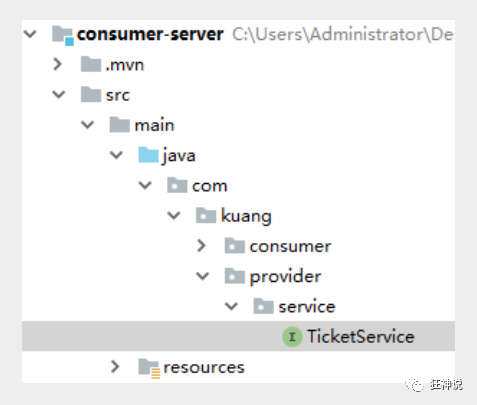
- 完善消费者的服务类
package com.kuang.consumer.service;

import com.kuang.provider.service.TicketService;
import org.apache.dubbo.config.annotation.Reference;
import org.springframework.stereotype.Service;

@Service //注入到容器中
public class UserService {

   @Reference //远程引用指定的服务,他会按照全类名进行匹配,看谁给注册中心注册了这个全类名
   TicketService ticketService;

   public void bugTicket(){
       String ticket = ticketService.getTicket();
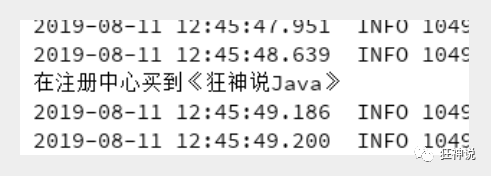
       System.out.println("在注册中心买到"+ticket);
  }

}
- 1
- 2
- 3
- 4
- 5
- 6
- 7
- 8
- 9
- 10
- 11
- 12
- 13
- 14
- 15
- 16
- 17
- 18
- 测试类编写;
@RunWith(SpringRunner.class)
@SpringBootTest
public class ConsumerServerApplicationTests {

   @Autowired
   UserService userService;

   @Test
   public void contextLoads() {

       userService.bugTicket();

  }

}
- 1
- 2
- 3
- 4
- 5
- 6
- 7
- 8
- 9
- 10
- 11
- 12
- 13
- 14
- 15
启动测试
1. 开启zookeeper
2. 打开dubbo-admin实现监控【可以不用做】
3. 开启服务者
4. 消费者消费测试,结果:
监控中心 :
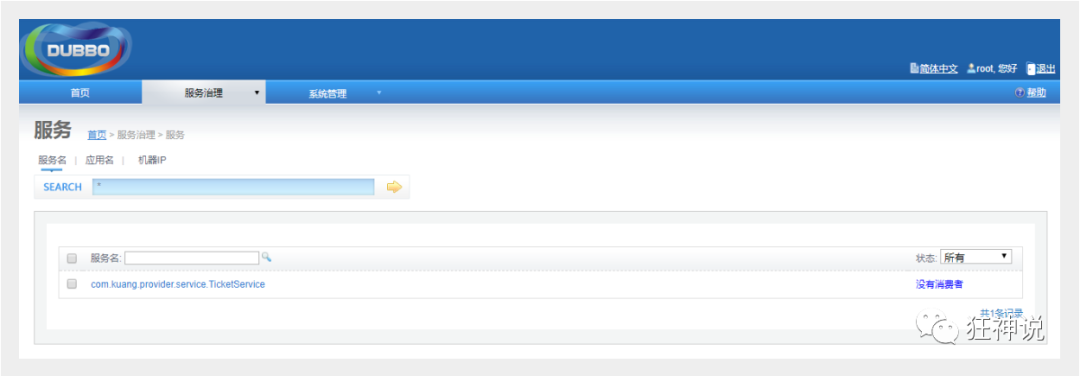
ok , 这就是SpingBoot + dubbo + zookeeper实现分布式开发的应用,其实就是一个服务拆分的思想;