- 1深入浅出Java虚拟机_深入浅出:java虚拟机设计与实现
- 2【ssmp】springboot综合开发——图书管理系统【CRUD】_黑马程序员sql图书管理系统
- 3数学建模算法集合_数学建模中的集合
- 4使用git合并两次commit_gerrit合并两次commit
- 5Dockerfile(11) - COPY 指令详解
- 6归并排序_public class mergesort { // 将arr[l...mid]和arr[mid+
- 7mongodb java分页查询_JAVA代码实现MongoDB动态条件之分页查询
- 8STM32 使用SPI读写FLASH(W25Q64型号)_stm32读写w25q64代码库函数
- 9at32f403 rtthread adc_at32f403a adc数据错误
- 10【SpringSecurity系列4】基于Spring Webflux集成SpringSecurity实现前后端分离无状态Rest API的权限控制原理分析_reactivesecuritycontextholder
Springboot扩展点之@PostConstruct_springboot postconstruct
赞
踩
Springboot扩展点系列实现方式、工作原理集合:
Springboot扩展点之ApplicationContextInitializer
Springboot扩展点之BeanFactoryPostProcessor
Springboot扩展点之BeanDefinitionRegistryPostProcessor
Springboot扩展点之BeanPostProcessor
Springboot扩展点之InstantiationAwareBeanPostProcessor
Springboot扩展点之SmartInstantiationAwareBeanPostProcessor
Springboot扩展点之ApplicationContextAwareProcessor
Springboot扩展点之InitializingBean
Springboot扩展点之SmartInitializingSingleton
Springboot扩展点之CommandLineRunner和ApplicationRunner
前言
@postContruct全限定类名是javax.annotation.PostConstruct,可以看出来其本身不是Spring定义的注解,但是Spring提供了具体的实现,所以这篇文章主要分析的是@PostConstruct在Spring项目开发中的功能特性、实现方式和基本工作原理。
功能特性
从@PostConstruct注解的注释上看,可以了解到以下内容:
1、要在依赖加载后,对象佤用前执行,并且只执行一次;
2、所有支持依赖注入的类都需要支持此方法。即使类没有请求注入任何的资源,也必须调用被@PostConstruct注解标记的方法;
3、一个类中在一个方法上使用@PostConstruct注解;
4、使用@PostConstruct注解标记的方法不能有参数,除非是拦截器,可以采用拦截器规范定义的InvocationContext对象。
5、使用@PostConstruct注解标记的方法不能有返回值,实际上如果有返回值,也不会报错,但是会忽略掉;
6、使用@PostConstruct注解标记的方法的权限,public、private、protected都可以;
7、使用@PostConstruct注解标记的方法不能被static修饰,但是final是可以的;
- package javax.annotation;
- import java.lang.annotation.*;
- import static java.lang.annotation.ElementType.*;
- import static java.lang.annotation.RetentionPolicy.*;
- @Documented
- @Retention (RUNTIME)
- @Target(METHOD)
- public @interface PostConstruct {
- }
在在实际的Spring项目中Bean的生命周期里,其执行的时机是:
1、Bean的实例化;
2、Bean内依赖属性的注入 ;
3、Bean里被@PostConstruct标记的方法;
下面在实现方式里,用一个小例子来验证一下这个过程。
实现方式
1、定义一个ExampleController类,采用setter的依赖注入的方式,注入exampleService属性,另外在定义一个myPostConstruct方法用@PostConstruct注解标记;
- @RestController
- @Slf4j
- public class ExampleController {
-
- private ExampleService exampleService;
-
- public ExampleController() {
- log.info("----ExampleController无参数构造方法被执行");
- }
- @Autowired
- public void setExampleService(ExampleService exampleService) {
- this.exampleService = exampleService;
- log.info("----ExampleController类的setExampleService方法被调用");
- }
- @PostConstruct
- public void myPostConstruct(){
- log.info("----ExampleController类的myPostConstruct方法被调用");
- }
- }
2、定义ExampleService类
- @Service
- @Slf4j
- public class ExampleService {
- public ExampleService() {
- log.info("----ExampleService的无参数构造方法被调用");
- }
- }
3、定义一个单元测试,在单元测试中启动Spring容器;
- @Test
- public void test4(){
- log.info("----单元测试执行开始");
- AnnotationConfigApplicationContext context = new AnnotationConfigApplicationContext("com.fanfu");
- log.info("----单元测试执行完毕");
- }
单元测试验证结果:
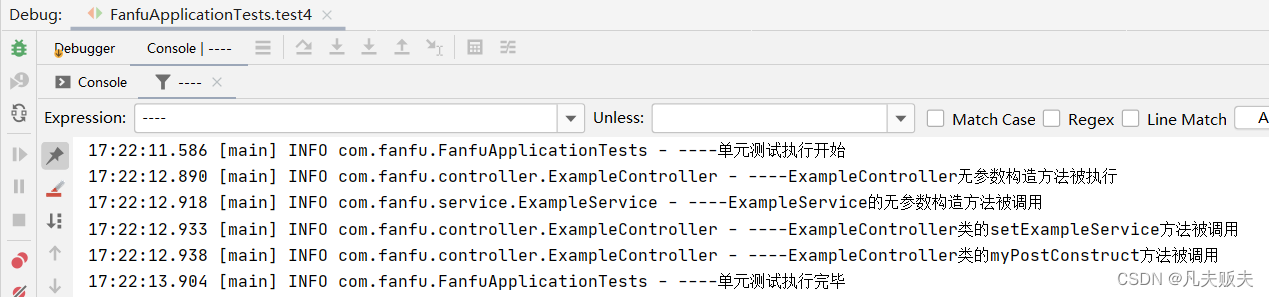
从单元测试的执行结果来看,首先,ExampleConstroller被实例化,接着是ExampleService被实例化,然后通过setter依赖注入的方式把ExampleService对象注入到了ExampleConstroller对象中,之后才开始了被@PostConstruct注解标记的myPostConstruct方法的执行。下面就单元测试的结果分析一个@PostConstruct注解的工作原理。
工作原理
@PostConstruct的工作原理的关键问题就是:在Spring容器启动的过程,被@PostConstruct标记的方法是怎么被执行的?
在被@PostConstruct标记的方法上打上断点,待程序执行的断点的时候观察一下方法调用栈信息,这时会发现:
1、Spring容器启动过程的最后一步,即把需要提前注册的一些非懒加载的单例Bean时,如ExampleController,注意这时exampleController对象实例化完成,需要注入的exampleService的属性已经被实例化,且已经注入到exampleController对象中,在BeanPostProcessor接口的扩展方法中,被@PostConstruct标记的方法开始触发执行,入口位置在AbstractAutowireCapableBeanFactory#applyBeanPostProcessorsBeforeInitialization。
- public Object applyBeanPostProcessorsBeforeInitialization(Object existingBean, String beanName)
- throws BeansException {
-
- Object result = existingBean;
- for (BeanPostProcessor processor : getBeanPostProcessors()) {
- Object current = processor.postProcessBeforeInitialization(result, beanName);
- if (current == null) {
- return result;
- }
- result = current;
- }
- return result;
- }
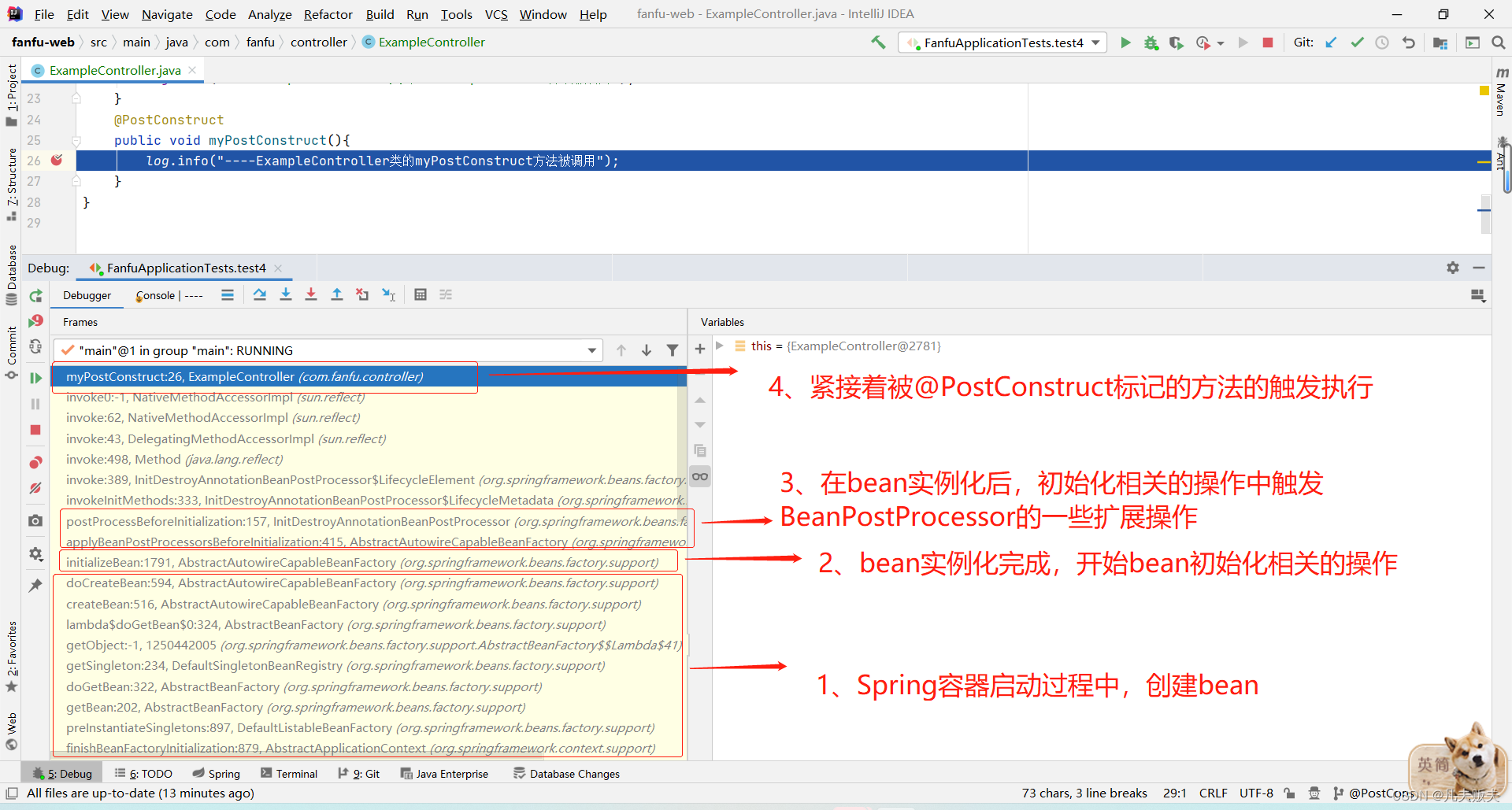
那么触发被@PostConstruct注解标记的方法执行的BeanPostProcessor接口的具体是实现是哪个类呢?通过debug分析,是CommonAnnotationBeanPostProcessor类。
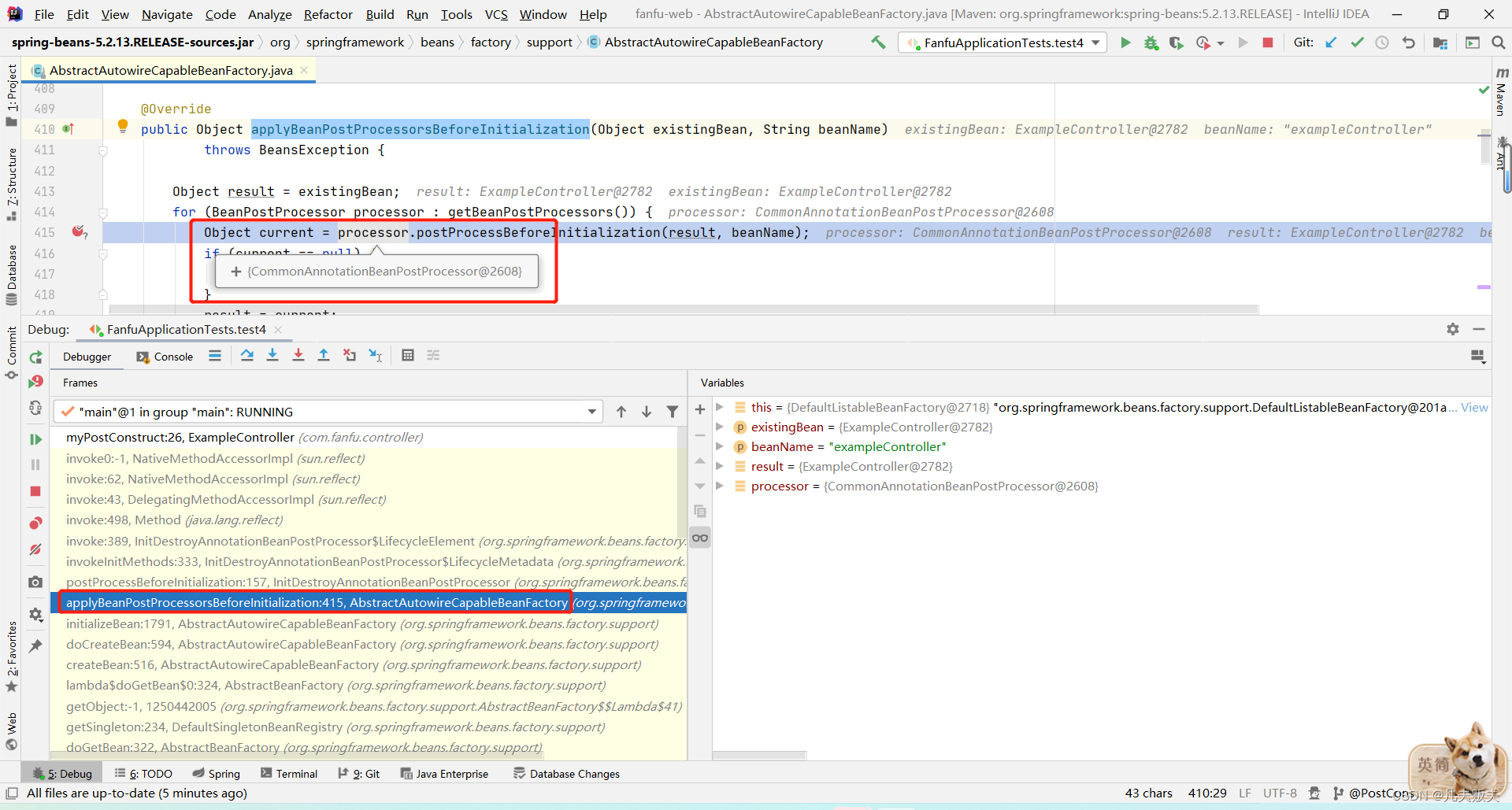
2、CommonAnnotationBeanPostProcessor类继承于InitDestroyAnnotationBeanPostProcessor,实际的触发@PostConstruct标记方法执行的入口是在InitDestroyAnnotationBeanPostProcessor的postProcessBeforeInitialization()
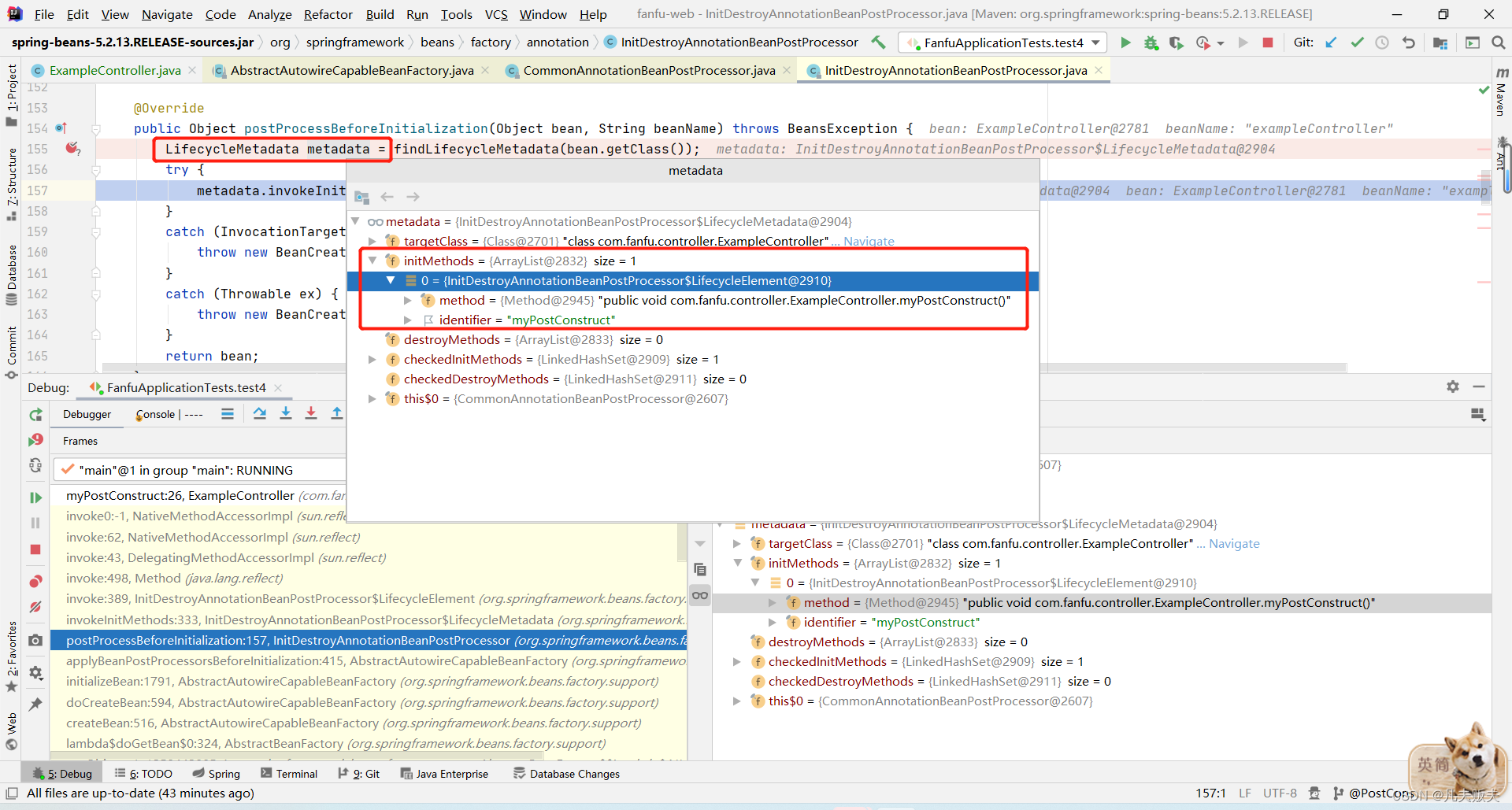
3、InitDestroyAnnotationBeanPostProcessor的postProcessBeforeInitialization()内,逻辑相对比较简洁,先查询bean中被@PostConstruct标记的方法,然后再使用java反射来执行这个方法;
- public Object postProcessBeforeInitialization(Object bean, String beanName) throws BeansException {
- //查询bean中被@PostConstruct标记的方法,相关的信息封在LifecycleMetadata对象的
- LifecycleMetadata metadata = findLifecycleMetadata(bean.getClass());
- try {
- //使用java反射执行被@PostConstruct标记的方法
- metadata.invokeInitMethods(bean, beanName);
- }
- catch (InvocationTargetException ex) {
- throw new BeanCreationException(beanName, "Invocation of init method failed", ex.getTargetException());
- }
- catch (Throwable ex) {
- throw new BeanCreationException(beanName, "Failed to invoke init method", ex);
- }
- return bean;
- }
总结
从以上几步的分析来看,被@PostConstruct标记的方法是怎么被执行的,这个问题回答清楚了。那么如果面试官问你,你了解@PostContruct注解是怎么工作的吗?你就可以这么回答他:在Bean实例化、属性注入后,被@PostConstruct标记的方法是在BeanPostProcessor的扩展方法postProcessBeforeInitialization()触发执行的,具体实现类是InitDestroyAnnotationBeanPostProcessor,具体的逻辑是:先查询被@PostConstruct标记的方法,然后使用java反射去执行这个方法。回答完后,如果他不换一个问题的话,把Springboot的扩展点都给他盘一遍。