- 1软件定义存储(SDS)学习一_sds组件
- 2eclipse链接数据库,找数据库jar包,项目导入数据库jar包,数据库链接测试,MySQL环境变量配置。_连接数据库的jar包
- 3怎么设计一个秒杀系统
- 4SSM框架,Spring-ioc的学习(上)
- 5在elementUI中sort-orders排序,默认为三种,怎么改成两种
- 6gitee pages更新了html后无法刷新_github pages 更新后不生效
- 7求生之路2服务器搭建插件安装及详细的游戏参数配置教程linux
- 8云计算学习8——OpenStack高级运维企业实战竞赛题目_cirros做raid
- 9bids格式数据中config文件的编写_bids sidecar
- 10独家 | 年度盘点!必看AI顶会论文、Github高星项目大合集(附链接)
Python 基础系列 8 - 函数 Function 基础知识_python function
赞
踩
引言
本文主要介绍一个 Python 中函数 Function 的基础知识点,更多 Python 基础系列文章,请参考 Python 基础系列大纲
内容提要:
- 函数的优势
- 函数是对象
- 函数的类型
- 函数参数
- 变量的范围
- List 的拷贝 vs. 引用传递
- 函数返回值
- 函数规范
函数的优势
函数是一组用于实现某一特殊功能按一定逻辑组织的代码集合。
- 提高代码可读性,可调试性
- 减少代码重复,方便以后修改,降低代码维护成本
- 方便小部分调试再进行组装
- 隐藏复杂实现,只一条简单的函数调用
- 重复利用高质量设计的代码
- 避免全局变量的维护,可在函数内部定义局部变量
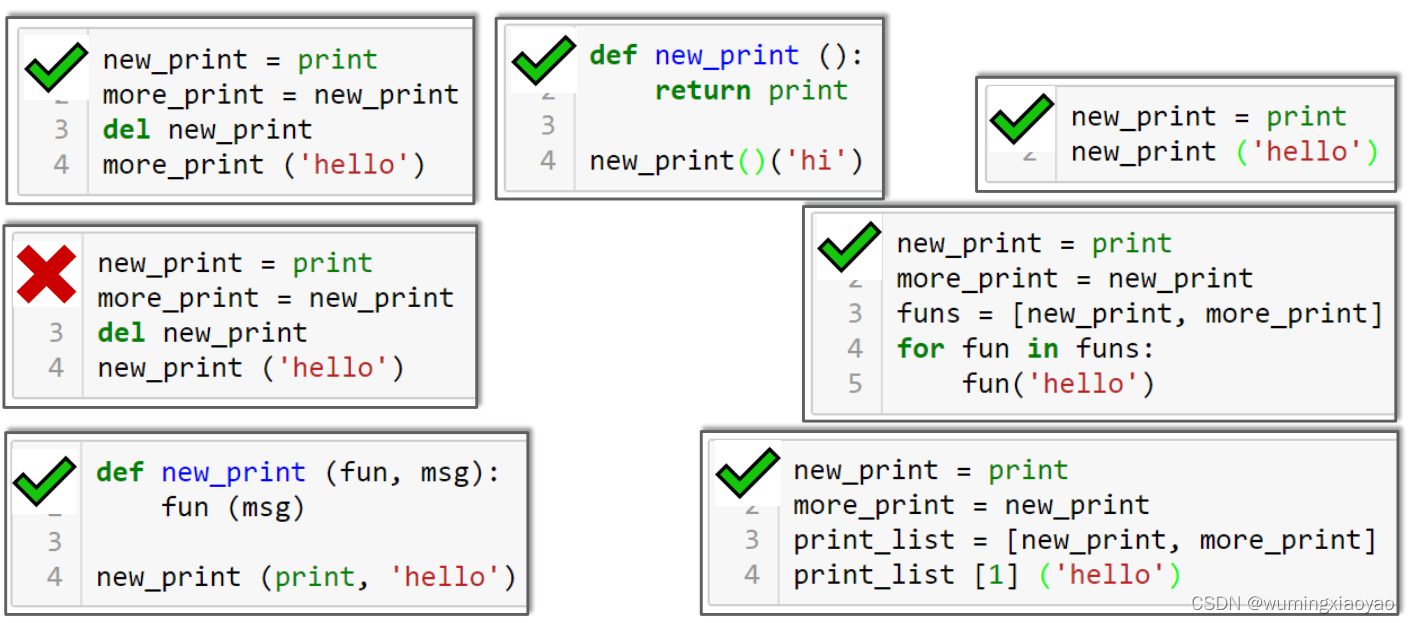
函数是对象 Function ≡ Object
- 函数可以赋值给变量
- 可以删除函数
- 可以存储数据结构
- 可以遍历
- 函数可以作为一个参数传递
- 函数可以有返回值
函数的类型
-
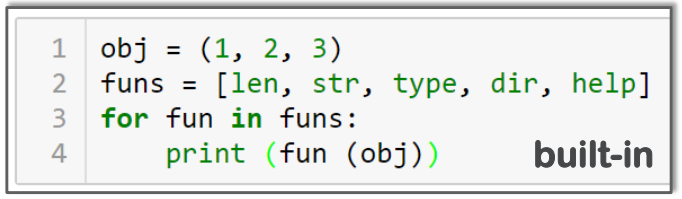
内建 Built-in 函数:
len(), dir(), help(), type(), str(),…
-
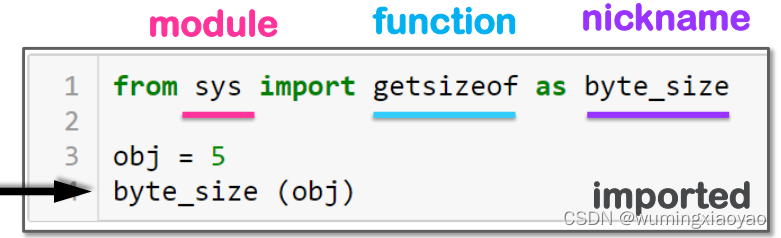
导入的模块 module 函数 :
-
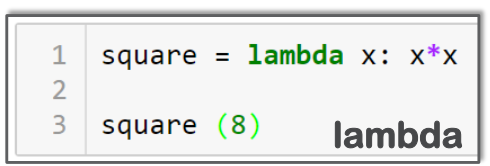
Lambda functions
表达式函数
不用指明函数名
-
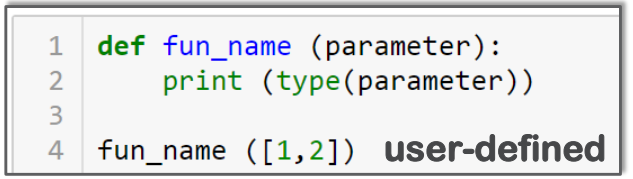
用户自定义函数
函数参数
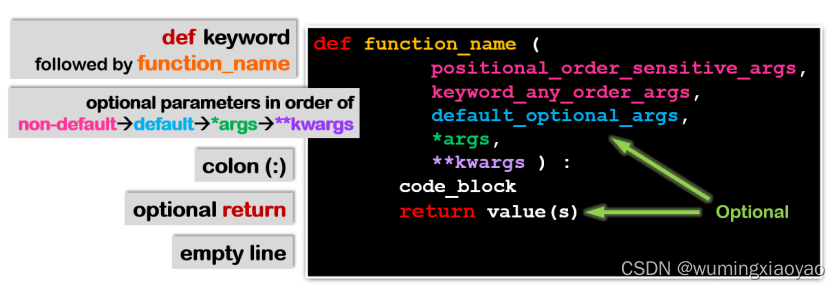
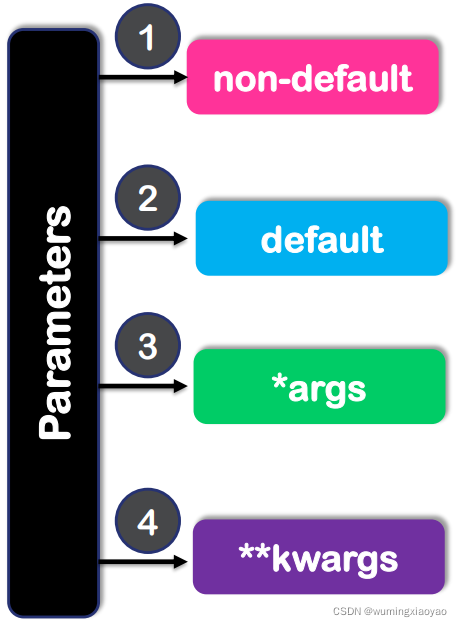
这 4 类参数必须按顺序在函数中申明,传递。

- 没有默认值的参数 non-default
函数的调用必须匹配参数的顺序 - 默认值参数 default
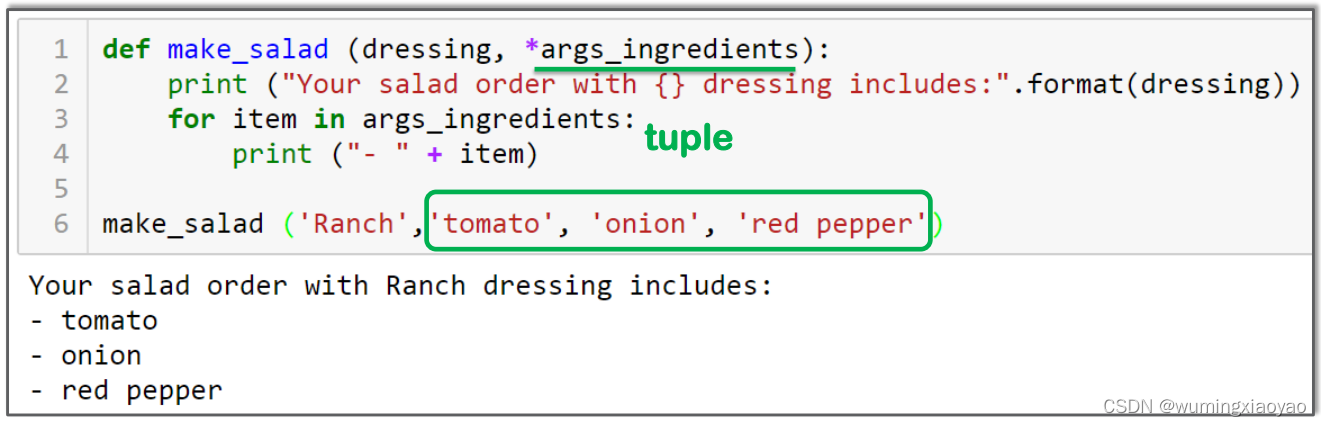
函数调用可以使用默认值,也可以用新的值覆盖默认的参数值 - 不定长度的参数 *args
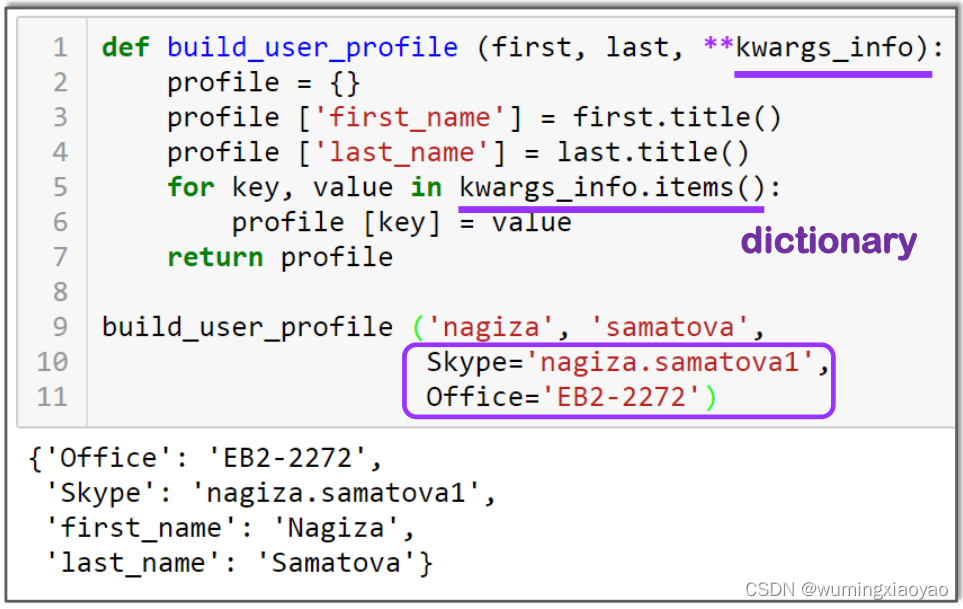
应用于不确定参数的个数 - 不定长的关键字 **kwargs
应用于不确定长度的关键字参数
举例:
不定长参数 *args
不定长关键字参数 **kwargs
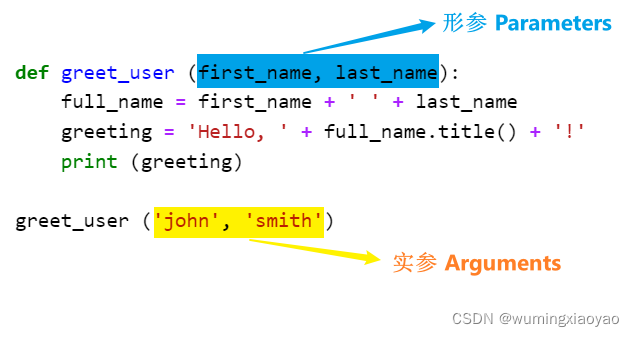
形参 Parameters vs. 实参 Arguments
通过形参与实参在函数中位置来进行区分,两者区别如下:
一、主体不同
1、实参:在调用有参函数时,函数名后面括号中的参数为“实际参数”。
2、形参:不是实际存在变量,又称虚拟变量。
二、目的不同
1、实参:可以是常量、变量或表达式, 无论实参是何种类型的量,在进行函数调用时,都必须具有确定的值, 以便把这些值传送给形参。
2、形参:定义函数名和函数体的时候使用的参数,目的是用来接收调用该函数时传入的参数。
三、特点不同
1、实参:在调用函数过程中,系统会把实参的值传递给被调用函数的形参。或者说,形参从实参得到一个值。该值在函数调用期间有效,可以参加该函数中的运算。
2、形参:形参的本质是一个名字,不占用内存空间。
变量的范围
什么是变量:
- 一个数据结构是一个变量 (e.g., int, str, tuple, list, dict, set)
- 一个函数是一个变量
- 一个类是一个变量
- 一个模块是一个变量
- 一个表达式是一个变量
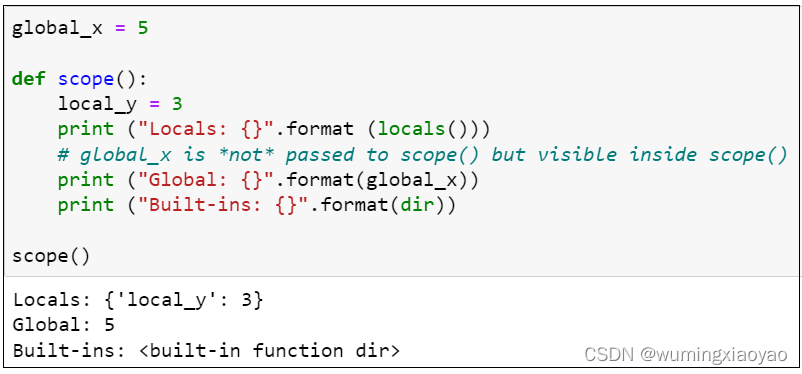
变量的作用范围:

- 局部变量:
变量定义在函数内部
用 locals() 方法可以列举局部变量 - 全局变量:
变量定义成 global 级别
用 globals() 获取 - 内建 Built-in 变量
Python 预定义的变量
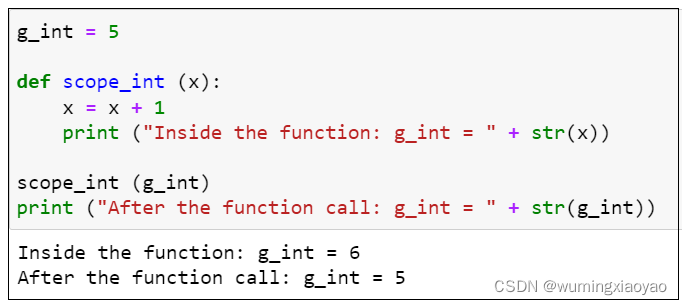
全局变量在函数内部是可见的:
可变 Mutable vs. Immutable 不可变 类型作用范围:
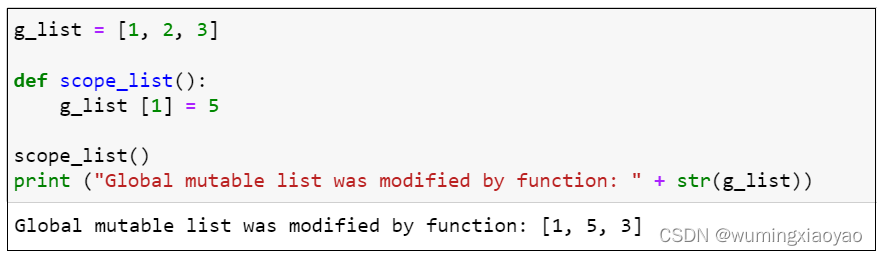
如果一个全局变量是一个可变类型 (如:list),那么在函数内部改变它的值将会更改它更改它原始的值。
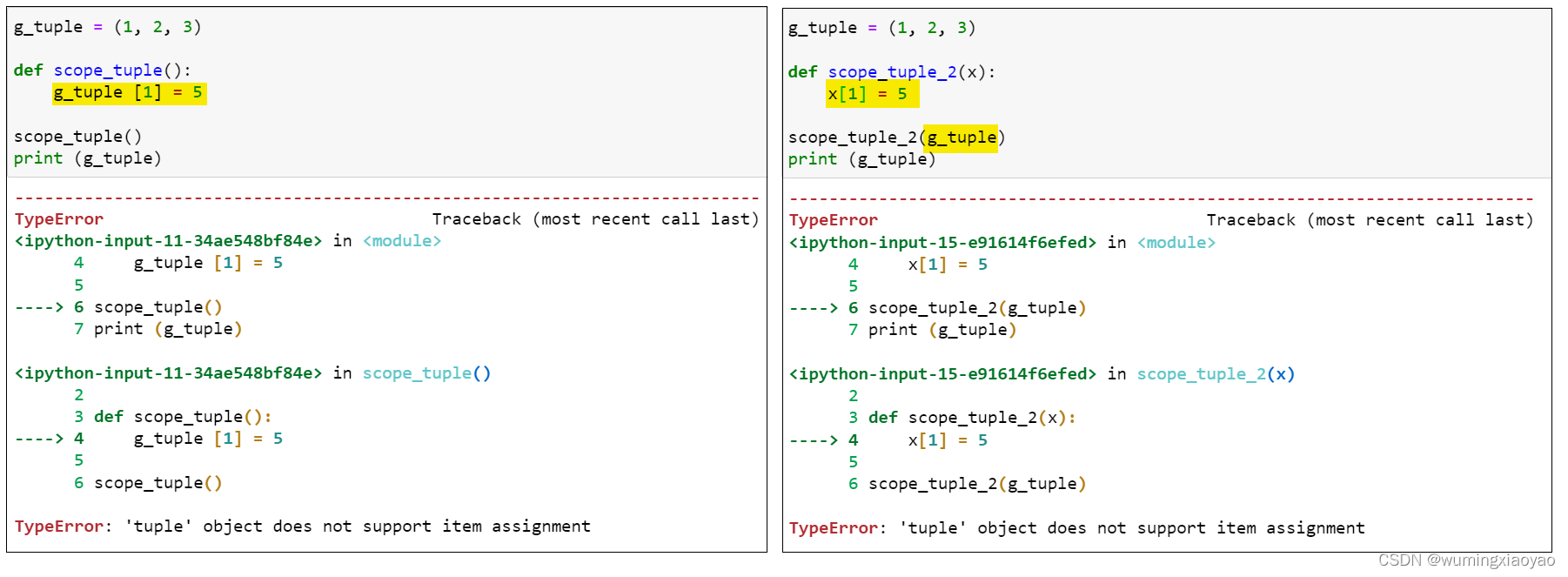
如果一个全局变量是一个不可变类型 (如:int, tuple), 即使作为参数传递给函数,它是不可更改的,将产生 Error。
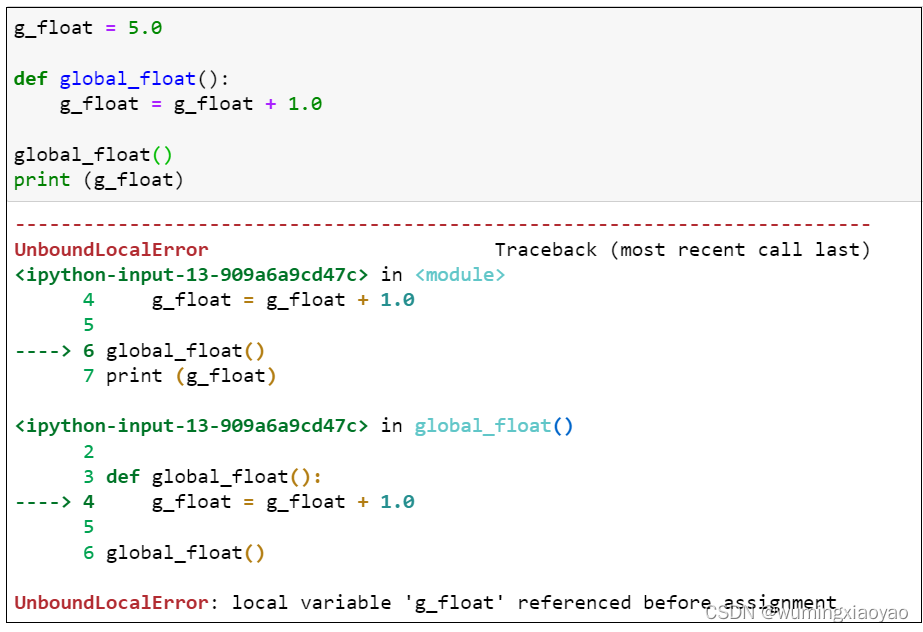
对于简单类型的全局变量(如 int),在函数内部只是作为局部变量处理,不会改变其原始值。
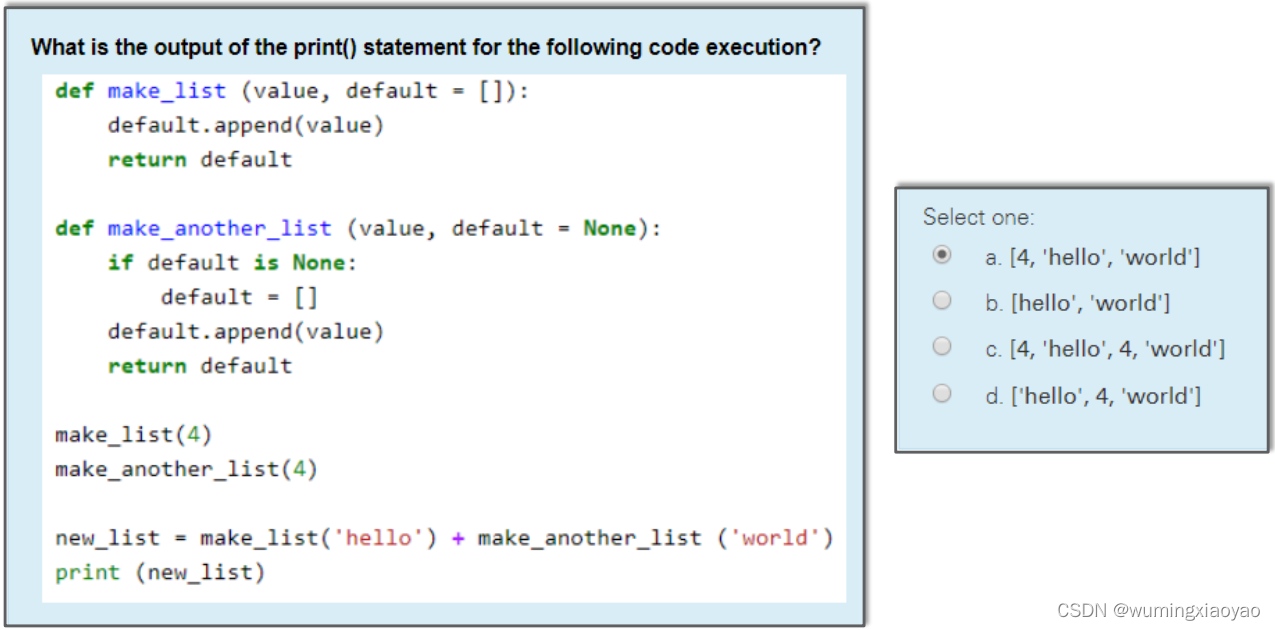
可变参数作为默认参数:
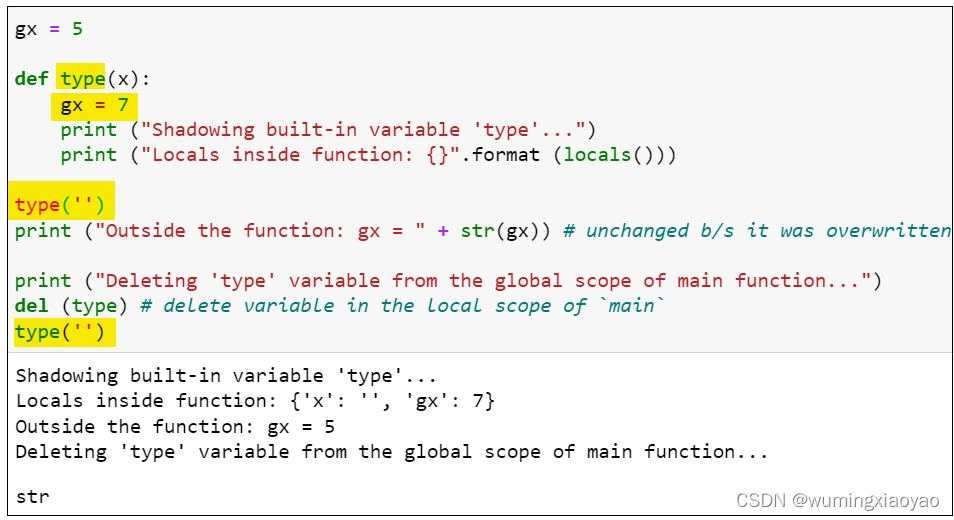
关于全局 global 变量和 build-in 的Tips
- 避免使用全局变量
使用全局变量,代码容易出错
利用函数和类移除全局变量,使得代码更加模块化 - 不要重写全局变量或 build-in变量
下面这个例子重写了 build-in 变量 type 和全局变量 gx
但是 gx 在函数内部只是做为局部变量使用。
List 的拷贝 vs. 引用传递
函数如果能访问一个 list 变量(通常是引用传递),就可以更改这个 list,任何在函数内部对 list 的更改都是永久的。
为了防止函数更改 list,以拷贝的方式传递给函数,而不是引用传递。

举例:
传入x[:]是x[]的一个copy,另外一个[]变量,跟原本的x[]是没有关系的,所以在函数中的parameter只是个local变量,不会影响到global变量x
x = [5]
def f(x):
    x[0] += 1

f(x[:])
print(str(x))  # output:[5]
- 1
- 2
- 3
- 4
- 5
- 6
下面这个例子很好的说明 拷贝传递和引用传递的区别:
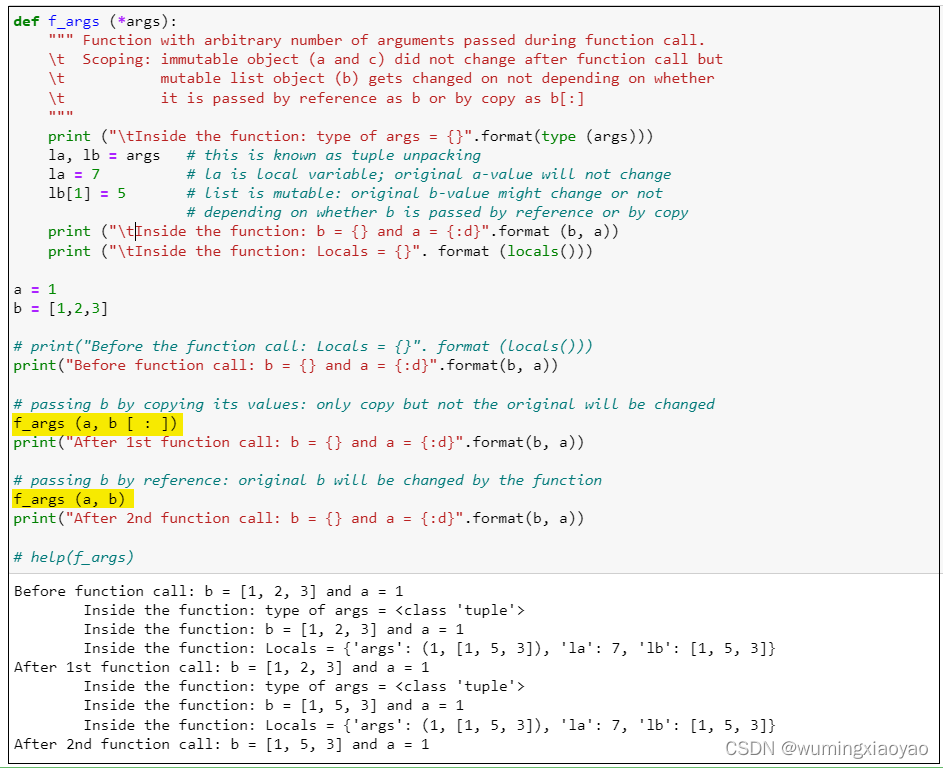
代码:
def f_args (*args):
    """ Function with arbitrary number of arguments passed during function call.
    \t  Scoping: immutable object (a and c) did not change after function call but
    \t           mutable list object (b) gets changed on not depending on whether
    \t           it is passed by reference as b or by copy as b[:]
    """
    print ("\tInside the function: type of args = {}".format(type (args)))
    la, lb = args   # this is known as tuple unpacking
    la = 7          # la is local variable; original a-value will not change
    lb[1] = 5       # list is mutable: original b-value might change or not
                    # depending on whether b is passed by reference or by copy
    print ("\tInside the function: b = {} and a = {:d}".format (b, a))
    print ("\tInside the function: Locals = {}". format (locals()))

a = 1
b = [1,2,3]

# print("Before the function call: Locals = {}". format (locals()))
print("Before function call: b = {} and a = {:d}".format(b, a))

# passing b by copying its values: only copy but not the original will be changed
f_args (a, b [ : ])
print("After 1st function call: b = {} and a = {:d}".format(b, a))

# passing b by reference: original b will be changed by the function
f_args (a, b)
print("After 2nd function call: b = {} and a = {:d}".format(b, a))

# help(f_args)

- 1
- 2
- 3
- 4
- 5
- 6
- 7
- 8
- 9
- 10
- 11
- 12
- 13
- 14
- 15
- 16
- 17
- 18
- 19
- 20
- 21
- 22
- 23
- 24
- 25
- 26
- 27
- 28
- 29
函数返回值
- 没有返回值 no return
返回一个 NoneType 类型的 object
def format_name(first, last):
    full_name = first.title() + ' ' + last.title()

print(type(format_name ('nagiza', 'samatova')))
print(format_name ('nagiza', 'samatova'))
#output:
<class 'NoneType'>
None
- 1
- 2
- 3
- 4
- 5
- 6
- 7
- 8
-
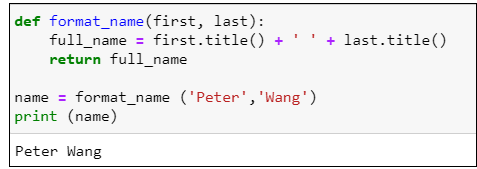
返回一个简单值
-
return 多个值,将多个值打包成 tuple 传出
def test(x):
    y1 = x+1
    y2 = x+2
    return y1,y2

result = test(2)
print(type(result)) #output:<class 'tuple'>
print(result) #output:(3, 4)
- 1
- 2
- 3
- 4
- 5
- 6
- 7
- 8
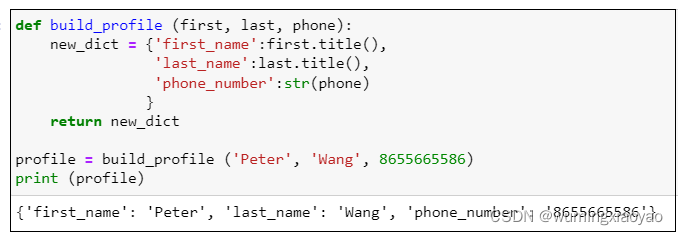
- 返回一个复杂的值
函数规范
函数命名
- 小写
- 单词之间用下划线_隔开
- 不能以数字开头
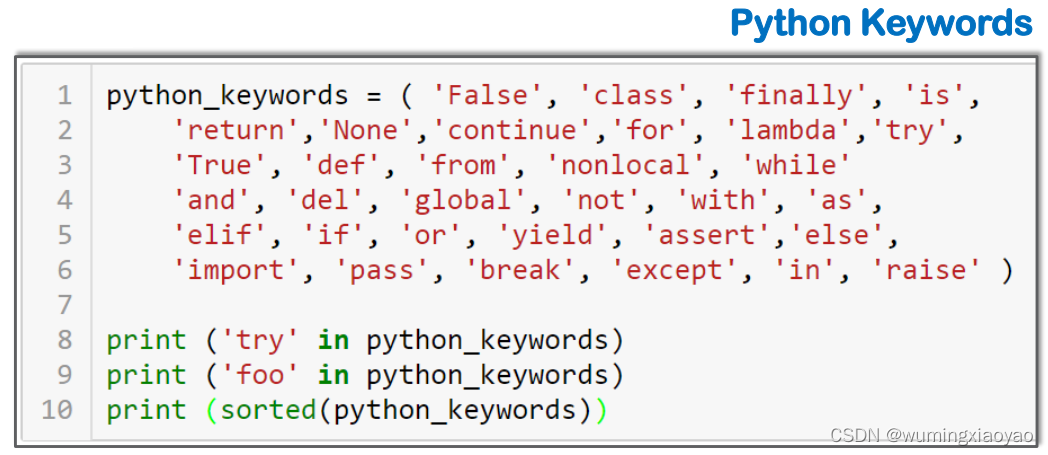
- 不能使用 Python 关键字
文档注释
- 对于一个用户自定义的函数,好的文档是非常重要的
- 文档说明定义在 “”" … “”" 之间,包含:
函数的功能是什么
哪些输入参数及类型
哪些输出参数及类型
内部运作的整体逻辑 - 用 help(function_name) 便可以显示文档说明的内容
例如:
def do_nothing():
    """the function that does nothing
    with zero input parameter
    and  zero return output values """
    pass

help(do_nothing)
- 1
- 2
- 3
- 4
- 5
- 6
- 7
Help on function do_nothing in module __main__:

do_nothing()
    the function that does nothing
    with zero input parameter
    and  zero return output values
- 1
- 2
- 3
- 4
- 5
- 6