
热门标签
热门文章
- 1HarmonyOS鸿蒙开发指南:基于ArkTS开发 轻量级智能穿戴 体验应用、构建布局、绘制样式和交互事件
- 2对于 Shift-JIS 编码的理解 (win10中 查看 Shift-JIS 编码 コード)
- 3Git的基本操作_git 未进行版本管理的文件
- 4Ubuntu下SSH远程连接、文件传输_ubuntu ssh远程连接传输文件
- 5Tensorflow 2.0 的新特性介绍——最详细版本
- 6个人关于React的一些理解
- 7linux udp单播、组播以及广播通信_linux增加单播
- 8spring boot的两种部署方式_spring-boot-starter-tomcat
- 9python程序开机自启动_Python脚本开机自启动(Linux)
- 10Dockerfile命令大全_stopsignal
当前位置: article > 正文
Python之random和string库学习_python random string
作者:数据灵魂 | 2024-02-01 19:00:46
赞
踩
python random string
一、random库
random是python中用来生存随机数的库。具体用法如下:
1、生成一个0到1随机浮点数
random.random()

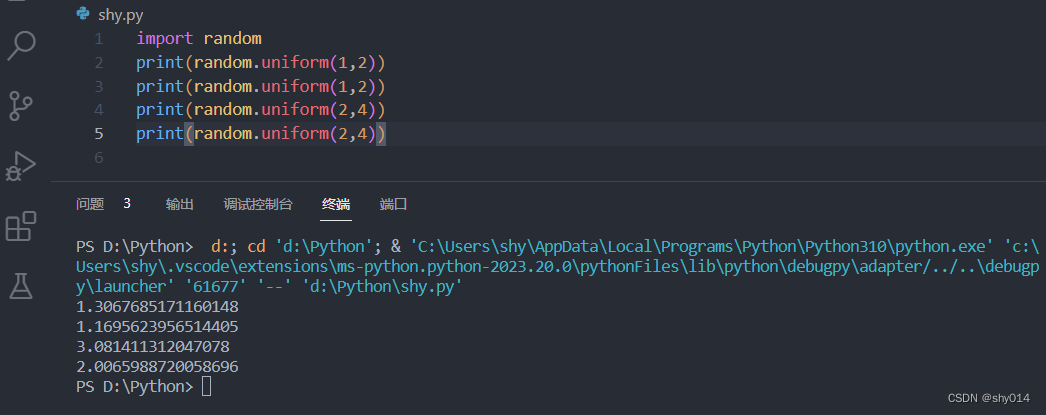
2、生成一个a到b的随机浮点数
random.uniform(1,2)
3、生成一个a到b之间的整数
random.randint(a,b)

4、随机从序列元素中取出一个值,这个序列可以是字符串、列表或元组。
random.choice()

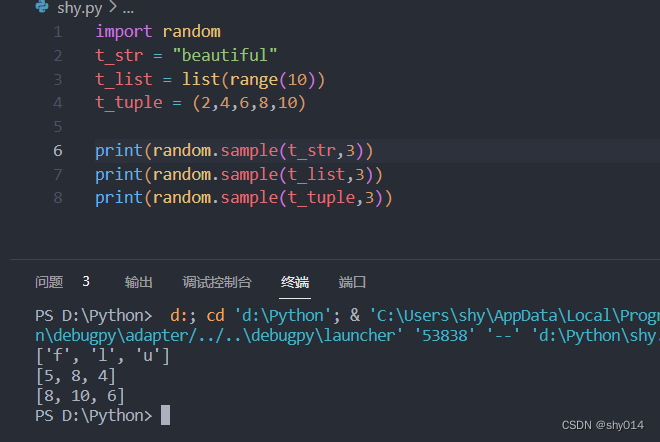
5、随机从序列中取出k个值,并以列表形式返回,这个序列可以是字符串、列表或元组;
random.sample(序列, k)
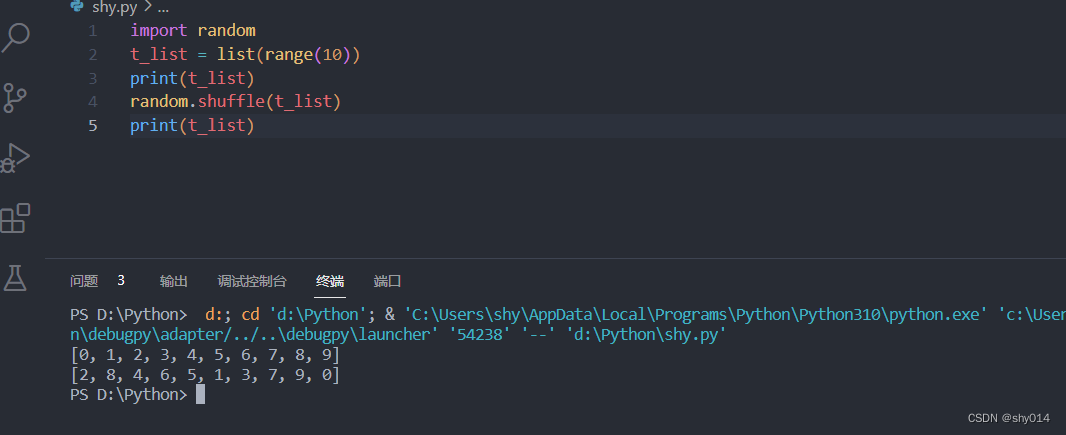
6、洗牌,随机打乱列表中的元素;
random.shuffle()
7、设置随机数种子,当设定好种子之后(其中x可以是任意数字),每次调用生成的随机数将会是同一个;
random.seed(x)

二、string库
1、返回大小写字母组合而成的字符串;
print(string.ascii_letters)
2、返回小写字母组合而成的字符串;
print(string.ascii_lowercase)
3、返回大写字母组合而成的字符串;
print(string.ascii_uppercase)
4、返回0-9数字组合而成的字符串;
print(string.digits)
5、返回所有特殊字符组合而成的字符串;
print(string.punctuation)

三、双库组合实例
1、random库批量生成手机号码
- import random
-
- def create_phone(num):
- # 用于存放生成的数据
- t_set = set()
- # 用于存放号段
- yidonglist = [134, 135, 136, 137, 138, 139, 147, 150, 151, 152, 157, 158, 159, 178, 182, 183, 184, 187]
- liantonglist = [130, 131, 132, 155, 156, 166, 185, 186, 145, 176]
- dianxinlist = [133, 153, 177, 173, 180, 181, 189, 199]
-
- t_list = input("请输入要生成的运营商名称(移动、联通、电信):")
- if t_list == "移动":
- t_list = yidonglist
- elif t_list == "联通":
- t_list = liantonglist
- elif t_list == "电信":
- t_list = dianxinlist
- else:
- print("请输入有效的运营商名称!!!")
- exit()
-
- while True:
- top_three = random.choice(t_list)
- last_eight = random.sample([str(i) for i in range(10)], 8)
- concat_last_eight = "".join(last_eight)
- t_set.add(f"{top_three}{concat_last_eight}")
- if len(t_set) >= num:
- break
- return t_set
-
- def start():
- num = int(input("请输入你想要生成多少个电话号码:"))
- t_set = create_phone(num)
-
- save_to_file = input("是否要将生成的号码保存到文件中?(输入 '是' 或 '否'):")
- if save_to_file.lower() == '是':
- filenames = input("请输入文件名称:")
- with open(filenames, 'w') as file:
- for nums in t_set:
- file.write(nums + '\n')
- print(f"号码已保存到文件 {filenames} 中。")
- elif save_to_file.lower() == '否':
- print("生成的号码如下:")
- for nums in t_set:
- print(nums)
- else:
- print("无效的输入。请输入 '是' 或 '否'。")
-
- start()

2、random+string库生成随机不重复车牌号
- import random
-
- def generate_license_plate(province, num_plates):
- plates = []
-
- for _ in range(num_plates):
- if province == "沪": # 上海车牌
- plate_number = f"{province}{random.choice(['A', 'B', 'C', 'D', 'E'])}{random.randint(0, 9)}{random.choice(['A', 'B', 'C', 'D', 'E', 'F', 'G', 'H', 'J', 'K'])}{random.randint(1000, 9999)}"
- elif province == "京": # 北京车牌
- plate_number = f"{province}{random.choice(['A', 'B', 'C', 'E', 'F'])}{random.randint(0, 9)}{random.choice(['A', 'B', 'C', 'D', 'E', 'F', 'G', 'H', 'J', 'K'])}{random.randint(10000, 99999)}"
- elif province == "粤": # 广东车牌
- plate_number = f"{province}{random.choice(['A', 'B', 'C', 'D', 'E', 'F', 'G', 'H', 'J', 'K', 'L', 'M', 'N', 'P', 'Q', 'R', 'S', 'T', 'U', 'V', 'W', 'X', 'Y', 'Z'])}{random.choice(['A', 'B', 'C', 'D', 'E', 'F', 'G', 'H', 'J', 'K'])}{random.randint(1000, 9999)}"
- # 可以继续添加其他省份的车牌生成规则
-
- plates.append(plate_number)
-
- return plates
-
- def main():
- province = input("请输入省份简称(例如,沪、京、粤等): ")
- num_plates = int(input("请输入要生成的车牌数量: "))
-
- if province:
- write_to_file = input("是否要将生成的车牌号码写入文件?(输入 '是' 或 '否'):")
- license_plates = generate_license_plate(province, num_plates)
- if write_to_file.lower() == '是':
- filenames = input("请输入文件名称:")
- with open(filenames, 'w',encoding='utf-8') as file:
- for plate in license_plates:
- file.write(plate + '\n')
- print(f"生成的{province}省车牌号码已保存到文件 {filenames} 中。")
- elif write_to_file.lower() == '否':
- print(f"{province}省生成的车牌号码如下:")
- for plate in license_plates:
- print(plate)
- else:
- print("无效的输入。请输入 '是' 或 '否'。")
- else:
- print("请输入有效的省份简称。")
-
- if __name__ == "__main__":
- main()
- import string
- import random
-
- def create_license(num):
- t_set = set()
- while True:
- t_list = [f"鄂{i}" for i in string.ascii_uppercase.split("T")[0] if i not in ["I","O"]]
- top_two = random.choice(t_list)
- the_third = random.choice(string.ascii_uppercase)
- last_four = random.sample([str(i) for i in range(10)],4)
- concat_last_four = "".join(last_four)
- t_set.add(f"{top_two}·{the_third}{concat_last_four}")
- if len(t_set) >= num:
- break
- return t_set
-
- def start():
- num = int(input("请输入你想要生成多少个车牌:"))
- t_set = create_license(num)
- save_to_file = input("是否要将生成的号码保存到文件中?(输入 '是' 或 '否'):")
- if save_to_file.lower() == '是':
- filenames = input("请输入文件名称:")
- with open(filenames, 'w',encoding='utf-8') as file:
- for nums in t_set:
- file.write(nums + '\n')
- print(f"生成的湖北省车牌号码已保存到文件 {filenames} 中。")
- elif save_to_file.lower() == '否':
- print("生成的湖北省车牌号码如下:")
- for nums in t_set:
- print(nums)
- else:
- print("无效的输入。请输入 '是' 或 '否'。")
- start()
声明:本文内容由网友自发贡献,不代表【wpsshop博客】立场,版权归原作者所有,本站不承担相应法律责任。如您发现有侵权的内容,请联系我们。转载请注明出处:https://www.wpsshop.cn/article/detail/54577
推荐阅读

相关标签

