
热门标签
当前位置: article > 正文
c++创建二叉树_从零开始学习数据结构>树、森林与二叉树的转换
作者:程序诗人2 | 2024-02-01 09:27:57
赞
踩
c++ class tree
1、树、森林为什么向二叉树转换?
因为在实际的处理问题中,大多数情况都是一对多,就像树、森林这样的数据结构!
而对于二叉树我们已经很熟悉了,所以就转向我们所熟悉的结构,比较容易处理。
2、孩子兄弟树的方法
把握
左孩子右兄弟
的原则:
(1)、树与二叉树的转换
i>以树的根结点为二叉树的根节点;
ii>左孩
子指针指向该根节点的第一个子结点;
iii>右
孩子指针指向"兄弟结点"。
(2)、二叉树表示森林
i>二叉树的根结点是森林中第一棵树的根结点;
ii>根结点的右孩
子为森林中其它树的根结点。
3、图形表示法
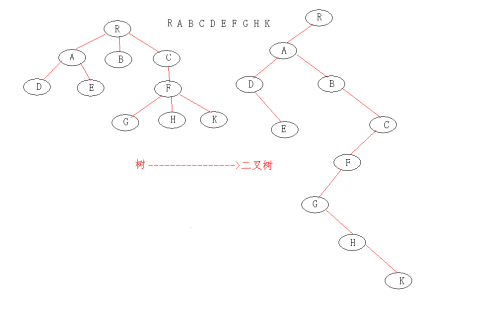 4、树的创建----->转化二叉树
应具有的存储结构:树结点和树。
4、树的创建----->转化二叉树
应具有的存储结构:树结点和树。
 推荐阅读:
从零开始学习数据结构-->入门篇
从零开始学习数据结构-->链表
从零开始学习数据结构-->线性表
从零开始学习数据结构-->栈
从零开始学习数据结构-->队列
从零开始学习数据结构-->矩阵+串
从零开始学习数据结构-->哈希表
从零开始学习数据结构-->散列桶
从零开始学习数据结构-->二叉树
推荐阅读:
从零开始学习数据结构-->入门篇
从零开始学习数据结构-->链表
从零开始学习数据结构-->线性表
从零开始学习数据结构-->栈
从零开始学习数据结构-->队列
从零开始学习数据结构-->矩阵+串
从零开始学习数据结构-->哈希表
从零开始学习数据结构-->散列桶
从零开始学习数据结构-->二叉树
4、树的创建----->转化二叉树
应具有的存储结构:树结点和树。
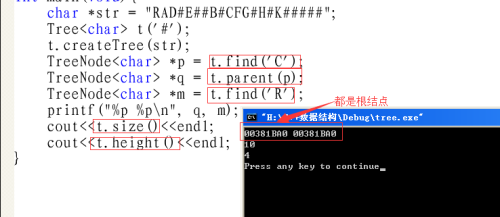
1template<typename Type> 2class TreeNode{ 3 friend class Tree; 4public: 5 TreeNode() : data(Type()), firstChild(NULL), nextSibling(NULL){} 6 TreeNode(Type d, TreeNode *first = NULL, TreeNode *next = NULL) : 7 data(d), firstChild(first), nextSibling(next){} 8 ~TreeNode(){} 9private:10 Type data;11 TreeNode *firstChild; //第一个孩子12 TreeNode *nextSibling; //下一个兄弟13};1415template<typename Type>16class Tree{17public:18 Tree() : root(NULL){}19 Tree(Type ref) : root(NULL), refval(ref){}20 ~Tree(){}21private:22 TreeNode *root;23 Type refval; //'#'24}; 1public: 2 void createTree(const char *str); //创建树 3 int size()const; //求树的结点个数 4 int height()const; //求树高 5 TreeNode* root_1()const; //返回根结点 6 bool isEmpty()const; //判树空 7 TreeNode *firstChild()const; //返回第一个孩子结点 8 TreeNode *nextSibling()const; //返回第一个兄弟结点 9 TreeNode* find(Type key)const; //查找当前结点10 TreeNode* parent(TreeNode *cur)const; //查找当前结点的父 1 int height(TreeNode *t)const{ 2 TreeNode *p; 3 int m; 4 int max = 0; 5 6 if(t == NULL){ 7 return 0; //空树,高0 8 }else if(t->firstChild == NULL){ 9 return 1; //只有根,为110 }else{11 p = t->firstChild; //先为第一个孩子12 while(p != NULL){13 m = height(p); //求高14 if(max 15 max = m; //遍历所有的分支,每次求最高的16 }17 p = p->nextSibling; //每次往右分支走,但还是求的左边树高;18 }19 return max+1; //返回时加上根的高度20 }21 } 1 TreeNode* parent(TreeNode *t, TreeNode *cur)const{ 2 if(t == NULL || cur == NULL || t == cur){ //父为NULL 3 return NULL; 4 } 5 TreeNode *p = t->firstChild; 6 while(p != NULL && p != cur){ 7 TreeNode *tmp = parent(p, cur); //递归查找其父结点,将找的结果给了tmp; 8 if(tmp != NULL){ 9 return tmp;10 }11 p = p->nextSibling; //在往右找12 }13 if(p != NULL && p == cur){14 return t; //找到了15 }else{16 return NULL;17 }18 } 1#ifndef _TREE_H_ 2#define _TREE_H_ 3 4#include 5using namespace std; 6 7template<typename Type> 8class Tree; 9 10template<typename Type> 11class TreeNode{ 12 friend class Tree; 13public: 14 TreeNode() : data(Type()), firstChild(NULL), nextSibling(NULL){} 15 TreeNode(Type d, TreeNode *first = NULL, TreeNode *next = NULL) : 16 data(d), firstChild(first), nextSibling(next){} 17 ~TreeNode(){} 18private: 19 Type data; 20 TreeNode *firstChild; 21 TreeNode *nextSibling; 22}; 23 24template<typename Type> 25class Tree{ 26public: 27 Tree() : root(NULL){} 28 Tree(Type ref) : root(NULL), refval(ref){} 29 ~Tree(){} 30public: 31 void createTree(const char *str){ 32 createTree(root, str); 33 } 34 int size()const{ 35 return size(root); 36 } 37 int height()const{ 38 return height(root); 39 } 40 TreeNode* root_1()const{ 41 return root; 42 } 43 bool isEmpty()const{ 44 return root == NULL; 45 } 46 TreeNode *firstChild()const{ 47 if(root != NULL){ 48 return root->firstChild; 49 } 50 return NULL; 51 } 52 TreeNode *nextSibling()const{ 53 if(root != NULL){ 54 return root->nextSibling; 55 } 56 return NULL; 57 } 58 TreeNode* find(const Type &key)const{ 59 return find(root, key); 60 } 61 TreeNode* parent(TreeNode *cur)const{ 62 return parent(root, cur); 63 } 64protected: 65 void createTree(TreeNode *&t, const char *&str){ 66 if(*str == refval){ 67 t = NULL; 68 }else{ 69 t = new TreeNode(*str); 70 createTree(t->firstChild, ++str); 71 createTree(t->nextSibling, ++str); 72 } 73 } 74 int size(TreeNode *t)const{ 75 if(t == NULL){ 76 return 0; 77 } 78 return size(t->firstChild) + size(t->nextSibling) + 1; 79 } 80 TreeNode* parent(TreeNode *t, TreeNode *cur)const{ 81 if(t == NULL || cur == NULL || t == cur){ 82 return NULL; 83 } 84 TreeNode *p = t->firstChild; 85 while(p != NULL && p != cur){ 86 TreeNode *tmp = parent(p, cur); 87 if(tmp != NULL){ 88 return tmp; 89 } 90 p = p->nextSibling; 91 } 92 if(p != NULL && p == cur){ 93 return t; 94 }else{ 95 return NULL; 96 } 97 } 98 TreeNode* find(TreeNode *t, const Type &key)const{ 99 if(t == NULL){100 return NULL;101 }102 if(t->data == key){103 return t;104 }105 TreeNode* p = find(t->firstChild, key);106 if(p != NULL){107 return p;108 }109 return find(t->nextSibling, key);110 }111 int height(TreeNode *t)const{112 TreeNode *p;113 int m;114 int max = 0;115116 if(t == NULL){117 return 0;118 }else if(t->firstChild == NULL){119 return 1;120 }else{121 p = t->firstChild;122 while(p != NULL){123 m = height(p);124 if(max 125 max = m;126 }127 p = p->nextSibling;128 }129 return max+1;130 }131 }132private:133 TreeNode *root;134 Type refval; //'#'135};136137#endif 1#include"tree.h" 2 3int main(void){ 4 char *str = "RAD#E##B#CFG#H#K#####"; //先根序的二叉树序列; 5 Tree<char> t('#'); 6 t.createTree(str); 7 TreeNode<char> *p = t.find('C'); 8 TreeNode<char> *q = t.parent(p); 9 TreeNode<char> *m = t.find('R');10 printf("%p %p\n", q, m);11 cout<endl;12 cout<endl;1314 return 0;15}从零开始学习数据结构-->二叉树方法实现
从零开始学习数据结构-->线索二叉树声明:本文内容由网友自发贡献,不代表【wpsshop博客】立场,版权归原作者所有,本站不承担相应法律责任。如您发现有侵权的内容,请联系我们。转载请注明出处:https://www.wpsshop.cn/article/detail/52919
推荐阅读





相关标签

