
热门标签
热门文章
- 1pom.xml文件中的repositories,profile和distributionManagement元素_pom.xml repositories
- 2web前端期末大作业 html+css家乡旅游主题网页设计 湖北武汉家乡介绍网页设计实例_我的家乡html+css网页设计免费武汉
- 3labelImg 使用以及安装过程_labelimg安装教程
- 4cv2多图拼接_cv2图片拼接
- 5Oracle启动与关闭及常见问题_oracle startup pfile
- 6实现安装“自由化”!在Windows 11中如何绕过“您尝试安装的应用程序未通过微软验证”_win11安装的应用不是验证过的
- 7mysql导入与导出_mysql schema 导入
- 8UIButton 点击事件响应延迟 问题解决_unity 在button触发事件中延迟
- 9Spring Boot学习(二十二):@ConditionalOnProperty和@ConditionalOnExpression控制加载_@conditionalonexpression("#{systemproperties['my.p
- 10FPS游戏框架漫谈第十天
当前位置: article > 正文
【Java 数据结构】LinkedList与链表
作者:代码领袖开发者 | 2024-01-31 18:40:31
赞
踩
【Java 数据结构】LinkedList与链表
1. ArrayList的缺陷
上节课已经熟悉了ArrayList的使用,并且进行了简单模拟实现。通过源码知道,ArrayList底层使用数组来存储元素:
public class ArrayList<E> extends AbstractList<E>
	implements List<E>, RandomAccess, Cloneable, java.io.Serializable
	{
	// ...
	// 默认容量是10
	private static final int DEFAULT_CAPACITY = 10;
	//...
	// 数组:用来存储元素
	transient Object[] elementData; // non-private to simplify nested class access
	// 有效元素个数
	private int size;
	public ArrayList(int initialCapacity) {
	if (initialCapacity > 0) {
	this.elementData = new Object[initialCapacity];
	} else if (initialCapacity == 0) {
	this.elementData = EMPTY_ELEMENTDATA;
	} else {
	throw new IllegalArgumentException("Illegal Capacity: "+
	initialCapacity);
	}
	}
	// ...
}

- 1
- 2
- 3
- 4
- 5
- 6
- 7
- 8
- 9
- 10
- 11
- 12
- 13
- 14
- 15
- 16
- 17
- 18
- 19
- 20
- 21
- 22
- 23
由于其底层是一段连续空间,当在ArrayList任意位置插入或者删除元素时,就需要将后序元素整体往前或者往后搬移,时间复杂度为O(n),效率比较低,因此ArrayList不适合做任意位置插入和删除比较多的场景。因此:java集合中又引入了LinkedList,即链表结构。
2. 链表
2.1 链表的概念及结构
链表是一种物理存储结构上非连续存储结构,数据元素的逻辑顺序是通过链表中的引用链接次序实现的 。
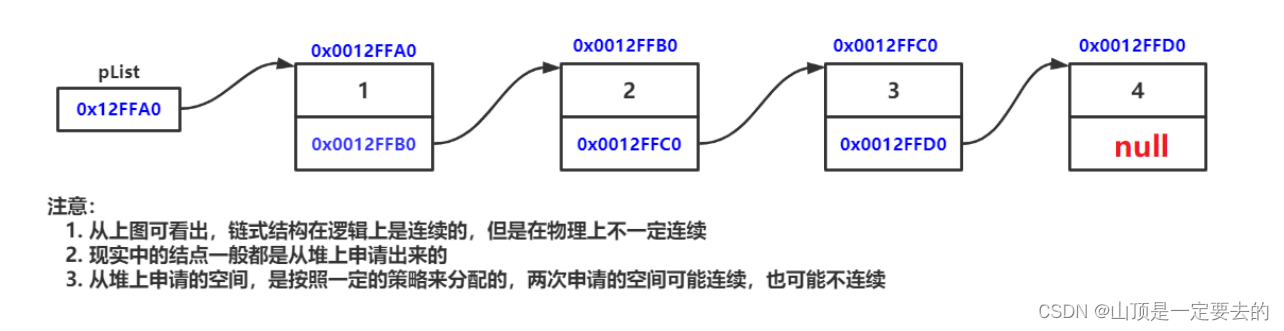
实际中链表的结构非常多样
- 单向或者双向
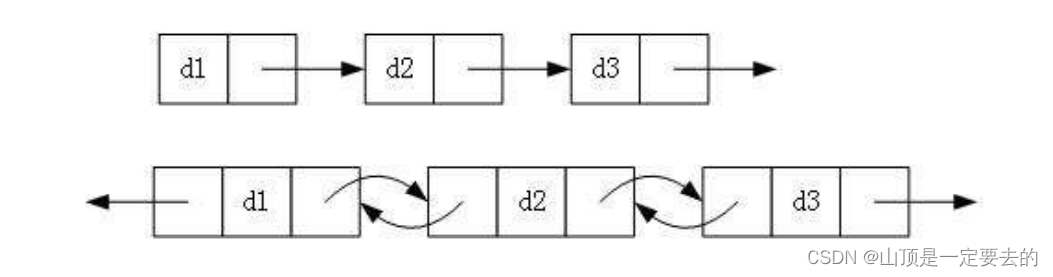
- 带头或者不带头
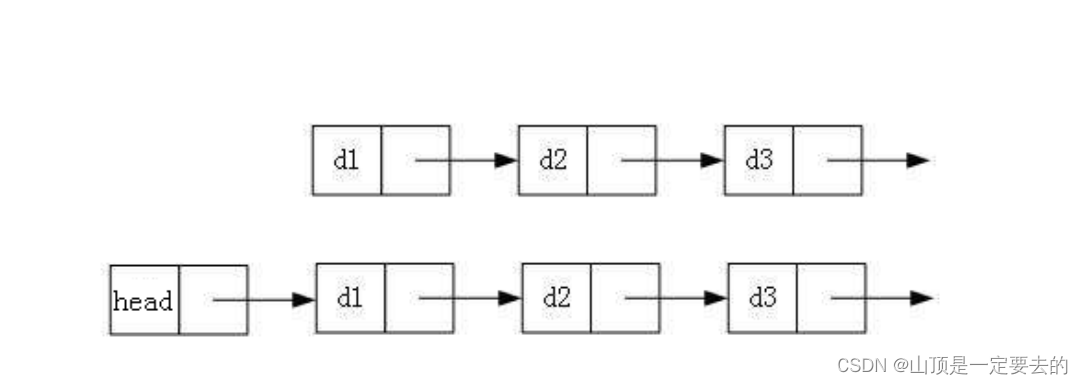
- 循环或者非循环
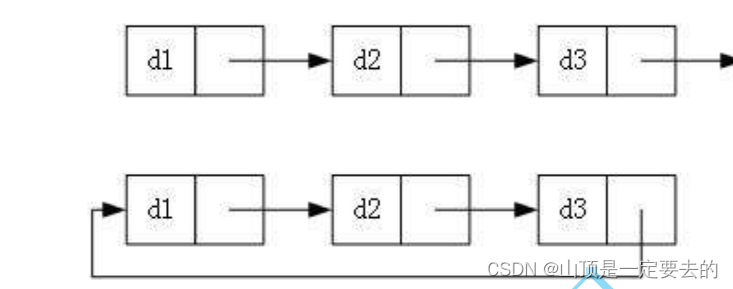
虽然有这么多的链表的结构,但是我们重点掌握两种: - 无头单向非循环链表:结构简单,一般不会单独用来存数据。实际中更多是作为其他数据结构的子结构,如哈希桶、图的邻接表等等。另外这种结构在笔试面试中出现很多
- 无头双向链表:在Java的集合框架库中LinkedList底层实现就是无头双向循环链表。
2.2 链表的实现
自己实现接口ILIST
public interface IList {
    //头插法
    void addFirst(int data);
    //尾插法
    void addLast(int data);
    //任意位置插入,第一个数据节点为0号下标
    void addIndex(int index,int data);
    //查找是否包含关键字key是否在单链表当中
    boolean contains(int key);
    //删除第一次出现关键字为key的节点
    void remove(int key);
    //删除所有值为key的节点
    void removeAllKey(int key);
    //得到单链表的长度
    int size();
    void clear();
    void display();
}
- 1
- 2
- 3
- 4
- 5
- 6
- 7
- 8
- 9
- 10
- 11
- 12
- 13
- 14
- 15
- 16
- 17
- 18
链表实现
public class MySingleList implements IList {

    //节点的内部类
    static class ListNode {
        public int val;
        public ListNode next;

        public ListNode(int val) {
            this.val = val;
        }
    }


    public ListNode head;
    //public int usedSize;//可以定义

    public void createList() {
        ListNode node1 = new ListNode(12);
        ListNode node2 = new ListNode(23);
        ListNode node3 = new ListNode(34);
        ListNode node4 = new ListNode(45);
        ListNode node5 = new ListNode(56);

        node1.next = node2;
        node2.next = node3;
        node3.next = node4;
        node4.next = node5;

        this.head = node1;
    }

    @Override
    public void addFirst(int data) {
        ListNode node = new ListNode(data);
        if (this.head == null) {
            this.head = node;
        } else {
            node.next = this.head;
            this.head = node;
        }
    }

    @Override
    public void addLast(int data) {

        ListNode node = new ListNode(data);

        ListNode cur = this.head;
        if (this.head == null) {
            this.head = node;
        } else {
            //找到尾巴
            while (cur.next != null) {
                cur = cur.next;
            }
            //cur 现在指向了最后一个节点
            cur.next = node;
        }

    }

    @Override
    public void addIndex(int index, int data) {
        if (index < 0 || index > size()) {
            //抛自定义的异常
            return;
        }
        if (index == 0) {
            addFirst(data);
            return;
        }
        if (index == size()) {
            addLast(data);
            return;
        }
        ListNode cur = searchPrev(index);
        ListNode node = new ListNode(data);
        node.next = cur.next;
        cur.next = node;
    }

    private ListNode searchPrev(int index) {
        ListNode cur = this.head;
        int count = 0;
        while (count != index - 1) {
            cur = cur.next;
            count++;
        }
        return cur;
    }

    @Override
    public boolean contains(int key) {
        ListNode cur = this.head;
        while (cur != null) {
            if (cur.val == key) {
                return true;
            }
            cur = cur.next;
        }
        return false;
    }

    @Override
    public void remove(int key) {
        if (this.head == null) {
            //一个节点都没有 无法删除!
            return;
        }
        if (this.head.val == key) {
            this.head = this.head.next;
            return;
        }
        //1. 找到前驱
        ListNode cur = findPrev(key);
        //2、判断返回值是否为空?
        if (cur == null) {
            System.out.println("没有你要删除的数字");
            return;
        }
        //3、删除
        ListNode del = cur.next;
        cur.next = del.next;


    }

    /**
     * 找到关键字key的前一个节点的地址
     *
     * @param key
     * @return
     */
    private ListNode findPrev(int key) {
        ListNode cur = this.head;
        while (cur.next != null) {
            if (cur.next.val == key) {
                return cur;
            }
            cur = cur.next;
        }
        return null;
    }

    @Override
    public void removeAllKey(int key) {
        if (this.head == null) {
            return;
        }
        ListNode prev = head;
        ListNode cur = head.next;
        while (cur != null) {
            if (cur.val == key) {
                prev.next = cur.next;
                cur = cur.next;
            } else {
                prev = cur;
                cur = cur.next;
            }
        }
        if (head.val == key) {
            head = head.next;
        }
    }

    @Override
    public int size() {
        int count = 0;
        ListNode cur = this.head;
        while (cur != null) {
            count++;
            cur = cur.next;
        }
        return count;
    }

    @Override
    public void clear() {
        ListNode cur = head;
        while (cur != null) {
            ListNode curNext = cur.next;
            //cur.val = null;
            cur.next = null;
            cur = curNext;
        }
        head = null;
    }

    @Override
    public void display() {
        ListNode cur = this.head;
        while (cur != null) {
            System.out.print(cur.val + " ");
            cur = cur.next;
        }
        System.out.println();
    }


    /**
     * 这个是从指定位置开始打印
     *
     * @param newHead
     */
    public void display(ListNode newHead) {
        ListNode cur = newHead;
        while (cur != null) {
            System.out.print(cur.val + " ");
            cur = cur.next;
        }
        System.out.println();
    }
}
- 1
- 2
- 3
- 4
- 5
- 6
- 7
- 8
- 9
- 10
- 11
- 12
- 13
- 14
- 15
- 16
- 17
- 18
- 19
- 20
- 21
- 22
- 23
- 24
- 25
- 26
- 27
- 28
- 29
- 30
- 31
- 32
- 33
- 34
- 35
- 36
- 37
- 38
- 39
- 40
- 41
- 42
- 43
- 44
- 45
- 46
- 47
- 48
- 49
- 50
- 51
- 52
- 53
- 54
- 55
- 56
- 57
- 58
- 59
- 60
- 61
- 62
- 63
- 64
- 65
- 66
- 67
- 68
- 69
- 70
- 71
- 72
- 73
- 74
- 75
- 76
- 77
- 78
- 79
- 80
- 81
- 82
- 83
- 84
- 85
- 86
- 87
- 88
- 89
- 90
- 91
- 92
- 93
- 94
- 95
- 96
- 97
- 98
- 99
- 100
- 101
- 102
- 103
- 104
- 105
- 106
- 107
- 108
- 109
- 110
- 111
- 112
- 113
- 114
- 115
- 116
- 117
- 118
- 119
- 120
- 121
- 122
- 123
- 124
- 125
- 126
- 127
- 128
- 129
- 130
- 131
- 132
- 133
- 134
- 135
- 136
- 137
- 138
- 139
- 140
- 141
- 142
- 143
- 144
- 145
- 146
- 147
- 148
- 149
- 150
- 151
- 152
- 153
- 154
- 155
- 156
- 157
- 158
- 159
- 160
- 161
- 162
- 163
- 164
- 165
- 166
- 167
- 168
- 169
- 170
- 171
- 172
- 173
- 174
- 175
- 176
- 177
- 178
- 179
- 180
- 181
- 182
- 183
- 184
- 185
- 186
- 187
- 188
- 189
- 190
- 191
- 192
- 193
- 194
- 195
- 196
- 197
- 198
- 199
- 200
- 201
- 202
- 203
- 204
- 205
- 206
- 207
- 208
- 209
- 210
- 211
- 212
- 213
- 214
- 215
3. LinkedList的模拟实现
// 2、无头双向链表实现
public class MyLinkedList {
	//头插法
	public void addFirst(int data){ }
	//尾插法
	public void addLast(int data){}
	//任意位置插入,第一个数据节点为0号下标
	public void addIndex(int index,int data){}
	//查找是否包含关键字key是否在单链表当中
	public boolean contains(int key){}
	//删除第一次出现关键字为key的节点
	public void remove(int key){}
	//删除所有值为key的节点
	public void removeAllKey(int key){}
	//得到单链表的长度
	public int size(){}
	public void display(){}
	public void clear(){}
}
- 1
- 2
- 3
- 4
- 5
- 6
- 7
- 8
- 9
- 10
- 11
- 12
- 13
- 14
- 15
- 16
- 17
- 18
- 19
4.LinkedList的使用
4.1 什么是LinkedList
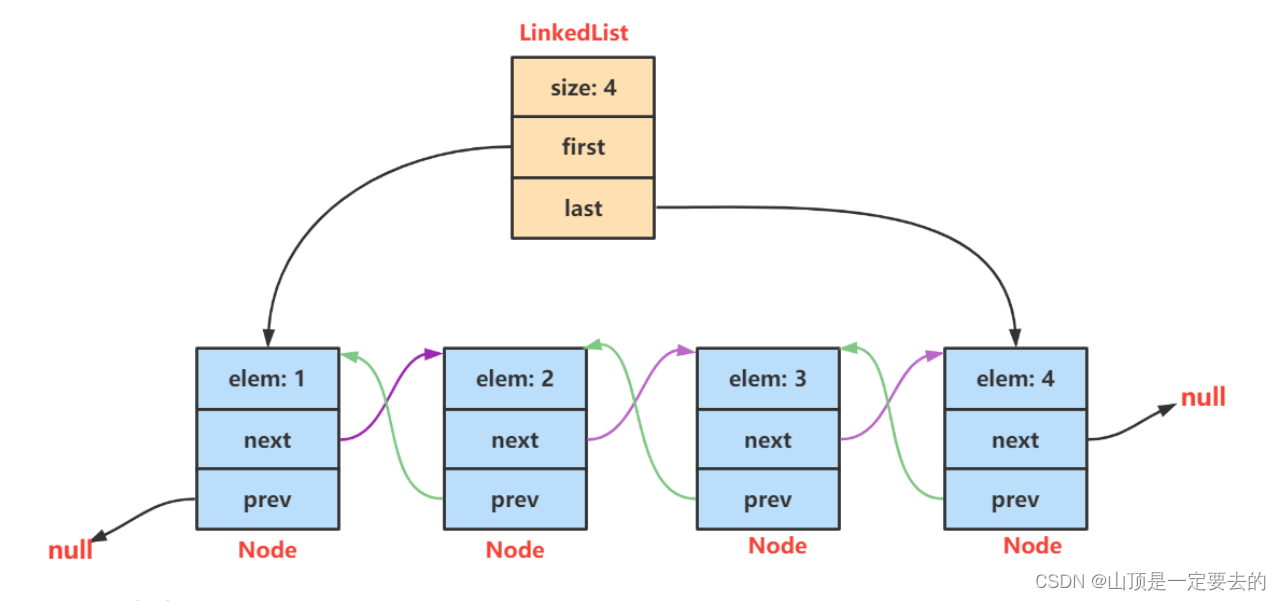
LinkedList的底层是双向链表结构(链表后面介绍),由于链表没有将元素存储在连续的空间中,元素存储在单独的节点中,然后通过引用将节点连接起来了,因此在在任意位置插入或者删除元素时,不需要搬移元素,效率比较高。
在集合框架中,LinkedList也实现了List接口
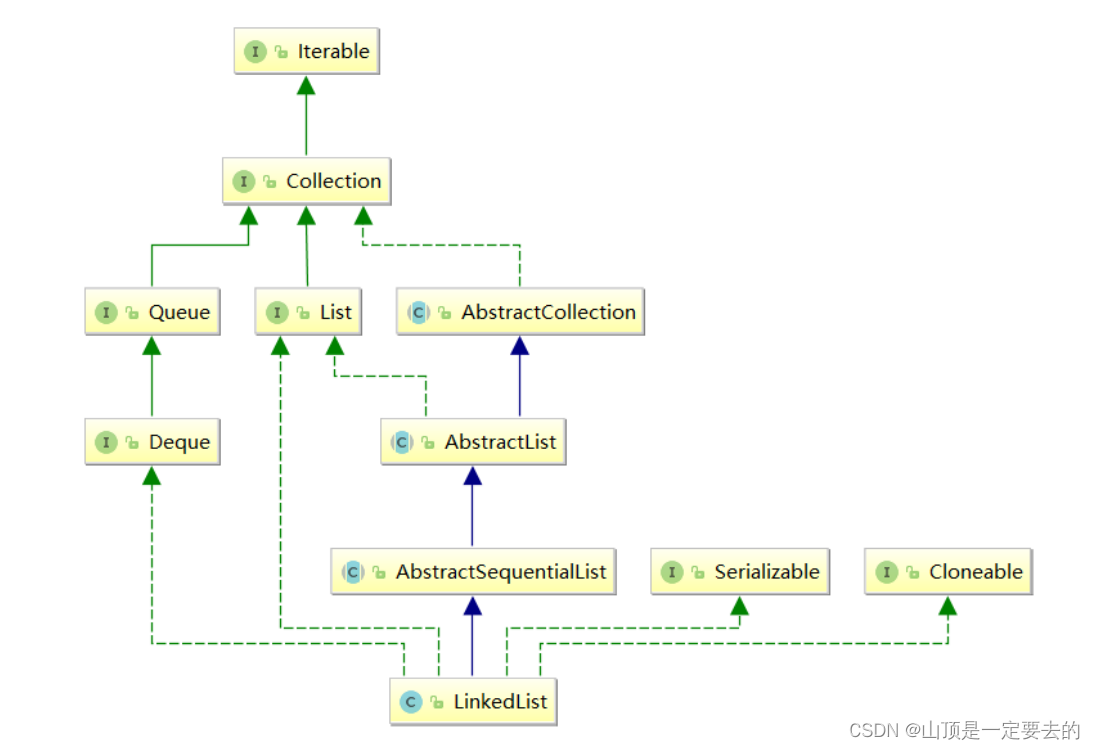
【说明】
- LinkedList实现了List接口
- LinkedList的底层使用了双向链表
- LinkedList没有实现RandomAccess接口,因此LinkedList不支持随机访问
- LinkedList的任意位置插入和删除元素时效率比较高,时间复杂度为O(1)
- LinkedList比较适合任意位置插入的场景
4.2LinkedList的使用
- LinkedList的构造

public static void main(String[] args) {
	// 构造一个空的LinkedList
	List<Integer> list1 = new LinkedList<>();
	List<String> list2 = new java.util.ArrayList<>();
	list2.add("JavaSE");
	list2.add("JavaWeb");
	list2.add("JavaEE");
	// 使用ArrayList构造LinkedList
	List<String> list3 = new LinkedList<>(list2);
}
- 1
- 2
- 3
- 4
- 5
- 6
- 7
- 8
- 9
- 10
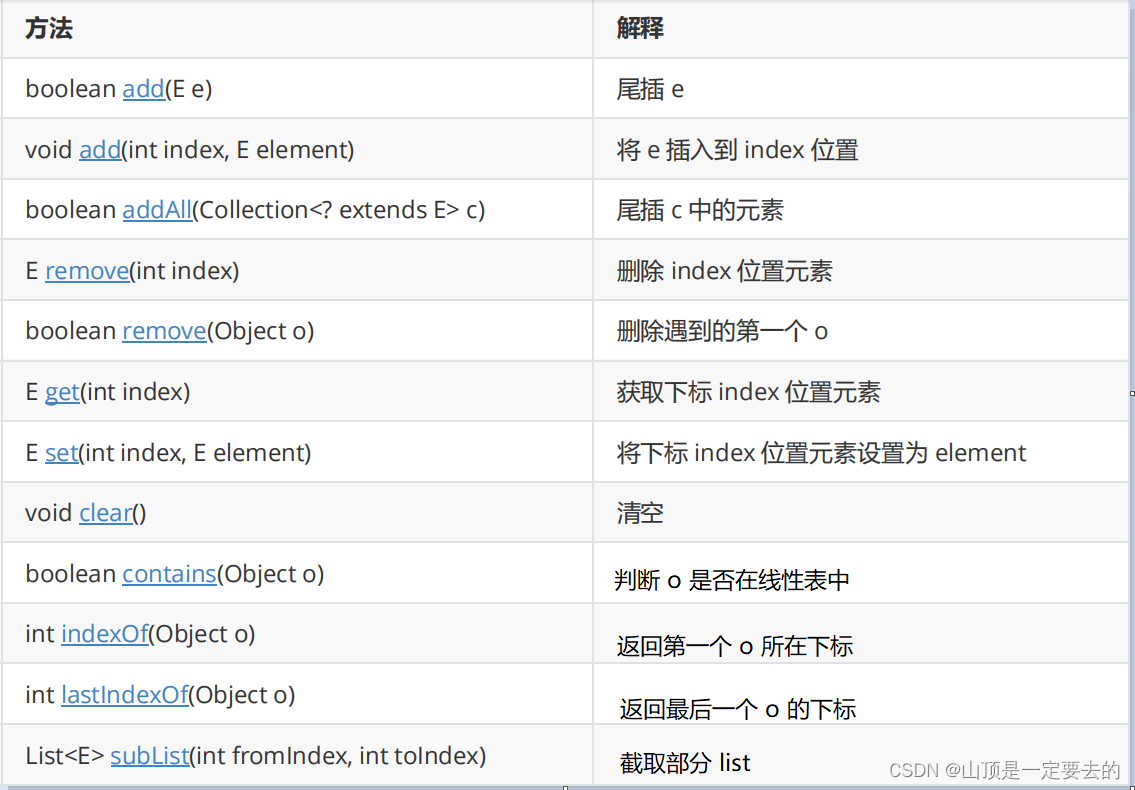
- LinkedList的其他常用方法介绍
- LinkedList的遍历
public static void main(String[] args) {
        LinkedList<Integer> list = new LinkedList<>();
        list.add(1); // add(elem): 表示尾插
        list.add(2);
        list.add(3);
        list.add(4);
        list.add(5);
        list.add(6);
        list.add(7);
        System.out.println(list.size());
// foreach遍历
        for (int e:list) {
            System.out.print(e + " ");
        }
        System.out.println();
// 使用迭代器遍历---正向遍历
        ListIterator<Integer> it = list.listIterator();
        while(it.hasNext()){
            System.out.print(it.next()+ " ");
        }
        System.out.println();
// 使用反向迭代器---反向遍历
        ListIterator<Integer> rit = list.listIterator(list.size());
        while (rit.hasPrevious()){
            System.out.print(rit.previous() +" ");
        }
        System.out.println();
    }
- 1
- 2
- 3
- 4
- 5
- 6
- 7
- 8
- 9
- 10
- 11
- 12
- 13
- 14
- 15
- 16
- 17
- 18
- 19
- 20
- 21
- 22
- 23
- 24
- 25
- 26
- 27
- 28
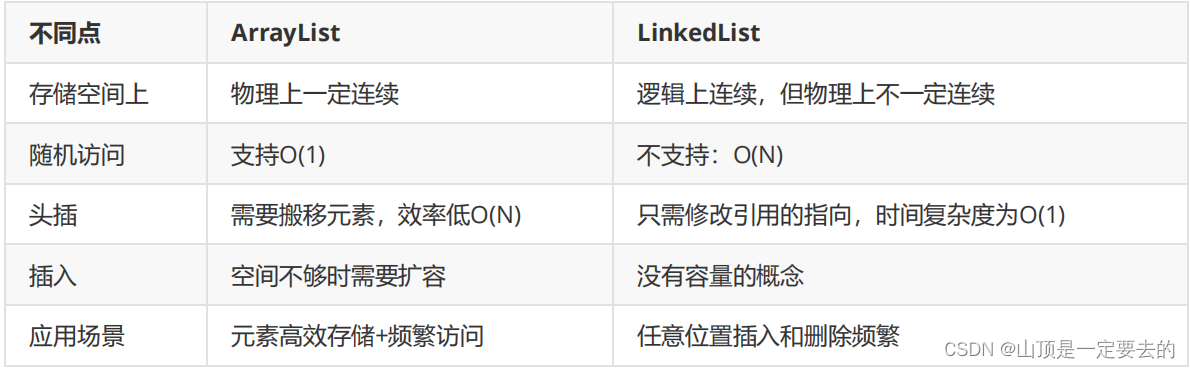
5. ArrayList和LinkedList的区别
声明:本文内容由网友自发贡献,不代表【wpsshop博客】立场,版权归原作者所有,本站不承担相应法律责任。如您发现有侵权的内容,请联系我们。转载请注明出处:https://www.wpsshop.cn/article/detail/51317
推荐阅读




相关标签

