
热门标签
热门文章
- 1LeetCode--代码详解 8.字符串转换整数(atoi)
- 2侧滑菜单栏 和 底部抽屉菜单栏( JavaScript 和 React 实现 )_js 实现从底抽屉
- 3汉诺塔问题(递归与非递归)_汉诺塔非递归算法
- 4java 周期执行_java ScheduledExecutorService 执行周期性任务
- 5linux系统资源查看详解_linux系统资源查看课件
- 6dnn+yolo+flask推理(树莓派实时推流—内含YOLO全家桶系列)_web python 上传视频流 yolo
- 7Unity DOTS系列之托管/非托管Component的区别与性能分析
- 8echarts+echarts-gl vue2制作3D地图+下钻功能+标记点功能,解决dblclick事件失效问题,解决地图下钻后边框不更新保留问题_echarts-gl安装
- 9mysqldump 命令参数大全_mysqldump 参数
- 10磁力搜索网站+下载神器放送2019-03-05_torrentkitty
当前位置: article > 正文
STM32F4--FLASH读写demo_stm32f4 flash读写例程
作者:算法设计者 | 2024-01-31 14:03:36
赞
踩
stm32f4 flash读写例程
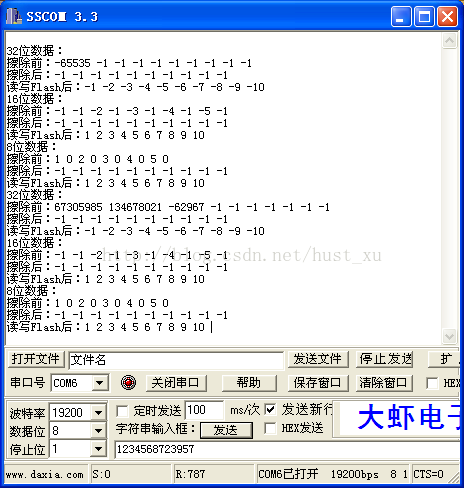
最近在写机器人的姿态解算,需要把一些数据保存到stm32f4的内部Flash中。于是调了一下午Flash,整理出了下面这个demo程序。发现stm32f4的功能还挺强的,
8位、16位、32位、64位的数据都能读写。而且还能写入负数,虽然库里提供的函数写数据的类型是无符号的,我也不知道这是什么原因。
flash.c
- #include "flash.h"
-
- /****************************************************************************
- * 功 能: 获取地址Address对应的sector编号
- * 入口参数:地址
- * 出口参数:sector编号
- * 说 明:无
- * 调用方法:无
- ****************************************************************************/
- uint16_t Flash_GetSector(uint32_t Address)
- {
- uint16_t sector = 0;
- if((Address < ADDR_FLASH_SECTOR_1) && (Address >= ADDR_FLASH_SECTOR_0))
- {
- sector = FLASH_Sector_0;
- }
- else if((Address < ADDR_FLASH_SECTOR_2) && (Address >= ADDR_FLASH_SECTOR_1))
- {
- sector = FLASH_Sector_1;
- }
- else if((Address < ADDR_FLASH_SECTOR_3) && (Address >= ADDR_FLASH_SECTOR_2))
- {
- sector = FLASH_Sector_2;
- }
- else if((Address < ADDR_FLASH_SECTOR_4) && (Address >= ADDR_FLASH_SECTOR_3))
- {
- sector = FLASH_Sector_3;
- }
- else if((Address < ADDR_FLASH_SECTOR_5) && (Address >= ADDR_FLASH_SECTOR_4))
- {
- sector = FLASH_Sector_4;
- }
- else if((Address < ADDR_FLASH_SECTOR_6) && (Address >= ADDR_FLASH_SECTOR_5))
- {
- sector = FLASH_Sector_5;
- }
- else if((Address < ADDR_FLASH_SECTOR_7) && (Address >= ADDR_FLASH_SECTOR_6))
- {
- sector = FLASH_Sector_6;
- }
- else if((Address < ADDR_FLASH_SECTOR_8) && (Address >= ADDR_FLASH_SECTOR_7))
- {
- sector = FLASH_Sector_7;
- }
- else if((Address < ADDR_FLASH_SECTOR_9) && (Address >= ADDR_FLASH_SECTOR_8))
- {
- sector = FLASH_Sector_8;
- }
- else if((Address < ADDR_FLASH_SECTOR_10) && (Address >= ADDR_FLASH_SECTOR_9))
- {
- sector = FLASH_Sector_9;
- }
- else if((Address < ADDR_FLASH_SECTOR_11) && (Address >= ADDR_FLASH_SECTOR_10))
- {
- sector = FLASH_Sector_10;
- }
- else/*(Address < FLASH_END_ADDR) && (Address >= ADDR_FLASH_SECTOR_11))*/
- {
- sector = FLASH_Sector_11;
- }
- return sector;
- }
-
- /****************************************************************************
- * 功 能: 擦除指定扇区
- * 入口参数:SectorNum 扇区号
- * 出口参数:无
- * 说 明:无
- * 调用方法:无
- ****************************************************************************/
- void Flash_EraseSector(uint16_t SectorNum)
- {
- FLASH_Unlock();
- FLASH_ClearFlag(FLASH_FLAG_EOP | FLASH_FLAG_OPERR | FLASH_FLAG_WRPERR |
- FLASH_FLAG_PGAERR | FLASH_FLAG_PGPERR|FLASH_FLAG_PGSERR);
- if (FLASH_EraseSector(SectorNum, VoltageRange_3) != FLASH_COMPLETE) while (1);
- FLASH_Lock();
- }
-
- /****************************************************************************
- * 功 能: 写入长度为length的32位数据
- * 入口参数:address:地址
- length: 数据长度
- data_32:要写入的数据指针
- * 出口参数:无
- * 说 明:无
- * 调用方法:无
- ****************************************************************************/
- void Flash_Write32BitDatas(uint32_t address, uint16_t length, int32_t* data_32)
- {
- uint16_t StartSector, EndSector,i;
- FLASH_Unlock(); //解锁FLASH后才能向FLASH中写数据。
- FLASH_ClearFlag(FLASH_FLAG_EOP | FLASH_FLAG_OPERR | FLASH_FLAG_WRPERR |
- FLASH_FLAG_PGAERR | FLASH_FLAG_PGPERR|FLASH_FLAG_PGSERR);
- StartSector = Flash_GetSector(address); //获取FLASH的Sector编号
- EndSector = Flash_GetSector(address+4*length);
- for (i = StartSector; i < EndSector; i += 8) //每次FLASH编号增加8,可参考上边FLASH Sector的定义。
- {
- if (FLASH_EraseSector(i, VoltageRange_3) != FLASH_COMPLETE) while (1);
- }
- for(i=0; i<length; i++)
- {
- if (FLASH_ProgramWord(address, data_32[i]) == FLASH_COMPLETE) //将DATA_32写入相应的地址。
- {
- address = address + 4;
- }
- else
- {
- while (1);
- }
- }
- FLASH_Lock(); //读FLASH不需要FLASH处于解锁状态。
- }
-
- /****************************************************************************
- * 功 能: 读取长度为length的32位数据
- * 入口参数:address:地址
- length: 数据长度
- data_32 指向读出的数据
- * 出口参数:无
- * 说 明:无
- * 调用方法:无
- ****************************************************************************/
- void Flash_Read32BitDatas(uint32_t address, uint16_t length, int32_t* data_32)
- {
- uint8_t i;
- for(i=0; i<length; i++)
- {
- data_32[i]=*(__IO int32_t*)address;
- address=address + 4;
- }
- }
-
- /****************************************************************************
- * 功 能: 写入长度为length的16位数据
- * 入口参数:address:地址
- length: 数据长度
- data_16:要写入的数据指针
- * 出口参数:无
- * 说 明:无
- * 调用方法:无
- ****************************************************************************/
- void Flash_Write16BitDatas(uint32_t address, uint16_t length, int16_t* data_16)
- {
- uint16_t StartSector, EndSector,i;
- FLASH_Unlock(); //解锁FLASH后才能向FLASH中写数据。
- FLASH_ClearFlag(FLASH_FLAG_EOP | FLASH_FLAG_OPERR | FLASH_FLAG_WRPERR |
- FLASH_FLAG_PGAERR | FLASH_FLAG_PGPERR|FLASH_FLAG_PGSERR);
- StartSector = Flash_GetSector(address); //获取FLASH的Sector编号
- EndSector = Flash_GetSector(address+2*length);
- for (i = StartSector; i < EndSector; i += 8) //每次FLASH编号增加8,可参考上边FLASH Sector的定义。
- {
- if (FLASH_EraseSector(i, VoltageRange_3) != FLASH_COMPLETE) while (1);
- }
- for(i=0; i<length; i++)
- {
- if (FLASH_ProgramHalfWord(address, data_16[i]) == FLASH_COMPLETE)
- {
- address = address + 2;
- }
- else
- {
- while (1);
- }
- }
- FLASH_Lock(); //读FLASH不需要FLASH处于解锁状态。
- }
-
- /****************************************************************************
- * 功 能: 读取长度为length的16位数据
- * 入口参数:address:地址
- length: 数据长度
- data_16 指向读出的数据
- * 出口参数:无
- * 说 明:无
- * 调用方法:无
- ****************************************************************************/
- void Flash_Read16BitDatas(uint32_t address, uint16_t length, int16_t* data_16)
- {
- uint8_t i;
- for(i=0; i<length; i++)
- {
- data_16[i]=*(__IO int16_t*)address;
- address=address + 2;
- }
- }
-
- /****************************************************************************
- * 功 能: 写入长度为length的8位数据
- * 入口参数:address:地址
- length: 数据长度
- data_8:要写入的数据指针
- * 出口参数:无
- * 说 明:无
- * 调用方法:无
- ****************************************************************************/
- void Flash_Write8BitDatas(uint32_t address, uint16_t length, int8_t* data_8)
- {
- uint16_t StartSector, EndSector,i;
- FLASH_Unlock(); //解锁FLASH后才能向FLASH中写数据。
- FLASH_ClearFlag(FLASH_FLAG_EOP | FLASH_FLAG_OPERR | FLASH_FLAG_WRPERR |
- FLASH_FLAG_PGAERR | FLASH_FLAG_PGPERR|FLASH_FLAG_PGSERR);
- StartSector = Flash_GetSector(address); //获取FLASH的Sector编号
- EndSector = Flash_GetSector(address+length);
- for (i = StartSector; i < EndSector; i += 8) //每次FLASH编号增加8,可参考上边FLASH Sector的定义。
- {
- if (FLASH_EraseSector(i, VoltageRange_3) != FLASH_COMPLETE) while (1);
- }
- for(i=0; i<length; i++)
- {
- if (FLASH_ProgramByte(address, data_8[i]) == FLASH_COMPLETE)
- {
- address++;
- }
- else
- {
- while (1);
- }
- }
- FLASH_Lock(); //读FLASH不需要FLASH处于解锁状态。
- }
-
- /****************************************************************************
- * 功 能: 读取长度为length的8位数据
- * 入口参数:address:地址
- length: 数据长度
- data_8 指向读出的数据
- * 出口参数:无
- * 说 明:无
- * 调用方法:无
- ****************************************************************************/
- void Flash_Read8BitDatas(uint32_t address, uint16_t length, int8_t* data_8)
- {
- uint8_t i;
- for(i=0; i<length; i++)
- {
- data_8[i]=*(__IO int8_t*)address;
- address++;
- }
- }

- #ifndef __FLASH_H__
- #define __FLASH_H__
-
- #include "stm32f4xx.h"
-
- /* Base address of the Flash sectors */
- #define ADDR_FLASH_SECTOR_0 ((uint32_t)0x08000000) /* Base @ of Sector 0, 16 Kbytes */
- #define ADDR_FLASH_SECTOR_1 ((uint32_t)0x08004000) /* Base @ of Sector 1, 16 Kbytes */
- #define ADDR_FLASH_SECTOR_2 ((uint32_t)0x08008000) /* Base @ of Sector 2, 16 Kbytes */
- #define ADDR_FLASH_SECTOR_3 ((uint32_t)0x0800C000) /* Base @ of Sector 3, 16 Kbytes */
- #define ADDR_FLASH_SECTOR_4 ((uint32_t)0x08010000) /* Base @ of Sector 4, 64 Kbytes */
- #define ADDR_FLASH_SECTOR_5 ((uint32_t)0x08020000) /* Base @ of Sector 5, 128 Kbytes */
- #define ADDR_FLASH_SECTOR_6 ((uint32_t)0x08040000) /* Base @ of Sector 6, 128 Kbytes */
- #define ADDR_FLASH_SECTOR_7 ((uint32_t)0x08060000) /* Base @ of Sector 7, 128 Kbytes */
- #define ADDR_FLASH_SECTOR_8 ((uint32_t)0x08080000) /* Base @ of Sector 8, 128 Kbytes */
- #define ADDR_FLASH_SECTOR_9 ((uint32_t)0x080A0000) /* Base @ of Sector 9, 128 Kbytes */
- #define ADDR_FLASH_SECTOR_10 ((uint32_t)0x080C0000) /* Base @ of Sector 10, 128 Kbytes */
- #define ADDR_FLASH_SECTOR_11 ((uint32_t)0x080E0000) /* Base @ of Sector 11, 128 Kbytes */
-
- #define FLASH_USER_START_ADDR ADDR_FLASH_SECTOR_9 //用户起始地址,暂定为第十个扇区的起始地址
-
- //API
- uint16_t Flash_GetSector(uint32_t Address);
- void Flash_EraseSector(uint16_t SectorNum);
-
- void Flash_Write32BitDatas(uint32_t address, uint16_t length, int32_t* data_32);
- void Flash_Read32BitDatas(uint32_t address, uint16_t length, int32_t* data_32);
-
- void Flash_Write16BitDatas(uint32_t address, uint16_t length, int16_t* data_16);
- void Flash_Read16BitDatas(uint32_t address, uint16_t length, int16_t* data_16);
-
- void Flash_Write8BitDatas(uint32_t address, uint16_t length, int8_t* data_8);
- void Flash_Read8BitDatas(uint32_t address, uint16_t length, int8_t* data_8);
-
-
- #endif
usart.c
- #include "usart.h"
-
- /****************************************************************************
- * 名 称:void USART_Configuration(void)
- * 功 能: UART4配置
- * 入口参数:无
- * 出口参数:无
- * 说 明:无
- * 调用方法:无
- ****************************************************************************/
- void USART_Configuration(void)
- {
- GPIO_InitTypeDef GPIO_InitStructure;
- USART_InitTypeDef USART_InitStructure;
-
- GPIO_InitStructure.GPIO_Pin = GPIO_Pin_10 | GPIO_Pin_11;
- GPIO_InitStructure.GPIO_Mode = GPIO_Mode_AF;
- GPIO_InitStructure.GPIO_Speed = GPIO_Speed_50MHz;
- GPIO_Init(GPIOC, &GPIO_InitStructure);
-
- GPIO_PinAFConfig(GPIOC,GPIO_PinSource10,GPIO_AF_UART4);
- GPIO_PinAFConfig(GPIOC,GPIO_PinSource11,GPIO_AF_UART4);
-
- USART_InitStructure.USART_BaudRate = 19200;
- USART_InitStructure.USART_WordLength = USART_WordLength_8b;
- USART_InitStructure.USART_StopBits = USART_StopBits_1;
- USART_InitStructure.USART_Parity = USART_Parity_No;
- USART_InitStructure.USART_HardwareFlowControl = USART_HardwareFlowControl_None;
- USART_InitStructure.USART_Mode = USART_Mode_Rx | USART_Mode_Tx;
- USART_Init(UART4,&USART_InitStructure);
- USART_Cmd(UART4,ENABLE);
- }
-
- /****************************************************************************
- * 名 称:int fputc(int ch, FILE *f)
- * 功 能: 重定向printf到串口
- * 入口参数: 略
- * 出口参数:略
- * 说 明:无
- * 调用方法:无
- ****************************************************************************/
- int fputc(int ch, FILE *f)
- {
- while (USART_GetFlagStatus(UART4, USART_FLAG_TC) == RESET);
- USART_SendData(UART4, (uint8_t) ch);
- while (USART_GetFlagStatus(UART4, USART_FLAG_TC) == RESET);
- return ch;
- }
-
- /****************************************************************************
- * 名 称:int fgetc(FILE *f)
- * 功 能: 重定向scanf到串口
- * 入口参数:略
- * 出口参数:略
- * 说 明:无
- * 调用方法:无
- ****************************************************************************/
- int fgetc(FILE *f)
- {
- int ch;
- while (USART_GetFlagStatus(UART4, USART_FLAG_RXNE) == RESET);
- ch = USART_ReceiveData(UART4);
- while (USART_GetFlagStatus(UART4, USART_FLAG_TC) == RESET);
- USART_SendData(UART4, (uint8_t) ch);
- return ch;
- }
usart.h
- #ifndef __PRINTF_H__
- #define __PRINTF_H__
-
- #include <stdio.h>
- #include "stm32f4xx.h"
-
- //供调用的API
- void USART_Configuration(void);
-
- #endif
main.c
- #include "stm32f4xx.h"
- #include "flash.h"
- #include "usart.h"
-
- void RCC_Configuration(void)
- {
- RCC_AHB1PeriphClockCmd(RCC_AHB1Periph_GPIOC, ENABLE); /* Enable GPIO clock */
- RCC_APB1PeriphClockCmd(RCC_APB1Periph_UART4, ENABLE); /* Enable USART clock */
- }
-
- int32_t data_32_1[]={-1,-2,-3,-4,-5,-6,-7,-8,-9,-10};
- int32_t data_32_2[10];
- int16_t data_16_1[]={1,2,3,4,5,6,7,8,9,10};
- int16_t data_16_2[]={0,0,0,0,0,0,0,0,0,0};
- int8_t data_8_1[]={1,2,3,4,5,6,7,8,9,10};
- int8_t data_8_2[]={0,0,0,0,0,0,0,0,0,0};
-
- int main()
- {
- uint8_t j;
- RCC_Configuration();
- USART_Configuration();
-
- printf("\r\n32位数据:");
- printf("\r\n擦除前:");
- Flash_Read32BitDatas(FLASH_USER_START_ADDR,10,data_32_2);
- for(j=0; j<10; j++)
- {
- printf("%d ",data_32_2[j]);
- }
- Flash_EraseSector(FLASH_Sector_9);
-
- printf("\r\n擦除后:");
- Flash_Read32BitDatas(FLASH_USER_START_ADDR,10,data_32_2);
- for(j=0; j<10; j++)
- {
- printf("%d ",data_32_2[j]);
- }
-
- printf("\r\n读写Flash后:");
- Flash_Write32BitDatas(FLASH_USER_START_ADDR, 10, data_32_1);
- Flash_Read32BitDatas(FLASH_USER_START_ADDR,10,data_32_2);
- for(j=0; j<10; j++)
- {
- printf("%d ",data_32_2[j]);
- }
-
- printf("\r\n16位数据:");
- printf("\r\n擦除前:");
- Flash_Read16BitDatas(FLASH_USER_START_ADDR,10,data_16_2);
- for(j=0; j<10; j++)
- {
- printf("%d ",data_16_2[j]);
- }
- Flash_EraseSector(FLASH_Sector_9);
-
- printf("\r\n擦除后:");
- Flash_Read16BitDatas(FLASH_USER_START_ADDR,10,data_16_2);
- for(j=0; j<10; j++)
- {
- printf("%d ",data_16_2[j]);
- }
-
- printf("\r\n读写Flash后:");
- Flash_Write16BitDatas(FLASH_USER_START_ADDR, 10, data_16_1);
- Flash_Read16BitDatas(FLASH_USER_START_ADDR,10,data_16_2);
- for(j=0; j<10; j++)
- {
- printf("%d ",data_16_2[j]);
- }
-
- printf("\r\n8位数据:");
- printf("\r\n擦除前:");
- Flash_Read8BitDatas(FLASH_USER_START_ADDR,10,data_8_2);
- for(j=0; j<10; j++)
- {
- printf("%d ",data_8_2[j]);
- }
- Flash_EraseSector(FLASH_Sector_9);
-
- printf("\r\n擦除后:");
- Flash_Read8BitDatas(FLASH_USER_START_ADDR,10,data_8_2);
- for(j=0; j<10; j++)
- {
- printf("%d ",data_8_2[j]);
- }
-
- printf("\r\n读写Flash后:");
- Flash_Write8BitDatas(FLASH_USER_START_ADDR, 10, data_8_1);
- Flash_Read8BitDatas(FLASH_USER_START_ADDR,10,data_8_2);
- for(j=0; j<10; j++)
- {
- printf("%d ",data_8_2[j]);
- }
- while(1);
- }
声明:本文内容由网友自发贡献,不代表【wpsshop博客】立场,版权归原作者所有,本站不承担相应法律责任。如您发现有侵权的内容,请联系我们。转载请注明出处:https://www.wpsshop.cn/article/detail/50675
推荐阅读

相关标签

