- 1国内首发!嗒嗒AI插件商店给GPT-4插上翅膀
- 2安卓系列机型 框架LSP 安装步骤 支持多机型 LSP框架通用安装步骤【二】_lsp框架和模块
- 3Kafka的重要组件,谈谈流处理引擎Kafka Stream_kafka streams 引擎
- 4随机梯度下降算法 入门介绍(最通俗易懂)_随机梯度下降法
- 5【大数据 OLAP 技术新书推荐】 字节跳动阿里巴巴大厂资深架构师程序员多年实践经验总结《ClickHouse入门、实战与进阶》ClickHouse领域集大成之作,入门标准参考书日常工作案头必备手册_clickhouse入门实战与进阶 pdf
- 680份Python计算机毕业设计项目推荐(源码+论文+PPT)_200个python毕设项目
- 7AI绘画——了解AI绘画爆火原因与工具,并生成几个端午绘画小作品
- 8【毕业季|进击的技术er】作为一个职场人,我想对你们说_纵是世间万象,道却万变不离其
- 9【2021年终总结】支愣起来——30岁程序员的2021_程序员年终总结2021年个人范文
- 10安全多方计算之九:不经意传输
权限管理之数据权限(若依框架)_若依框架数据权限如何进行分配
赞
踩
数据权限说明:不同的用户查看到的数据不一样。比如,部门经理可以查看属于该部门的所有数据,该部门普通员工只能查看属于自己的数据。
数据权限实现思路是:
角色表中通过data_scope字段来控制数据范围。
data_scope取值说明:1表示全部数据权限。 2表示自定数据权限 。3本部门数据权限 。4本部门及以下数据 权限 。5仅本人数据。
data_scope每一个值对应了不同的sql片段。
用户发起请求,后台获取用户的角色,从角色中读取data_scope字段。
在service层,Aop处理将sql片段,加入到bean属性map中,key是dataScope,value是sql片段。 这个map的变量名是param。
在Mapper.xml 通过${params.dataScope},就可以获取到sql片段,进行sql组装。
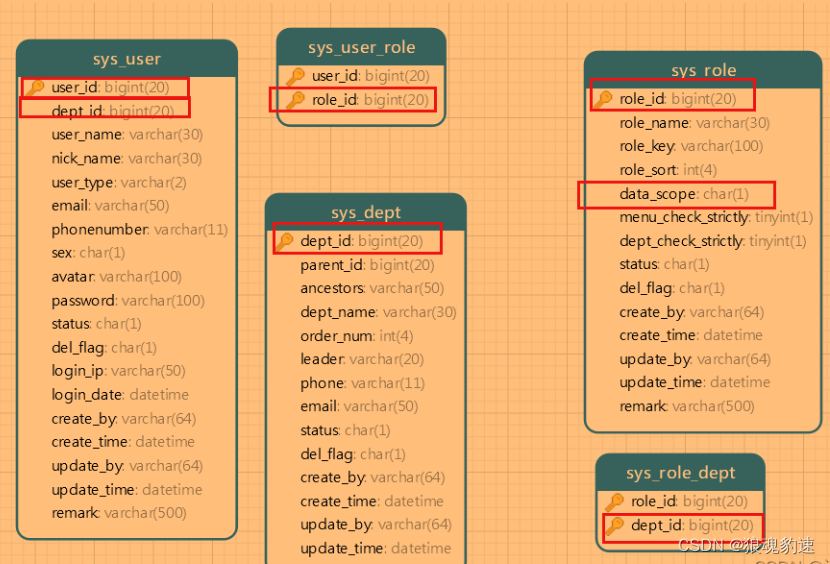
例子:从用户表中获取用户信息
实体类
public class BaseEntity implements Serializable{
    private Map<String, Object> params;
}

public class SysUser extends BaseEntity{
    // 省略
}
- 1
- 2
- 3
- 4
- 5
- 6
- 7
- 8
Service
@Override
@DataScope(deptAlias = "d", userAlias = "u")
public List<SysUser> selectUserList(SysUser user)
{
    return userMapper.selectUserList(user);
}
- 1
- 2
- 3
- 4
- 5
- 6
- 7
AOP处理
// 处理的是有DataScope注解的方法
public static void dataScopeFilter(JoinPoint joinPoint, SysUser user, String deptAlias, String userAlias)
{
	// 省略了代码,后面有详细代码。
    // 通过用户id,获取角色
    // 通过角色获取data_scope值。
    // 根据data_scope值,给map中赋值,key是dataScope。value是sql片段。
    BaseEntity baseEntity = (BaseEntity) params;
    baseEntity.getParams().put("dataScope", " AND (" + sqlString.substring(4) + ")");

}
- 1
- 2
- 3
- 4
- 5
- 6
- 7
- 8
- 9
- 10
- 11
- 12
SysUserMapper.xml
    <select id="selectUserList" parameterType="SysUser" resultMap="SysUserResult">
		select u.user_id, u.dept_id, u.nick_name, u.user_name, u.email, u.avatar, u.phonenumber, u.password, u.sex, u.status, u.del_flag, u.login_ip, u.login_date, u.create_by, u.create_time, u.remark, d.dept_name, d.leader from sys_user u
		left join sys_dept d on u.dept_id = d.dept_id
		where u.del_flag = '0'
		<!-- 省略了不重要的语句 -->
		<!-- 数据范围过滤 -->
		${params.dataScope}
	</select>

	说明:如果只查询自己的数据。最后的sql片段就是 user_id = 用户id。也就是${params.dataScope}的值。
- 1
- 2
- 3
- 4
- 5
- 6
- 7
- 8
- 9
- 10
- 11
代码分析
核心逻辑是sql的拼接,使用的是Aop技术实现。
自定义注解类
注解类中的字段是用来拼接sql时,获取表的别名。
/**
 * 数据权限过滤注解
 *
 * @author ruoyi
 */
@Target(ElementType.METHOD)
@Retention(RetentionPolicy.RUNTIME)
@Documented
public @interface DataScope
{
    /**
     * 部门表的别名
     */
    public String deptAlias() default "";

    /**
     * 用户表的别名
     */
    public String userAlias() default "";
}

- 1
- 2
- 3
- 4
- 5
- 6
- 7
- 8
- 9
- 10
- 11
- 12
- 13
- 14
- 15
- 16
- 17
- 18
- 19
- 20
- 21
切面类DataScopeAspect
切点为自定的注解DataScope, 使用的是前置通知。当方法使用了DataScope注解,在执行该方法前会被拦截。执行DataScopeAspect的doBefore方法。最后调用dataScopeFilter来处理需要拼接的sql。最后把需要拼接的sql存入到BaseEntity对象中。(所有的实体类都继承来了BaseEntity类,这是关键)
/**
 * 数据过滤处理
 *
 * @author ruoyi
 */
@Aspect
@Component
public class DataScopeAspect
{
    /**
     * 全部数据权限
     */
    public static final String DATA_SCOPE_ALL = "1";

    /**
     * 自定数据权限
     */
    public static final String DATA_SCOPE_CUSTOM = "2";

    /**
     * 部门数据权限
     */
    public static final String DATA_SCOPE_DEPT = "3";

    /**
     * 部门及以下数据权限
     */
    public static final String DATA_SCOPE_DEPT_AND_CHILD = "4";

    /**
     * 仅本人数据权限
     */
    public static final String DATA_SCOPE_SELF = "5";

    /**
     * 数据权限过滤关键字
     */
    public static final String DATA_SCOPE = "dataScope";

    // 配置织入点
    @Pointcut("@annotation(com.ruoyi.common.annotation.DataScope)")
    public void dataScopePointCut()
    {
    }

    @Before("dataScopePointCut()")
    public void doBefore(JoinPoint point) throws Throwable
    {
        handleDataScope(point);
    }

    protected void handleDataScope(final JoinPoint joinPoint)
    {
        // 获得注解
        DataScope controllerDataScope = getAnnotationLog(joinPoint);
        if (controllerDataScope == null)
        {
            return;
        }
        // 获取当前的用户
        LoginUser loginUser = SpringUtils.getBean(TokenService.class).getLoginUser(ServletUtils.getRequest());
        if (StringUtils.isNotNull(loginUser))
        {
            SysUser currentUser = loginUser.getUser();
            // 如果是超级管理员,则不过滤数据
            if (StringUtils.isNotNull(currentUser) && !currentUser.isAdmin())
            {
                dataScopeFilter(joinPoint, currentUser, controllerDataScope.deptAlias(),
                        controllerDataScope.userAlias());
            }
        }
    }

    /**
     * 数据范围过滤
     *
     * @param joinPoint 切点
     * @param user 用户
     * @param userAlias 别名
     */
    public static void dataScopeFilter(JoinPoint joinPoint, SysUser user, String deptAlias, String userAlias)
    {
        StringBuilder sqlString = new StringBuilder();

        for (SysRole role : user.getRoles())
        {
            String dataScope = role.getDataScope();
            if (DATA_SCOPE_ALL.equals(dataScope))
            {
                sqlString = new StringBuilder();
                break;
            }
            else if (DATA_SCOPE_CUSTOM.equals(dataScope))
            {
                sqlString.append(StringUtils.format(
                        " OR {}.dept_id IN ( SELECT dept_id FROM sys_role_dept WHERE role_id = {} ) ", deptAlias,
                        role.getRoleId()));
            }
            else if (DATA_SCOPE_DEPT.equals(dataScope))
            {
                sqlString.append(StringUtils.format(" OR {}.dept_id = {} ", deptAlias, user.getDeptId()));
            }
            else if (DATA_SCOPE_DEPT_AND_CHILD.equals(dataScope))
            {
                sqlString.append(StringUtils.format(
                        " OR {}.dept_id IN ( SELECT dept_id FROM sys_dept WHERE dept_id = {} or find_in_set( {} , ancestors ) )",
                        deptAlias, user.getDeptId(), user.getDeptId()));
            }
            else if (DATA_SCOPE_SELF.equals(dataScope))
            {
                if (StringUtils.isNotBlank(userAlias))
                {
                    sqlString.append(StringUtils.format(" OR {}.user_id = {} ", userAlias, user.getUserId()));
                }
                else
                {
                    // 数据权限为仅本人且没有userAlias别名不查询任何数据
                    sqlString.append(" OR 1=0 ");
                }
            }
        }

        if (StringUtils.isNotBlank(sqlString.toString()))
        {
            Object params = joinPoint.getArgs()[0];
            if (StringUtils.isNotNull(params) && params instanceof BaseEntity)
            {
                BaseEntity baseEntity = (BaseEntity) params;
                baseEntity.getParams().put(DATA_SCOPE, " AND (" + sqlString.substring(4) + ")");
            }
        }
    }

    /**
     * 是否存在注解,如果存在就获取
     */
    private DataScope getAnnotationLog(JoinPoint joinPoint)
    {
        Signature signature = joinPoint.getSignature();
        MethodSignature methodSignature = (MethodSignature) signature;
        Method method = methodSignature.getMethod();

        if (method != null)
        {
            return method.getAnnotation(DataScope.class);
        }
        return null;
    }
}
- 1
- 2
- 3
- 4
- 5
- 6
- 7
- 8
- 9
- 10
- 11
- 12
- 13
- 14
- 15
- 16
- 17
- 18
- 19
- 20
- 21
- 22
- 23
- 24
- 25
- 26
- 27
- 28
- 29
- 30
- 31
- 32
- 33
- 34
- 35
- 36
- 37
- 38
- 39
- 40
- 41
- 42
- 43
- 44
- 45
- 46
- 47
- 48
- 49
- 50
- 51
- 52
- 53
- 54
- 55
- 56
- 57
- 58
- 59
- 60
- 61
- 62
- 63
- 64
- 65
- 66
- 67
- 68
- 69
- 70
- 71
- 72
- 73
- 74
- 75
- 76
- 77
- 78
- 79
- 80
- 81
- 82
- 83
- 84
- 85
- 86
- 87
- 88
- 89
- 90
- 91
- 92
- 93
- 94
- 95
- 96
- 97
- 98
- 99
- 100
- 101
- 102
- 103
- 104
- 105
- 106
- 107
- 108
- 109
- 110
- 111
- 112
- 113
- 114
- 115
- 116
- 117
- 118
- 119
- 120
- 121
- 122
- 123
- 124
- 125
- 126
- 127
- 128
- 129
- 130
- 131
- 132
- 133
- 134
- 135
- 136
- 137
- 138
- 139
- 140
- 141
- 142
- 143
- 144
- 145
- 146
- 147
- 148
- 149
- 150
Mapper.xml
通过${params.dataScope}来完成sql的拼接。params是实体类父类中的属性类型,类型为Map。从该属性中可以获取到需要拼接的sql。需要拼接的sql是在切面类中前置方法中存入的。(baseEntity.getParams().put(DATA_SCOPE, " AND (" + sqlString.substring(4) + “)”);)
<select id="selectUserList" parameterType="SysUser" resultMap="SysUserResult"> select u.user_id, u.dept_id, u.nick_name, u.user_name, u.email, u.avatar, u.phonenumber, u.password, u.sex, u.status, u.del_flag, u.login_ip, u.login_date, u.create_by, u.create_time, u.remark, d.dept_name, d.leader from sys_user u left join sys_dept d on u.dept_id = d.dept_id where u.del_flag = '0' <if test="userName != null and userName != ''"> AND u.user_name like concat('%', #{userName}, '%') </if> <if test="status != null and status != ''"> AND u.status = #{status} </if> <if test="phonenumber != null and phonenumber != ''"> AND u.phonenumber like concat('%', #{phonenumber}, '%') </if> <if test="params.beginTime != null and params.beginTime != ''"><!-- 开始时间检索 --> AND date_format(u.create_time,'%y%m%d') >= date_format(#{params.beginTime},'%y%m%d') </if> <if test="params.endTime != null and params.endTime != ''"><!-- 结束时间检索 --> AND date_format(u.create_time,'%y%m%d') <= date_format(#{params.endTime},'%y%m%d') </if> <if test="deptId != null and deptId != 0"> AND (u.dept_id = #{deptId} OR u.dept_id IN ( SELECT t.dept_id FROM sys_dept t WHERE find_in_set(#{deptId}, ancestors) )) </if> <!-- 数据范围过滤 --> ${params.dataScope} </select>
- 1
- 2
- 3
- 4
- 5
- 6
- 7
- 8
- 9
- 10
- 11
- 12
- 13
- 14
- 15
- 16
- 17
- 18
- 19
- 20
- 21
- 22
- 23
- 24
- 25
- 26
代码中的使用
class: com.ruoyi.system.service.impl.SysUserServiceImpl

@Override
@DataScope(deptAlias = "d", userAlias = "u")
public List<SysUser> selectUserList(SysUser user)
{
    return userMapper.selectUserList(user);
}
- 1
- 2
- 3
- 4
- 5
- 6
- 7
- 8
- 9