
热门标签
热门文章
- 1Golang 面试题(3) 两个协程轮流打印字母和数字
- 2android.hardware.camera2详解
- 3SpringBoot数据源——为什么平时默认线程池是Hikari_hikari线程池
- 4若依框架---权限控制角色设计_若依权限字符
- 5HarmonyOS应用开发者基础认证考试题目及答案_harmonyos应用开发者基础认证答案
- 6【Python】Django搭建个人博客系统简单记录_python+django个人博客
- 7194、基于STM32单片机智能小车循迹避障小车蓝牙遥控小车设计(程序+原理图+参考论文+硬件框图+芯片设计资料+元器件清单等)_stm32小车各部分电路原理图
- 8数据库课程设计(饭店点餐系统)_数据库课程设计餐饮管理系统的e-r图
- 92023认证杯D题:低光观察黄昏系数|数学中国数学建模国际赛(小美赛) |数学建模完整代码+建模过程全解全析
- 10[附源码]Sprintboot计算机毕业设计餐馆点餐管理系统【源码+数据库+LW+部署】_数据库课程设计饭店点菜系统
当前位置: article > 正文
bert系列第一篇: bert进行embedding_bert embedding
作者:数据灵魂2 | 2024-01-30 14:37:55
赞
踩
bert embedding
bert理解
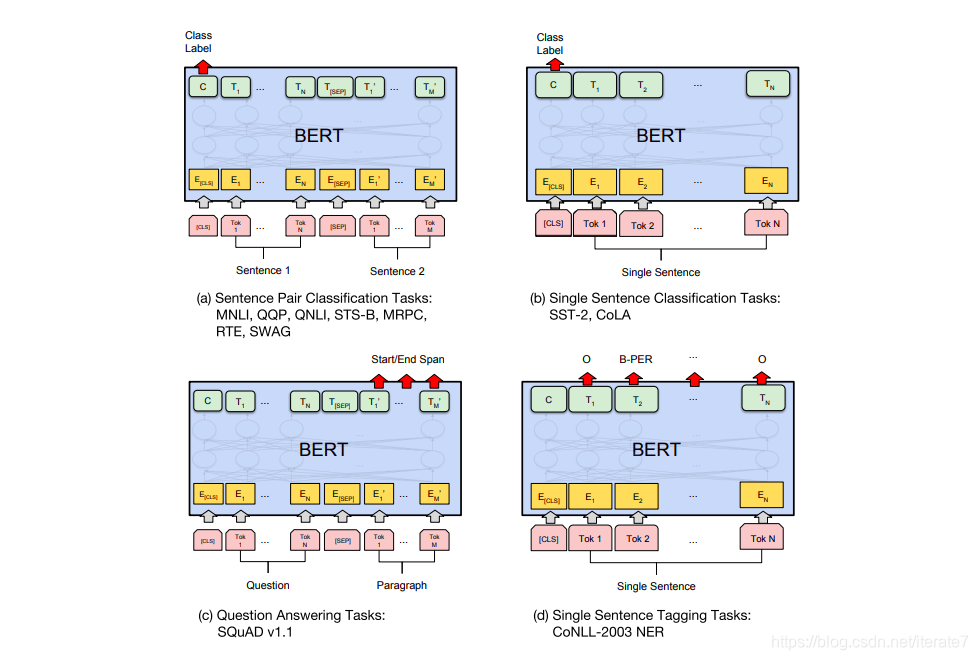
一句话概括, bert就是一个抽取器。输入一句话(词序列),输出抽取后的embedding序列。
再简单理解就是,它就是一个 encoder。
简单机理
我们可以用transformer在语言模型上做预训练。因为transformer是encoder-decoder结构,语言模型就只需要encoder部分就够了。BERT,利用transformer的encoder来进行预训练。
那么什么是transformer?
这是一个新的训练结构,发展历程而言就是CNN,RNN,transformer; transformer是基于attention机理发展而来。
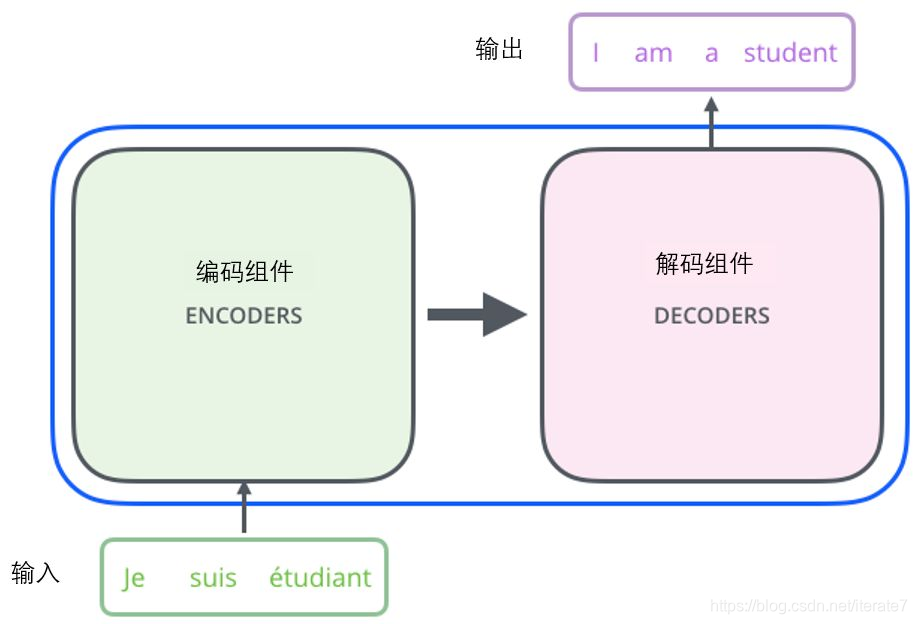
transformer由编码器和解码器组成。编码器和解码器都是基于attention机制。如下图
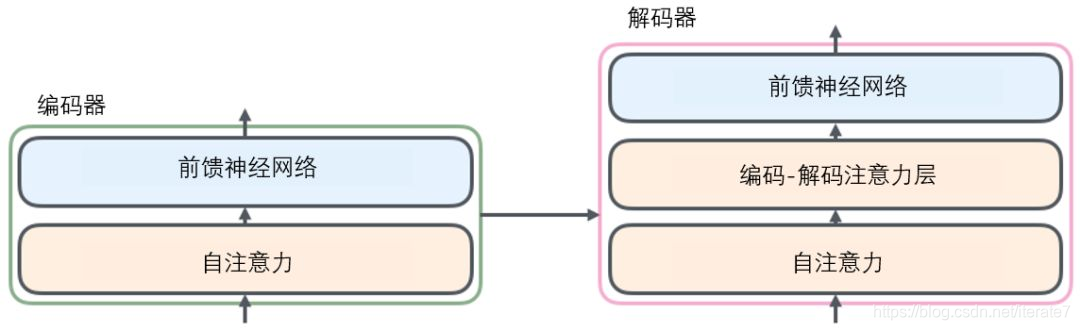
什么是注意力机制,一图简单领会,后面我们单独开一篇动手实践一下
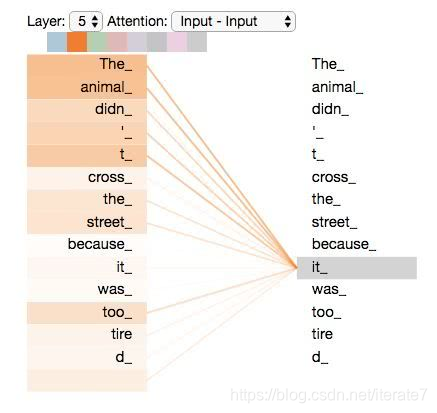
注意力机制就是,当前词的含义,必须结合结合上下文才能更好的理解。
encoder输入输出
-
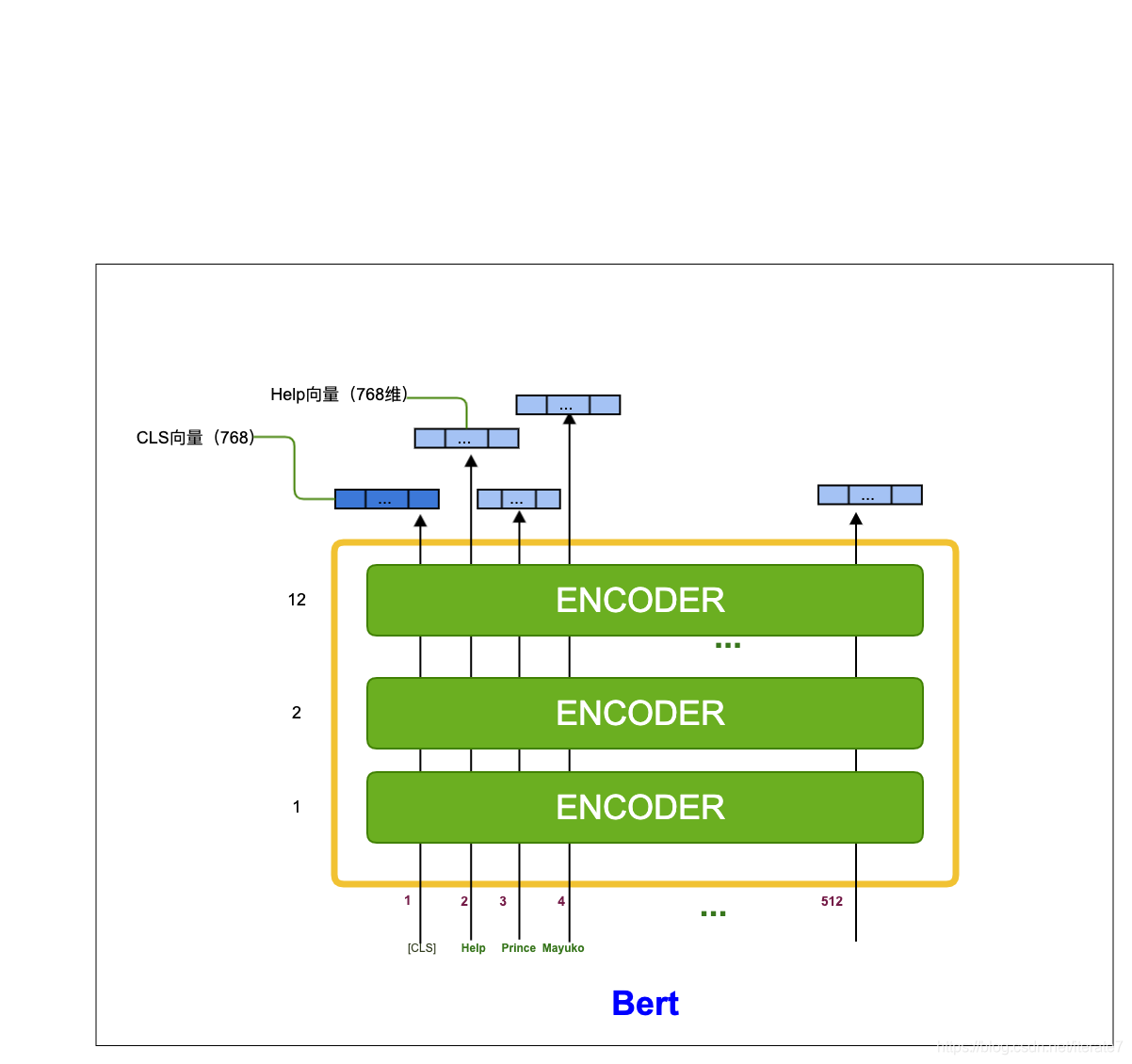
输入会加入特殊的[CLS]代表整句话的含义,可以用于分类。
-
input的词help,prince,mayuko等,一共512,这是截取的最大长度。
-
然后经过12层的encoder
-
最后输出的是每个token对应的embedding序列,每个token对应一个768维的向量。这个应该很好理解。
输出的结果
out = bert(xx)
 Return:
        :obj:`tuple(torch.FloatTensor)` comprising various elements depending on the configuration (:class:`~transformers.BertConfig`) and inputs:
        **last_hidden_state** (:obj:`torch.FloatTensor` of shape :obj:`(batch_size, sequence_length, hidden_size)`):
            Sequence of hidden-states at the output of the last layer of the model.
        **pooler_output** (:obj:`torch.FloatTensor`: of shape :obj:`(batch_size, hidden_size)`):
            Last layer hidden-state of the first token of the sequence (classification token)
            further processed by a Linear layer and a Tanh activation function. The Linear
            layer weights are trained from the next sentence prediction (classification)
            objective during pre-training.

            This output is usually *not* a good summary
            of the semantic content of the input, you're often better with averaging or pooling
            the sequence of hidden-states for the whole input sequence.
        **hidden_states** (:obj:`tuple(torch.FloatTensor)`, `optional`, returned when ``config.output_hidden_states=True``):
            Tuple of :obj:`torch.FloatTensor` (one for the output of the embeddings + one for the output of each layer)
            of shape :obj:`(batch_size, sequence_length, hidden_size)`.

            Hidden-states of the model at the output of each layer plus the initial embedding outputs.
        **attentions** (:obj:`tuple(torch.FloatTensor)`, `optional`, returned when ``config.output_attentions=True``):
            Tuple of :obj:`torch.FloatTensor` (one for each layer) of shape
            :obj:`(batch_size, num_heads, sequence_length, sequence_length)`.

            Attentions weights after the attention softmax, used to compute the weighted average in the self-attention
            heads.

- 1
- 2
- 3
- 4
- 5
- 6
- 7
- 8
- 9
- 10
- 11
- 12
- 13
- 14
- 15
- 16
- 17
- 18
- 19
- 20
- 21
- 22
- 23
- 24
作用
有了词序列对应的embedding向量,就可以对词分类、句子向量构建,句子分类、句子相似度比较等。
code(notebook)
#%% md

# bert

#%%

!pip install transformers

#%%

import torch
from transformers import BertModel, BertTokenizer

#%%

tokenizer = BertTokenizer.from_pretrained('bert-base-uncased')

#%%

input_ids = tokenizer.encode('hello world bert!')
input_ids

#%%

type(input_ids)

#%%

ids = torch.LongTensor(input_ids)
ids

#%%

text = tokenizer.convert_ids_to_tokens(input_ids)
text

#%%

model = BertModel.from_pretrained('bert-base-uncased', output_hidden_states=True)
# Set the device to GPU (cuda) if available, otherwise stick with CPU
device = 'cuda' if torch.cuda.is_available() else 'cpu'

model = model.to(device)
ids = ids.to(device)

model.eval()

#%%

print(ids.size())
# unsqueeze IDs to get batch size of 1 as added dimension
granola_ids = ids.unsqueeze(0)
print(granola_ids.size())


#%% md

In the example below, an additional argument has been given to the model initialisation. output_hidden_states will give us more output information. By default, a BertModel will return a tuple but the contents of that tuple differ depending on the configuration of the model. When passing output_hidden_states=True, the tuple will contain (in order; shape in brackets):

1. the last hidden state (batch_size, sequence_length, hidden_size)
1. the pooler_output of the classification token (batch_size, hidden_size)
1. the hidden_states of the outputs of the model at each layer and the initial embedding outputs (batch_size, sequence_length, hidden_size)

#%%

out = model(input_ids=granola_ids) # tuple

hidden_states = out[2]
print("last hidden state:",out[0].shape) #torch.Size([1, 6, 768])
print("pooler_output of classification token:",out[1].shape)#[1,768] cls
print("all hidden_states:", len(out[2]))

#%%

for i, each_layer in enumerate(hidden_states):
    print('layer=',i, each_layer)

#%%

sentence_embedding = torch.mean(hidden_states[-1], dim=1).squeeze()
print(sentence_embedding)
print(sentence_embedding.size())

#%%


# get last four layers
last_four_layers = [hidden_states[i] for i in (-1, -2, -3, -4)]
# cast layers to a tuple and concatenate over the last dimension
cat_hidden_states = torch.cat(tuple(last_four_layers), dim=-1)
print(cat_hidden_states.size())

# take the mean of the concatenated vector over the token dimension
cat_sentence_embedding = torch.mean(cat_hidden_states, dim=1).squeeze()
print(cat_sentence_embedding)
print(cat_sentence_embedding.size())
- 1
- 2
- 3
- 4
- 5
- 6
- 7
- 8
- 9
- 10
- 11
- 12
- 13
- 14
- 15
- 16
- 17
- 18
- 19
- 20
- 21
- 22
- 23
- 24
- 25
- 26
- 27
- 28
- 29
- 30
- 31
- 32
- 33
- 34
- 35
- 36
- 37
- 38
- 39
- 40
- 41
- 42
- 43
- 44
- 45
- 46
- 47
- 48
- 49
- 50
- 51
- 52
- 53
- 54
- 55
- 56
- 57
- 58
- 59
- 60
- 61
- 62
- 63
- 64
- 65
- 66
- 67
- 68
- 69
- 70
- 71
- 72
- 73
- 74
- 75
- 76
- 77
- 78
- 79
- 80
- 81
- 82
- 83
- 84
- 85
- 86
- 87
- 88
- 89
- 90
- 91
- 92
- 93
- 94
- 95
- 96
- 97
- 98
- 99
不同的emebdding组合会带来不一样的结果,参考。
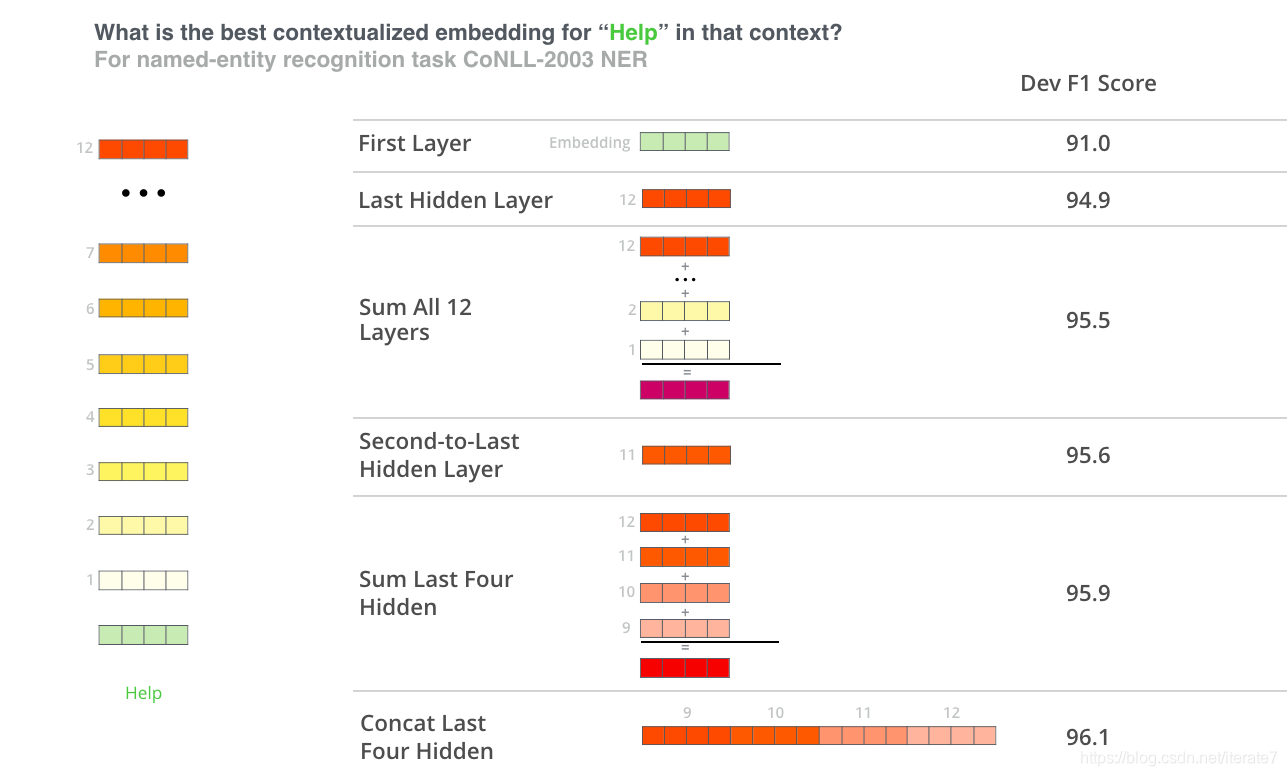
利用concat的向量,最优结果。
总结
- 不同的层代表不同的特征含义,向量组合的实验可以证明这一点。
- bert就是抽取器
- 不同隐层输出的向量的使用是核心所在
- 仔细理解文中的两幅图,和样例代码。然后就是感悟了!
引用
- https://github.com/huggingface/transformers/issues/2986
- https://github.com/BramVanroy/bert-for-inference/blob/master/introduction-to-bert.ipynb
- https://www.cnblogs.com/gczr/p/11785930.html
- https://blog.csdn.net/longxinchen_ml/article/details/86533005
声明:本文内容由网友自发贡献,不代表【wpsshop博客】立场,版权归原作者所有,本站不承担相应法律责任。如您发现有侵权的内容,请联系我们。转载请注明出处:https://www.wpsshop.cn/article/detail/46912
推荐阅读
相关标签

