
热门标签
热门文章
- 1pager mysql md5_webupload-vue: 使用vue+elementUI+webuploader制作大文件分片上传插件,支持断点续传,文件MD5校验,分片md5校验,第一次上传成功...
- 2LLM - Baichuan7B Tokenizer 生成训练数据_baichuantokenizer
- 3硕士博士简历latex模板_申请博士简历 latex模板
- 4SQL教程_sql 教程
- 55.6 Mybatis代码生成器Mybatis Generator (MBG)实战详解
- 6Linux中ifconfig :command not found 找不到命令的解决方法_ifconfig未找到命令
- 7python时间戳,时间类型解析_python2 时间戳
- 8虚拟机建立游戏服务器,在虚拟机上创建游戏服务器
- 9Python 练习之餐厅点菜_有位顾客来餐厅吃饭询问顾客是否点菜将顾客菜单存入列表中python
- 10AWS VPC Endpoint
当前位置: article > 正文
dubbo学习三-负载均衡策略_loadbalance dubboreference
作者:代码维护者 | 2024-01-17 22:10:40
赞
踩
loadbalance dubboreference
1 负载均衡策略介绍
dubbo负载均衡包括4种,随机、轮询、最小活跃调用数、IP哈希
Dubbo负载均衡类图如下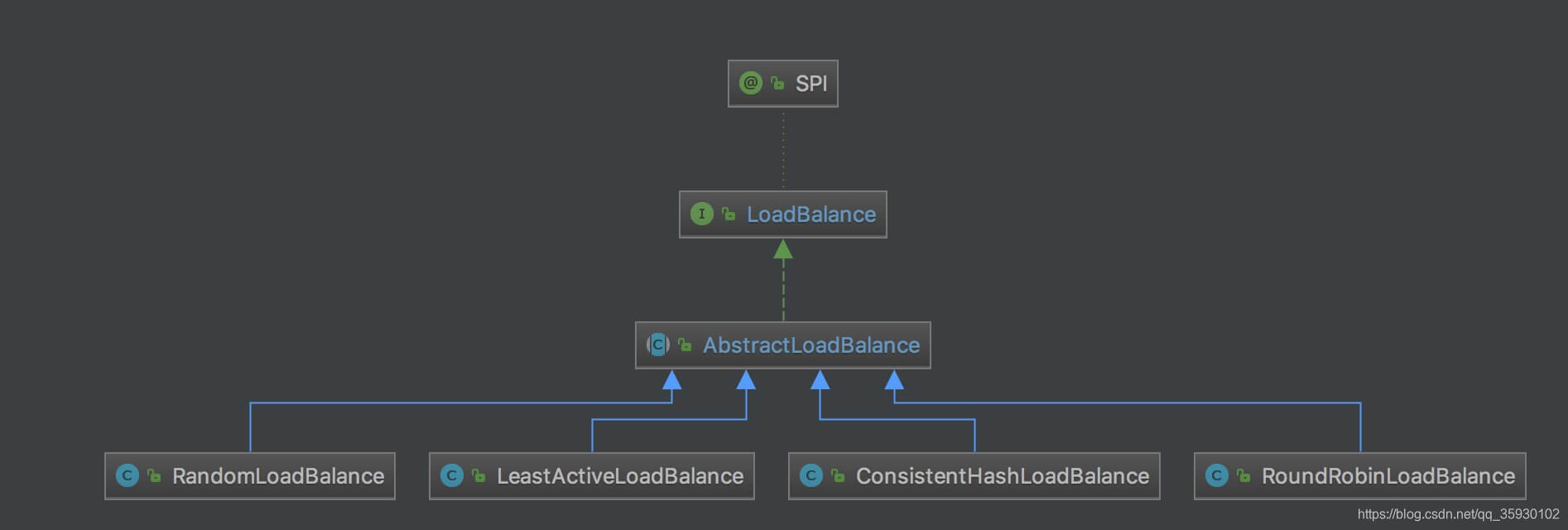
Dubbo使用负载均衡方式很简单,只需要在服务调用者标签上配置loadbalance属性就行
1.1 随机(默认)
@Reference(loadbalance = "random")
如果配置了权重,则invoker权重越大,执行的概率越大;如果没有配置权重,则随机选择invoker执行
1.2 轮询
@Reference(loadbalance = "roundrobin")
如果配置了权重,则根据权重轮询;否则直接通过方法调用次数取模
1.3 最小活跃数
@Reference(loadbalance = "leastactive")
指的是当请求调用来临,有多个实例提供服务的时候,选择其中被调用活跃次数最少的实例来提供服务。通俗一点讲就是,当前有 3 个实例在提供服务,A 当前被 2 个服务调用,B 当前被 3 个服务调用,C 当前被 1 个服务调用,一个新的调用请求过来,会选择调用到 C 实例。
能动态的根据当前服务的调用情况,选择最小被调用的实例,调用越慢的机器,会接收到更少的请求。因为调用越慢的机器调用间隔越大,累积的请求越多
1.4 一致性哈希
@Reference(loadbalance = "consistenthash")
相同参数的请求总是发到同一提供者。当某一台提供者挂时,原本发往该提供者的请求,基于虚拟节点,平摊到其它提供者,不会引起剧烈变动。
2 实现原理
2.1 随机算法RandomLoadBalance
- protected <T> Invoker<T> doSelect(List<Invoker<T>> invokers, URL url, Invocation invocation) {
- // 获取所有的服务提供者invoker数量
- int length = invokers.size();
- // 初始化总权重为0
- int totalWeight = 0;
- // 默认权重都相等
- boolean sameWeight = true;
-
- int offset;
- int i;
- for(offset = 0; offset < length; ++offset) {
- // 获取某个invoker的权重(可以在@Server注解上配置)
- i = this.getWeight((Invoker)invokers.get(offset), invocation);
- totalWeight += i;
- if (sameWeight && offset > 0 && i != this.getWeight((Invoker)invokers.get(offset - 1), invocation)) {
- // 如果任意相邻两个invoker权重不相等则把sameWeight设置为false
- sameWeight = false;
- }
- }
-
- // 下面是轮询权重算法
- if (totalWeight > 0 && !sameWeight) {
- // 从0-totalWeight中随机选取一个数
- offset = this.random.nextInt(totalWeight);
- for(i = 0; i < length; ++i) {
- // 这个数减去该invoker的offset
- offset -= this.getWeight((Invoker)invokers.get(i), invocation);
- if (offset < 0) {
- // 如果相减后的值<0则用该invoker,权重越大,相减后<0的概率越大
- return (Invoker)invokers.get(i);
- }
- }
- }
- // 如果权重都相同或者权重算法相减后都>0则随机选一个
- return (Invoker)invokers.get(this.random.nextInt(length));
- }

2.2 轮询RoundRobinLoadBalance
- protected <T> Invoker<T> doSelect(List<Invoker<T>> invokers, URL url, Invocation invocation) {
- // 用全类名和方法名做key
- String key = ((Invoker)invokers.get(0)).getUrl().getServiceKey() + "." + invocation.getMethodName();
- // 获取invoker的数量
- int length = invokers.size();
- int maxWeight = 0;
- int minWeight = 2147483647;
- // 做一个invoker-weight map
- LinkedHashMap<Invoker<T>, RoundRobinLoadBalance.IntegerWrapper> invokerToWeightMap = new LinkedHashMap();
- int weightSum = 0;
-
- int currentSequence;
- for(int i = 0; i < length; ++i) {
- // 当前invoker权重
- currentSequence = this.getWeight((Invoker)invokers.get(i), invocation);
- // 设置最大权重和最小权重
- maxWeight = Math.max(maxWeight, currentSequence);
- minWeight = Math.min(minWeight, currentSequence);
- if (currentSequence > 0) {
- // 如果权重>0则把invoker-weight放到map中
- invokerToWeightMap.put(invokers.get(i), new RoundRobinLoadBalance.IntegerWrapper(currentSequence));
- weightSum += currentSequence;
- }
- }
-
- // 获取这个方法的执行次数,如果为空则初始化
- AtomicPositiveInteger sequence = (AtomicPositiveInteger)this.sequences.get(key);
- if (sequence == null) {
- this.sequences.putIfAbsent(key, new AtomicPositiveInteger());
- sequence = (AtomicPositiveInteger)this.sequences.get(key);
- }
- // 调用次数自增1
- currentSequence = sequence.getAndIncrement();
- // 如果有权重,则考虑权重因素进行选取
- if (maxWeight > 0 && minWeight < maxWeight) {
- int mod = currentSequence % weightSum;
-
- for(int i = 0; i < maxWeight; ++i) {
- Iterator i$ = invokerToWeightMap.entrySet().iterator();
- while(i$.hasNext()) {
- Entry<Invoker<T>, RoundRobinLoadBalance.IntegerWrapper> each = (Entry)i$.next();
- Invoker<T> k = (Invoker)each.getKey();
- RoundRobinLoadBalance.IntegerWrapper v = (RoundRobinLoadBalance.IntegerWrapper)each.getValue();
- if (mod == 0 && v.getValue() > 0) {
- return k;
- }
-
- if (v.getValue() > 0) {
- v.decrement();
- --mod;
- }
- }
- }
- }
-
- // 根据方法调用次数取模,一次次来
- return (Invoker)invokers.get(currentSequence % length);
- }
2.3 最小活跃数LeastActiveLoadBalance
- protected <T> Invoker<T> doSelect(List<Invoker<T>> invokers, URL url, Invocation invocation) {
- // 获取invoker个数
- int length = invokers.size();
- // 最小活跃值
- int leastActive = -1;
- // 最小活跃数量
- int leastCount = 0;
- // 做一个数组,记录最小活跃invoker的下标
- int[] leastIndexs = new int[length];
- int totalWeight = 0;
- int firstWeight = 0;
- boolean sameWeight = true;
-
- int offsetWeight;
- int leastIndex;
- for(offsetWeight = 0; offsetWeight < length; ++offsetWeight) {
- Invoker<T> invoker = (Invoker)invokers.get(offsetWeight);
- // 获取该实例的活跃值
- leastIndex = RpcStatus.getStatus(invoker.getUrl(), invocation.getMethodName()).getActive();
- int weight = invoker.getUrl().getMethodParameter(invocation.getMethodName(), "weight", 100);
- if (leastActive != -1 && leastIndex >= leastActive) {
- if (leastIndex == leastActive) {
- // 如果该invoker == 最小活跃度则把该invoker下标记录到leastIndexs中
- leastIndexs[leastCount++] = offsetWeight;
- totalWeight += weight;
- if (sameWeight && offsetWeight > 0 && weight != firstWeight) {
- sameWeight = false;
- }
- }
- } else {
- // 如果出现更小活跃度的invoker则重新设置最小活跃度的值
- leastActive = leastIndex;
- // 更新最小活跃度个数为1
- leastCount = 1;
- // 把该invoker下标记录到leastIndexs中
- leastIndexs[0] = offsetWeight;
- totalWeight = weight;
- firstWeight = weight;
- sameWeight = true;
- }
- }
-
- if (leastCount == 1) {
- // 如果最小活跃数量invoker个数为1则直接返回
- return (Invoker)invokers.get(leastIndexs[0]);
- } else {
- // 如果有多个最小活跃数量的invoker
- if (!sameWeight && totalWeight > 0) {
- // 如果考虑权重则根据权重做随机
- offsetWeight = this.random.nextInt(totalWeight);
-
- for(int i = 0; i < leastCount; ++i) {
- leastIndex = leastIndexs[i];
- offsetWeight -= this.getWeight((Invoker)invokers.get(leastIndex), invocation);
- if (offsetWeight <= 0) {
- return (Invoker)invokers.get(leastIndex);
- }
- }
- }
- // 如果没有权重则从最小活跃度invoker中随机选择一个
- return (Invoker)invokers.get(leastIndexs[this.random.nextInt(leastCount)]);
- }
- }
2.4 一致性哈希ConsistentHashLoadBalance
- protected <T> Invoker<T> doSelect(List<Invoker<T>> invokers, URL url, Invocation invocation) {
- // 用全类名和方法名做key
- String key = ((Invoker)invokers.get(0)).getUrl().getServiceKey() + "." + invocation.getMethodName();
- // 基于 invokers 集合,根据对象内存地址来计算定义哈希值
- int identityHashCode = System.identityHashCode(invokers);
- // 获取根据key获取本次执行的选择器
- ConsistentHashLoadBalance.ConsistentHashSelector<T> selector = (ConsistentHashLoadBalance.ConsistentHashSelector)this.selectors.get(key);
- if (selector == null || selector.identityHashCode != identityHashCode) {
- this.selectors.put(key, new ConsistentHashLoadBalance.ConsistentHashSelector(invokers, invocation.getMethodName(), identityHashCode));
- selector = (ConsistentHashLoadBalance.ConsistentHashSelector)this.selectors.get(key);
- }
-
- return selector.select(invocation);
- }
-
- public Invoker<T> select(Invocation invocation) {
- // 根据方法参数做key
- String key = this.toKey(invocation.getArguments());
- // 加密
- byte[] digest = this.md5(key);
- // 选取执行的invoker
- return this.selectForKey(this.hash(digest, 0));
- }
声明:本文内容由网友自发贡献,不代表【wpsshop博客】立场,版权归原作者所有,本站不承担相应法律责任。如您发现有侵权的内容,请联系我们。转载请注明出处:https://www.wpsshop.cn/article/detail/41325
推荐阅读
- article" href="/article/detail/41315" target="_blank"><em>dubbo</em> - 智能容错_<<em>dubbo</em>:<em>service</em> <em>cluster</em>=<em>"</em><em>broadcast</em><em>"</em> />...
相关标签

