- 1SpringBoot添加自定义消息转换器
- 2docker 初体验 for mac_the 'boot2docker' command line interface is offici
- 3如何搭建自己的网站_搭建网站
- 4网络技术学习指南(二)路由表与转发表_组播路由表 前向转发表
- 5UBUNTU添加开机自动启动程序方法_ubuntun开机不会启动gdm
- 6windows批处理自动获取电脑配置信息_批处理获取系统信息
- 7如何合并两个有序链表(以O(n)的时间复杂度并且不开辟新的空间)_合并两个有序链表不申请额外空间
- 8pytorch之python基础_pytorch中python基础
- 9系统开发经验总结_系统开发技术经验
- 10python的循环语句_某公司,账户余额有10w元,给20名员工发工资:
【C++】浅拷贝 / 深拷贝 / 写时拷贝
赞
踩
1. 经典的string类问题
上一篇博客已经对string类进行了简单的介绍,大家只要能够正常使用即可。
在面试中,面试官总喜欢让学生自己来模拟实现string类,最主要是实现string类的构造、拷贝构造、赋值运算符重载以及析构函数。大家看下以下string类的实现是否有问题?
// 为了和标准库区分,此处使用String
class String
{
public:
	//String()
	//	:_str(new char[1])
	//{
	//	*_str = '\0';
	//}

	//String(const char* str = "\0")	// 错误示范
	//String(const char* str = nullptr)	// 错误示范
	String(const char* str = "")
	{
		// 构造String类对象时,如果传递nullptr指针,可以认为程序非法
		if (nullptr == str)
		{
			assert(false);
			return;
		}
		_str = new char[strlen(str) + 1];
		strcpy(_str, str);
	}

	~String()
	{
		if (_str)
		{
			delete[] _str;
			_str = nullptr;
		}
	}

private:
	char* _str;
};

// 测试
void TestString()
{
	String s1("hello string");
	String s2(s1);
}

- 1
- 2
- 3
- 4
- 5
- 6
- 7
- 8
- 9
- 10
- 11
- 12
- 13
- 14
- 15
- 16
- 17
- 18
- 19
- 20
- 21
- 22
- 23
- 24
- 25
- 26
- 27
- 28
- 29
- 30
- 31
- 32
- 33
- 34
- 35
- 36
- 37
- 38
- 39
- 40
- 41
- 42
- 43
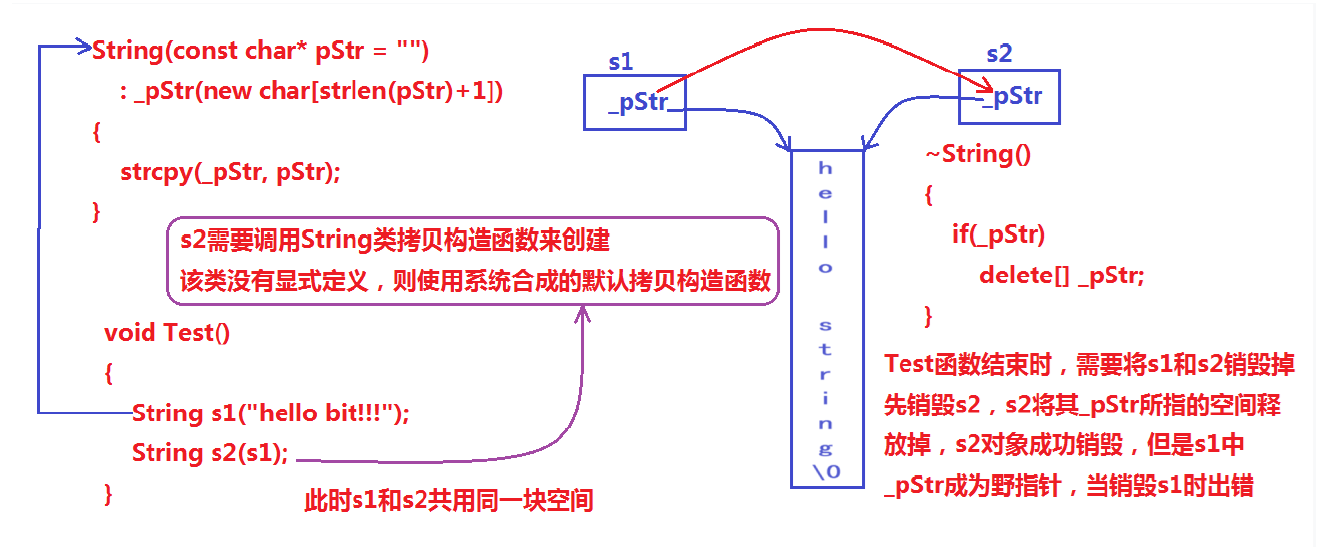
说明:上述String类没有显式定义其拷贝构造函数与赋值运算符重载,此时编译器会合成默认的,当用s1构造s2时,编译器会调用默认的拷贝构造。最终导致的问题时,s1、s2共用同一块内存空间,在释放时同一块空间被释放多次而引起程序崩溃,这种拷贝方式,称为浅拷贝。
2. 浅拷贝
浅拷贝:也称位拷贝,编译器只是将对象中的值拷贝过来。如果对象中管理资源,最后就会导致多个对象共享同一份资源,当一个对象销毁时就会将该资源释放掉,而此时另一些对象不知道该资源已经被释放,以为还有效,所以当继续对资源进行操作时,就会发生访问违规。
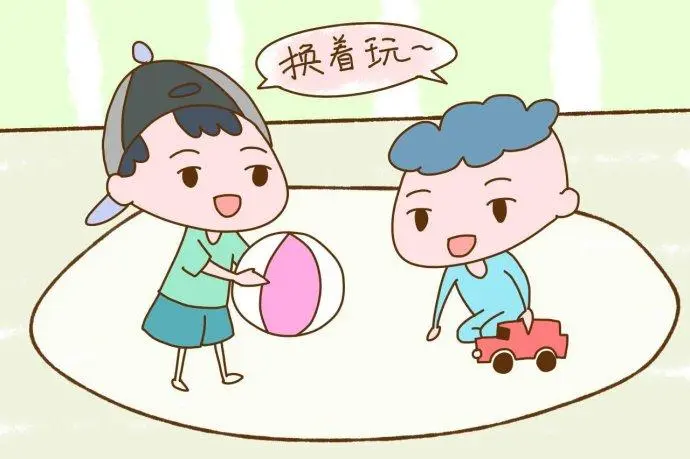
就像一个家庭中有两个孩子,但父母只买了一份玩具,两个孩子愿意一块玩,则万事大吉,万一不想分享就你争我夺,玩具损坏。

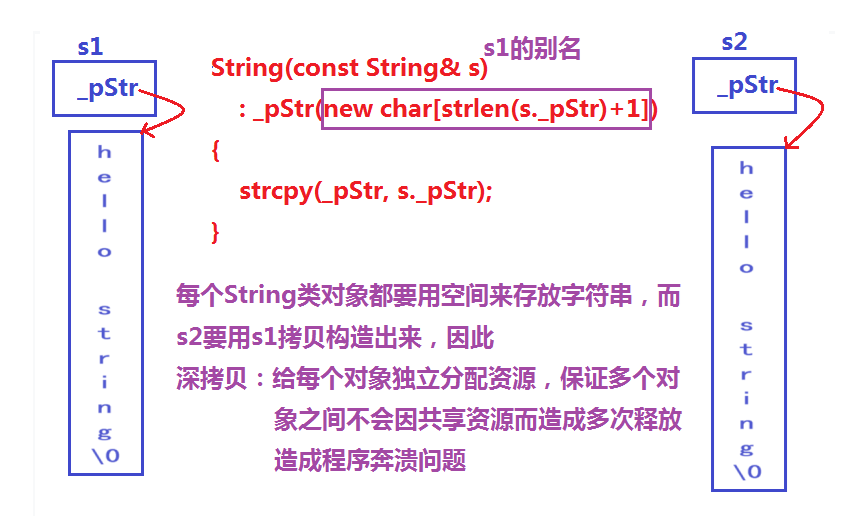
可以采用深拷贝解决浅拷贝问题,即:每个对象都有一份独立的资源,不要和其他对象共享。父母给每个孩子都买一份玩具,各自玩各自的就不会有问题了。
3. 深拷贝
如果一个类中涉及到资源的管理,其拷贝构造函数,赋值运算符重载以及析构函数必须要显式给出。一般情况都是按照深拷贝方式提供。
3.1 传统写法的String类
class String
{
public:
	String(const char* str = "")
	{
		// 构造String类对象时,如果传递nullptr指针,可以认为程序非法
		if (nullptr == str)
		{
			assert(false);
			return;
		}
		_str = new char[strlen(str) + 1];
		strcpy(_str, str);
	}

	String(const String& s)
		: _str(new char[strlen(s._str) + 1])
	{
		strcpy(_str, s._str);
	}

	String& operator=(const String& s)
	{
		if (this != &s)
		{
			char* pStr = new char[strlen(s._str) + 1];
			strcpy(pStr, s._str);
			delete[] _str;
			_str = pStr;
		}
		return *this;
	}

	~String()
	{
		if (_str)
		{
			delete[] _str;
			_str = nullptr;
		}
	}

private:
	char* _str;
};
- 1
- 2
- 3
- 4
- 5
- 6
- 7
- 8
- 9
- 10
- 11
- 12
- 13
- 14
- 15
- 16
- 17
- 18
- 19
- 20
- 21
- 22
- 23
- 24
- 25
- 26
- 27
- 28
- 29
- 30
- 31
- 32
- 33
- 34
- 35
- 36
- 37
- 38
- 39
- 40
- 41
- 42
- 43
- 44
- 45
3.2 现代写法的String类
class String
{
public:
	String(const char* str = "")
	{
		if (nullptr == str)
		{
			assert(false);
			return;
		}
		_str = new char[strlen(str) + 1];
		strcpy(_str, str);
	}

	String(const String& s)
		: _str(nullptr)
	{
		String strTmp(s._str);
		swap(_str, strTmp._str);
	}

	// 对比下和上面的赋值那个实现比较好?
	String& operator=(String s)
	{
		swap(_str, s._str);
		return *this;
	}

	//String& operator=(const String& s)
	//{
	//	if (this != &s)
	//	{
	//		String strTmp(s);
	//		swap(_str, strTmp._str);
	//	}
	//	return *this;
	//}

	~String()
	{
		if (_str)
		{
			delete[] _str;
			_str = nullptr;
		}
	}

private:
	char* _str;
};
- 1
- 2
- 3
- 4
- 5
- 6
- 7
- 8
- 9
- 10
- 11
- 12
- 13
- 14
- 15
- 16
- 17
- 18
- 19
- 20
- 21
- 22
- 23
- 24
- 25
- 26
- 27
- 28
- 29
- 30
- 31
- 32
- 33
- 34
- 35
- 36
- 37
- 38
- 39
- 40
- 41
- 42
- 43
- 44
- 45
- 46
- 47
- 48
- 49
- 50
传统写法就是老老实实自己开空间、自己拷贝数据、自己删除旧空间;而现代写法则利用了swap()函数以及局部变量出作用域自动销毁的特性,让函数和编译器帮我们“打工”,我们只要坐享其成即可。这两种方式在效率上并没有什么区别,只是让代码看起来更简洁,但这又会使代码的可读性降低。总体来说,我还是更偏向于传统写法。
4. 写时拷贝
写时拷贝就是一种拖延症,是在浅拷贝的基础之上增加了引用计数的方式来实现的。
引用计数:用来记录资源使用者的个数。在构造时,将资源的计数给成1,每增加一个对象使用该资源,就给计数增加1,当某个对象被销毁时,先给该计数-1,然后再检查是否需要释放资源,如果计数为1,说明该对象是资源的最后一个使用者,将该资源释放;否则就不能释放,因为还有其他对象也在使用该资源。
本文完