
热门标签
热门文章
- 1目标检测数据集 - 猫狗检测数据集下载「包含VOC、COCO、YOLO三种格式」_下载猫狗数据集
- 2STM32 HAL库函数——HAL_TIM_Base_Start_IT()详解
- 3Qt5下串口编程中“QIODevice::write (QSerialPort): device not open”问题的分析处理总结
- 4学生食堂信息管理系统_《学生食堂信息管理系统》饭卡管理模块的 e-r 图如图 1.6 .1 所示,逻辑 数据模型
- 5程序员思维模式 - 主调试循环_写程序陷入思维循环
- 6微信小程序:fail api scope is not declared in the privacy agreement(授权点击没反应)
- 7【设计模式】适配器模式怎么理解?
- 8【chatglm3】(4):如何设计一个知识库问答系统,参考智谱AI的知识库系统,
- 9【C语言】--求一个3 * 3矩阵对角线元素之和_求一个3*3矩阵对角线元素之和
- 10【C#入门练习及答案】_c#代码练习
当前位置: article > 正文
数据结构 | 队列的实现
作者:数据可视化灵魂 | 2023-12-17 06:06:51
赞
踩
数据结构 | 队列的实现
数据结构 | 队列的实现
队列的概念及结构
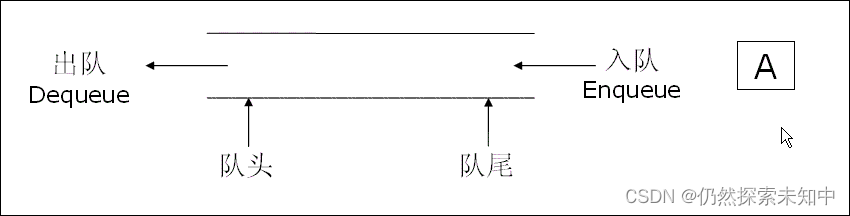
- 队列:只允许在一端进行插入数据操作,在另一端进行删除数据操作的特殊线性表,队列具有先进先出
FIFO(First In First Out) - 入队列:进行插入操作的一端称为队尾 出队列:进行删除操作的一端称为队头
队列的实现
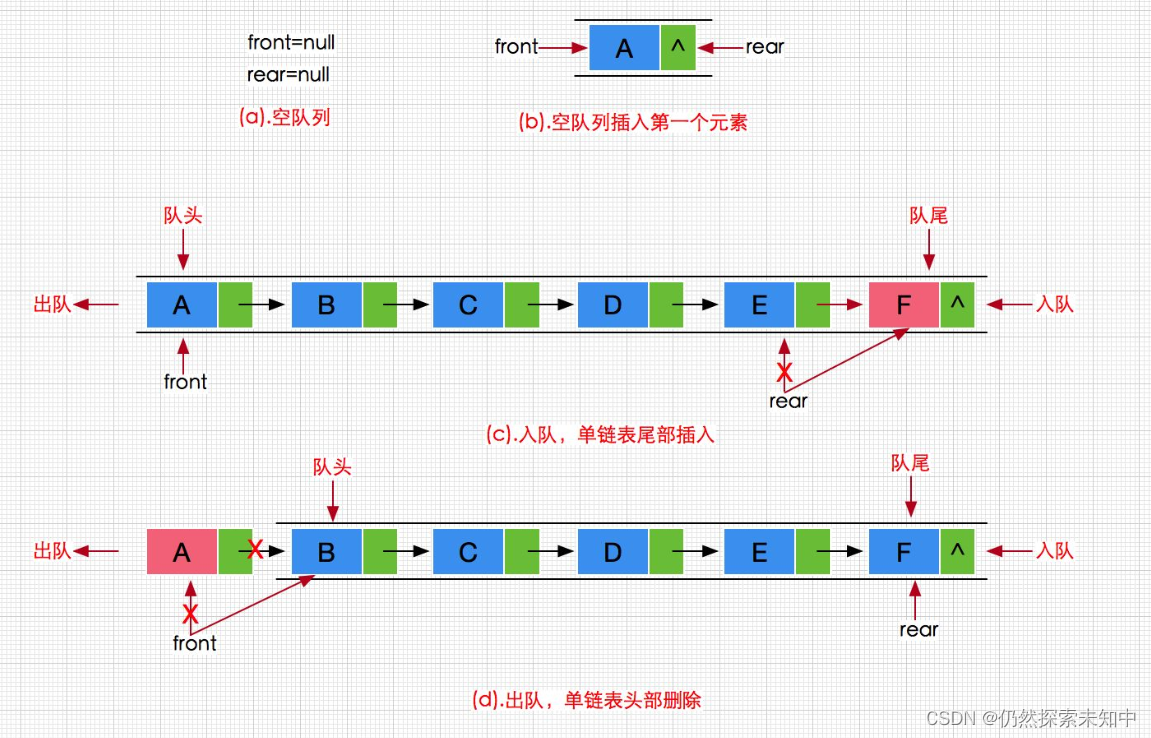
- 队列也可以数组和链表的结构实现,使用链表的结构实现更优一些,因为如果使用数组的结构, 出队列在数组头上出数据,效率会比较低。
队列的实现
头文件,需要实现的接口
Queue.h
#pragma once
#include<stdio.h>
#include<assert.h>
#include<stdlib.h>
#include<stdbool.h>

typedef int QDataType;

typedef struct QListNode
{
	QDataType val;
	struct QListNode* next;
}QNode;
// 队列的结构
typedef struct Queue
{
	QNode* phead;
	QNode* ptail;
	QDataType size;
}Queue;
// 初始化队列
void QueueInit(Queue* pq);
// 队尾入队列
void QueuePush(Queue* pq, QDataType x);
// 队头出队列
void QueuePop(Queue* pq);
// 获取队列头部元素
QDataType QueueFront(Queue* pq);
// 获取队列队尾元素
QDataType QueueBack(Queue* pq);
// 获取队列中有效元素个数
int QueueSize(Queue* pq);
// 检测队列是否为空,如果为空返回非零结果,如果非空返回0
int QueueEmpty(Queue* pq);
// 销毁队列
void QueueDestroy(Queue* pq);

- 1
- 2
- 3
- 4
- 5
- 6
- 7
- 8
- 9
- 10
- 11
- 12
- 13
- 14
- 15
- 16
- 17
- 18
- 19
- 20
- 21
- 22
- 23
- 24
- 25
- 26
- 27
- 28
- 29
- 30
- 31
- 32
- 33
- 34
- 35
- 36
初始化队列
void QueueInit(Queue* pq)
{
	assert(pq);
	pq->phead = pq->ptail = NULL;
	pq->size = 0;
}
- 1
- 2
- 3
- 4
- 5
- 6
队尾入队列【重点】
void QueuePush(Queue* pq, QDataType x)
{
	assert(pq);
	QNode* newnode = (QNode*)malloc(sizeof(QNode));
	if (newnode == NULL)
	{
		perror("malloc fail!\n");
		return;
	}

	newnode->val = x;
	newnode->next = NULL;

	if (pq->ptail == NULL)
	{
		pq->phead = pq->ptail = newnode;
	}
	else
	{
		pq->ptail->next = newnode;
		pq->ptail = newnode;
	}
	pq->size++;
}
- 1
- 2
- 3
- 4
- 5
- 6
- 7
- 8
- 9
- 10
- 11
- 12
- 13
- 14
- 15
- 16
- 17
- 18
- 19
- 20
- 21
- 22
- 23
- 24
队头出队列【重点】
void QueuePop(Queue* pq)
{
	assert(pq);
	assert(pq->phead);
	QNode* del = pq->phead;
	pq->phead = pq->phead->next;
	free(del);
	del = NULL;

	if (pq->phead == NULL)
		pq->ptail = NULL;
	pq->size--;
}
- 1
- 2
- 3
- 4
- 5
- 6
- 7
- 8
- 9
- 10
- 11
- 12
- 13
获取队列头部元素
QDataType QueueFront(Queue* pq)
{
	assert(pq);
	assert(pq->phead);
	return pq->phead->val;
}
- 1
- 2
- 3
- 4
- 5
- 6
获取队列队尾元素
QDataType QueueBack(Queue* pq)
{
	assert(pq);
	assert(pq->ptail);
	return pq->ptail->val;
}
- 1
- 2
- 3
- 4
- 5
- 6
获取队列中有效元素个数
int QueueSize(Queue* pq)
{
	assert(pq);
	return pq->size;
}
- 1
- 2
- 3
- 4
- 5
检测队列是否为空
int QueueEmpty(Queue* pq)
{
	assert(pq);
	return pq->phead == 0;
}
- 1
- 2
- 3
- 4
- 5
销毁队列
void QueueDestroy(Queue* pq)
{
	assert(pq);
	QNode* cur = pq->phead;
	while (cur != NULL)
	{
		QNode* next = cur->next;
		free(cur);
		cur = next;
	}
	pq->phead = pq->ptail = NULL;
	pq->size = 0;
}
- 1
- 2
- 3
- 4
- 5
- 6
- 7
- 8
- 9
- 10
- 11
- 12
- 13
Queue.c
#include"Queue.h"

// 初始化队列
void QueueInit(Queue* pq)
{
	assert(pq);
	pq->phead = pq->ptail = NULL;
	pq->size = 0;
}
// 队尾入队列
void QueuePush(Queue* pq, QDataType x)
{
	assert(pq);
	QNode* newnode = (QNode*)malloc(sizeof(QNode));
	if (newnode == NULL)
	{
		perror("malloc fail!\n");
		return;
	}

	newnode->val = x;
	newnode->next = NULL;

	if (pq->ptail == NULL)
	{
		pq->phead = pq->ptail = newnode;
	}
	else
	{
		pq->ptail->next = newnode;
		pq->ptail = newnode;
	}
	pq->size++;
}
// 队头出队列
void QueuePop(Queue* pq)
{
	assert(pq);
	assert(pq->phead);
	QNode* del = pq->phead;
	pq->phead = pq->phead->next;
	free(del);
	del = NULL;

	if (pq->phead == NULL)
		pq->ptail = NULL;
	pq->size--;
}
// 获取队列头部元素
QDataType QueueFront(Queue* pq)
{
	assert(pq);
	assert(pq->phead);
	return pq->phead->val;
}
// 获取队列队尾元素
QDataType QueueBack(Queue* pq)
{
	assert(pq);
	assert(pq->ptail);
	return pq->ptail->val;
}
// 获取队列中有效元素个数
int QueueSize(Queue* pq)
{
	assert(pq);
	return pq->size;
}
// 检测队列是否为空,如果为空返回非零结果,如果非空返回0
int QueueEmpty(Queue* pq)
{
	assert(pq);
	return pq->phead == 0;
}
// 销毁队列
void QueueDestroy(Queue* pq)
{
	assert(pq);
	QNode* cur = pq->phead;
	while (cur != NULL)
	{
		QNode* next = cur->next;
		free(cur);
		cur = next;
	}
	pq->phead = pq->ptail = NULL;
	pq->size = 0;
}
- 1
- 2
- 3
- 4
- 5
- 6
- 7
- 8
- 9
- 10
- 11
- 12
- 13
- 14
- 15
- 16
- 17
- 18
- 19
- 20
- 21
- 22
- 23
- 24
- 25
- 26
- 27
- 28
- 29
- 30
- 31
- 32
- 33
- 34
- 35
- 36
- 37
- 38
- 39
- 40
- 41
- 42
- 43
- 44
- 45
- 46
- 47
- 48
- 49
- 50
- 51
- 52
- 53
- 54
- 55
- 56
- 57
- 58
- 59
- 60
- 61
- 62
- 63
- 64
- 65
- 66
- 67
- 68
- 69
- 70
- 71
- 72
- 73
- 74
- 75
- 76
- 77
- 78
- 79
- 80
- 81
- 82
- 83
- 84
- 85
- 86
- 87
- 88
- 89
好了,队列的实现就到这里结束了,有用的话点个赞吧~~
声明:本文内容由网友自发贡献,不代表【wpsshop博客】立场,版权归原作者所有,本站不承担相应法律责任。如您发现有侵权的内容,请联系我们。转载请注明出处:https://www.wpsshop.cn/article/detail/31215
推荐阅读



相关标签

